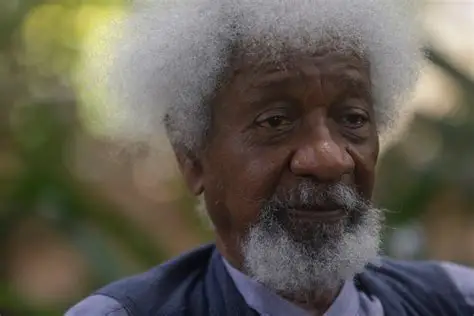
Akinwande Oluwole Babatunde Soyinka, popularly known as Wole Soyinka, is a Nigerian writer, playwright, poet, essayist, and political activist widely regarded as one of the greatest literary figures in Africa. Renowned for his powerful plays, novels, poetry, and essays, Soyinka became the first African to receive the Nobel Prize in Literature in 1986, earning global recognition for his outstanding contributions to world literature.
Born on July 13, 1934, in Abeokuta, Ogun State, he has spent decades using his writing and public advocacy to explore themes of justice, freedom, identity, culture, and human rights. His remarkable literary achievements and unwavering commitment to democracy have established him as one of Nigeria’s most influential intellectuals. This article explores Wole Soyinka’s biography, literary career, major works, achievements, personal life, and enduring legacy.
Over decades, Soyinka has used his voice to challenge injustice, from colonial legacies to post-independence authoritarianism. His life reflects a deep commitment to artistic expression and civic duty, making him a prominent figure in African and world literature.
Wole Soyinka Early Life
Wole Soyinka was born Akinwande Oluwole Babatunde Soyinka on 13 July 1934 in Aké, Abeokuta, Ogun State, Nigeria. He came from an Anglican Yoruba family as the second of seven children. His father, Samuel Ayodele Soyinka, known as “Essay” or S.A., served as an Anglican minister and headmaster of St. Peter’s Primary School in the parsonage. His mother, Grace Eniola Soyinka, called “Wild Christian,” worked as a shopkeeper and participated actively in local politics and women’s movements.
Ogun State, his state of origin, lies in southwestern Nigeria. It features a rich mix of Yoruba culture, history, and natural landscapes. Abeokuta, the state capital, is famous for its rock formations and as a center of Egba Yoruba heritage. Soyinka grew up in a syncretic environment where Christian practices mixed with Yoruba spiritual traditions and influences from Muslim neighbors. This cultural blending shaped his worldview. He drew from Yoruba mythology, especially the deity Ogun, associated with iron, war, creativity, and roads, which appears often in his writings.
As a child, Soyinka lived in the Anglican enclave known as the Parsonage. He attended church services and sang in the choir, but he also absorbed indigenous stories and beliefs. His father’s library gave him early access to books, including the Bible, English literature, and Greek tragedies like Euripides’ Medea. These readings connected with local folklore in his imagination. His mother joined protests, such as those led by her relative Funmilayo Ransome-Kuti against colonial-backed rulers and taxes, exposing young Soyinka to activism.
From 1940 to 1946, he attended St. Peter’s Primary School, where his father was headmaster. He then moved to Abeokuta Grammar School for secondary education. At age 16, he entered the prestigious Government College in Ibadan on scholarship. There, he excelled in studies while writing stories and acting in plays. This period marked the start of his lifelong engagement with theater. After a brief stint working in Lagos at his uncle’s pharmacy, where he wrote radio plays, he pursued higher education.
These early experiences in Ogun State and Ibadan fostered Soyinka’s appreciation for Yoruba heritage alongside Western education. The blend of tradition and modernity became a hallmark of his creative output.
Wole Soyinka Education
Soyinka’s formal education began locally but extended internationally. After primary school in Abeokuta, he attended Abeokuta Grammar School and then Government College, Ibadan, from around 1946 to 1951. This elite boarding school emphasized academics and exposed him to a broader world.
In 1952, he entered University College Ibadan (now University of Ibadan), studying English literature, Greek, and Western history. During his time there, he wrote his first radio play, Keffi’s Birthday Treat, broadcast in 1954. He also co-founded the National Association of Seadogs (Pyrate Confraternity), Nigeria’s first confraternity, with classmates. In 1954, he transferred to the University of Leeds in England to continue English literature studies under G. Wilson Knight. He earned his BA honours in 1957 and later received a doctorate from Leeds in 1973.
At Leeds, Soyinka edited the university’s satirical magazine The Eagle and won an oratory competition. He recorded for BBC programs and wrote short stories. This period honed his skills while exposing him to European theater traditions, which he later fused with African elements. The move abroad also heightened his awareness of racism and colonialism, influencing his pan-African outlook.
His education combined rigorous academic training with practical involvement in writing and performance. It prepared him to bridge cultural divides in his future works.
Wole Soyinka Career
Soyinka’s career spans playwriting, poetry, novels, teaching, and activism. It reflects consistent engagement with Nigeria’s social and political realities.
Early Career and First Plays
After graduating from Leeds in 1957, Soyinka worked at the Royal Court Theatre in London as a play reader and dramaturg. He wrote early plays like The Swamp Dwellers and The Lion and the Jewel, performed in Ibadan in 1958 and 1959. The Invention premiered at the Royal Court in 1957. In 1959, a Rockefeller Fellowship allowed him to return to Nigeria to study African drama.
He founded the 1960 Masks theater group and later the Orisun Theatre Company. His play A Dance of the Forests served as Nigeria’s independence celebration production in 1960, satirizing the new nation’s leaders. Other works from this era include The Trials of Brother Jero and The Road. He taught at universities in Ibadan, Lagos, and Ife, rising to professor of comparative literature.
Political Activism During the Nigerian Civil War
Soyinka’s activism intensified in the 1960s. He protested electoral fraud by seizing a radio station in 1965, leading to brief detention. During the lead-up to the Nigerian Civil War (1967-1970), he met with leaders on both sides to prevent conflict. Accused of conspiring with Biafran rebels, he was imprisoned for 22 months without trial from 1967 to 1969. In solitary confinement, he wrote poems on toilet paper and notes that later formed The Man Died: Prison Notes (1972).
This experience deepened his commitment to justice and informed much of his later writing on tyranny and resilience.
Post-Imprisonment Works and Exile
Released in 1969, Soyinka produced plays like Madmen and Specialists and adapted The Bacchae of Euripides. He published poetry collections such as A Shuttle in the Crypt and novels including Season of Anomy. Political pressures led to voluntary exile in the 1970s and again in the 1990s under Sani Abacha’s regime, during which he faced a death sentence in absentia. He taught at institutions like Cambridge, Sheffield, and Yale.
In 1986, he received the Nobel Prize in Literature, cited for his “wide cultural perspective and poetic overtones fashioning the drama of existence.” This recognition elevated African literature globally.
Later Career and Continued Advocacy
Soyinka returned to Nigeria after Abacha’s death. He continued writing, with notable later works including King Baabu, The Beatification of Area Boy, and the novel Chronicles from the Land of the Happiest People on Earth (2021). He has held visiting professorships and engaged in public discourse on democracy, corruption, and human rights. In 2024, the National Arts Theatre in Nigeria was renamed in his honor.
His career demonstrates a fusion of art and activism. Plays often use Yoruba rituals, music, and symbolism alongside Western techniques to critique power.
Wole Soyinka Major Plays and Works
Soyinka has written around 25 plays, several novels, poetry collections, and memoirs. Key plays include The Lion and the Jewel (comedy on tradition vs. modernity), Death and the King’s Horseman (exploring cultural clash and duty), Kongi’s Harvest (satire on dictatorship), and A Dance of the Forests (independence critique).
Novels such as The Interpreters and Season of Anomy examine Nigerian intellectuals and societal issues. Poetry collections like Idanre and Other Poems and Mandela’s Earth and Other Poems showcase his lyrical style. Memoirs Aké: The Years of Childhood and The Man Died provide personal insights.
These works draw on Yoruba mythology while addressing universal themes, making them accessible and profound.
Wole Soyinka Awards
Soyinka has received numerous honors. The 1986 Nobel Prize stands as the pinnacle. Other awards include the John Whiting Award (1967), Jock Campbell-New Statesman Award (1968), Benson Medal, and Commonwealth Poetry Prize. He holds honorary doctorates from many universities, including Leeds and Harvard. In Nigeria, he received chieftaincy titles like Akogun of Isara-Remo. He has also earned lifetime achievement recognitions, such as the Anisfield-Wolf Award.
These accolades affirm his contributions to literature and human rights.
Wole Soyinka Personal Life
Soyinka has been married three times and has eight children. His first marriage in 1958 was to British writer Barbara Dixon; they divorced in 1963. In 1963, he married Olaide Idowu, a Nigerian librarian; that marriage ended in 1989. Since 1989, he has been married to Folake Doherty Soyinka. He values family privacy but has dedicated works to his children and wife for their support during his exiles and imprisonments.
He maintains ties to Ogun State while traveling for lectures and residencies. In later years, he has spoken about health challenges, including overcoming prostate cancer.
Wole Soyinka Political Activism and Legacy
Beyond literature, Soyinka has consistently opposed tyranny. He criticized military regimes, advocated for democracy, and supported causes like anti-apartheid efforts. His writings and public statements continue to influence generations on governance and ethics in Africa.
Read Also: Ebiere Soberekon Biography: Age, State of Origin, Husband, Wedding Day, Career, Net Worth & Family
Conclusion
Wole Soyinka’s life and work embody the power of words to confront injustice and celebrate human complexity. From his roots in Abeokuta to global acclaim, he has enriched literature while championing freedom. His enduring relevance underscores the role of artists in society.
FAQs
What is Wole Soyinka’s full name and date of birth?
Akinwande Oluwole Babatunde Soyinka was born on 13 July 1934.
Where was Wole Soyinka born and what is his state of origin?
He was born in Abeokuta, Ogun State, Nigeria.
What award did Wole Soyinka win in 1986?
He received the Nobel Prize in Literature, the first African to do so.
How many plays has Wole Soyinka written?
He has authored approximately 25 plays, along with novels, poetry, and memoirs.
What are some famous plays by Wole Soyinka?
Notable ones include The Lion and the Jewel, Death and the King’s Horseman, and A Dance of the Forests.
Is Wole Soyinka still active in writing and activism?
Yes, he continues to produce works and comment on political and social issues.