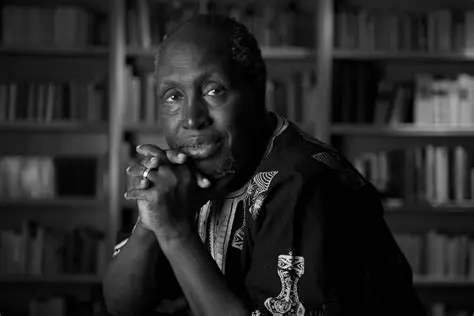
Ngũgĩ wa Thiong’o, born James Ngugi, was a Kenyan author, academic, literary critic, and activist widely regarded as one of Africa’s greatest writers and a leading voice in postcolonial literature. Best known for his influential novels, essays, and unwavering advocacy for African languages, Ngũgĩ transformed global conversations about colonialism, cultural identity, language, and social justice.
Born on January 5, 1938, in Kamiriithu, Kiambu County, Kenya, he built an extraordinary literary career that inspired generations of readers, scholars, and writers across the world. His groundbreaking works and commitment to writing in indigenous African languages established him as one of the most important intellectuals in modern African literature until his passing on May 28, 2025. This article explores Ngũgĩ wa Thiong’o’s biography, literary career, major works, achievements, personal life, and enduring legacy.
Ngũgĩ began writing in English but later chose to write primarily in Gikuyu, his native language. This choice reflected his commitment to decolonizing African minds and promoting indigenous languages. His novels, plays, essays, and memoirs have shaped discussions on post-colonial Africa. He taught at universities in Kenya and abroad, including the University of California, Irvine, where he served as Distinguished Professor. His life included periods of imprisonment and exile due to his political writings and community theatre work.
Ngũgĩ wa Thiong’o Early Life
Ngũgĩ wa Thiong’o was born on 5 January 1938 in Kamiriithu village, near Limuru in Kenya’s Kiambu district, during British colonial rule. He came from a Kikuyu family. His father, Thiong’o wa Ndūcũ, had four wives and 28 children in total. Ngũgĩ was born to the third wife, Wanjiku wa Ngũgĩ. The family worked as farmers, but British colonial policies, including the Imperial Land Act of 1915, took much of their land. This created hardship and shaped his early views on injustice.
The Mau Mau Uprising from 1952 to 1960 deeply affected his childhood. British forces imposed a state of emergency. One half-brother joined the Kenya Land and Freedom Army and died in the conflict. Another brother was shot, and his mother endured torture at a home guard post. These events left lasting impressions on Ngũgĩ. The colonial authorities destroyed his village during the emergency. When he returned from school, he saw the ruins, which heightened his awareness of home and loss.
Ngũgĩ grew up in a large polygamous household common in traditional Kikuyu society at the time. Daily life involved farming, community stories, and oral traditions that later influenced his writing style. Christianity played a role through missionary education, and he was baptized as James Ngugi. However, he later rejected the English name as part of his rejection of colonial influences. His early experiences with land dispossession, family disruption, and resistance movements formed the foundation for themes in his books about ordinary people fighting oppression.
Kamiriithu and the surrounding Limuru area represent the heart of Kikuyu land in central Kenya. This region saw intense colonial settlement and resistance. Ngũgĩ often returned to these settings in his stories, describing ridges, valleys, and villages to ground his narratives in real Kenyan landscapes and histories. His state of origin is Kenya, specifically the Kikuyu community in Kiambu County, which remains central to his identity and work.
Ngũgĩ wa Thiong’o Education
Ngũgĩ attended local primary schools such as Kamandura, Manguu, and Kinyogori. In 1955, he moved to Alliance High School, a prestigious boys’ boarding school about 20 kilometers away. This marked his first major separation from home. At Alliance, he received a strong British-style education that introduced him to English literature while exposing him to colonial contradictions.
He studied at Makerere University College in Kampala, Uganda, from 1959 to 1963. There he earned his BA in English. Uganda provided distance to reflect on Kenya. During this time, he wrote early works. He attended the 1962 African Writers Conference at Makerere, a key event for emerging African literature. His play The Black Hermit premiered there. He shared manuscripts with Chinua Achebe, leading to publications in the Heinemann African Writers Series.
After Makerere, Ngũgĩ won a scholarship to the University of Leeds in England for an MA. He studied there starting in 1964 but left in 1967 without completing his thesis on Caribbean literature, focusing on George Lamming. Exposure to different literatures and Marxist ideas influenced his thinking. He began embracing Fanonist ideas about colonialism and culture during this period.
His education combined colonial schooling with growing awareness of African perspectives. This tension drove him to question the dominance of English and Western canons in African education. Later, as a professor, he advocated for changes at the University of Nairobi, pushing African literature and oral traditions to the center.
Ngũgĩ wa Thiong’o Career
Ngũgĩ wa Thiong’o Early Writings
Ngũgĩ published his first novel, Weep Not, Child, in 1964. It was the first English novel by an East African writer. The story follows a Kikuyu family during the Mau Mau emergency, highlighting personal and national struggles. His second novel, The River Between (1965), explores conflicts between Christian converts and traditionalists in a divided community. A Grain of Wheat (1967) examines moral complexities around Kenya’s independence.
These early works used English but focused on Kenyan realities. They gained international attention and established him as a major voice.
Ngũgĩ wa Thiong’o University Teaching and Name Change
In 1967, Ngũgĩ began teaching at the University of Nairobi. He served as professor of English literature and later chaired the department. He pushed to replace the English department with one centered on African literature and languages. This reform highlighted African oral and written traditions.
Around this time, he changed his name from James Ngugi to Ngũgĩ wa Thiong’o and shifted toward writing in Gikuyu. This reflected his ideological evolution toward cultural decolonization.
Ngũgĩ wa Thiong’o Kamiriithu Community Theatre
In 1976, Ngũgĩ helped establish the Kamiriithu Community Education and Cultural Centre near his birthplace. The project involved local villagers in creating theatre. It aimed to make culture accessible and participatory, moving away from elite, bourgeois forms.
With Ngũgĩ wa Mirii, he co-wrote Ngaahika Ndeenda (I Will Marry When I Want) in Gikuyu. The play addressed worker exploitation, land issues, and elite corruption. It succeeded with huge local audiences but authorities banned it after six weeks. The theatre faced destruction, signaling government intolerance.
This experiment showed Ngũgĩ’s belief in people’s theatre for empowerment and education.
Ngũgĩ wa Thiong’o Imprisonment
In 1977, after Petals of Blood and the play, authorities arrested Ngũgĩ without trial. He spent nearly a year in Kamiti Maximum Security Prison. There, on toilet paper, he wrote Devil on the Cross in Gikuyu, the first modern novel in that language.
Prison strengthened his resolve to write in African languages. International pressure, including from Amnesty International, led to his release in late 1978. He lost his university position, and his family faced harassment.
Ngũgĩ wa Thiong’o Exile and International Career
After release, threats forced Ngũgĩ into exile. He lived in Europe and the United States, teaching at universities like Northwestern, Yale, New York University, and the University of California, Irvine. He worked with groups advocating for Kenyan political prisoners.
In exile, he continued writing and published Matigari (1986), a satirical novel. He returned to Kenya briefly in 2004 but faced a violent attack. He remained based abroad for safety until conditions improved after Moi’s era.
Ngũgĩ wa Thiong’o Later Works
Later novels include Wizard of the Crow (2004/2006), a satirical epic on dictatorship. Memoirs such as Dreams in a Time of War (2010) and In the House of the Interpreter (2012) recount his childhood and education. The Perfect Nine (2018/2019) retells a Gikuyu epic in verse.
He founded and edited the Gikuyu journal Mũtĩiri and wrote essays on globalectics and African renaissance.
Ngũgĩ wa Thiong’o Major Novels and Themes
Ngũgĩ’s novels center on Kenya’s history from colonialism to independence and beyond. Weep Not, Child portrays a young boy’s coming of age amid violence and lost dreams. The River Between uses a love story to show cultural clashes over female circumcision and education.
A Grain of Wheat weaves multiple perspectives around independence celebrations, revealing betrayals and sacrifices. Petals of Blood critiques post-independence capitalism and corruption through a murder investigation in a rural area.
Devil on the Cross employs allegory and satire, with characters meeting the Devil to plan exploitation. Written in Gikuyu, it reached new audiences when performed. Wizard of the Crow expands this with magical realism in a fictional African dictatorship, addressing power, gender, and resistance over hundreds of pages.
Common themes include land and dispossession, the role of women in struggle, language as power, and the need for true liberation beyond flag independence. His style mixes realism, folklore, satire, and oral narrative techniques for accessibility.
Ngũgĩ wa Thiong’o Plays and Theatre Work
Beyond Ngaahika Ndeenda, Ngũgĩ co-wrote The Trial of Dedan Kimathi (1976) with Micere Githae Mugo. It celebrates the Mau Mau leader and female fighters. The Black Hermit (1968) was his first play, performed for Ugandan independence.
His theatre emphasized community involvement and Gikuyu language to challenge passive audiences and promote active participation. Kamiriithu represented a model of decolonized cultural production.
Ngũgĩ wa Thiong’o Essays and Literary Criticism
Ngũgĩ’s essay collections include Homecoming (1972), Writers in Politics (1981), and the seminal Decolonising the Mind (1986). The latter argues that using colonial languages perpetuates mental colonization. He called for African writers to use indigenous languages for authentic literature.
Other works like Moving the Centre (1993) and Globalectics (2012) discuss knowledge production, world literature, and shifting cultural power from the West. His criticism blends theory with activism.
Ngũgĩ wa Thiong’o Awards and Recognitions
Ngũgĩ received many honors. In 1966, UNESCO awarded him First Prize for Weep Not, Child at the World Festival of Black Arts. He won the Lotus Prize, the 2001 Nonino Prize, and the 2016 Park Kyong-ni Prize. He held honorary doctorates from institutions including Leeds, Albright, and Auckland.
He was a perennial Nobel Prize in Literature candidate. His influence extended to academia, with centers and conferences dedicated to his work. Honorary membership in the American Academy of Arts and Letters recognized his contributions.
Ngũgĩ wa Thiong’o Personal Life
Ngũgĩ married twice and had nine children. Four children, including Mũkoma wa Ngũgĩ and Wanjikũ wa Ngũgĩ, became published authors. His first marriage ended in divorce. His second wife was Njeeri. Family life faced strains from his political activities, imprisonment, and exile.
In 2004, during a Kenya visit, robbers attacked him and his wife. He spoke openly about family matters in memoirs. His children sometimes reflected publicly on their upbringing. Ngũgĩ balanced intense public commitment with personal roles as father and husband.
He lived his later years in the United States but maintained strong ties to Kenya through writings and occasional returns.
Read Also: Ebiere Soberekon Biography: Age, State of Origin, Husband, Wedding Day, Career, Net Worth & Family
Conclusion
Ngũgĩ wa Thiong’o dedicated his life to literature as a tool for liberation. From Kamiriithu village to global stages, he championed African voices and languages. His works continue to inspire readers and writers confronting colonialism’s legacies and seeking justice. His legacy endures in African literature, theatre, and cultural activism. He passed away on 28 May 2025 at age 87, leaving a rich body of work that challenges and enlightens.
FAQs
What is Ngũgĩ wa Thiong’o best known for?
Ngũgĩ wa Thiong’o is best known for novels like Weep Not, Child and A Grain of Wheat, and his advocacy for writing in African languages. His book Decolonising the Mind remains influential.
Why did Ngũgĩ wa Thiong’o start writing in Gikuyu?
He believed colonial languages limited authentic African expression. Switching to Gikuyu allowed him to reach local audiences directly and decolonize literature.
What happened to Ngũgĩ wa Thiong’o in prison?
He was detained without trial in 1977 for about a year. He wrote Devil on the Cross on toilet paper and strengthened his commitment to indigenous languages.
Did Ngũgĩ wa Thiong’o win the Nobel Prize?
He was a frequent candidate but did not win the Nobel Prize in Literature. He received many other major literary awards and honors.
Where was Ngũgĩ wa Thiong’o from in Kenya?
He was born in Kamiriithu village near Limuru in Kiambu district, in Kenya’s central region, part of the Kikuyu community.
What are some key themes in Ngũgĩ wa Thiong’o books?
Key themes include colonialism and its aftermath, class struggle, cultural identity, land rights, gender roles in resistance, and the politics of language.
How many books did Ngũgĩ wa Thiong’o write?
He authored over 30 books across novels, plays, essays, memoirs, and children’s literature, spanning more than six decades.