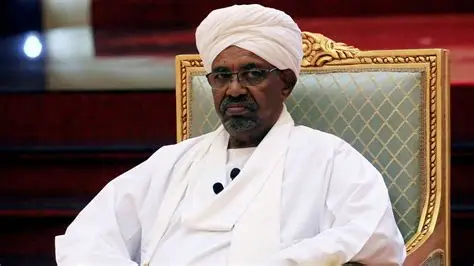
Omar Hassan Ahmed al-Bashir also known as Omar al-Bashir was a Sudanese military officer and politician who served as the President of Sudan from 1993 until his removal from office in 2019. Widely recognized as one of Africa’s longest-serving leaders, al-Bashir came to power after leading the 1989 military coup that ended civilian rule and went on to shape Sudan’s political landscape for nearly three decades.
Born in Hosh Bannaga, Sudan, he presided over a period marked by civil conflicts, Islamist governance, economic challenges, the secession of South Sudan, and growing international scrutiny over allegations of human rights abuses. His presidency remains one of the most consequential and controversial chapters in Sudan’s modern history.
Born into a modest farming family in northern Sudan, al-Bashir projected an image of a pious, resilient leader rooted in humble origins. His rule saw periods of economic growth fueled by oil, alongside prolonged conflicts, including the Darfur crisis that drew global condemnation. After his ouster amid popular protests, he faced domestic trials and remained subject to International Criminal Court warrants. His life reflects the complexities of Sudanese politics, tribal dynamics, and the challenges of governance in a diverse nation.
Omar al-Bashir Early Life
Omar Hassan Ahmed al-Bashir was born on January 1, 1944, in Hosh Bannaga, a small village on the eastern bank of the Nile River near Shendi in what was then Anglo-Egyptian Sudan, now part of Sudan’s River Nile State. He came from a poor peasant family of Arab descent, belonging to the Ja’alin tribe, specifically the Al-Bedairyya Al-Dahmashyya Bedouin subgroup. His father worked as a small-scale dairy farmer, and the family faced the hardships typical of rural life in northern Sudan at the time.
The region around Hosh Bannaga features mud-brick homes and agricultural fields along the Nile, where communities have long relied on farming and river-based livelihoods. Al-Bashir often spoke of his humble beginnings, including working at construction sites as a student to help pay for his education. He recounted breaking a tooth while carrying concrete and choosing not to replace it with a silver implant as a reminder of his roots. His family later moved to Khartoum, where he completed his early schooling. This transition from village life to the capital exposed him to urban opportunities and the broader political currents of the country.
As a member of the Ja’alin tribe, one of Sudan’s prominent Arab groups with historical ties to the Nile Valley, al-Bashir drew on cultural and social networks that influenced his later career. Northern Sudan, his state of origin, has a rich history tied to ancient Nubian kingdoms, Islamic traditions, and interactions with Egypt. The area around Shendi served as a historical trading and cultural hub. These origins shaped his identity as a Sudanese Arab nationalist with strong Islamic values, which he emphasized throughout his public life. He was one of many siblings in an extended family, and accounts describe him as active in childhood, with an interest in football where he played in defensive positions.
The post-colonial context of Sudan during his youth played a key role. Sudan gained independence in 1956, and the young al-Bashir grew up amid nation-building efforts, military influence, and debates over Arab identity versus broader African diversity. His family’s Sufi connections, possibly linked to sects like the Khatmiyya, added a layer of religious piety to his upbringing. These early experiences in a resource-scarce environment fostered resilience and ambition, directing him toward the military as a path for social mobility.
Omar al-Bashir Education
Al-Bashir received his primary education in his home area before the family move to Khartoum. There, he finished secondary schooling. A British teacher reportedly encouraged him to continue his studies when he considered dropping out, highlighting early determination.
He joined the Sudanese Armed Forces in 1960 and pursued formal military training. He studied at the Egyptian Military Academy in Cairo and graduated from the Sudan Military Academy in Khartoum in 1966. He later earned master’s degrees in military science from the Sudanese College of Commanders and attended additional courses, including in Malaysia and Pakistan. Some sources mention training or exposure in the United States as well.
His education combined practical military skills with strategic studies. Training as a paratrooper and pilot equipped him for leadership roles. The academies instilled discipline, Arab nationalist ideas, and exposure to Islamist influences that were growing in the region. This foundation proved crucial for his rapid rise in the armed forces and eventual entry into politics.
Omar al-Bashir Military Career
Al-Bashir began his military service shortly after joining the army in 1960. He progressed through ranks as a dedicated officer. In 1973, he served with Sudanese forces supporting Egypt during the October Arab-Israeli War, gaining combat experience as a paratrooper.
He held various posts, including military attaché in the United Arab Emirates from 1975 to 1979. Upon returning, he served as a garrison commander and later commanded an armored parachute brigade in Khartoum by 1981. In the mid-1980s, he played a significant role in operations against the Sudan People’s Liberation Army in southern Sudan during the civil war.
By the late 1980s, he had reached the rank of brigadier. His field experience and loyalty within the military positioned him as a key figure among officers frustrated with civilian governance under Prime Minister Sadiq al-Mahdi.
Omar al-Bashir Rise to Power
On June 30, 1989, al-Bashir led a military coup that overthrew the elected government. He established the Revolutionary Command Council for National Salvation, dissolved parliament, banned political parties, and suspended the constitution. He allied closely with Hassan al-Turabi and the National Islamic Front, introducing elements of Islamic law.
This period involved consolidating control amid economic difficulties and ongoing civil war. He survived a coup attempt in 1990 and took firm measures against opponents. In 1993, the Revolutionary Command Council dissolved, and he assumed the presidency, transitioning to a more civilian-appearing structure while maintaining military influence.
Omar al-Bashir Presidency and Domestic Policies
Al-Bashir served as president from 1993 to 2019, one of Sudan’s longest tenures. He won elections in 1996, 2000, and later years, often with limited opposition. His government promoted Islamist policies, including sharia law elements, which intensified divisions with non-Muslim populations in the south.
He oversaw efforts to end the long-running civil war with the south, culminating in the Comprehensive Peace Agreement in 2005 and South Sudan’s independence in 2011. Oil revenues during the 2000s supported some infrastructure and economic liberalization, though benefits remained uneven. Ties with China and other nations helped develop the energy sector.
His administration faced criticism for authoritarian measures, including restrictions on press freedom and political activity. Supporters credited him with maintaining national unity during turbulent times and advancing development projects.
Omar al-Bashir Darfur Conflict
The conflict in Darfur erupted in 2003 when rebel groups accused the government of marginalizing the region. Al-Bashir’s government responded with military operations and support for local militias, leading to widespread violence, displacement, and deaths estimated in the hundreds of thousands. The International Criminal Court issued arrest warrants against him in 2009 and 2010 for alleged war crimes, crimes against humanity, and genocide.
The crisis drew international attention, with accusations of ethnic targeting of groups like the Fur, Masalit, and Zaghawa. Al-Bashir denied the charges, framing the situation as internal security matters and accusing the ICC of bias. Peace efforts and hybrid peacekeeping missions followed, but resolution remained elusive during his rule.
Omar al-Bashir Foreign Relations
Al-Bashir cultivated relations with countries like China, Russia, and several Arab states, often in defiance of Western sanctions. Sudan hosted Osama bin Laden in the 1990s before his departure. Later, improved ties with the United States came through counterterrorism cooperation and peace initiatives.
He navigated African Union dynamics and faced travel restrictions due to ICC warrants, yet visited several nations. Relations with Egypt remained close due to shared Nile interests, while southern tensions defined much of his early presidency.
Omar al-Bashir Awards
Al-Bashir received various national and international recognitions during his rule, including honors from allied countries. One notable award was the Order of the Republic of Serbia. Sudanese state honors and military decorations marked his service. Critics viewed many as reflective of political alliances rather than universal acclaim.
Omar al-Bashir Personal Life
Al-Bashir married his cousin Fatima Khalid as his first wife. His second wife is Widad Babiker Omer, the widow of a former Revolutionary Command Council member. He has no biological children but helped raise relatives. His family life remained relatively private, with emphasis on Islamic values and extended family support.
He maintained connections to his village roots and supported family members. Reports describe him as proud and pragmatic, with a military bearing influencing his leadership style.
Omar al-Bashir Ouster and Later Years
Mass protests beginning in late 2018 over economic issues led to his removal on April 11, 2019, in a military coup. He was arrested and faced trials for corruption and his role in the 1989 coup. Convicted on corruption charges in 2019, he received a two-year sentence. The Darfur-related proceedings continued amid Sudan’s subsequent instability and civil war.
As of recent reports, health issues have affected him while in detention, with transfers for medical care. His legacy remains divisive in Sudan and abroad.
Omar al-Bashir Legacy
Al-Bashir’s rule transformed Sudan in multiple ways. Supporters point to infrastructure gains, oil sector development, and resistance to external pressures. Critics highlight authoritarianism, conflict costs, and international isolation. His ouster sparked hopes for democratic transition, though challenges persist. He remains a polarizing figure in Sudanese history, embodying both resilience and the pitfalls of prolonged military-influenced governance.
His impact on north-south relations, Darfur, and Islamist politics continues to influence the country. Future generations will assess his tenure against Sudan’s ongoing struggles for stability and unity.
Read Also: Ebiere Soberekon Biography: Age, State of Origin, Husband, Wedding Day, Career, Net Worth & Family
Conclusion
Omar al-Bashir’s life spans from rural Sudanese roots to decades at the helm of national power. His biography captures the intersections of military tradition, political ambition, and complex regional dynamics. While achievements in certain economic and diplomatic areas stand out, controversies and conflicts define much of the narrative. Understanding his story provides insight into Sudan’s modern challenges and the broader forces shaping African leadership.
FAQs
What is Omar al-Bashir full name and date of birth?
Omar Hassan Ahmed al-Bashir was born on January 1, 1944.
Where was Omar al-Bashir born and what is his nationality?
He was born in Hosh Bannaga, Sudan, and holds Sudanese nationality.
What was Omar al-Bashir role in the 1989 coup?
He led the military coup that overthrew the civilian government and established the Revolutionary Command Council.
What are the main charges against Omar al-Bashir by the ICC?
The ICC issued warrants for war crimes, crimes against humanity, and genocide related to the Darfur conflict.
How long did Omar al-Bashir serve as president of Sudan?
He served from 1993 until 2019, nearly 26 years in the presidency following the 1989 coup.
What is known about Omar al-Bashir family and personal life?
He has two wives and no biological children, maintaining a private family life rooted in his tribal and Islamic background.
What happened to Omar al-Bashir after 2019?
He was ousted, arrested, tried on domestic charges, and has faced health issues while in custody amid Sudan’s ongoing conflicts.