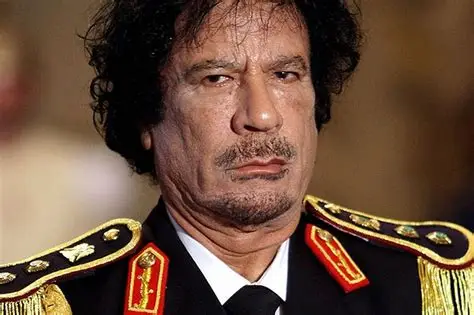
Muammar Mohammed Abu Minyar al-Gaddafi was born in a tent near Surt in the Libyan desert. He served as the de facto leader of Libya from 1969 until 2011. A Bedouin tribesman turned revolutionary soldier, he rose through a bloodless coup to reshape Libya according to his unique political vision outlined in The Green Book. Gaddafi promoted Arab nationalism, African unity, and a form of direct democracy mixed with Islamic socialism. His rule brought significant changes to Libya through oil wealth, but it also featured authoritarian control, international isolation, and eventual violent downfall.
Gaddafi’s life reflected the complexities of postcolonial North Africa. He transformed a poor, tribal society into one with high living standards for many citizens while pursuing ambitious foreign policies that made him both a supporter of liberation movements and a figure accused of sponsoring terrorism. His eccentric personality, colorful attire, and ideological writings drew global attention. The 2011 Arab Spring uprisings ended his long reign, leading to his death amid civil conflict. This biography explores his journey from desert roots to controversial leadership.
Muammar Gaddafi Early Life and Background
Muammar Mohammed Abu Minyar al-Gaddafi entered the world around 1942, with some sources citing June 7 specifically, in a Bedouin tent near Surt (also spelled Sirte) in western Libya. His nationality was Libyan. He belonged to the Qadhadhfa tribe, a smaller Arab group with roots in the Sirte region, traditionally involved in herding animals across the desert. The tribe claimed descent from noble Arab lines, sometimes linked to the Prophet Muhammad’s family through historical narratives, though such claims are common in tribal societies.
His father, Mohamed Abdul Salam bin Hamed bin Mohamed, known as Abu Meniar, was a poor Bedouin farmer and herder. His mother was Aisha bin Niran. Gaddafi was the youngest child and only son among several siblings, with three older sisters. The family lived a nomadic life typical of Bedouin traditions in the arid landscapes south of the Mediterranean coast. This environment instilled in him values of self-reliance, tribal loyalty, and resilience against harsh conditions.
Libya at the time was under Italian colonial influence until after World War II, when it moved toward independence. The desert region around Surt saw fighting during the war, shaping local experiences of foreign powers. Gaddafi’s family faced poverty, but they emphasized education and Islamic teachings. He received early religious instruction in the Quran from local mosque schools. The nomadic lifestyle meant frequent movement, yet his parents prioritized schooling despite the costs. Gaddafi later recalled walking long distances and studying diligently, advancing quickly through grades.
The Qadhadhfa tribe’s position in the Sirte basin, an area rich in oil later discovered, gave it strategic importance. Though not one of Libya’s largest tribes, its central location between eastern and western regions helped Gaddafi leverage tribal networks throughout his life. He grew up hearing stories of resistance against Italian colonizers and admired figures like Egyptian leader Gamal Abdel Nasser, whose pan-Arab nationalism inspired many young Arabs. These early influences fueled his anti-imperialist views and desire for unity among Arab nations.
Life in the desert emphasized communal bonds, hospitality, and suspicion of outsiders, elements that appeared in Gaddafi’s later governance. He attended primary school in Surt from around 1953 to 1955, then continued studies in Sebha in the Fezzan region after his family moved. There, he engaged in political activities, organizing protests against events like Syria’s secession from the United Arab Republic in 1961. This activism led to his expulsion from Sebha, prompting a move to Misurata for secondary education, completed between 1961 and 1963.
Gaddafi’s humble origins contrasted with the monarchy ruling Libya under King Idris I. The king’s government maintained close ties with Western powers, including military bases, which angered nationalist youth. Gaddafi’s Bedouin background and exposure to inequality drove him toward revolutionary ideas. He developed a strong sense of justice rooted in Islamic principles and Arab solidarity, viewing foreign influence as a continuation of colonialism. These formative years laid the foundation for his lifelong commitment to transforming Libyan society.
Muammar Gaddafi Education
Gaddafi pursued formal education despite his family’s limited resources. After primary schooling in mosque settings, he excelled in secondary studies in Sebha and Misurata. He demonstrated academic talent and political awareness, balancing studies with activism. In 1963, he enrolled at the University of Libya in Tripoli, studying history and law, and graduated in 1963 or shortly after with good grades.
Military training followed as a path to power. Gaddafi entered the Royal Military Academy in Benghazi in 1963, graduating in 1965. He received further signals training in Britain at the British Army Staff College, returning in 1966 as a commissioned officer. These experiences exposed him to Western military methods while reinforcing his dislike of foreign bases on Libyan soil. He used his time in the military to recruit like-minded officers for a secret revolutionary group.
His education combined classroom learning with self-study of Nasserist ideas, Islamic thought, and anti-colonial literature. Gaddafi criticized traditional education systems as tools of the elite and later promoted practical, people-centered approaches in his writings. The University of Libya period honed his oratory and organizational skills, essential for the 1969 coup.
Muammar Gaddafi Career
Gaddafi’s professional path began in the military, where he advanced while building a network of loyal officers disillusioned with the monarchy.
Military Service and Revolutionary Activities
As a young officer, Gaddafi organized the Free Unionist Officers Movement, inspired by Nasser’s 1952 Egyptian revolution. He criticized King Idris’s pro-Western policies, including U.S. and British bases. On September 1, 1969, while the king was abroad for medical treatment, Gaddafi and his comrades seized control in a nearly bloodless coup. They established the Libyan Arab Republic, with Gaddafi as chairman of the Revolutionary Command Council and de facto leader. He promoted himself to colonel, a rank he retained symbolically.
Early reforms included expelling foreign military personnel, closing bases, and nationalizing Italian and Jewish properties. In 1970, he nationalized foreign oil assets, channeling revenues into development. Libya’s oil wealth surged, funding infrastructure, education, and healthcare improvements that raised living standards.
Political Reforms and the Green Book
Gaddafi sought a unique system beyond capitalism and communism. He published The Green Book in three parts starting in 1975, outlining the Third Universal Theory. Part one addressed democracy through people’s committees and congresses for direct participation. Part two focused on socialism, emphasizing worker ownership and abolishing wage labor and rent. Part three covered social issues, advocating Islamic principles, gender roles, and tribal values adapted to modern needs.
In 1977, Libya became the Great Socialist People’s Libyan Arab Jamahiriya, meaning “state of the masses.” Gaddafi relinquished formal titles but remained the “Brother Leader” guiding the revolution. He dismantled traditional government structures in favor of popular congresses, though in practice power stayed centralized with him and close allies, often from his tribe or loyal factions.
Economic policies redistributed wealth through subsidies, free education, healthcare, and housing initiatives. Oil revenues supported massive projects, including the Great Man-Made River to bring water from desert aquifers to coastal cities. Agriculture and industry saw investments, though inefficiencies and sanctions later hampered progress. Gaddafi promoted self-sufficiency and resisted Western economic dominance.
Foreign Policy and International Relations
Gaddafi pursued pan-Arab unity, attempting mergers with Egypt, Syria, and others, though most failed. He supported liberation movements in Africa and beyond, providing aid to groups fighting colonialism and apartheid. This earned praise from some leaders but criticism for backing militants.
Relations with the West deteriorated over accusations of terrorism sponsorship, including the 1988 Lockerbie bombing of Pan Am Flight 103. UN sanctions in the 1990s isolated Libya economically. In the 2000s, Gaddafi normalized ties, abandoning weapons of mass destruction programs and compensating Lockerbie victims, leading to lifted sanctions and renewed oil deals.
He positioned himself as a king of kings in Africa, advocating for the African Union and a United States of Africa. Visits and financial support to African nations highlighted his pan-African vision. Domestically, he balanced tribal alliances through patronage and marriages while suppressing dissent.
Later Years and Challenges
By the 2000s, economic liberalization under his son Saif al-Islam attempted reforms, but corruption and inequality persisted. The 2011 Arab Spring protests, fueled by demands for political freedom and economic justice amid regional unrest, escalated into civil war. NATO intervention supported rebels, leading to the fall of Tripoli.
Muammar Gaddafi Awards
Gaddafi received various honors reflecting his international engagements. National awards included the Order of the Republic and Order of Courage from Libya. Internationally, he earned the Order of the Balkan Mountains from Bulgaria, Grand Star of Peoples’ Friendship from East Germany, and orders from Poland, Czechoslovakia, Yugoslavia, Ukraine, Malta, Uganda, and Gambia. Many were later revoked amid controversies. Universities granted him honorary doctorates in places like South Korea, Algeria, Serbia, and Tunisia.
These recognitions highlighted support from socialist and non-aligned nations but did not shield him from global criticism.
Muammar Gaddafi Personal Life
Gaddafi married first to Fatiha al-Nuri in 1969, a brief union producing son Muhammad. They divorced soon after. His second marriage to Safia Farkash, a nurse from the Obeidat tribe, in 1970 proved enduring. They met during his hospitalization and had seven biological children: Saif al-Islam, Al-Saadi, Mutassim, Hannibal, Aisha, Saif al-Arab, and Khamis. They also adopted Hana and Milad.
Family members held influential roles. Saif al-Islam engaged in diplomacy and reform efforts. Aisha practiced law and charity. Sons like Mutassim and Khamis held military positions. The family resided in the Bab al-Azizia compound in Tripoli, a fortified complex. Several children faced international scrutiny for behavior abroad. Tragically, several sons died during the 2011 conflict, and reports indicate Saif al-Islam was killed years later.
Gaddafi maintained a distinctive public image with colorful robes, sunglasses, and tents symbolizing Bedouin roots. He had eccentric habits and phobias but cultivated a cult of personality through media and Green Book study. His personal life intertwined with politics, using tribal and family ties to consolidate power. Safia Farkash supported him until the end, fleeing with family members after his death.
Muammar Gaddafi Death and Legacy
In October 2011, rebel forces captured Gaddafi in Surt amid NATO-backed advances. He died on October 20, 2011, at age 69, under violent circumstances with conflicting accounts of the exact events. His body was displayed publicly before burial in an unmarked desert grave. The death marked the end of his 42-year rule and the start of Libya’s ongoing instability.
Gaddafi’s legacy remains divided. Supporters credit him with modernizing Libya, improving literacy, healthcare, and women’s rights in some areas, and challenging Western dominance. Critics point to human rights abuses, suppression of opposition, cult of personality, and economic mismanagement despite oil riches. His fall plunged Libya into factional conflict, tribal divisions, and foreign interference that persist today.
Read Also: Ebiere Soberekon Biography: Age, State of Origin, Husband, Wedding Day, Career, Net Worth & Family
Conclusion
Muammar Gaddafi’s life embodied the ambitions and contradictions of a leader who sought to forge a unique path for his nation and the Arab-African world. From desert tent to revolutionary icon, his story highlights the power of ideology, oil wealth, and personal rule in shaping modern Libya. While his vision inspired some and alienated others, the consequences of his era continue to influence regional dynamics. Understanding Gaddafi requires balancing achievements in development against the costs of authoritarianism and isolation.
FAQs
What was Muammar Gaddafi’s full name and date of birth?
Muammar Mohammed Abu Minyar al-Gaddafi was born around 1942 near Surt, Libya.
Where did Muammar Gaddafi come from and what was his tribal background?
He originated from the Qadhadhfa tribe in the Sirte region, a Bedouin Arab group in a strategically located area of Libya.
What was the main idea in Muammar Gaddafi’s Green Book?
It proposed a Third Universal Theory for direct democracy through people’s committees, socialist economics without wages or exploitation, and social principles based on Islam and natural laws.
How long did Muammar Gaddafi rule Libya?
He held power from the 1969 coup until his death in 2011, over four decades.
What happened to Muammar Gaddafi’s family after 2011?
Many fled to Algeria or other places. Several sons died in the conflict, and survivors faced legal issues or exile. Safia Farkash and others lived abroad before some returns or further events.