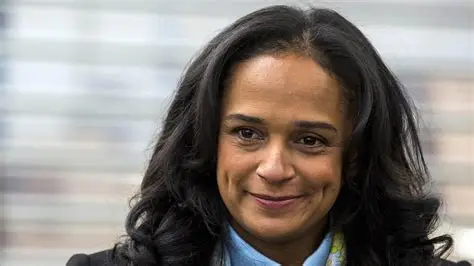
Isabel dos Santos is an Angolan businesswoman and investor widely recognized for building one of Africa’s largest private business portfolios across telecommunications, banking, energy, retail, and finance. Best known as the daughter of former Angolan President José Eduardo dos Santos, she rose to international prominence as one of Africa’s wealthiest women through investments in several major companies.
Born in Baku, Azerbaijan, during her father’s diplomatic service, she became a central figure in Angola’s business landscape while attracting global attention for both her entrepreneurial ventures and the legal controversies surrounding her wealth. Her career remains closely tied to debates on governance, transparency, and economic development in Angola.
Dos Santos leveraged education abroad and family connections to enter business in the 1990s. She acquired significant stakes in key Angolan and Portuguese companies. While supporters viewed her as a pioneering entrepreneur, critics and investigations highlighted concerns over potential conflicts of interest and the use of state-linked opportunities. Her career includes high-profile roles, such as a brief chairmanship at the state oil company Sonangol, and later faced legal and financial repercussions after her father left power.
Early Life of Isabel dos Santos
Isabel Kukanova dos Santos was born on April 20, 1973, in Baku, Azerbaijan SSR, in the Soviet Union. Her father, José Eduardo dos Santos, was studying engineering there as part of efforts by the Popular Movement for the Liberation of Angola (MPLA) to prepare leaders against Portuguese colonial rule. Her mother, Tatiana Sergeievna Kukanova, a Russian-born chess champion studying geology or related subjects, met him during that time.
The family returned to Angola after the country gained independence from Portugal in 1975. José Eduardo dos Santos rose quickly in the MPLA and became president in 1979 following the death of Agostinho Neto. Isabel spent her early childhood in Luanda, the capital, during a period of nation-building mixed with the outbreak of a long civil war. Her parents divorced when she was young, and she moved with her mother to London for safety and education while the conflict continued in Angola.
Her father’s side of the family had roots connected to São Tomé and Príncipe, adding layers to her multicultural background. Growing up as the daughter of the president placed her in a privileged position, often referred to informally as “the princess” in Angolan circles. This environment exposed her early to political and economic networks that would later influence her path. Despite the turmoil in Angola, where the civil war lasted until 2002 and caused immense hardship, Isabel experienced a different reality shaped by her family’s status and international mobility.
Angola, rich in oil and diamonds, offered vast potential but faced severe challenges including poverty, infrastructure deficits, and the effects of war. Isabel’s early life bridged Soviet-influenced education for her father, the realities of African independence, and European opportunities through her mother. These experiences helped shape her multilingual abilities and global outlook. She speaks Portuguese, Russian, English, French, Italian, and Spanish fluently, skills that proved valuable in international business dealings.
Education of Isabel dos Santos
Isabel dos Santos received a strong international education. After initial schooling in Luanda, she attended elite institutions in the United Kingdom. She studied at Cobham Hall School, an all-girls boarding school in Kent, and later at St. Paul’s Girls’ School in London. These schools provided rigorous academic training during a time when Angola’s public education system struggled amid conflict.
She pursued higher education at King’s College London, where she earned a degree in electrical engineering. Reports indicate she also engaged with business management concepts. Her time in London coincided with meeting her future husband, Sindika Dokolo, a Congolese businessman and art collector. She worked briefly as a junior consultant at Coopers & Lybrand (now part of PwC) after graduation, gaining exposure to professional services and finance.
This educational foundation in engineering and business equipped her with technical knowledge useful for sectors like telecommunications and energy. She approached studies seriously, focusing on mathematics, physics, and related fields. The contrast between her stable, high-quality education abroad and the conditions in war-torn Angola highlighted the disparities that later informed her business decisions in infrastructure and services.
Her academic path reflected a common strategy among African elites of the era: seeking excellence overseas while maintaining ties to the homeland. Upon completing her studies around 1995, she returned to Angola to begin her professional journey, bringing skills in project management and an understanding of global markets.
Business Ventures of Isabel dos Santos
Isabel dos Santos entered the Angolan business scene in the mid-1990s. She started with practical roles, including work as a project manager engineer for Urbana 2000, a subsidiary involved in urban sanitation and cleaning contracts in Luanda. This experience introduced her to local operations and logistics needs in a recovering city.
She soon established a trucking business to support transportation demands. In 1997, she opened the Miami Beach Club, one of the first modern nightclubs and beach restaurants on Luanda Island. This venture marked her entry into hospitality and leisure, catering to the emerging elite and expatriates in the capital.
Telecommunications Investments of Isabel dos Santos
Telecommunications became a cornerstone of her portfolio. In the late 1990s, she co-founded Unitel, Angola’s first private mobile operator. Through her holding company Vidatel, she secured a 25 percent stake in the consortium that included Portugal Telecom and Sonangol. Unitel grew rapidly as mobile phone adoption surged in Angola, turning it into a dominant player and generating substantial value.
This sector aligned with her engineering background and the country’s need for modern communication infrastructure after years of isolation. Unitel expanded services, contributing to connectivity in both urban and rural areas. Her involvement helped position Angola in the digital age, though questions later arose about the tender processes and ownership structures.
Energy and Oil Sector Activities of Isabel dos Santos
Dos Santos engaged deeply with Angola’s oil industry, the backbone of the national economy. In June 2016, her father appointed her chair of Sonangol, the state-owned oil company. She held the position briefly until November 2017, when the new president, João Lourenço, removed her as part of broader changes. During her tenure, she focused on modernization efforts, but the role drew significant scrutiny.
She also held stakes in related energy firms, including interests in Galp Energia through complex share arrangements involving Dutch entities. These deals allowed participation in exploration and production, sectors critical to Angola’s revenue. Her activities extended to power equipment and industrial conglomerates in Portugal, such as Efacec.
Banking and Financial Holdings of Isabel dos Santos
In banking, she acquired significant positions. She held stakes in institutions like Banco BIC and EuroBic in Portugal. These investments diversified her interests beyond Angola and provided platforms for financial services. Her holdings in Portuguese banks reflected strong economic ties between the two countries, rooted in colonial history and ongoing trade.
Media and Other Diversified Interests of Isabel dos Santos
Dos Santos invested in media, including satellite television operator ZAP. She also held interests in diamonds, cement, retail, and real estate. Her portfolio spanned hundreds of companies across multiple jurisdictions, demonstrating a strategy of diversification to manage risk in volatile markets.
In Portugal, she built notable presence through holdings in various sectors, earning descriptions in media as a key investor linking Angolan and European economies. These moves helped expand her influence beyond Angola’s borders.
Awards of Isabel dos Santos
Isabel dos Santos received recognition for her business achievements. In 2015, the BBC named her one of the 100 Most Influential Women in the World. Forbes featured her on lists of Africa’s richest people and highlighted her as the continent’s first female billionaire and youngest in that category at one point, with estimates of her net worth reaching billions before subsequent declines and asset challenges.
She earned other honors in African business circles, reflecting perceptions of her role in economic development during a period of oil-driven growth. These accolades celebrated her visibility as a woman in high-level commerce on the continent.
Personal Life of Isabel dos Santos
Isabel dos Santos married Sindika Dokolo in 2002 in a large ceremony in Luanda. Dokolo, a Congolese art collector and businessman from a prominent family, shared her interest in culture and enterprise. The couple had three children: Talita, Duarte, and Diana. They maintained a private family life while engaging in public philanthropic and cultural activities, including art collections.
Sindika Dokolo passed away in 2020 in a diving accident near Dubai. Dos Santos has spoken about balancing motherhood with her professional demands. She lives in Dubai in recent years, navigating international legal matters while focusing on family. Her multilingual background and cross-cultural marriage underscored a cosmopolitan personal world.
State of Origin and Angolan Roots of Isabel dos Santos
Isabel dos Santos has deep ties to Angola, her primary nationality alongside Russian citizenship. Though born in Baku, she identifies strongly with Angola, where her father led the country for nearly four decades. The family has connections to São Tomé and Príncipe through paternal grandparents, but her life and business centered in Luanda and the broader Angolan context.
Angola’s history of resilience—from colonial rule to independence, civil war, and oil boom—frames her story. She invested in sectors vital to national reconstruction, such as telecoms that improved communication and energy projects supporting development. Her presence highlighted the role of the diaspora and returnees in rebuilding efforts, even as debates continue about equitable distribution of wealth in a country where many citizens face poverty despite resource riches.
Luanda served as the hub for her early ventures, from the Miami Beach Club to major infrastructure plays. The capital’s transformation in the post-war era mirrored her own growth as a business figure. Broader Angolan society values strong family and community links, elements visible in her emphasis on legacy and support for local initiatives.
Controversies and Legal Matters Surrounding Isabel dos Santos
Following her father’s departure from power in 2017, Dos Santos faced increased scrutiny. Investigations, including the 2020 Luanda Leaks by the International Consortium of Investigative Journalists, examined her business dealings through hundreds of thousands of documents. Reports alleged use of offshore structures, state contracts, and potential conflicts tied to her position.
Angolan authorities pursued asset freezes, charges of financial crimes, and recovery efforts for alleged losses. Courts in Portugal, the Netherlands, the UK, and elsewhere addressed related disputes, including share ownership and payments. Dos Santos has consistently denied wrongdoing, describing actions against her as politically motivated. International sanctions followed in some jurisdictions, citing concerns over public fund management.
These developments impacted her empire, with some assets seized or transferred. The cases raised wider discussions about governance, transparency, and anti-corruption reforms in Angola under the new administration. They also spotlighted global financial systems enabling complex cross-border holdings. Dos Santos maintained that her success stemmed from legitimate entrepreneurship and hard work.
Philanthropy and Public Image of Isabel dos Santos
Throughout her career, Dos Santos engaged in initiatives supporting education, culture, and social projects. Her art-related activities through her husband’s collection brought attention to African artists. She advocated for women’s roles in business and highlighted opportunities for young entrepreneurs in Angola.
Her public image evolved from celebrated business leader to a figure of debate. Media coverage ranged from profiles of her achievements to critical examinations of wealth accumulation in resource-rich nations. She granted occasional interviews emphasizing self-reliance and national pride.
Read Also: Ebiere Soberekon Biography: Age, State of Origin, Husband, Wedding Day, Career, Net Worth & Family
Conclusion
Isabel dos Santos remains a complex figure in African business history. From her early life bridging continents to building a diversified empire, her journey illustrates ambition amid Angola’s transformation. While celebrated for pioneering roles, her story also underscores ongoing challenges around accountability and development in post-colonial states. As legal processes continue, her legacy will likely reflect both commercial impact and broader conversations on power, opportunity, and public trust. Her experiences offer lessons on resilience, global connectivity, and the responsibilities that accompany influence in emerging economies.
FAQs
What is the full name and date of birth of Isabel dos Santos?
Isabel Kukanova dos Santos was born on April 20, 1973.
Where was Isabel dos Santos born and what is her nationality?
She was born in Baku, Azerbaijan, and holds Angolan and Russian nationality.
What businesses is Isabel dos Santos known for?
She is known for major stakes in Unitel (telecoms), banking institutions, energy firms like those linked to Galp, media, and other sectors across Angola and Portugal.
Who was the husband of Isabel dos Santos?
She was married to Sindika Dokolo until his death in 2020. They had three children.
What awards did Isabel dos Santos receive?
She was named in the BBC’s 100 Women list in 2015 and featured on Forbes rich lists.
What challenges has Isabel dos Santos faced in recent years?
She has encountered legal investigations, asset freezes, and sanctions in several countries related to her business activities.