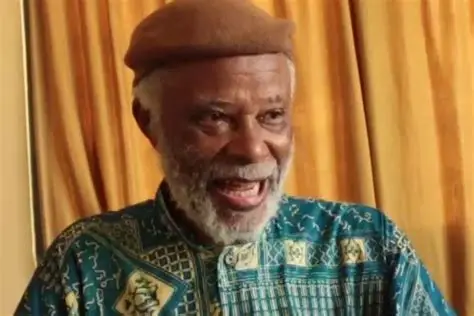
Chinweizu Ibekwe, widely known as Chinweizu, is a Nigerian writer, poet, literary critic, and public intellectual recognized for his influential contributions to African literature, decolonization, and cultural thought. Renowned for his bold critiques of Western influence and his advocacy for African-centered knowledge, Chinweizu has shaped debates on identity, language, education, and cultural independence for decades.
Through his essays, books, and literary criticism, he has challenged conventional perspectives while encouraging Africans to reclaim their history, traditions, and intellectual heritage. His enduring influence on scholarship, journalism, and public discourse has established him as one of Nigeria’s most significant contemporary thinkers. This article explores Chinweizu Ibekwe’s biography, literary career, major works, achievements, personal life, and lasting legacy.
Over several decades, Chinweizu produced books, essays, poems, and newspaper columns that challenge readers to examine power structures, historical narratives, and social norms. His ideas often spark debate, reflecting his commitment to Pan-African thought and resistance against external domination in various forms. This biography explores his journey from humble beginnings in southeastern Nigeria to becoming a key voice in African intellectual life.
Chinweizu Ibekwe Early Life and Background
Chinweizu Ibekwe was born on 26 March 1943 in the town of Eluoma, in Isuikwuato, which forms part of Abia State in southeastern Nigeria.
Isuikwuato is a local government area known for its three main lineages descending from the Isu people, translating roughly to “three Isu families.” The region features a rich Igbo cultural heritage, with communities engaged in farming, trade, and traditional governance systems. Abia State itself emerged from historical divisions in the old Eastern Region, encompassing areas like Aba, Bende, and others known for commerce, resilience during the Nigerian Civil War, and contributions to Nigerian society through military leaders, entrepreneurs, and scholars. Growing up in this environment during the late colonial period and early independence era exposed Chinweizu to the tensions of cultural change and political awakening common in post-colonial Africa.
His formative years coincided with significant historical shifts in Nigeria. The push for independence from British rule in 1960 and subsequent nation-building efforts influenced many young people from his generation. Eluoma and surrounding communities maintained strong family and communal ties typical of Igbo society, where education, storytelling, and respect for elders played central roles. These early experiences likely planted seeds for his later emphasis on African self-reliance and critique of foreign influences.
Chinweizu Ibekwe Educational Qualifications
Chinweizu Ibekwe attended Government Secondary School in Afikpo, located in what is now Ebonyi State. This institution provided a solid foundation in academics during a time when secondary education opened doors to higher opportunities for bright students from rural areas.
He later traveled to the United States for university studies at the Massachusetts Institute of Technology (MIT). There, he pursued philosophy and mathematics, earning a Bachelor of Science degree in 1967. This period overlapped with the outbreak of the Nigerian Civil War, also known as the Biafran War, which lasted from 1967 to 1970. Living in Cambridge, Massachusetts, Chinweizu engaged with the Black Power movement and the Black Arts Movement, influences that deepened his commitment to African and diaspora liberation struggles.
While in the US, he founded and edited the Biafra Review (1969–1970), a publication that highlighted the plight of Biafrans during the conflict. He went on to enroll in a PhD program at the State University of New York at Buffalo, studying under political scientist Claude E. Welch Jr. A notable episode occurred when he disagreed with his dissertation committee. He published his manuscript as the book The West and the Rest of Us in 1975 and successfully claimed his PhD in 1976 based on that work.
This educational path combined rigorous Western training with a growing awareness of its limitations when applied to African realities. His time abroad equipped him with analytical tools while fueling his determination to advocate for decolonized perspectives.
Chinweizu Ibekwe State of Origin
Chinweizu Ibekwe hails from Isuikwuato in Abia State, Nigeria. Abia State, created in 1991 from parts of the former Imo State, derives its name from the initials of its major divisions: Aba, Bende, Isuikwuato (sometimes spelled Isiukwuato), and Afikpo. The state lies in Nigeria’s southeastern region, part of the Igbo heartland known for industrious people, vibrant markets, and a history of resilience.
Isuikwuato features hilly terrain, agricultural activities, and strong communal structures. It has produced notable figures in Nigerian military and public service, including generals and administrators. The area’s history includes participation in pre-colonial trade networks and experiences during the Biafran conflict, which affected many families in the region. For Chinweizu, this background reinforced his focus on Igbo and broader African cultural preservation amid modernization pressures. His origins in this part of Nigeria inform his writings on sovereignty, identity, and resistance to external control.
Chinweizu Ibekwe Career
Chinweizu Ibekwe built a multifaceted career spanning academia, journalism, literary criticism, and Pan-African advocacy.
Chinweizu Ibekwe Teaching Experience
After completing his studies, Chinweizu taught at institutions including MIT and San Jose State University in the United States. These roles allowed him to engage with students on topics related to philosophy, politics, and African affairs during a dynamic era of civil rights and anti-colonial movements.
He returned to Nigeria in the early 1980s and continued contributing through writing and intellectual work rather than sustained formal teaching positions in his home country.
Chinweizu Ibekwe Journalism and Columns
Chinweizu became a leading figure in Nigerian journalism, particularly through his influential column in The Guardian of Lagos. His pieces offered sharp analyses of political, social, and cultural issues, often critiquing governance, corruption, and neo-colonial tendencies in post-independence Nigeria. He also contributed to other publications and worked with magazines like South in London.
His journalistic style combined accessibility with depth, making complex ideas reachable to a wide audience. Columns addressed topics ranging from national politics to broader African concerns, establishing him as a consistent voice for critical thought.
Chinweizu Ibekwe Literary Criticism
One of Chinweizu’s major contributions came in literary criticism. He co-authored Toward the Decolonization of African Literature (1983) with Onwuchekwa Jemie and Ihechukwu Madubuike. This work challenged Eurocentric standards in evaluating African writing and called for criticism rooted in African experiences and aesthetics. It sparked debates, including responses from figures like Wole Soyinka.
He also edited the literary magazine Okike and advocated for literature that reflects authentic African voices rather than imitating Western forms.
Chinweizu Ibekwe Books and Major Publications
Chinweizu authored several influential books. The West and the Rest of Us: White Predators, Black Slavers, and the African Elite (1975) examines historical and ongoing exploitation of Africa by external powers and local collaborators. It remains a key text in postcolonial studies.
Other notable works include:
- Energy Crisis and Other Poems (1978)
- Decolonising the African Mind (1987)
- Anatomy of Female Power: A Masculinist Dissection of Matriarchy (1990), which explores gender dynamics and power relations from a perspective critiquing certain feminist approaches
- Invocations and Admonitions (1986), a collection of poems
- Later titles such as The Reconstituted Virgin and Other Satires (2022) and 432 Centuries of Recorded Science and Technology in Black Africa (2023), published under his pen name Maazi Chinweizu.
These publications cover themes of decolonization, Pan-Africanism, history, and social critique. His poetry often blends personal reflection with political commentary.
Chinweizu Ibekwe Views on Decolonization and Pan-Africanism
Chinweizu consistently argued for mental and cultural decolonization. He highlighted how Western education and media shape African minds and advocated for reclaiming indigenous knowledge systems. He extended critiques to other forms of external influence, including Arab-Islamic expansion in parts of Africa, drawing parallels with European imperialism.
His promotion of Black orientalism within Pan-Africanism emphasized solidarity across the African diaspora while prioritizing African agency.
Chinweizu Ibekwe Awards
Chinweizu received recognition for his contributions, including the Silverbird Lifetime Achievement Award. Such honors acknowledge his decades of intellectual engagement and impact on African thought.
Chinweizu Ibekwe Poetry and Creative Works
Beyond criticism and prose, Chinweizu produced poetry that captures African experiences. Collections like Energy Crisis and Other Poems and Invocations and Admonitions use verse to address social issues, history, and personal insights. His poetic voice complements his analytical writing, offering emotional depth to intellectual arguments.
Chinweizu Ibekwe Personal Life
Information about Chinweizu Ibekwe’s personal life remains relatively private. He has focused public attention on his ideas rather than family details. Like many intellectuals of his generation, he navigated the challenges of the Biafran War era and subsequent national upheavals, which likely influenced his worldview on unity, resilience, and identity. He continues to engage with contemporary issues through writing into his later years.
Chinweizu Ibekwe Influence and Legacy
Chinweizu’s work has left a lasting mark on African studies, literature, and journalism. Scholars reference his books in discussions of postcolonial theory, gender, and Pan-Africanism. His critiques encourage ongoing reflection about Africa’s place in the global order and the importance of self-definition. Younger generations of writers and thinkers draw from his emphasis on cultural autonomy.
Read Also: Ebiere Soberekon Biography: Age, State of Origin, Husband, Wedding Day, Career, Net Worth & Family
Conclusion
Chinweizu Ibekwe’s life and writings represent a dedicated effort to understand and reshape African narratives. From his roots in Abia State to global intellectual stages, he has championed ideas of independence and pride in African heritage. His contributions provide valuable perspectives for anyone interested in history, culture, and development on the continent.
FAQs
Who is Chinweizu Ibekwe?
Chinweizu Ibekwe is a Nigerian critic, essayist, poet, and journalist known for his works on decolonization and African autonomy.
What is Chinweizu Ibekwe’s date of birth?
He was born on 26 March 1943.
Where was Chinweizu Ibekwe born?
He was born in Eluoma, Isuikwuato, Abia State, Nigeria.
What are some famous books by Chinweizu Ibekwe?
Key books include The West and the Rest of Us, Toward the Decolonization of African Literature, Decolonising the African Mind, and Anatomy of Female Power.
What is Chinweizu Ibekwe known for in literature?
He is known for advocating the decolonization of African literature and criticism, challenging Eurocentric approaches.
Has Chinweizu Ibekwe received any awards?
Yes, he received the Silverbird Lifetime Achievement Award, among other recognitions for his intellectual contributions.
What is the state of origin of Chinweizu Ibekwe?
His state of origin is Abia State, specifically from Isuikwuato.