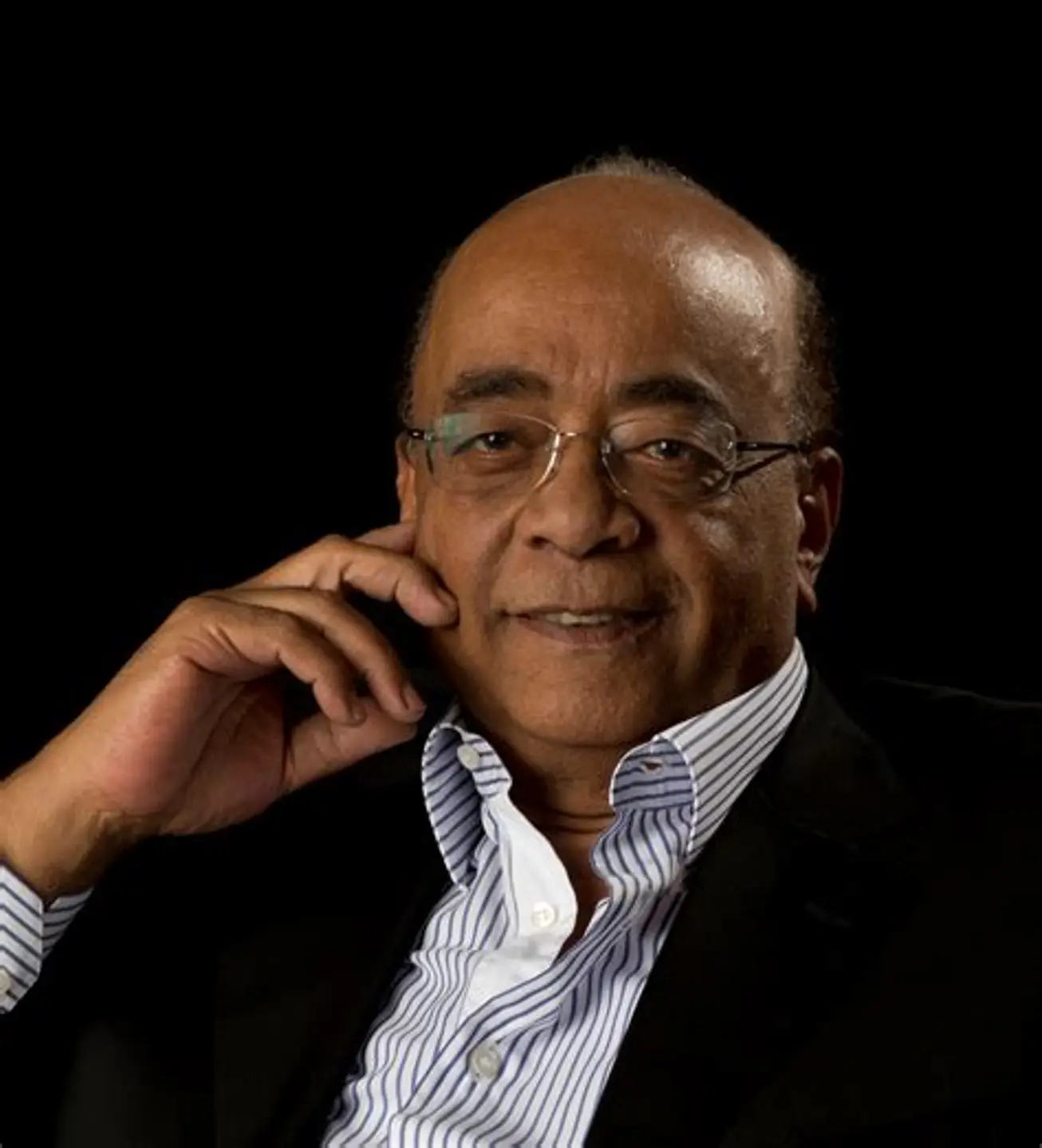
Sir Mohammed Fathi Ahmed Ibrahim, widely known as Mo Ibrahim, is a Sudanese-British billionaire businessman, engineer, and philanthropist recognized as one of Africa’s most influential technology pioneers. Renowned for transforming the continent’s telecommunications industry, Ibrahim built a successful career by expanding mobile connectivity across Africa through innovative business leadership and strategic investments.
After achieving remarkable success in the private sector, he dedicated his efforts to promoting good governance, accountable leadership, and sustainable development through the Mo Ibrahim Foundation. His groundbreaking contributions to telecommunications and public policy have earned him global recognition as a leading advocate for Africa’s progress. This article explores Mo Ibrahim’s biography, business career, net worth, achievements, philanthropy, and lasting legacy.
Born in Sudan and educated in Egypt and the United Kingdom, Ibrahim combined technical expertise with entrepreneurial vision. He founded Celtel, which brought mobile phones to millions in challenging markets, and sold the company for billions. His subsequent work focuses on leadership, accountability, and development in Africa. His story highlights the power of education, innovation, and commitment to public good.
Mo Ibrahim Early Life
Mo Ibrahim was born on 3 May 1946 in Sudan, of Nubian descent. He grew up as the second of five children, with four boys in the family. His father, Fathi, worked for a cotton company, and his mother, Aida, placed strong emphasis on education for all her children.
The family moved to Alexandria, Egypt, when Ibrahim was young. This relocation provided better opportunities. Nubian heritage connects him to a rich cultural tradition in northern Sudan and southern Egypt, known for resilience and community values. Sudan, his country of birth, features diverse ethnic groups and a complex history shaped by the Nile River, ancient civilizations, and modern challenges. Northern Sudan, where Nubian communities often reside, includes areas along the Nile with historical significance in trade and agriculture.
Life in Sudan during his early years reflected modest circumstances. His parents instilled discipline and the importance of learning. The move to Egypt exposed him to urban environments and stronger educational systems. These experiences shaped his determination and global outlook. He witnessed how access to opportunities could change lives, a theme that later defined his philanthropy. Growing up in a large family taught him collaboration and responsibility, skills useful in both business and leadership roles.
Mo Ibrahim Education
Mo Ibrahim pursued higher education with focus and ambition. He earned a bachelor’s degree in electrical engineering from Alexandria University in Egypt. This foundation in engineering equipped him with technical knowledge essential for his future career in telecommunications.
After completing his undergraduate studies, he returned briefly to Sudan in 1974 and worked for Sudan Telecom. This experience gave him direct insight into communication infrastructure challenges in Africa. He then moved to the United Kingdom for advanced studies. There, he obtained a master’s degree in Electronics and Electrical Engineering from the University of Bradford. He later completed a PhD in Mobile Communications at the University of Birmingham.
His academic journey combined practical experience with rigorous research. The PhD focused on mobile technologies, an emerging field at the time. This specialization positioned him at the forefront of an industry that would revolutionize global connectivity. Education played a central role in his success, and he often credits his mother’s insistence on learning. These years built not only technical expertise but also an understanding of international markets and innovation.
Mo Ibrahim Career
Mo Ibrahim began his professional journey in telecommunications with roles that built his expertise step by step. He worked for British Telecom and served as technical director for Cellnet, now known as O2. In that position, he contributed to launching the first cellular network in the United Kingdom. This early success demonstrated his ability to manage complex technical projects.
Founding of Mobile Systems International
In 1989, Ibrahim founded Mobile Systems International (MSI), a consultancy and software company specializing in cellular networks. The firm designed mobile networks for clients across Europe, the United States, and Asia. MSI grew rapidly due to demand for expertise in this expanding sector. In 2000, the Marconi Company acquired it. This venture established Ibrahim as a key player in global telecommunications.
Development of Celtel in Africa
In 1998, MSI spun off MSI-Cellular Investments, later renamed Celtel. This marked a pivotal shift toward Africa. Many international investors hesitated to enter African markets due to perceived risks. Ibrahim financed the venture largely through equity, avoiding heavy reliance on banks. Celtel aimed to provide mobile services in underserved regions.
The company expanded across multiple countries. By the time of its sale, Celtel operated in 14 African nations and served over 24 million subscribers. It employed around 4,000 people, with 98 percent being African. This approach created jobs and built local capacity. Mobile phones under Celtel improved economic activities, from market access for farmers to coordination for small businesses. Health services and education also benefited from better communication. Ibrahim and his team demonstrated that profitable businesses could thrive while delivering social impact in Africa.
In 2005, Celtel sold to Kuwait-based Mobile Telecommunications Company (now Zain) for approximately 3.4 billion dollars. This transaction highlighted the value of African markets and cemented Ibrahim’s reputation as a transformative entrepreneur. He showed that innovation tailored to local needs could succeed on a large scale.
Post-Celtel Business Activities
After the sale, Ibrahim did not retire from business. He serves as funding chairman of Satya Capital Limited, a private investment firm focused primarily on Africa. This entity supports promising opportunities across the continent. He has also backed initiatives like the Broadband Commission for Digital Development, a United Nations effort to expand internet access.
His career reflects a blend of engineering precision and strategic vision. From UK networks to pioneering African mobile markets, Ibrahim consistently identified gaps and filled them with practical solutions. His work challenged stereotypes about investing in Africa and encouraged others to see its potential.
Mo Ibrahim Foundation
Mo Ibrahim established the Mo Ibrahim Foundation in 2006. Headquartered in London and Dakar, the organization promotes good governance and exceptional leadership in Africa. It provides data-driven analysis and convenes stakeholders to address continental challenges.
The foundation emphasizes the provision of political, social, and economic public goods that citizens expect from governments. Its activities inform policy discussions and support Africa’s progress through evidence-based approaches.
Mo Ibrahim Prize for Achievement in African Leadership
In 2007, the foundation launched the Mo Ibrahim Prize for Achievement in African Leadership. This award recognizes former African heads of state who demonstrate outstanding governance, deliver security, health, education, and economic development, and ensure peaceful democratic transitions. The prize offers five million dollars over ten years, followed by two hundred thousand dollars annually for life. Recipients can also access additional funds for philanthropic work.
The first recipient was former Mozambican president Joaquim Chissano. Nelson Mandela received honorary recognition. Other laureates include leaders like Festus Mogae of Botswana and Mahamadou Issoufou of Niger. The prize highlights positive examples of leadership and incentivizes ethical governance. It addresses the challenge of attracting talented individuals to public service by providing financial security after tenure.
Ibrahim Index of African Governance
The foundation publishes the Ibrahim Index of African Governance every two years. This tool ranks the performance of all 54 African countries across key dimensions. It covers areas such as rule of law, human rights, economic opportunity, and sustainable development. The index serves as a benchmark for governments, citizens, and partners.
Data from the index sparks conversations on progress and gaps. It tracks trends over time and encourages accountability. The foundation uses it to foster dialogue during events like the Ibrahim Governance Weekend.
Mo Ibrahim Awards and Honours
Mo Ibrahim has received numerous awards for his contributions to business and philanthropy. These include the GSM Association Chairman’s Award for Lifetime Achievement in 2007 and The Economist Innovation Award for Social and Economic Innovation the same year. He earned the BNP Paribas Prize for Philanthropy in 2008 and the Clinton Global Citizen Award in 2010.
Other recognitions feature the Eisenhower Medal for Distinguished Leadership and Service in 2014, the Foreign Policy Association Medal in 2014, and the David Rockefeller Bridging Leadership Award in 2012 and 2017. African leaders honored him with titles such as Commander of the Order of the Lion from Senegal and Commander of the Wissam Arch from Morocco.
Time magazine named him among the 100 Most Influential People in the World in 2008. He appears on lists of influential Africans and Black Britons. In 2023, he received a knighthood as Knight Commander of the Order of St Michael and St George for services to charity and philanthropy. He holds honorary degrees from institutions including the University of Birmingham, University of Oxford, and others.
These honors reflect broad recognition of his impact on telecommunications, economic development, and governance advocacy.
Mo Ibrahim Views on Governance and Development
Ibrahim speaks frequently about the importance of strong institutions and accountable leadership in Africa. He argues that good governance drives sustainable progress and attracts investment. His foundation’s work provides tools for measuring and improving performance. He emphasizes that citizens deserve reliable public services and that leaders must prioritize long-term national interests over personal gain.
He highlights successes in countries that improved governance and notes challenges where progress stalls. His perspective combines optimism with realism, drawing from his business experience. Mobile technology, he notes, empowered people by connecting them to markets, information, and services. Similar innovations in governance can unlock potential. He supports youth involvement and data-driven decision making.
Mo Ibrahim Personal Life
Mo Ibrahim married Hania Morsi Fadl in 1973. She is a Sudanese-born British radiologist who established a breast cancer clinic in Sudan. The couple later divorced. They have two children, Hosh Ibrahim and Hadeel Ibrahim. Both serve on the board of the Mo Ibrahim Foundation. Hadeel also contributes to the Clinton Foundation.
He is currently married to Jane Ibrahim, and they have a son named Sami Ibrahim. The family maintains connections across cultures and continents. Ibrahim resides between London and Monaco. He joined The Giving Pledge, committing to donate at least half his wealth to charitable causes.
His personal values align with his professional efforts. Family emphasis on education influenced his path, and he extends similar opportunities through scholarships. The foundation offers programs at universities like Birmingham, SOAS, and London Business School for African students in development and governance fields.
Mo Ibrahim Philanthropy and Broader Impact
Beyond the foundation, Ibrahim supports various organizations. He participates in the B Team, Council on Foreign Relations, and other global initiatives. He co-founded the Africa-Europe Foundation in 2020 to strengthen relations between the two continents. His involvement spans climate discussions, digital inclusion, and justice projects.
His philanthropy focuses on systemic change rather than short-term aid. By investing in data, leadership prizes, and education, he aims to build capacity for self-sustained development. Celtel’s legacy continues through improved connectivity that supports entrepreneurship and social services across Africa.
Mo Ibrahim Legacy
Mo Ibrahim’s journey from Sudan to global influence illustrates the transformative power of education and vision. He pioneered mobile services in Africa when others hesitated, creating economic opportunities for millions. His foundation continues to shape conversations on leadership and governance. As an advocate, he challenges Africa and the world to prioritize excellence in public service.
His net worth, estimated around 1.3 billion dollars as of recent reports, funds ongoing efforts. Yet his true measure lies in the institutions built and the standards promoted. Future generations in Africa and beyond may draw inspiration from his example of turning technical knowledge into widespread benefit and using success for collective good.
Read Also: Ebiere Soberekon Biography: Age, State of Origin, Husband, Wedding Day, Career, Net Worth & Family
Conclusion
Mo Ibrahim stands as a figure whose career bridges business innovation and public service. From his Nubian roots in Sudan through pioneering telecommunications to founding influential governance initiatives, his contributions continue to resonate. His work encourages better leadership, data transparency, and investment in Africa’s potential. As challenges evolve, his emphasis on accountability and opportunity offers a lasting framework for progress.
FAQs
What is Mo Ibrahim full name and nationality?
Sir Mohammed Fathi Ahmed Ibrahim holds Sudanese-British nationality. He was born in Sudan and later became a British citizen.
When and where was Mo Ibrahim born?
He was born on 3 May 1946 in Sudan.
What companies did Mo Ibrahim found?
He founded Mobile Systems International and Celtel, a major mobile operator in Africa.
What is the Mo Ibrahim Prize?
It is a prestigious award given to former African heads of state who exemplify excellent leadership and democratic transition. The prize includes substantial financial support.
How does the Ibrahim Index of African Governance work?
The index ranks African countries on governance metrics and provides data for analysis and improvement.
Who are members of Mo Ibrahim family?
He has children from his first marriage, Hosh and Hadeel, and a son, Sami, with his current wife Jane.
What universities did Mo Ibrahim attend?
He studied at Alexandria University, University of Bradford, and University of Birmingham.
What is Mo Ibrahim current focus?
He focuses on the Mo Ibrahim Foundation, investments in Africa, and global advocacy for governance and development.