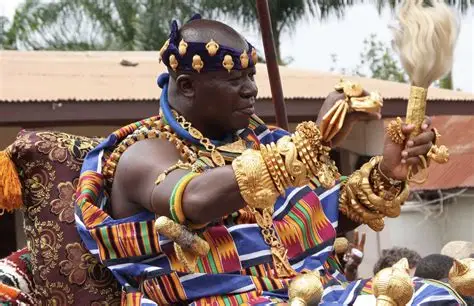
Otumfuo Nana Osei Tutu II, born Nana Barima Kwaku Duah, is the 16th Asantehene, the king of the Asante people and traditional ruler of the Asante Kingdom in Ghana. Widely recognized as one of Africa’s most respected monarchs, he has championed education, cultural preservation, peacebuilding, and national development while safeguarding the rich heritage of the Asante Kingdom.
As the custodian of the Golden Stool, the sacred symbol of Asante unity and authority, he has strengthened the global influence of the Asante monarchy since his enstoolment on April 26, 1999. A direct descendant of Otumfuo Osei Tutu I, the founder of the Asante Empire, he continues to combine centuries of royal tradition with modern leadership. This article explores Otumfuo Osei Tutu II’s biography, early life, coronation, reign, achievements, personal life, and enduring legacy.
His reign has blended deep respect for Asante traditions with forward-looking initiatives in education, health, peacebuilding, and economic development. Otumfuo Nana Osei Tutu II has earned recognition as a national and international figure for resolving conflicts, supporting community growth, and strengthening cultural identity in Ghana and beyond. His leadership emphasizes service, unity, and progress, making him a respected voice in both traditional and contemporary affairs.
Otumfuo Nana Osei Tutu II Early Life
Otumfuo Nana Osei Tutu II was born on 6 May 1950 in Kumasi, in the Ashanti Region of what was then the Gold Coast, now Ghana. His birth name was Nana Barima Kwaku Duah. He is the youngest of five children, the third son of Nana Afia Kobi Serwaa Ampem II, who later became the Asantehemaa (Queen Mother of Asante), and Nana Kwame Boakye-Dankwa, from Kantinkyere in the Atwima District, who served as Brehyia Duke of Asante.
His family ties place him firmly within the Oyoko Royal Dynasty. He was named after his paternal grandfather, Ohenenana Kwaku Duah (Nana Agari), the Brahyiahene. Some of his siblings included Nana Ama Konadu (who became the current Asantehemaa, Nana Konadu Yiadom III), and others who have passed away. His father had additional children from other marriages.
From around the age of five, he moved into the royal household of his uncle, Oheneba Mensah Bonsu, the Hiahene, who had been enstooled in 1952. This arrangement provided careful grooming in Asante customs, leadership, statecraft, and royal conduct. Such early preparation ensured he understood the responsibilities of the throne from a young age. His upbringing instilled values of diplomacy, reconciliation, and service to the community.
The Ashanti Region, his state of origin, forms the heart of the Asante Kingdom. Centered in Kumasi, it features rich history, vibrant culture, and the legacy of the Asante Empire, known for its military prowess, gold wealth, and sophisticated governance. The region remains a cultural and economic hub in Ghana, with strong traditional institutions that continue to influence national life. Otumfuo Nana Osei Tutu II’s roots in this area tie him closely to the land, people, and heritage he now leads.
Otumfuo Nana Osei Tutu II Education
Otumfuo Nana Osei Tutu II received his early education in Kumasi. In 1964, he attended Sefwi Wiawso Secondary School in the Western Region, where he obtained his O-Level certificate. The Omanhene of Sefwi Wiawso, Nana Kwadwo Aduhene II, a cousin of his guardian uncle, provided additional guidance during this period.
He returned to Kumasi and completed his A-Levels at Osei Kyeretwie Secondary School (OKESS) in 1969. In 1971, he studied accountancy at the Institute of Professional Studies (IPS) in Accra, now the University of Professional Studies, Accra (UPSA). He continued his studies in the United Kingdom at Kilburn Polytechnic and later at the University of North London (now London Metropolitan University), where he earned qualifications in Human Resource Management and Public Administration.
In recognition of his contributions, he has received several honorary doctorates, including one from London Metropolitan University in 2006 at the Barbican Centre. These academic experiences equipped him with professional skills that later informed his leadership approach, combining traditional wisdom with modern management principles.
Otumfuo Nana Osei Tutu II Professional Career Before Enstoolment
Before ascending the Golden Stool, Otumfuo Nana Osei Tutu II built a successful career in the private sector. Between 1981 and 1985, he worked as a senior consultant with Mutual of Omaha Insurance Company in Toronto, Canada. He then returned to London, serving as Personnel Manager at the Manpower Services Commission of the Brent Council and in other roles, including with HPCC.
He founded Primoda Financial Services Limited, a mortgage brokerage firm in London. In 1989, he returned to Ghana and established Transpomech International (Ghana) Limited, a transport business. These experiences gave him international exposure, financial expertise, and practical knowledge of management and entrepreneurship, which have shaped his development initiatives as Asantehene.
Otumfuo Nana Osei Tutu II Ascension to the Throne
Otumfuo Nana Osei Tutu II was enstooled as the 16th Asantehene on 26 April 1999, succeeding his uncle Otumfuo Opoku Ware II. The ceremony was a grand display of Asante culture, drawing thousands to Kumasi. As custodian of the Golden Stool, he assumed the role of spiritual and political leader of the Asante people.
His early years on the throne focused on resolving internal disputes and strengthening traditional governance within Asanteman.
Otumfuo Nana Osei Tutu II Leadership and Governance
Otumfuo Nana Osei Tutu II has worked to modernize aspects of chieftaincy while preserving core traditions. He has settled numerous land and chieftaincy disputes in Asanteman, often through his court at Manhyia Palace rather than formal litigation. This approach has brought stability and earned him the title “King Solomon” among his people for his wisdom and fairness.
He has destooled sub-chiefs for offenses such as corruption or illegal land sales, setting clear standards of accountability. His governance style emphasizes reconciliation, development, and collaboration with state institutions.
Otumfuo Nana Osei Tutu II Contributions to Peace and Conflict Resolution
One of the most notable aspects of his reign is his role as a peacemaker. In 2002, he chaired the Committee of Eminent Chiefs appointed by President John Agyekum Kufuor to resolve the long-standing Dagbon chieftaincy crisis in northern Ghana. The committee, which included other prominent traditional leaders, facilitated dialogue between the Abudu and Andani gates. After years of mediation spanning multiple administrations, the process led to the performance of funerals and the enskinment of a new Ya-Na in 2019, restoring peace to Dagbon.
He has also contributed to mediation efforts in other areas, including Bawku. His work has helped maintain national stability and earned him the Pillar of Peace Award. Otumfuo Nana Osei Tutu II has promoted the Kumasi Declaration, where political leaders committed to peaceful elections.
Otumfuo Nana Osei Tutu II Education Initiatives and the Otumfuo Osei Tutu II Foundation
Education has been a cornerstone of his leadership. Shortly after enstoolment, he established the Otumfuo Education Fund, which evolved into the Otumfuo Osei Tutu II Foundation in 2009. The Foundation operates in areas including education, health, water and sanitation, culture and heritage, and entrepreneurship.
By various reports, the Education Fund has supported hundreds of thousands of students with scholarships, bursaries, infrastructure, and materials. It has helped build and renovate hundreds of classroom blocks, provided desks, textbooks, and other supplies across Ghana, with a focus on deprived areas. Partnerships with organizations like the World Bank have amplified these efforts. The Foundation continues projects such as building dormitories and supporting STEM education.
Otumfuo Nana Osei Tutu II Health and Community Development Projects
The Foundation’s health initiatives include support for reducing maternal and infant mortality, fighting diseases like Buruli ulcer and glaucoma, and mobile dental outreach programs. Projects have reached many communities with screenings, infrastructure, and awareness campaigns.
Water and sanitation efforts have improved access in rural areas. Community development includes income-generating projects and environmental initiatives, such as tree planting around Lake Bosomtwe to protect water bodies and combat climate change.
Otumfuo Nana Osei Tutu II Cultural Preservation and Heritage Efforts
Otumfuo Nana Osei Tutu II has strongly promoted Asante and Ghanaian culture. He supports the return of looted artifacts and has launched initiatives like the Otumfuo Osei Tutu II Art Awards in partnership with UNESCO to celebrate artists and preserve heritage. The Manhyia Palace Museum plays a key role in these efforts.
He encourages youth engagement with traditions while adapting to contemporary realities, including through cultural initiatives and tourism promotion.
Otumfuo Nana Osei Tutu II Awards and Recognitions
Otumfuo Nana Osei Tutu II has received numerous honors, including honorary doctorates from institutions in Ghana, the UK, the US, and Nigeria. He holds positions such as Chancellor of Kwame Nkrumah University of Science and Technology (KNUST). He is Grand Patron of the Grand Lodge of Ghana and Sword Bearer of the United Grand Lodge of England. He received the Pillar of Peace Award and other national and international commendations for leadership and philanthropy.
Otumfuo Nana Osei Tutu II Personal Life
Otumfuo Nana Osei Tutu II married Lady Julia Osei Tutu (née Julia Ama Adwapa Amaning) in April 2002 in a traditional ceremony in Kumasi. Lady Julia, a lawyer by training, supports the Foundation’s work, particularly through the Serwaa Ampem Foundation for Children, and serves as a pillar in family and charitable activities.
They have children together, including Nana Afia Kobi Serwaa Ampem and Nana Kwame Kyeretwie, and maintain a relatively private family life consistent with royal customs. He is known to enjoy golf and remains active in the sport.
Read Also: Ebiere Soberekon Biography: Age, State of Origin, Husband, Wedding Day, Career, Net Worth & Family
Conclusion
Otumfuo Nana Osei Tutu II continues to lead the Asante Kingdom with a balance of tradition and modernity. His focus on education, health, peace, and culture has created lasting positive change for many in Ghana. As custodian of the Golden Stool, he upholds a rich legacy while addressing present-day needs, inspiring respect across communities and borders.
FAQs
What is the full name and title of Otumfuo Nana Osei Tutu II?
His full title is Otumfuo Nana Osei Tutu II, the 16th Asantehene.
When and where was Otumfuo Nana Osei Tutu II born?
He was born on 6 May 1950 in Kumasi, Ashanti Region, Ghana.
What is the role of the Asantehene?
The Asantehene is the king and traditional ruler of the Asante people, custodian of the Golden Stool, and a key figure in cultural, social, and developmental matters.
How has Otumfuo Nana Osei Tutu II contributed to education in Ghana?
Through the Otumfuo Education Fund and Foundation, he has provided scholarships, built school infrastructure, and supported thousands of students nationwide.
What major peace initiative did Otumfuo Nana Osei Tutu II lead?
He chaired the Committee of Eminent Chiefs that resolved the Dagbon chieftaincy crisis, leading to peace in the region.
Who is the wife of Otumfuo Nana Osei Tutu II?
He is married to Lady Julia Osei Tutu, who actively supports charitable and cultural initiatives.