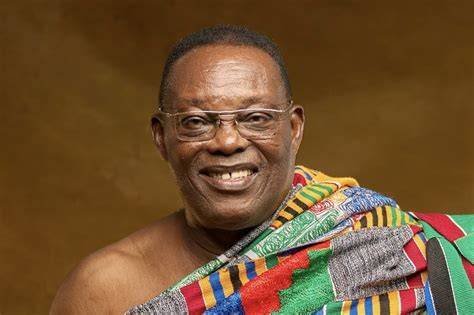
Kwaa Mensah was a pioneering Ghanaian guitarist, composer, and recording artist widely regarded as the godfather of palm wine highlife music. Celebrated for his innovative guitar style and timeless compositions, he played a defining role in the evolution of Ghanaian highlife and influenced generations of musicians across West Africa.
Born in Lagos and raised in the historic coastal city of Cape Coast, Mensah blended traditional musical traditions with the emerging guitar band sound, helping to shape one of Africa’s most enduring music genres. His remarkable career, which spanned more than five decades, established him as one of Ghana’s most influential highlife musicians. This article explores Kwaa Mensah’s biography, music career, achievements, legacy, and lasting impact on African music.
Through hundreds of recordings, live performances, and later teaching, Kwaa Mensah preserved and popularized a gentle, acoustic form of highlife rooted in everyday life, storytelling, and the rhythms of the coastal communities. His music reached both rural audiences and international listeners, and his influence continues to be felt in the revival of palm wine styles today.
Kwaa Mensah Early Life
Kwaa Mensah was born in September 1920 in Lagos, Nigeria. Although his birth took place outside the Gold Coast, he was brought up in Cape Coast, the coastal city that became the center of his personal and musical life. Cape Coast, known locally as Oguaa, lies in what is now the Central Region of Ghana. It has long been a major settlement of the Fante people, an Akan group whose history is closely tied to trade, education, and cultural exchange along the Gulf of Guinea.
The Fante people occupy the forest and coastal areas of southern Ghana, with major towns including Cape Coast, Elmina, Anomabo, and Mankessim. Their society developed through a combination of Akan migration and earlier Guan communities. Cape Coast itself grew into an important commercial and administrative center during the era of European trade.
Fortresses such as Cape Coast Castle stood as visible reminders of that history, while the surrounding communities maintained strong traditions of music, dance, and storytelling. Fishing, farming, and craftsmanship shaped daily life, and music was woven into festivals, social gatherings, and work songs.
Growing up in this environment, young Kwaa absorbed the sounds of local ensembles. His uncle, Kwame Asare, also known as Jacob Sam or simply Sam, was a goldsmith from Cape Coast and one of the earliest highlife guitarists in Ghana. Asare had traveled to London in 1928 and recorded for Zonophone, becoming the first Ghanaian musician to make commercial recordings.
He played a two finger guitar style influenced by Kru fishermen from Liberia and Sierra Leone, blending it with local melodies. This style formed the foundation of palm wine music, named after the gatherings where people drank palm wine and listened to guitarists in bars and courtyards.
Kwaa learned guitar directly from his uncle. By the 1930s he was already performing in Cape Coast. He joined adaha bands, which featured flutes, fifes, and brass band drums playing an early form of highlife. In the 1940s he moved into konkoma groups. Konkoma was a lively style known for complex, drill like dances performed in fancy dress. These experiences gave him a deep understanding of both the melodic and rhythmic sides of Ghanaian popular music before he formed his own groups.
Kwaa Mensah Education
Formal schooling details for Kwaa Mensah are limited in available records. Like many musicians of his generation in the Gold Coast, his primary education came through practical apprenticeship rather than long years in the classroom. The most important teacher in his life was his uncle Kwame Asare, who passed on the techniques of palm wine guitar playing. This included the distinctive two finger plucking style, the use of open tunings suited to local melodies, and the ability to accompany singing in Fante and other languages.
Cape Coast itself was an educational center. Mission schools and later government institutions had been established there for decades, and the city later became home to the University of Cape Coast. Kwaa’s later teaching career shows that he developed a systematic way of passing on knowledge.
In his mature years he taught guitar at the Music Department of the University of Cape Coast and at the School of Performing Arts at the University of Ghana in Legon. These appointments indicate that he had mastered both the practical and theoretical sides of the music well enough to instruct university students.
His education was therefore rooted in oral tradition, family transmission, and continuous performance practice. He learned by watching, playing, and adapting. This approach was common among the first generation of highlife guitarists and helped keep the music closely connected to everyday language and experience.
Kwaa Mensah Career
Kwaa Mensah’s professional path unfolded in clear stages that mirrored the development of Ghanaian popular music itself.
Early Band Experience
In the 1930s and 1940s he performed with adaha and konkoma ensembles in Cape Coast. These groups mixed European brass band instruments with local rhythms and prepared him for the guitar band era that followed. He became known for introducing the guitar into konkoma settings, where brass instruments had previously taken the lead.
Formation of His Own Groups
Around 1950 he formed Kwaa Mensah’s Band. In 1951 or 1952 he recorded his first single for His Master’s Voice. The group quickly gained popularity. By the mid 1950s he had expanded the format, following the example of E.K. Nyame, and added concert party elements. Concert party was a theatrical form that combined music, comedy, and drama.
Kwaa often played the female role, a common practice in the tradition. He renamed the group the Fanti Trio. The band appealed strongly to less westernized and rural audiences. By the early 1960s he had released around two hundred records. Overall estimates place his total output of 78 rpm discs at more than five hundred. These recordings made him a household name across Ghana and neighboring territories.
Peak Recording Years and Style
His music stayed true to the palm wine aesthetic: acoustic guitar, simple percussion, and clear, storytelling vocals. Songs often addressed love, social observation, and daily life. Titles such as Odo Me Me Sum Do No, Obra Ye Ku, Kalabule, and Mami Wata became well known. The gentle, flowing guitar lines and Fante language lyrics gave the music an intimate quality that distinguished it from the louder, more urban dance band highlife of the same period.
Later Career and Revival
During the 1960s and early 1970s electric guitar bands and other styles pushed acoustic palm wine music somewhat into the background. Kwaa’s popularity dipped, yet he continued working. In 1975 he recorded a long playing album for Ambassador Records of Ghana, sometimes referred to as Wawo Christo.
The same year he toured the United States supporting the group Wulomei. This exposure helped renew interest in his work. Numerous cassette albums followed in the years after. In the final decade of his life he combined performance with teaching at the University of Cape Coast and the University of Ghana.
Kwaa Mensah Musical Style and Contributions
Palm wine highlife is an acoustic form that grew in the ports and coastal towns of Ghana. It drew on the two finger guitar technique of Kru seamen, local Akan melodies, and the social atmosphere of palm wine bars. Kwaa Mensah became its most celebrated exponent. He kept the instrumentation light, focusing on guitar, voice, and minimal percussion. The result was music that felt conversational and close to the listener.
His contribution was both creative and archival. By recording hundreds of sides he documented a style that might otherwise have remained local and unrecorded. He also helped move the guitar from a supporting role into the center of the ensemble. Later musicians who revived palm wine music, including artists associated with the Vintage Palmwine compilation, looked back to his recordings as a primary source.
Kwaa Mensah Notable Songs and Albums
Among the best known tracks associated with him are Odo Me Me Sum Do No, Obra Ye Ku, Kalabule, Mami Wata, and pieces such as Sokoo Na Maa Mope recorded with the Fanti Trio around 1975. His early output consisted mainly of 78 rpm singles. Later releases included the 1975 long playing record for Ambassador Records and various cassette albums. Posthumous compilations such as Vintage Palmwine have kept selected tracks in circulation for new listeners.
Kwaa Mensah Awards and Recognition
In 1990 the National Commission on Culture organized a Highlife Awards Night at which Kwaa Mensah received an award. This formal recognition came near the end of his life and acknowledged decades of contribution to Ghanaian music. Beyond the official prize, his status as the king or godfather of palm wine highlife reflects the respect he earned from fellow musicians and audiences.
Kwaa Mensah Teaching and Mentorship
After years of performing, Kwaa Mensah turned part of his energy toward education. He taught guitar at the Music Department of the University of Cape Coast and at the School of Performing Arts at the University of Ghana, Legon. These roles allowed him to pass technical skills and stylistic understanding to younger players. His presence in academic settings helped give institutional recognition to a music that had begun in bars and community gatherings.
Kwaa Mensah Personal Life
Public records focus mainly on Kwaa Mensah’s musical activities. Details about marriage, children, or private family life are scarce. What is clear is that Cape Coast remained his home base throughout his adult years. He maintained strong ties to the Fante cultural environment that had shaped him. His long association with the University of Cape Coast further rooted him in the city where he grew up. He died in Cape Coast on 22 February 1991.
Kwaa Mensah Legacy in Ghanaian Music
Kwaa Mensah occupies a central place in the history of Ghanaian highlife. While dance band leaders such as E.T. Mensah brought the style to international dance floors, Kwaa kept the quieter, acoustic strand alive. His recordings preserve the sound of mid twentieth century coastal Ghana. Later generations of guitarists and researchers have returned to his work when seeking the roots of palm wine music. Compilations and academic studies continue to cite him as a key figure. The revival of interest in acoustic highlife in recent decades owes much to the foundation he helped build.
Read Also: Ebiere Soberekon Biography: Age, State of Origin, Husband, Wedding Day, Career, Net Worth & Family
Conclusion
Kwaa Mensah’s life traced a clear path from a childhood in Cape Coast under the guidance of his uncle to a long career as performer, recording artist, and teacher. Born in Lagos in September 1920 and raised among the Fante people of the Central Region, he became the leading voice of palm wine highlife. Through more than five hundred recordings, concert party performances, international tours, and university teaching, he left a body of work that remains a reference point for anyone interested in the acoustic roots of Ghanaian popular music. His death in 1991 closed a chapter, yet the gentle guitar lines and storytelling songs he created continue to speak to new audiences.
FAQs
Who was Kwaa Mensah?
Kwaa Mensah was a Ghanaian guitarist, singer, and composer widely regarded as the leading figure in palm wine highlife music. He was born in Lagos in 1920, raised in Cape Coast, and died there in 1991.
Where was Kwaa Mensah born and raised?
He was born in Lagos, Nigeria, in September 1920 and brought up in Cape Coast in the Central Region of Ghana, the historic home of the Fante people.
What is palm wine highlife?
Palm wine highlife is an acoustic style of highlife that developed in coastal Ghana. It features guitar, voice, and light percussion and takes its name from the social settings where people drank palm wine and listened to music.
How many recordings did Kwaa Mensah make?
He is credited with more than five hundred 78 rpm records by the early 1960s, along with later long playing records and cassette albums.
Did Kwaa Mensah teach music?
Yes. In his later years he taught guitar at the Music Department of the University of Cape Coast and at the School of Performing Arts at the University of Ghana in Legon.
What award did Kwaa Mensah receive?
In 1990 he received an award at the Highlife Awards Night organized by the National Commission on Culture.
When did Kwaa Mensah die?
He died on 22 February 1991 in Cape Coast, Ghana.