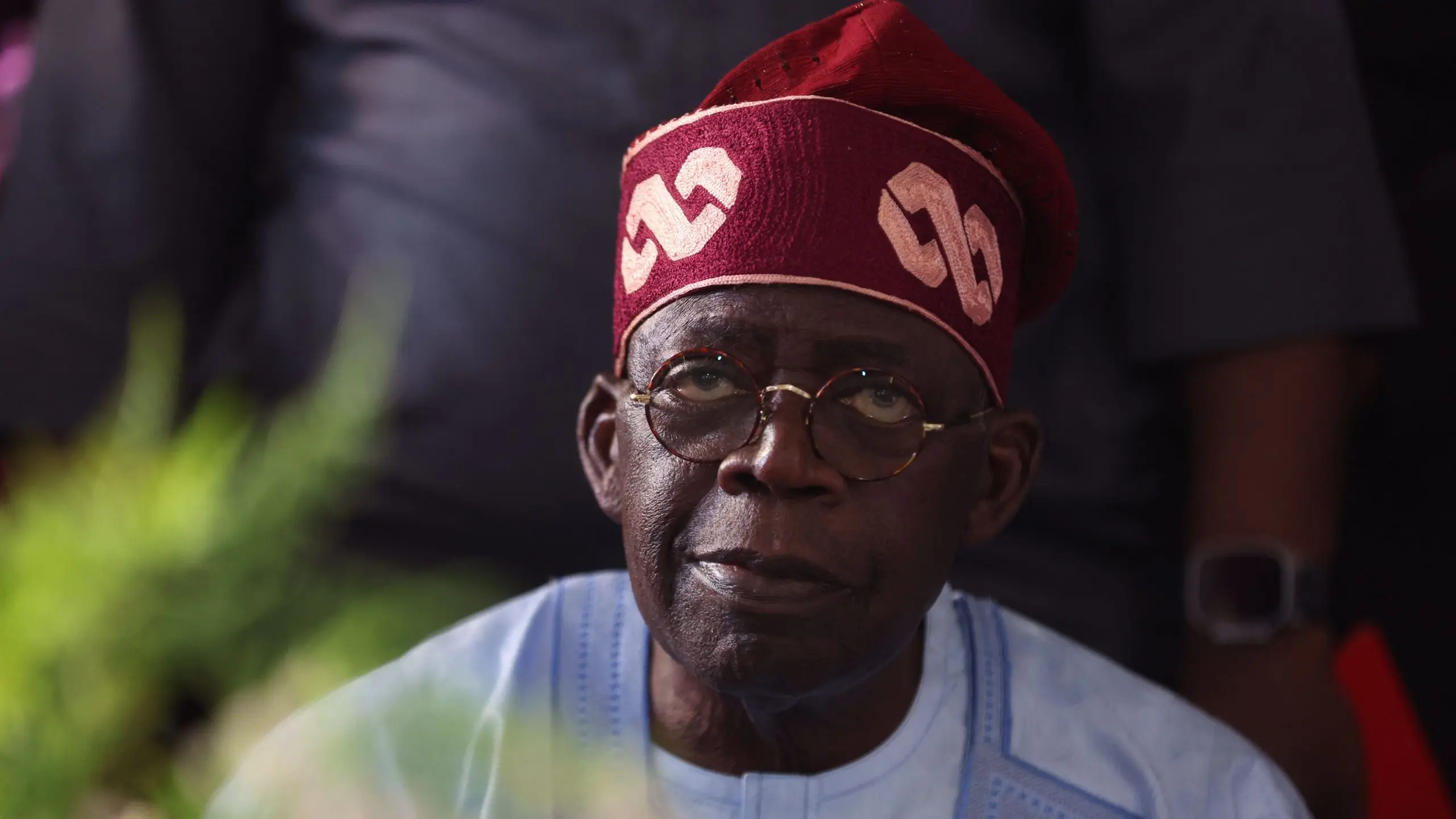
Bola Ahmed Adekunle Tinubu is a Nigerian politician, accountant, and statesman serving as the 16th President of the Federal Republic of Nigeria. Widely recognized as one of the country’s most influential political leaders, Tinubu has played a central role in shaping Nigeria’s democratic and electoral landscape through decades of public service, political strategy, and party leadership.
Born in Lagos State, he built an extensive career that spans the Nigerian Senate, two terms as Governor of Lagos State, and the leadership of political movements that transformed national politics before assuming the presidency on May 29, 2023. His enduring influence continues to shape governance, economic policy, and democratic development in Nigeria. This article explores Bola Tinubu’s biography, political career, achievements, personal life, and lasting legacy.
Born into a Yoruba Muslim family in Lagos, Tinubu rose from corporate finance roles in the United States and Nigeria to become one of the most influential figures in the nation’s Fourth Republic. His journey reflects a blend of professional expertise, resilience during periods of military rule, and a sustained focus on governance reforms, particularly in Lagos State, where his administration left a lasting imprint on urban development and fiscal management. This biography traces his life from early years through education, career milestones, personal experiences, and his ongoing leadership of Africa’s most populous country.
Bola Ahmed Tinubu Early Life
Bola Ahmed Adekunle Tinubu was born on 29 March 1952 in Lagos, then part of British Nigeria. He comes from a Muslim family of the Yoruba ethnic group, one of the major ethnic nationalities in southwestern Nigeria. His mother, Abibatu Mogaji, was a well known merchant and later held the traditional position of Ìyál’ọ́jà of Lagos, a respected market leader role that carried significant community influence. Growing up in Lagos during the late colonial and early independence periods exposed him to the vibrant commercial and cultural life of the city, which would later become central to his political identity.
Tinubu spent his formative years in southwestern Nigeria. The environment of Lagos, with its mix of traditional Yoruba customs, Islamic faith practices within his family, and the growing urban energy of the time, shaped his early outlook. Reliable accounts place his birth and early childhood in Lagos, though some political discussions over the years have raised questions about family roots in other parts of the southwest, including references to Osun State. Official and widely accepted biographical records consistently identify Lagos as his place of birth and the setting of his childhood.
His early education began at St. John’s Primary School in Aroloya, Lagos. He later continued at Children Home School in Ibadan. These years provided a foundation in basic academics while he lived within the cultural and commercial networks of the Yoruba southwest. The period of Nigerian independence in 1960 and the subsequent challenges of nation building formed the broader backdrop of his youth. By the mid 1970s he made the decision to travel to the United States for higher education, a step that marked a significant transition from his Lagos roots to international exposure.
Bola Ahmed Tinubu Education
After completing his early schooling in Nigeria, Tinubu moved to the United States in 1975 to pursue university studies. He first attended Richard J. Daley College in Chicago, formerly known as Southwest College. From there he transferred to Chicago State University, where he focused on accounting and management within a business administration program.
While studying, he supported himself through various jobs, including work as a dishwasher, night security guard, and taxi driver. These experiences reflected the determination required to complete higher education as an international student. At Chicago State University he performed strongly academically, making the dean’s list and serving as president of the university accounting society in his senior year. He also taught remedial tutorials that classmates later credited with helping improve their performance.
Tinubu graduated in 1979 with a Bachelor of Science degree in Business Administration, earning summa cum laude honors and a cumulative grade point average of 3.54. Accounting formed the core of his academic focus, equipping him with skills that would define his early professional path.
This American education provided both technical knowledge in finance and exposure to corporate systems that later influenced his approach to public administration in Nigeria. The combination of rigorous study and practical work experience during those years laid the groundwork for his subsequent roles in major accounting and oil companies.
Bola Ahmed Tinubu Career
Tinubu’s professional life began in the corporate sector before transitioning fully into politics. After graduating from Chicago State University, he worked as an accountant for several American firms. These included Arthur Andersen, Deloitte, and GTE Services Corporation. At Deloitte he gained experience in auditing and management consultancy for large corporations. He also served as a consultant for a joint venture linked to Saudi Aramco, helping establish accounting and auditing systems that contributed to an early financial success.
He later moved to London and was recruited as an auditor for Mobil Oil UK. In the 1980s he returned to Nigeria and joined Mobil Producing Nigeria Unlimited, rising through the ranks to the position of Treasurer. This role at one of the major oil companies operating in the country marked the peak of his corporate career and provided both financial independence and practical insight into large scale organizational management.
Early Political Involvement
Tinubu entered politics in the early 1990s. He joined the Social Democratic Party and actively supported the presidential candidacy of Moshood Kashimawo Abiola. In 1992 he was elected to the Nigerian Senate to represent the Lagos West Senatorial District during the short lived Third Republic. In the Senate he chaired the Committee on Banking, Finance, Appropriation, and Currency.
The annulment of the 12 June 1993 presidential election and the subsequent military takeover under General Sani Abacha ended that democratic experiment. Tinubu became a founding member of the National Democratic Coalition, known as NADECO, which campaigned for the restoration of democracy and recognition of the election results. His activism led to arrests, detentions, and threats, forcing him into exile in 1994. From abroad he continued pro democracy efforts until the death of Abacha in 1998 allowed a return to Nigeria and the transition to the Fourth Republic.
Bola Ahmed Tinubu as Governor of Lagos State
In the 1999 elections that ushered in civilian rule, Tinubu contested and won the governorship of Lagos State on the platform of the Alliance for Democracy. He defeated other candidates in the party primaries and then secured a decisive victory in the general election. He was re elected in 2003, becoming the only Alliance for Democracy governor to retain office in the southwest amid a broader shift toward the People’s Democratic Party.
During his eight years in office from 29 May 1999 to 29 May 2007, Tinubu focused on fiscal reforms, infrastructure, and urban management. His administration improved tax collection systems, increasing the state’s internally generated revenue and reducing dependence on federal allocations. He initiated road construction projects to address the needs of a rapidly growing population and introduced measures aimed at improving the living environment. One notable area of work involved public transportation planning to ease congestion in the commercial capital.
Tinubu also created additional Local Council Development Areas to better serve the large population of Lagos. This move led to a prolonged dispute with the federal government under President Olusegun Obasanjo, which withheld local government funds. A Supreme Court ruling eventually supported the state’s position and ordered the release of the funds.
His tenure saw recognition for leadership in governance, including awards such as Best Governor in Nigeria for 2000 by the Nigerian Belgian Chamber of Commerce, the Y2002 Best Practices Prize from the Federal Ministry of Works and the UN Habitat Group for improving living conditions, and the Y2000 Best Computerized Government in Nigeria Award from the Computer Association of Nigeria. Abia State University conferred an honorary Doctor of Law degree on him for contributions to democracy and good governance.
He left office in 2007, handing over to his successor and former chief of staff, Babatunde Fashola.
Political Strategy and Party Building
After leaving the governorship, Tinubu remained a central figure in opposition politics. He helped form the Action Congress, later known as the Action Congress of Nigeria. In 2013 he played a leading role in the merger of several opposition parties, including the Action Congress of Nigeria, the Congress for Progressive Change, the All Nigeria Peoples Party, and factions of other groups, to create the All Progressives Congress. This new party became the main challenger to the long ruling People’s Democratic Party.
Tinubu supported Muhammadu Buhari as the All Progressives Congress presidential candidate in 2015. The party’s victory that year marked the first time an incumbent Nigerian president lost re election to an opposition candidate. He continued to support Buhari’s successful re election campaign in 2019. Throughout this period Tinubu was widely regarded as a key strategist and influencer within the party, helping shape its direction and candidate selection processes.
Path to the Presidency
On 10 January 2022 Tinubu formally declared his intention to seek the presidency. At the All Progressives Congress national convention in June 2022 he secured the party’s nomination with a strong majority of votes, defeating other contenders including then Vice President Yemi Osinbajo and Rotimi Amaechi. In the presidential election held on 25 February 2023 he emerged as the winner with nearly 37 percent of the votes.
The Independent National Electoral Commission declared him the victor, and after legal challenges from opponents the results were upheld by the election tribunal and the Supreme Court. He was inaugurated as the 16th President of Nigeria on 29 May 2023, with Kashim Shettima as Vice President.
Since assuming office Tinubu has pursued economic reforms, including the removal of fuel subsidies and adjustments to the exchange rate system. His administration has set targets for economic growth, including a goal of reaching a one trillion dollar gross domestic product by 2030, and has introduced tax and fiscal policy changes aimed at improving the business environment. He also holds the position of Minister of Petroleum Resources.
Bola Ahmed Tinubu State of Origin and Heritage
Tinubu’s roots lie in Lagos State in southwestern Nigeria. Lagos is the commercial hub of the country and a major center of Yoruba culture. The Yoruba people form the predominant ethnic group in the southwest, known for rich traditions in trade, governance, arts, and communal organization. As a Muslim from a Yoruba family, Tinubu grew up within a cultural setting that combined Islamic practices with indigenous Yoruba customs.
His mother Abibatu Mogaji’s role as Ìyál’ọ́jà of Lagos placed the family within the influential merchant and traditional leadership networks of the city. This background connected him early to the economic and social life of Lagos.
While some public discussions have referenced possible family links to towns in Osun State, such as Iragbiji, the consistent record from official biographies and major reference sources identifies Lagos as his place of birth and the primary setting of his upbringing. The southwestern region, with its history of progressive politics and commercial enterprise, has remained central to his political base and identity throughout his career.
Bola Ahmed Tinubu Awards
Tinubu has received recognition for his contributions to governance and democracy. As President he holds the national honor of Grand Commander of the Order of the Federal Republic.
During his time as Governor of Lagos State he received the Best Governor in Nigeria award for 2000 from the Nigerian Belgian Chamber of Commerce, the Y2002 Best Practices Prize for improving the living environment from the Federal Ministry of Works and the UN Habitat Group, and the Y2000 Best Computerized Government in Nigeria Award from the Computer Association of Nigeria.
Abia State University awarded him an honorary Doctor of Law degree in recognition of his work on democracy, good governance, and national development.
He also holds traditional titles, including Asiwaju of Lagos and Jagaba of the Borgu Emirate in Niger State. These honors reflect both formal institutional recognition and traditional acknowledgment of his standing within Nigerian society.
Bola Ahmed Tinubu Personal Life
Tinubu married Oluremi Tinubu, commonly known as Remi, in 1987. She is a Christian from Ogun State and has pursued her own political career, serving as a senator representing Lagos Central and later as First Lady of Nigeria. The couple have three children together: Zainab Abisola Tinubu, Habibat Tinubu, and Olayinka Tinubu. Tinubu also has three children from previous relationships: Kazeem Olajide Tinubu, who passed away in London on 31 October 2017; Folashade Tinubu; and Oluwaseyi Tinubu, often referred to as Seyi.
His mother Abibatu Mogaji died on 15 June 2013 at the age of 96. The family maintains a presence in public life, with various members involved in business, politics, and community activities. Tinubu’s personal life has remained relatively private compared to his public roles, though family events and milestones occasionally appear in national coverage.
Read Also: Ebiere Soberekon Biography: Age, State of Origin, Husband, Wedding Day, Career, Net Worth & Family
Conclusion
Bola Ahmed Adekunle Tinubu’s life story moves from a Lagos childhood and American education through corporate success, democratic activism, transformative state governance, and national political leadership. As President of Nigeria he continues to navigate the complex demands of economic reform, security, and national unity in a diverse and dynamic country.
His career illustrates the intersection of professional expertise, political strategy, and persistence across decades of change in Nigeria’s democratic journey. The legacy of his years in Lagos and his role in building the All Progressives Congress remain central to understanding contemporary Nigerian politics, while his current tenure shapes the ongoing direction of the nation.
FAQs
What is the full name of Bola Tinubu?
His full name is Bola Ahmed Adekunle Tinubu. He is also widely known by the traditional title Asiwaju.
When and where was Bola Tinubu born?
He was born on 29 March 1952 in Lagos, British Nigeria, now the Federal Republic of Nigeria.
What is Bola Tinubu’s educational background?
He attended St. John’s Primary School in Aroloya, Lagos, and Children Home School in Ibadan. He later studied at Richard J. Daley College in Chicago and graduated from Chicago State University in 1979 with a Bachelor of Science in Business Administration, focusing on accounting, with summa cum laude honors.
What positions has Bola Tinubu held in Nigerian politics?
He served as Senator for Lagos West from 1992 to 1993, Governor of Lagos State from 1999 to 2007, and has been President of Nigeria since 29 May 2023. He also played a major role in the formation of the All Progressives Congress.
Who is Bola Tinubu’s wife?
He is married to Oluremi Tinubu, known as Remi Tinubu, who is the current First Lady of Nigeria and a former senator.
How many children does Bola Tinubu have?
He has six children in total. Three are with his wife Oluremi Tinubu, and three are from previous relationships. One of his sons, Olajide, passed away in 2017.
What is Bola Tinubu’s state of origin?
He is from Lagos State in southwestern Nigeria and belongs to the Yoruba ethnic group.
What awards has Bola Tinubu received?
He holds the Grand Commander of the Order of the Federal Republic as President. As governor he received awards including Best Governor in Nigeria for 2000 and recognition from UN Habitat related initiatives. He also holds traditional titles such as Asiwaju of Lagos and Jagaba of the Borgu Emirate, along with an honorary Doctor of Law degree from Abia State University.