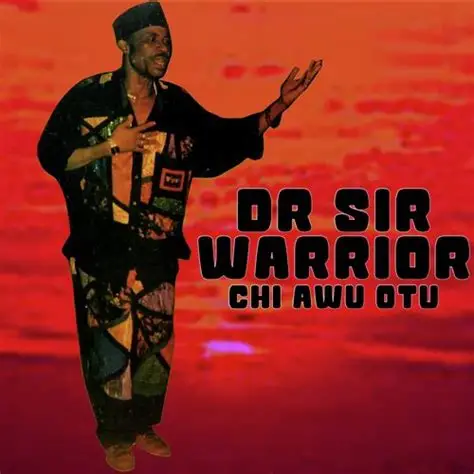
Christogonus Ezebuiro Obinna, widely known as Dr. Sir Warrior or Ultimate Dr. Sir Warrior, was a Nigerian highlife musician, guitarist, singer, songwriter, and bandleader widely regarded as one of the greatest icons of Igbo highlife music. Best known as the longtime leader of the legendary Oriental Brothers International Band, Dr. Sir Warrior played a pivotal role in shaping the sound and popularity of post-war Igbo highlife through his soulful vocals, exceptional guitar skills, and culturally rich compositions. Born in 1947 in Colonial Nigeria, he built a celebrated career that spanned several decades, producing timeless songs that resonated with audiences across Nigeria and the African diaspora. His enduring musical legacy continues to influence generations of highlife artists and preserve the rich traditions of Igbo music. his article explores Dr. Sir Warrior’s biography, early life, music career, achievements, family, death, and lasting legacy.
His music blended traditional Igbo rhythms with Congolese guitar styles and Cameroonian influences, creating a distinctive sound that resonated deeply with audiences in the southeast and further afield. Through the Oriental Brothers International Band and later his own formations, he produced numerous hit records that sold in the millions and left a lasting mark on African popular music. This biography traces his journey from a young guitarist in Imo State to one of the most celebrated voices in highlife.
Dr. Sir Warrior Early Life
Christogonus Ezebuiro Obinna was born in 1947 in Umuhu Enyiogugu, a community in Aboh Mbaise Local Government Area of Imo State, Nigeria. At the time of his birth the region formed part of Colonial Nigeria under British administration. He grew up in a culturally rich Igbo environment where music, storytelling, and communal gatherings played central roles in daily life.
Mbaise society placed strong value on hard work, education, and cultural expression. Young Christogonus showed an early interest in music and began playing the guitar around the age of eleven during the 1960s. Local performances and informal gatherings gave him opportunities to develop his skills on the instrument and to experiment with melody and rhythm. The post-civil war period in eastern Nigeria brought both hardship and a renewed desire for cultural expression, and music offered many young people a path toward purpose and recognition. His early experiences in this setting laid the foundation for the career that would later make him a household name across Igboland and beyond.
Dr. Sir Warrior Education
Formal details about Dr. Sir Warrior’s schooling remain limited in public records. Like many of his generation in rural Imo State during the late colonial and early independence periods, he would have attended local primary schools where basic literacy and numeracy formed the core of instruction. Music education at that time was largely informal, acquired through observation, practice, and participation in community events rather than through structured conservatory training.
What stands out clearly is the high value he later placed on formal education for his own children. He consistently encouraged them to complete their studies before pursuing any interest in music, viewing academic achievement as the most reliable foundation for future success. This emphasis reflects both personal conviction and the broader aspirations of many Igbo families who saw education as a route to advancement after the disruptions of the Nigerian Civil War.
Dr. Sir Warrior Career
Dr. Sir Warrior’s professional path began in earnest when he joined the Oriental Brothers International Band in the early 1970s. The group had formed around 1972 and quickly gained attention for its energetic performances and distinctive highlife sound. Original members included Godwin Kabaka Opara, Ferdinand Dan Satch Emeka Opara, Nathaniel Ejiogu, Hybrilious Akwilla Alaraibe, Prince Ichita, and Christogonus Ezebuiro Obinna himself. Warrior’s guitar work and strong vocal presence soon made him a central figure in the ensemble.
Formation and Success of the Oriental Brothers
The band’s early recordings, including tracks such as “Ihe Chinyere M Onye Ananam,” “Nwa Ada di Mma,” “Ihe Oma,” and “Mgbe G’asa,” established them as a major force in Igbo highlife. Their music combined intricate guitar lines, steady rhythmic sections, and lyrics that spoke to everyday experiences, social observations, and moral lessons. Performances took place across Nigeria, and the group later appeared in London and the United States, expanding their audience beyond the southeast.
Commercial success followed. The 1978 album Nwanne Awu Enyi achieved gold status and sold more than 7.8 million copies, becoming one of the most successful releases in the genre. Across his career Warrior accumulated approximately twelve platinum and ten gold records, a remarkable commercial record for the period.
Band Splits and Leadership Changes
Internal tensions eventually led to divisions. In the late 1970s disagreements involving financial matters and leadership caused Godwin Kabaka Opara to leave. Further separations followed. By 1980 Warrior and Dan Satch Opara had parted ways, resulting in several parallel groups that continued to use variations of the Oriental Brothers name. Warrior led his own formation, often referred to as Dr. Sir Warrior and His Oriental Brothers International or The Oriental Original. Other offshoots included Prince Ichita and the Great Oriental Brothers and versions under Dan Satch’s leadership.
Despite these changes, Warrior maintained a strong following. His solo and band releases continued to attract listeners who appreciated his particular blend of guitar technique, vocal delivery, and lyrical style. He remained active through the 1980s and 1990s, releasing new material and performing regularly until shortly before his death.
Notable Albums and Songs
Among the many recordings associated with Dr. Sir Warrior and his groups are the following:
- Nwanne Awu Enyi (1978)
- Onye Oma Nmanu (also rendered Onye Ọma Nmanu, late 1980)
- Chi Awu Otu / Chi Abu Otu (1982)
- Agwo Loro Ibe Ya / Agwo Loro Ibeya (1983)
- Ndi Adudu (1986)
- Jide Nkegi (1981)
- Ana Eri Aku
- Who Goes There (1996)
- Ugo Chinyere
- Anri Aku
- Nakwa Echeki
- Oko Nke Gi
- Onye Obula Zoba Isi Onwe
- Hapum Mebiri
- My Success
These works showcase the range of his output, from extended dance tracks to reflective pieces that addressed family, morality, success, and social relations. His final album, Who Goes There, appeared in December 1996.
Dr. Sir Warrior Musical Style and Innovations
Warrior developed a style that many listeners came to regard as definitive of Igbo highlife of his era. He combined traditional Igbo vocal phrasing and proverbs with Congolese-influenced guitar picking and a strong sense of rhythmic balance that he described with the Igbo term oyorima, referring to a refined feeling of movement and equilibrium. The result was music that felt both rooted in local culture and open to wider African and international currents.
His lyrics often carried moral weight and observational sharpness. He used idiomatic Igbo expressions that could be humorous, pointed, or deeply reflective. This approach helped the music connect with audiences who recognized their own lives and values in the songs. The guitar work remained central, providing both melodic hooks and intricate supporting lines that gave the recordings lasting appeal.
Dr. Sir Warrior State of Origin and Cultural Roots
Dr. Sir Warrior came from Mbaise, a densely populated and culturally vibrant region in Imo State in southeastern Nigeria. Mbaise comprises three local government areas: Aboh Mbaise, Ahiazu Mbaise, and Ezinihitte Mbaise. The name itself derives from the idea of five original towns or clans that over time formed a larger identity united by intermarriage, shared customs, and a distinctive dialect of Igbo.
Aboh Mbaise, where Warrior was born in the Umuhu Enyiogugu community, is known for its agricultural traditions, communal festivals, and strong sense of local identity. The New Yam Festival, or Iri Ji, remains one of the most important annual celebrations, marking the harvest and reinforcing social bonds. Music and dance occupy a central place in Mbaise cultural life, with elaborate performances accompanying rites of passage, festivals, and communal gatherings.
Imo State itself forms part of the Igbo heartland. Its people have long been noted for enterprise, educational ambition, and resilience, qualities that became especially visible in the decades after the Nigerian Civil War. Highlife music flourished in this environment as a form of cultural affirmation and entertainment. Warrior’s success brought particular pride to Mbaise. Many residents regarded him as one of the region’s most visible and positive ambassadors, someone who carried the name and spirit of his home area to national and international audiences.
Dr. Sir Warrior Personal Life
Dr. Sir Warrior was married and raised five children, three sons and two daughters. He placed strong emphasis on their education, discouraging early involvement in music until they had completed formal schooling. His sons later spoke of this guidance with respect, noting that their father viewed academic achievement as the best foundation upon which other pursuits could be built.
Despite the demands of a performing career that involved extensive travel within Nigeria and abroad, he maintained close ties to his family and community. Those who knew him described him as amiable and approachable. Fellow musician Oliver De Coque, in a tribute after Warrior’s death, called him a good and amiable person and a genius in highlife.
Dr. Sir Warrior Awards and Recognition
While formal industry awards of the modern type were less systematically documented during much of his career, Dr. Sir Warrior received substantial commercial recognition. His recordings earned multiple gold and platinum certifications, with Nwanne Awu Enyi alone selling more than 7.8 million copies. The consistent commercial performance of his albums across two decades stands as a clear measure of public esteem.
Within Igbo cultural circles and among highlife enthusiasts he was widely acknowledged as one of the leading voices of his generation. The affectionate titles “Dr. Sir Warrior” and “Ultimate Dr. Sir Warrior” reflected both popular affection and a sense of elevated status within the music community. After his death, tributes from fellow musicians and large-scale community participation in his funeral in Mbaise further confirmed the high regard in which he was held.
Dr. Sir Warrior Later Years and Passing
In the mid-1990s there were reports of declining health. Warrior continued to perform and recorded his last album in 1996. He died on 2 June 1999 after a brief illness, following two final performances. He was in his early fifties. The news prompted widespread mourning across Imo State and among highlife fans throughout Nigeria. His burial in Mbaise drew large crowds and was treated as a major community event, reflecting the depth of local pride in his achievements.
Dr. Sir Warrior Legacy
More than two decades after his death, Dr. Sir Warrior’s recordings continue to be played and appreciated. His approach to highlife helped shape the sound that many younger Igbo musicians still draw upon. The Oriental Brothers name and the various groups that emerged from the original band remain part of the historical narrative of Nigerian popular music. For listeners in Mbaise and across Igboland, his songs evoke both personal memories and a broader sense of cultural continuity.
His insistence on education for his children also left a practical legacy. Sons such as Uche Obinna and Ajuzieogu Obinna have spoken publicly about their father’s values and have taken steps to keep his musical memory alive. In this way the personal and artistic strands of his life continue to influence those who follow.
Read Also: Ebiere Soberekon Biography: Age, State of Origin, Husband, Wedding Day, Career, Net Worth & Family
Conclusion
Christogonus Ezebuiro Obinna, known to the world as Dr. Sir Warrior, rose from a childhood in rural Imo State to become one of the defining voices of Igbo highlife music. Through skillful guitar playing, distinctive vocals, and a steady stream of successful recordings, he entertained millions and gave musical expression to the experiences and values of his community. His career spanned the critical decades after the Nigerian Civil War, a period when cultural affirmation carried special importance. The commercial
uccess of his albums, the affection of his audiences, and the continued circulation of his music all testify to a lasting contribution. In Mbaise and beyond, he is remembered not only as a gifted musician but as a cultural figure who brought pride and recognition to his people.
FAQs
Who was Dr. Sir Warrior?
Dr. Sir Warrior was the stage name of Christogonus Ezebuiro Obinna, a Nigerian Igbo highlife musician, guitarist, and bandleader best known for his work with the Oriental Brothers International Band and later with his own groups.
When and where was Dr. Sir Warrior born?
He was born in 1947 in Umuhu Enyiogugu, Aboh Mbaise Local Government Area, Imo State, Nigeria.
What is Dr. Sir Warrior’s real name?
His full name was Christogonus Ezebuiro Obinna.
When did Dr. Sir Warrior die?
He died on 2 June 1999 after a brief illness.
What band was Dr. Sir Warrior associated with?
He was a central member and later leader of the Oriental Brothers International Band, and after internal splits he led his own version of the group often called Dr. Sir Warrior and His Oriental Brothers International.
What was Dr. Sir Warrior’s most successful album?
His 1978 album Nwanne Awu Enyi is widely cited as a major commercial success, achieving gold status and selling more than 7.8 million copies.
Did Dr. Sir Warrior have children?
Yes, he was married and had five children, three sons and two daughters. He strongly encouraged them to complete their education before considering careers in music.
What style of music did Dr. Sir Warrior play?
He specialized in Igbo highlife, incorporating traditional Igbo elements, Congolese guitar techniques, and a rhythmic approach he associated with the concept of oyorima.
Where is Mbaise and why is it important to Dr. Sir Warrior’s story?
Mbaise is a culturally significant region in Imo State made up of three local government areas. Warrior was born there and remained closely identified with the area throughout his life. His success brought particular pride to Mbaise communities.