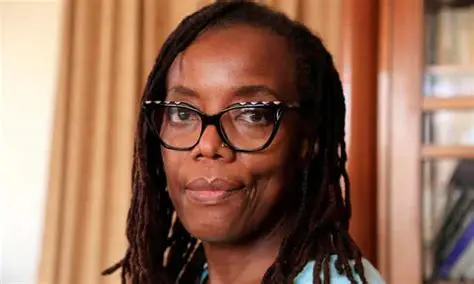
Tsitsi Dangarembga is a Zimbabwean novelist, playwright, filmmaker, and activist widely regarded as one of Africa’s most influential contemporary writers. Best known for her acclaimed novel Nervous Conditions, Dangarembga has earned international recognition for exploring gender, identity, colonialism, and social change through powerful storytelling and compelling female characters.
Born in Southern Rhodesia, now Zimbabwe, she has built a distinguished career in literature and film, using her work to examine the challenges and aspirations of African women in changing societies. Her groundbreaking contributions to African literature, cinema, and human rights advocacy continue to inspire readers, filmmakers, and scholars around the world. This article explores Tsitsi Dangarembga’s biography, literary career, major works, achievements, personal life, and enduring legacy.
Her debut novel, Nervous Conditions, marked a milestone as the first English-language novel by a Black Zimbabwean woman, and her subsequent works have continued to explore the complexities of life in Zimbabwe. Through literature and film, Dangarembga has contributed to global conversations on African feminism, cultural identity, and social justice, while remaining deeply engaged with her homeland’s evolving realities.
Tsitsi Dangarembga Early Life
Tsitsi Dangarembga was born on 4 February 1959 in Mutoko, a small town in Southern Rhodesia, now known as Zimbabwe. Her parents, Susan and Amon Dangarembga, worked as educators at a nearby mission school. Susan Dangarembga stood out as the first Black woman in Southern Rhodesia to earn a bachelor’s degree, setting a powerful example of intellectual achievement for her daughter. Amon later became a school headmaster.
From the ages of two to six, Tsitsi lived in England while her parents pursued further education. This early exposure to a different culture influenced her language development. She and her brother began speaking English as their primary language and temporarily forgot much of the Shona they had learned. Upon returning to Rhodesia in 1965, the year of the colony’s Unilateral Declaration of Independence, she reacquired Shona but retained English as her first language, shaped by her schooling.
The family settled in Old Mutare, a Methodist mission near Umtali (now Mutare). Her father served as headmaster and her mother as a teacher at Hartzell High School. Tsitsi attended Hartzell Primary School and later boarded at Marymount Mission convent school. She completed her A-Levels at Arundel School, an elite, predominantly white girls’ school in Salisbury (now Harare). These formative years exposed her to the racial and social divisions of colonial Rhodesia, themes that would later appear in her writing.
Mutoko and the surrounding areas represent her deep roots in Zimbabwe’s Mashonaland East province. This region, known for its agricultural communities and mission influences, provided a backdrop of traditional Shona culture mixed with colonial education systems. Her family’s emphasis on learning amid limited opportunities for Black Zimbabweans highlighted the value of education as a path to progress, an idea central to her life and work.
Tsitsi Dangarembga Education
Tsitsi Dangarembga’s educational journey spanned continents and disciplines, reflecting her adaptability and determination. In 1977, she enrolled at the University of Cambridge in England, studying medicine at Sidney Sussex College. The experience brought challenges, including racism and a sense of isolation as one of few Black students. She left after three years without completing the degree.
Returning to Zimbabwe around 1980, shortly before independence, she briefly taught before pursuing studies in medicine and psychology at the University of Zimbabwe. To support herself, she worked as a copywriter at a marketing agency for two years. At university, she joined the drama club, writing and directing plays, which sparked her creative path. She also engaged with the theatre group Zambuko, performing in productions like Katshaa! and Mavambo.
Later, she studied film direction at the German Film and Television Academy in Berlin. She earned a doctorate in African studies from Humboldt University of Berlin, with a thesis focusing on the reception of African film. These studies equipped her with tools to address storytelling across media.
Her education exposed her to diverse influences, from English classics to African-American women writers and contemporary African literature. This shift enriched her perspective on representation and voice, particularly for Black women in Zimbabwe.
Tsitsi Dangarembga Career
Tsitsi Dangarembga built a multifaceted career in writing, theatre, and filmmaking. Her early creative efforts addressed the scarcity of roles and stories for Black women in Zimbabwean theatre. She wrote plays including Lost of the Soil in 1983, She No Longer Weeps, and The Third One. These works emerged from her university experiences and a desire to fill representational gaps.
In 1985, her short story “The Letter” won second place in a competition by the Swedish International Development Cooperation Agency and appeared in the anthology Whispering Land. Her play She No Longer Weeps was published in Harare in 1987.
Tsitsi Dangarembga Literary Works and Impact
Her breakthrough came with the 1988 publication of Nervous Conditions by the Women’s Press in London after rejections from Zimbabwean publishers. The novel follows Tambudzai, a young girl from a rural family who pursues education amid colonial and patriarchal constraints. It won the Commonwealth Writers’ Prize for the Africa region in 1989 and gained acclaim as a seminal work in African literature. The BBC later included it among the top 100 books that have shaped the world.
The story explores themes of colonialism, gender, and mental health through Tambudzai and her cousin Nyasha. Readers connect with its honest depiction of the “nervous conditions” arising from cultural clashes and limited opportunities. It remains a staple in literature courses worldwide for its feminist and postcolonial insights.
After a long interval focused on film, she published the sequel The Book of Not in 2006, continuing Tambudzai’s story into her young adulthood. The trilogy concluded with This Mournable Body in 2018, shortlisted for the Booker Prize in 2020. This final novel examines Tambudzai’s return to Zimbabwe and the personal and national struggles in the post-independence era. Critics praised its depth and relevance to contemporary Zimbabwean life.
In 2022, she released Black and Female, a collection of essays reflecting on identity, race, and gender. Her writing consistently centers ordinary African women while addressing broader issues of agency, history, and societal change.
Tsitsi Dangarembga Filmmaking Contributions
Dangarembga transitioned significantly to film in the late 1980s. In 1989, she studied at the German Film and Television Academy Berlin and produced several works, including documentaries. She founded Nyerai Films in Harare in 1992, focusing on stories relevant to Zimbabwean audiences.
She wrote the story for Neria (1993), which became one of Zimbabwe’s highest-grossing films. It portrays a widow fighting family customs after her husband’s death, drawing from personal and cultural observations. In 1996, she directed Everyone’s Child, the first feature film by a Black Zimbabwean woman. The movie addresses the impact of AIDS on orphans and was screened at international festivals.
Other notable films include Kare Kare Zvako (2005), which won awards at the Zanzibar International Film Festival and Milan Film Festival, and Peretera Maneta (2006), recognized for its focus on children’s and human rights. She founded the International Images Film Festival for Women in Harare, promoting female filmmakers and diverse stories.
Her film work complements her literature by visually capturing Zimbabwean realities, from rural hardships to urban transitions. Through Nyerai Films and organizations like Women Filmmakers of Zimbabwe, she has mentored emerging talent and advocated for stronger African cinema industries.
Tsitsi Dangarembga Activism and Public Engagement
Dangarembga has actively participated in Zimbabwe’s social and political spheres. In 2010, she served as education secretary for the Movement for Democratic Change. Her family background in education informed this role. She has spoken publicly on governance, corruption, and women’s rights.
In 2020, she joined protests against corruption and faced arrest. She held a placard calling for institutional reform. Her 2022 conviction for inciting public violence was later overturned on appeal, drawing international attention to issues of free expression in Zimbabwe. She received the PEN International Award for Freedom of Expression in 2021, among other honors recognizing her courage.
She has held positions such as writer-in-residence at Stellenbosch Institute for Advanced Study and International Chair of Creative Writing at the University of East Anglia. These roles extend her influence through teaching and mentorship.
Tsitsi Dangarembga Awards
Tsitsi Dangarembga has received numerous accolades that affirm her contributions to literature, film, and human rights. Nervous Conditions earned the Commonwealth Writers’ Prize (Africa region) in 1989. Her films, such as Kare Kare Zvako, secured awards at major festivals including the Golden Dhow at Zanzibar.
In 2020, This Mournable Body reached the Booker Prize shortlist. The following years brought high-profile recognitions: the PEN International Award for Freedom of Expression and the Peace Prize of the German Book Trade in 2021, making her the first Black woman to receive the latter. She also won the PEN Pinter Prize in 2021.
Additional honors include the Windham-Campbell Literature Prize for fiction in 2022 and election to an honorary fellowship at Sidney Sussex College, Cambridge. In 2026, she received a lifetime achievement award at the Sharjah Festival of African Literature.
These awards highlight her role in elevating Zimbabwean and African voices on the global stage while underscoring her commitment to artistic freedom amid personal and political challenges.
Tsitsi Dangarembga Personal Life
Tsitsi Dangarembga married Olaf Koschke, and they have three children: Tonderai, Chadamoyo, and Masimba. The family lived in Germany for a period before returning to Zimbabwe around 2000. She balances her creative work with family responsibilities and continues to reside in Harare.
Her personal experiences, including her mother’s pioneering achievements and the family’s educational focus, deeply inform her themes of motherhood, ambition, and cultural navigation. She has discussed the difficulties of writing while raising a family and managing practical demands, referencing Virginia Woolf’s ideas on the need for space and resources.
Dangarembga remains committed to Zimbabwe despite its challenges. Her activism stems from a desire for better opportunities for future generations, echoing the hopes expressed in her fiction.
Tsitsi Dangarembga Influence on African Literature and Film
Beyond her individual works, Dangarembga has shaped African creative fields by founding institutions and advocating for inclusion. The International Images Film Festival for Women provides platforms for female directors and challenges male-dominated narratives in cinema. Her production company supports local storytelling that resonates with Zimbabwean viewers.
In literature, her trilogy offers a sustained examination of one woman’s life across decades, mirroring Zimbabwe’s journey from colonialism to independence and beyond. Scholars and readers value her nuanced approach to psychology, feminism, and postcolonial identity without oversimplification.
Her essays in Black and Female further articulate the intersections of race and gender, contributing to ongoing dialogues in African feminism. Younger writers and filmmakers cite her as an inspiration for pursuing authentic voices amid global and local pressures.
Tsitsi Dangarembga Legacy and Continued Work
Dangarembga’s legacy lies in her ability to humanize complex socio-political issues through compelling characters and stories. Her works encourage readers to reflect on power dynamics, resilience, and the costs of progress. As Zimbabwe continues to evolve, her observations on hope, disillusionment, and reform retain relevance.
She maintains an active presence through writing, speaking, and organizational leadership. Her commitment to creative arts for progress in Africa underscores a vision of culture as a tool for empowerment and change. Future generations will likely draw from her example of persistence and clarity in expression.
Read Also: Ebiere Soberekon Biography: Age, State of Origin, Husband, Wedding Day, Career, Net Worth & Family
Conclusion
Tsitsi Dangarembga stands as a vital figure in contemporary African arts. From her roots in Mutoko to international acclaim, she has consistently used her talents to explore and challenge the realities shaping Zimbabwe and its people. Her contributions across novels, plays, films, and activism demonstrate a profound dedication to truthful storytelling and social betterment. As both artist and advocate, she continues to inspire meaningful engagement with the world’s complexities.
FAQs
What is Tsitsi Dangarembga best known for?
Tsitsi Dangarembga is best known for her novel Nervous Conditions, a groundbreaking work in African literature that addresses themes of education, gender, and colonialism through the eyes of a young Zimbabwean girl.
Where was Tsitsi Dangarembga born?
She was born in Mutoko, Southern Rhodesia, which is now part of Zimbabwe.
Has Tsitsi Dangarembga won any major awards?
Yes, she has won several, including the Commonwealth Writers’ Prize, the Peace Prize of the German Book Trade, the PEN Pinter Prize, and the Windham-Campbell Literature Prize. Her novel This Mournable Body was shortlisted for the Booker Prize.
What other professions does Tsitsi Dangarembga have besides writing?
She is also a filmmaker, playwright, and activist. She has directed films, founded festivals and production companies, and engaged in political and educational initiatives.
How has Tsitsi Dangarembga contributed to Zimbabwean film?
She founded Nyerai Films and the International Images Film Festival for Women. Her films like Everyone’s Child and Neria have highlighted important social issues and advanced Zimbabwean cinema.