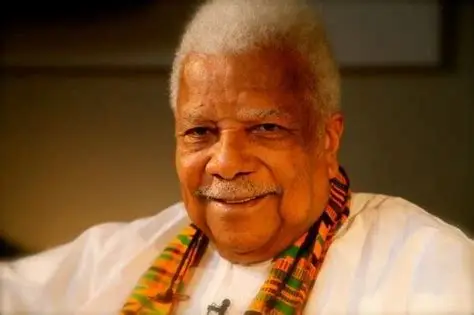
Ali Al’amin Mazrui was a Kenyan-born political scientist, academic, author, and public intellectual widely regarded as one of Africa’s most influential scholars. Best known for his groundbreaking work in African studies, political science, Islamic studies, and international relations, Mazrui shaped global debates on culture, governance, colonialism, identity, and North-South relations through his books, lectures, and television documentaries.
Born in Mombasa, Kenya, and later becoming an American citizen, he built a distinguished academic career at leading universities while inspiring generations of scholars across the world. His thought-provoking ideas and interdisciplinary approach established him as a leading voice in modern African scholarship. This article explores Ali Mazrui’s biography, academic career, major works, achievements, personal life, and enduring intellectual legacy.
Mazrui made significant contributions through his writings, teaching positions across continents, and the influential television documentary series The Africans: A Triple Heritage. His ideas on Africa’s complex cultural identities, the role of Islam in African societies, and critiques of global power structures sparked widespread discussion and debate. He served in key academic roles at institutions in Africa, the United States, and beyond, shaping generations of scholars and public understanding of postcolonial Africa.
Ali Mazrui Early Life
Ali Al’amin Mazrui was born on 24 February 1933 in Mombasa, Kenya Colony. He came from the Mazrui family, a historically prominent and influential clan in the coastal region of Kenya. The family had once ruled Mombasa for over a century until the early 19th century. His father, Sheikh Al-Amin Bin Ali Mazrui, served as the Chief Islamic Judge (Qadi) in the Kadhi courts of Kenya Colony, holding the highest authority on Islamic law in the region. His mother was Bibi Safia Suleiman.
The Mazrui family maintained strong ties to Islamic scholarship and local governance. Ali’s father was not only a judge but also a scholar and author whose works included pamphlets and debates on political and moral issues. Young Ali often accompanied his father to court sessions, where he absorbed discussions on law, ethics, and society. This early exposure fostered a deep interest in intellectual debate and public discourse. His father instilled in him a love for learning and critical thinking, which became central to Ali’s later career.
Growing up in Mombasa, a vibrant port city with a mix of African, Arab, and Indian influences, Mazrui experienced the cultural diversity that later informed his concept of Africa’s triple heritage. He attended primary school in Mombasa, where he focused on learning English to participate in formal debates. He also spoke Swahili and Arabic fluently. Initially, he planned to follow his father’s path by studying at Al-Azhar University in Egypt to become an Islamic scholar. However, his performance in the Cambridge School Certificate examination in 1949 was not strong enough for entry into Makerere College, the main higher education institution in East Africa at the time.
Instead, Mazrui worked at the Mombasa Institute of Muslim Education, now known as the Technical University of Mombasa. This period allowed him to engage with education and community issues while preparing for further studies. The death of his father when Ali was 14 added responsibilities but also reinforced his commitment to scholarship. These formative years in coastal Kenya shaped his understanding of identity, blending indigenous African traditions with Islamic and later Western influences.
Ali Mazrui Education
Mazrui pursued higher education with support from a Kenyan government scholarship. He earned his Bachelor of Arts degree with distinction from Manchester University in Great Britain in 1960. He then obtained a Master of Arts from Columbia University in New York in 1961. In 1966, he completed his doctorate (DPhil) at Nuffield College, Oxford University.
During his studies abroad, Mazrui engaged with ideas of pan-Africanism, particularly those of Kwame Nkrumah. Concepts like consciencism influenced his thinking on Africa’s identity. He viewed Africa as shaped by three main forces: its indigenous heritage, Islamic influences, and Western colonial legacies. This framework became a cornerstone of his intellectual work.
His time in Britain and the United States exposed him to different academic environments and global perspectives. He honed skills in political science, writing, and analysis. Journalism also played a role early on, serving as a bridge to academic pursuits. These educational experiences equipped him with tools to analyze power dynamics, culture, and international relations from an African viewpoint.
Ali Mazrui State of Origin
Ali Mazrui originated from Mombasa in Kenya’s Coast Province, now part of Mombasa County. Mombasa is Kenya’s second-largest city and a key historical port on the Indian Ocean. It has long been a melting pot of cultures due to trade routes connecting Africa, the Middle East, and Asia. The Mazrui clan played a significant role in the region’s history as rulers and leaders before British colonial rule.
This coastal background gave Mazrui a unique lens on African history. Unlike many inland perspectives, his upbringing highlighted interactions between African societies and external influences through trade, religion, and migration. He often drew on Swahili coastal culture in his analyses of broader African themes. Kenya’s diverse ethnic and religious landscape, including strong Muslim communities on the coast, informed his balanced views on identity and unity.
Ali Mazrui Academic Career
Mazrui began his teaching career at Makerere University in Uganda, where he had long aspired to study. He rose to positions such as professor of political science, head of the Department of Political Science, Dean of the Faculty of Social Sciences, and Dean of the Faculty of Law. His years at Makerere were highly productive. In 1967 alone, he published three books, signaling his ambition to contribute prolifically to scholarship.
At Makerere, he directed the World Order Models Project, which involved global political scientists discussing paths to international peace. He navigated political pressures carefully, declining invitations from figures like John Okello of the Zanzibar Revolution and later Idi Amin, prioritizing academic neutrality. These decisions eventually contributed to his departure from Uganda amid regional instability.
In 1974, Mazrui joined the University of Michigan as a professor of political science. He also held a concurrent position at the University of Jos in Nigeria, emphasizing the importance of maintaining ties with African institutions. From 1978 to 1981, he directed the Center for Afro-American and African Studies at Michigan, advocating for stronger connections between African and African American communities.
His move to the State University of New York at Binghamton in the late 1980s involved a notable bidding process between institutions, highlighting his stature in academia. There, he became the Albert Schweitzer Professor and founded the Institute of Global Cultural Studies. He held additional roles, including chancellor of Jomo Kenyatta University of Agriculture and Technology in Kenya and positions at Cornell University.
Mazrui served as a visiting scholar at numerous universities worldwide, including Stanford, Harvard, Oxford, and institutions in Africa, Asia, and the Middle East. He was president of the African Studies Association and vice-president of the International Political Science Association. These roles allowed him to influence policy discussions and mentor scholars globally.
Ali Mazrui Major Works and Publications
Mazrui authored or co-authored more than twenty books and hundreds of articles on African politics, international relations, political Islam, and North-South dynamics. His works challenged conventional views and promoted African-centered perspectives.
Key publications include explorations of political culture, liberalism in Africa, and the impacts of colonialism and globalization. He critiqued both Western capitalism and Marxism as unsuitable imports, advocating instead for an “African liberalism” rooted in local realities. His writings addressed dependency, cultural identity, and the need for genuine African agency in world affairs.
He contributed to public media and scholarly journals, serving on many editorial boards. Heads of state, media outlets, and research institutions frequently sought his insights on global issues.
Ali Mazrui The Africans Triple Heritage
One of Mazrui’s most notable achievements was the 1986 television documentary series The Africans: A Triple Heritage, produced with the BBC, PBS, and Nigerian Television Authority. He wrote and narrated the nine-part series, which examined Africa’s history through the lens of three influences: indigenous African traditions, Islamic culture, and Western impacts.
The series covered topics from geography and lifestyles to politics, religion, and global relations. It argued that Africa’s challenges stemmed partly from these overlapping heritages and highlighted Africa’s contributions to world civilization. A companion book expanded on these themes.
The documentary aired widely but sparked controversy, particularly in the United States, with debates over its portrayal of Western influences and Islam. Critics like Wole Soyinka questioned aspects of its perspective. Nevertheless, it brought African issues to international audiences and remains a reference for understanding postcolonial Africa.
Ali Mazrui Views on Africa Paradoxes and Dependency
Mazrui identified six central paradoxes in Africa. These included Africa being the birthplace of humanity yet one of the last continents to achieve modern habitability, possessing great natural wealth while its people remained poor, and being culturally distinct from the West yet rapidly westernizing. He highlighted fragmentation despite the continent’s vast size and its geographic centrality alongside political marginality.
He emphasized Africa’s dependency on the developed world as a core problem. True progress, he argued, required reducing this reliance. His famous quote about elephants and grass illustrated how superpower conflicts and alliances harmed weaker nations. Mazrui stressed that Africa’s greatest resource was its people, urging stronger bonds between Africans and the diaspora to influence global policies.
Ali Mazrui Perspectives on Islam and African Liberalism
As a Muslim scholar, Mazrui wrote extensively on Islam’s role in Africa and global affairs. He saw Islam as a vital part of Africa’s triple heritage, contributing to cultural and spiritual life. He rejected violence and terrorism but recognized anti-imperialist elements in some Islamic movements. He controversially suggested that Sharia law could align with democratic principles in certain contexts.
Mazrui promoted African liberalism as an alternative to imposed Western models or socialism. This approach drew from Africa’s historical experiences, emphasizing adaptability, moral values, and local governance traditions. He critiqued global capitalism’s exploitative aspects while seeking balanced integration.
Ali Mazrui Awards and Recognitions
Mazrui received the Order of the Burning Spear from Kenya, one of the country’s highest honors. In 2005, he was named among the Top 100 Public Intellectuals by Prospect Magazine and Foreign Policy.
Other honors included appointments as Albert Luthuli Professor and Walter Rodney Professor. His legacy includes websites and archives dedicated to his work, reflecting ongoing influence in African studies.
Ali Mazrui Personal Life
Mazrui married Molly Vickerman in the early 1960s while studying in England. They had three sons: Jamal, Alamin, and Kim Abubakar. The family lived in Kampala during his Makerere years. The marriage ended in divorce.
In 1991, he married Pauline Uti from Jos, Nigeria. They had two sons, Farid and Harith, and adopted a daughter, Grace. Mazrui balanced family life with his demanding career, often involving travel between continents.
He maintained connections to Kenya throughout his life, though much of his later career was based in the United States. He died on 12 October 2014 at age 81 in Vestal, New York, from natural causes. He was buried in the Mazrui Graveyard in Mombasa.
Ali Mazrui Legacy and Influence
Mazrui’s ideas continue to shape discussions on African identity, development, and international relations. His emphasis on cultural synthesis and critique of dependency offers insights for contemporary challenges like globalization and governance. Scholars and policymakers reference his works in fields ranging from postcolonial studies to Islamic thought in Africa.
He bridged academia and public discourse, making complex topics accessible through writing and television. His commitment to intellectual independence, even amid political pressures, serves as a model for engaged scholarship.
Read Also: Ebiere Soberekon Biography: Age, State of Origin, Husband, Wedding Day, Career, Net Worth & Family
Conclusion
Ali Al’amin Mazrui left a lasting mark as a thinker who illuminated Africa’s place in the modern world. His life and work reflected a deep engagement with history, culture, and power, always centered on advancing understanding and justice for African peoples.
FAQs
Who was Ali Mazrui?
Ali Al’amin Mazrui was a Kenyan-born academic and writer known for his contributions to African and Islamic studies.
What is Ali Mazrui famous for?
He is famous for the documentary The Africans: A Triple Heritage and his concept of Africa’s triple heritage.
Where was Ali Mazrui born?
He was born in Mombasa, Kenya.
What were Ali Mazrui’s main ideas?
His main ideas included the paradoxes of Africa, critiques of dependency, and advocacy for African liberalism.
Did Ali Mazrui receive any awards?
Yes, he received the Order of the Burning Spear and recognition as a top public intellectual.
When did Ali Mazrui die?
He died on 12 October 2014.