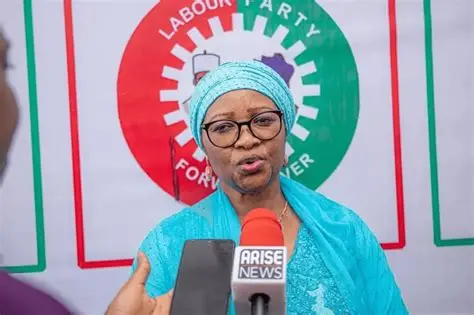
Nenadi Esther Usman is a Nigerian politician, public servant, and governance advocate recognized for her contributions to public administration, economic management, and democratic leadership. Renowned for her roles in state and federal government, Usman has built a distinguished career focused on governance reforms, fiscal responsibility, women’s empowerment, youth development, and inclusive political participation.
Born in Jos and closely connected to communities in southern Kaduna, she has served in key leadership positions, including as a federal minister, legislator, and national political leader, shaping public policy across multiple democratic administrations. Her enduring commitment to public service has made her one of Nigeria’s most influential female political figures. This article explores Nenadi Esther Usman’s biography, political career, achievements, personal life, and lasting legacy.
Her path reflects a steady progression from classroom instruction to high public office, marked by roles that shaped fiscal policy, social development, and party structures. As the current National Chairman of the Labour Party, she continues to influence national discourse while drawing on earlier experience as Minister of Finance and the first female senator from Nigeria’s North West geopolitical zone.
Nenadi Usman Early Life and Background
Nenadi Esther Usman was born on 12 November 1966 in Jos, Plateau State, Nigeria. Her early years unfolded during successive periods of military rule, a time of political uncertainty and occasional unrest that left a lasting impression on her outlook. Growing up in that environment encouraged a strong interest in public service and the belief that stable institutions and thoughtful leadership could improve everyday life for ordinary citizens.
She spent formative periods both in Jos and later in Kagoro, a town in what is now Kaduna State. These settings exposed her to the cultural diversity of the Middle Belt and southern Kaduna regions, where communities of different ethnic and religious backgrounds lived side by side. The experience of navigating such diversity, combined with the challenges of military governance, helped shape her later commitment to inclusive policies and the protection of vulnerable groups, especially women and children.
Family life and community values played an important part in her upbringing. Education was treated as a practical route to opportunity, and she showed early academic promise that carried her through secondary school and into higher education. The combination of personal discipline and awareness of national challenges set the foundation for a career that would move from teaching into politics and national administration.
Nenadi Usman Educational Qualifications
Nenadi Usman began formal schooling in Jos and later continued studies connected to Kagoro. She attended Federal Government College in Jos, Plateau State, where she obtained her West African School Certificate in 1982. The following year she completed the Interim Joint Matriculation Board programme, an advanced level qualification, at Ahmadu Bello University in Zaria, Kaduna State.
She went on to earn a Bachelor of Science degree in Geography from Ahmadu Bello University in 1986. This first degree provided a strong grounding in spatial analysis, resource management, and environmental understanding, subjects that later informed her work in state government portfolios dealing with natural resources and development planning.
Further studies expanded her expertise. She obtained a postgraduate diploma in management from the University of Jos. She later earned a master’s degree in strategy and security administration from the Nigerian Defence Academy in Kaduna, equipping her with knowledge of institutional security and strategic planning. An additional master’s degree in Geography from Ahmadu Bello University deepened her academic specialisation, and she has pursued doctoral studies in the same field. These successive qualifications reflect a sustained commitment to learning that supported her movement across teaching, administration, and high level political roles.
Nenadi Usman State of Origin and Cultural Background
Although born in Jos, Plateau State, Nenadi Usman is closely identified with southern Kaduna, particularly the areas around Kagoro and Jere. Southern Kaduna forms part of the larger Kaduna State in north western Nigeria and is known for its ethnic and religious diversity. Communities in this region include groups with long established agricultural traditions, distinct cultural practices, and a history of both cooperation and occasional tension with neighbouring populations.
Kagoro, where she taught and maintained strong ties, is a significant town in the area. Jere, the seat of the traditional institution to which she became connected through marriage, is located in Kagarko Local Government Area. These places sit within a broader landscape of rolling hills, farming communities, and towns that have produced educators, public servants, and political figures. The region’s experience of military rule, democratic transitions, and local development challenges informed her emphasis on education, women’s economic participation, and community level projects.
Kaduna State itself has long been an important administrative and commercial centre in northern Nigeria. Its southern districts share cultural and historical links with the Middle Belt, including Plateau State. Nenadi Usman’s dual connection to Jos by birth and to southern Kaduna by education, career, and family life places her within this interconnected regional identity. She has repeatedly drawn attention to the needs of rural and semi urban communities in these areas, especially regarding access to water, skills training, and basic services.
Nenadi Usman Career
Teaching and Early Professional Work
After completing her first degree, Nenadi Usman began her working life as a geography teacher at Government Secondary School in Kagoro, Kaduna State. She viewed education as a practical tool for empowerment and used the classroom to encourage students to understand their environment and opportunities. This early experience reinforced her belief that knowledge and skills training could open pathways for young people, particularly girls.
She later served as managing director of Dana Ventures, gaining experience in private sector management. In 1992 she was appointed executive adviser on youth and sports in Kaduna State, followed shortly by responsibility for information, home affairs, and culture. These roles introduced her to the practical demands of public administration and the importance of cultural promotion alongside social programmes.
From 1994 to 1998 she worked as principal personnel officer with the Federal Capital Development Authority in Abuja. The position involved human resource and organisational responsibilities within the agency overseeing the development of Nigeria’s capital city, further broadening her administrative experience.
State Government Service
With the return of civilian rule, Nenadi Usman entered state politics more fully. She served as Commissioner for Women Affairs and Social Development in Kaduna State from 1999 to 2002. In that capacity she focused on programmes supporting women and families. She later held the portfolios of Commissioner for Environment and Natural Resources in 2002 and Commissioner for Health from 2002 to 2003. These successive appointments allowed her to address environmental management, public health delivery, and social welfare at the state level.
She also played organisational roles in political campaigns, coordinating efforts for gubernatorial and presidential candidates associated with the People’s Democratic Party during key election periods. These activities strengthened her networks and understanding of electoral processes.
Federal Ministerial Roles
In the mid 2000s Nenadi Usman was appointed Minister of State for Finance and subsequently Minister of Finance under President Olusegun Obasanjo, serving from July 2006 to May 2007. She succeeded Ngozi Okonjo Iweala in the full finance portfolio. During her tenure she contributed to efforts aimed at strengthening fiscal institutions. Work included support for reforms in the Customs Service and participation in the establishment of the Fiscal Responsibility Commission, bodies intended to improve transparency and accountability in public finance.
Her period in the Ministry of Finance coincided with broader economic management challenges and the preparation for a change of administration. The experience placed her among a small number of women who have held the finance portfolio at the federal level in Nigeria.
Legislative Service
In the April 2011 general elections Nenadi Usman contested and won the seat for Kaduna South Senatorial District on the platform of the People’s Democratic Party. She served from 29 May 2011 to 29 May 2015, becoming the first woman elected to the Senate from the entire North West geopolitical zone. During her term she advocated greater attention to the needs of women and children, describing them as among the most vulnerable members of society. She supported community projects addressing water supply, unemployment, and medical access, and promoted skills training programmes in trades such as welding, fashion design, plumbing, and related fields for youth and women in her constituency.
Her election result was disputed by the Action Congress of Nigeria, yet she completed her term and used the platform to advance legislation and constituency interventions focused on practical development needs.
Leadership in the Labour Party
In recent years Nenadi Usman has assumed a central role in the Labour Party. She was appointed to lead a caretaker committee and later emerged as National Chairman. Court judgments and subsequent recognition by the Independent National Electoral Commission affirmed the leadership structure associated with her. In 2026 she was elected substantive National Chairman at the party’s national convention, becoming the first woman to hold the national chairmanship of a major Nigerian political party. This position places her at the centre of party organisation, internal governance, and preparation for future electoral contests.
Nenadi Usman Role in Women’s Empowerment
Throughout her public life Nenadi Usman has maintained a consistent focus on the advancement of women. She played a key part in establishing the Education and Empowerment Centre for Women, an organisation with headquarters in Jere, Kaduna State. The centre has supported training, education, and economic initiatives aimed at improving the status of women in the region.
She has also served as chairperson of the Coalition of Non Governmental Organisations for Women Development in Kaduna State. These platforms have enabled practical programmes in skills acquisition, adult education, and community mobilisation. Her senatorial work further extended these efforts through constituency projects that provided vocational training and addressed barriers faced by women and girls in accessing opportunities.
Her approach links formal education, economic participation, and political representation, arguing that sustainable progress requires attention to all three areas. The emphasis on girls’ education and women’s economic independence has remained a thread connecting her teaching days, state commissionerships, federal service, and current party leadership.
Nenadi Usman Philanthropy and Social Work
Beyond official positions, Nenadi Usman has supported initiatives addressing the needs of displaced persons, rural communities, and young people seeking skills. Her involvement with non governmental organisations has focused on practical interventions rather than purely advocacy. Projects under her influence have included training in marketable trades and efforts to improve access to basic services in underserved areas of southern Kaduna.
She has spoken about the importance of empathy in public life and the responsibility of leaders to respond to the hardships faced by ordinary citizens, including those affected by conflict or economic difficulty. This orientation has informed both her legislative priorities and her organisational work outside government.
Nenadi Usman Personal Life
Nenadi Usman was married to His Royal Highness Dr Sa’ad Usman, the Emir of Jere in Kaduna State. The traditional ruler died in March 2020 at the age of 70 after a period of illness related to a spinal cord condition. The couple had three children according to some accounts and four according to others. Their marriage represented a union across religious lines, with Nenadi Usman identifying as Christian and her husband as Muslim, a personal arrangement she has described as harmonious.
Family life has remained an important part of her identity even as public responsibilities increased. Residence and community ties have continued to centre on the Jere and wider southern Kaduna area, reinforcing her connection to the region’s traditional and social structures.
Nenadi Usman Awards and Recognitions
Public records do not list an extensive catalogue of formal awards attached to Nenadi Usman’s name in the same manner as some contemporaries. Her recognition has come primarily through the historical firsts she has achieved and the institutional roles she has held. These include becoming the first female senator elected from the North West geopolitical zone and later the first woman to serve as National Chairman of a major political party in Nigeria.
Her appointments as Minister of Finance and as a state commissioner across multiple portfolios themselves constitute forms of recognition of administrative capability. Mentions in contemporary reporting and organisational leadership of women’s coalitions further reflect peer and public acknowledgment of her contributions to governance and social development.
Read Also: Ebiere Soberekon Biography: Age, State of Origin, Husband, Wedding Day, Career, Net Worth & Family
Conclusion
Nenadi Esther Usman’s biography traces a path from a childhood in Jos under military rule through education at leading northern Nigerian institutions, teaching in Kagoro, successive state and federal appointments, legislative service, and eventual national party leadership. Her work has consistently returned to themes of education, fiscal responsibility, women’s economic participation, and inclusive governance.
As National Chairman of the Labour Party she continues to occupy a position of influence at a time of significant political realignment in Nigeria. The combination of administrative experience, legislative service, and sustained advocacy for women and communities in southern Kaduna and beyond forms the core of her public record.
FAQs
What is Nenadi Usman’s full name and date of birth?
Her full name is Nenadi Esther Usman. She was born on 12 November 1966.
Where was Nenadi Usman born and what is her connection to Kaduna State?
She was born in Jos, Plateau State. She has strong educational, professional, and family ties to Kagoro and Jere in southern Kaduna State, which form the centre of her political base and personal life.
What were Nenadi Usman’s main educational qualifications?
She obtained her West African School Certificate from Federal Government College Jos, an IJMB certificate from Ahmadu Bello University, a B.Sc in Geography from the same university, a postgraduate diploma in management from the University of Jos, a master’s in strategy and security administration from the Nigerian Defence Academy, and a further master’s in Geography from Ahmadu Bello University. She has also pursued doctoral studies in Geography.
When did Nenadi Usman serve as Minister of Finance?
She served as Minister of State for Finance and then as Minister of Finance between July 2006 and May 2007 under President Olusegun Obasanjo.
What is notable about Nenadi Usman’s senatorial career?
She was elected senator for Kaduna South in 2011 and served until 2015. She was the first woman to represent any senatorial district in Nigeria’s North West geopolitical zone.
What is Nenadi Usman’s current political position?
She is the National Chairman of the Labour Party, a position she assumed substantively in 2026 after earlier service as caretaker chair and following judicial and electoral commission recognition of the associated leadership structure.
Is Nenadi Usman involved in women’s empowerment work?
Yes. She helped establish the Education and Empowerment Centre for Women based in Jere and has chaired the Coalition of Non Governmental Organisations for Women Development in Kaduna State. Her public service has repeatedly prioritised programmes for women and girls.
What is known about Nenadi Usman’s family?
She was married to HRH Dr Sa’ad Usman, the Emir of Jere, who passed away in March 2020. She has children, with sources varying between three and four.