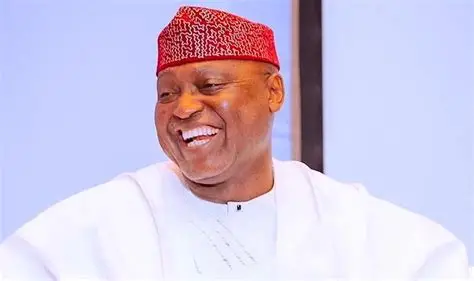
Abiodun Abayomi Oyebanji, popularly known as Biodun Oyebanji or BAO, is a Nigerian politician, public administrator, academic, and agribusiness leader serving as the Governor of Ekiti State. Widely recognized for his grassroots leadership, administrative expertise, and commitment to sustainable development, Oyebanji has built a distinguished career through decades of service in government, education, banking, and the private sector.
Born and raised in Ikogosi, Ekiti State, he has played a significant role in the state’s growth since its creation, holding several strategic positions before assuming office as governor on October 16, 2022. His practical approach to governance and people-centered policies has strengthened his reputation as one of Nigeria’s emerging political leaders. This article explores Biodun Oyebanji’s biography, political career, achievements, personal life, and leadership in Ekiti State.
As the first person in the history of Ekiti State to lead a ruling party to consecutive electoral victories, Oyebanji has drawn attention for his quiet style of leadership and emphasis on continuity. His administration has concentrated on roads, education, healthcare, agriculture, and power supply while drawing on decades of experience inside the same state system he now heads. This biography traces his journey from a modest childhood in Ikogosi through education, early professional work, successive public appointments, and eventual election as governor, offering a clear picture of the man and the environment that shaped him.
Biodun Oyebanji Early Life
Abiodun Abayomi Oyebanji was born on 21 December 1967 in Ikogosi-Ekiti, then part of the old Western State of Nigeria and today located in Ekiti State. His parents were Pa Ezekiel Olukunle Oyebanji, a retired secondary school principal, and Esther Bosede Oyebanji (née Ojo). The family valued education, honesty, hard work, and self-discipline. Pa Oyebanji often spoke of scholarship as a reliable way out of poverty, a lesson that guided his son from an early age. The young Abiodun grew up in a household where integrity and humility were daily expectations rather than occasional advice.
Ikogosi itself is a quiet town set among rolling hills and famous for its warm and cold springs that flow side by side. Local tradition credits a hunter named Ọ̀gánungánun with the discovery of the springs centuries ago. The site later attracted Baptist missionaries and eventually became a recognised tourist attraction. Growing up near this natural wonder left an impression on Oyebanji. He has often returned to the town for quiet reflection and has spoken of the springs as a symbol of balance and continuity. His early schooling began at Baptist Primary School in Ikogosi-Ekiti, where the influence of Christian values and community life first took root.
Secondary education took him further afield within the region. He attended Awo Community High School before transferring to C.A.C. Grammar School in Efon-Alaaye, Ekiti State, in 1979. He later studied at the Federal School of Arts and Science in Ondo State and completed his secondary education at District Commercial Secondary School in Aramoko-Ekiti between 1983 and 1985.
These years exposed him to different communities across the Ekiti and Ondo areas and strengthened his sense of belonging to the broader Yoruba-speaking southwest of Nigeria. The combination of a stable home, strong parental example, and the natural and cultural environment of Ikogosi formed the foundation of his character long before public office entered the picture.
Biodun Oyebanji Education
After secondary school, Oyebanji proceeded to tertiary education with a clear interest in political science. He enrolled at Ondo State University, which later became Ekiti State University, Ado-Ekiti. In 1989 he obtained a Bachelor of Science degree in Political Science. The choice of discipline reflected both personal curiosity about governance and an early awareness of the political changes then unfolding in Nigeria.
Three years later he moved to the University of Ibadan, one of Nigeria’s oldest and most respected institutions. There he earned a Master of Science degree in Political Science with a focus on International Relations and Strategic Studies in 1992. The University of Ibadan held special meaning for the family. His father had graduated from the same university, and later his wife and children would also study there.
Oyebanji himself has spoken of a long family association with the institution, describing it as part of his heritage. The academic training sharpened his understanding of government structures, policy making, and the interplay between local and national politics. It also prepared him for the teaching career that followed immediately after his postgraduate studies.
Biodun Oyebanji State of Origin and Ekiti Heritage
Ekiti State occupies a distinctive place in southwestern Nigeria. Created on 1 October 1996 from the old Ondo State, it is known as the Land of Honour and Integrity. The people are predominantly Yoruba, and the state is noted for its hills, dense vegetation, and a long tradition of education and public service. Ado-Ekiti serves as the capital, while towns such as Ikogosi, Ijero, Ikole, and Efon-Alaaye carry deep historical and cultural significance.
Ikogosi, Oyebanji’s hometown, sits in the Ekiti West Local Government Area. The warm springs that define the town have drawn visitors for decades and remain a source of local pride. The landscape of undulating hills and the mixture of warm and cold water flowing together have long been regarded as a natural wonder. For residents, the springs represent both a tourist asset and a spiritual heritage linked to traditional stories of discovery and reverence.
Growing up in this setting gave Oyebanji a strong attachment to the land and its people. He has repeatedly described himself as a product of the soil of Ekiti and has returned to Ikogosi for thanksgiving services, family events, and moments of quiet reflection even after assuming high office.
The broader Ekiti identity emphasises scholarship, hard work, and communal responsibility. Many of the state’s early leaders and professionals emerged from similar modest backgrounds, using education as the primary ladder of advancement. Oyebanji’s own trajectory mirrors this pattern. His early involvement in the campaign for state creation in the mid-1990s further rooted him in the collective aspiration of Ekiti people for self-determination and local development. Understanding this background is essential to understanding his later choices in public life.
Biodun Oyebanji Career
Oyebanji’s professional life began in the classroom and later moved into banking before settling into public administration. Each stage added practical experience that would later prove useful in government.
Academic and Banking Years
Between 1993 and 1997 he worked as a lecturer in the Department of Political Science at the University of Ado-Ekiti, the same institution where he had earned his first degree. Teaching allowed him to remain close to young people and to the intellectual debates surrounding Nigerian politics in the final years of military rule. After four years in academia he joined the banking sector, serving as Manager of Treasury and Financial Services at the defunct Omega Bank Plc, later known as Heritage Bank. He remained in that role until May 1999. The banking experience introduced him to financial management, risk assessment, and the practical demands of running an organisation.
Early Public Service and State Creation
Even before democracy returned in 1999, Oyebanji had already contributed to the political future of his people. In 1994 and 1996 he served as a member and later secretary of the committee that worked for the creation of Ekiti State. He was also secretary of the Ekiti State Development Fund. These roles placed him among the group of younger activists and professionals who pushed for the new state. When Ekiti finally came into existence in 1996, he had already demonstrated organisational ability and commitment to the local cause.
Service under the First Civilian Administration
With the return of civilian rule in 1999, Otunba Niyi Adebayo became the first democratically elected governor of Ekiti State. Oyebanji, then only thirty-two years old, was appointed Special Assistant on Parliamentary Affairs from 8 June 1999 to July 2000. He later became Special Adviser on Parliamentary Affairs from August 2000 to September 2001. In September 2001 he rose to the position of Chief of Staff to the Governor, a role he held until 29 May 2003. These successive appointments gave him direct experience of the daily operations of government, legislative liaison, and the coordination of the executive office.
Federal and State Appointments under Later Administrations
After a period outside direct state government following the change of administration, Oyebanji returned to public service at the federal level. From June 2009 to December 2010 he served as Chairman of the Governing Board of the Citizenship and Leadership Training Centre under the Federal Ministry of Youth and Sports Development. The position involved oversight of youth development programmes and leadership training across the country.
When Kayode Fayemi became governor of Ekiti State, Oyebanji was appointed Commissioner for Integration and Inter-Governmental Affairs from 23 December 2010 to December 2011. He then headed the Office of Transformation Strategy and Delivery from December 2011 to 9 January 2013. From 10 January 2013 to 16 October 2014 he served as Commissioner for Budget, Economic Planning and Service Delivery. These roles deepened his knowledge of planning, inter-governmental relations, and the practical delivery of policy.
Secretary to the State Government
In October 2018, after Fayemi returned for a second term, Oyebanji was appointed Secretary to the Ekiti State Government. He held the position until December 2021, when he resigned to pursue the governorship. As Secretary to the Government he coordinated the activities of the state executive council and served as a key link between the governor and the rest of the administration. The long years spent in successive governments made him one of the most experienced public officers in the short history of Ekiti State.
Path to the Governorship
On 8 December 2021 Oyebanji formally declared his intention to contest the 2022 Ekiti State gubernatorial election on the platform of the All Progressives Congress. He emerged as the party’s candidate after the primary election, polling 101,703 votes. On 18 June 2022 he won the general election with a clear margin over his main opponents, Olusegun Oni of the Social Democratic Party and Bisi Kolawole of the Peoples Democratic Party. He was sworn in as Governor on 16 October 2022, succeeding Kayode Fayemi. His victory marked the first time a ruling party in Ekiti State had successfully transferred power to another candidate of the same party through the ballot box.
Private Sector Engagement
Alongside public service, Oyebanji has remained active in agribusiness. He is the chairman of Con Dois Farms Limited. The farming interest reflects both a personal commitment to agriculture as a source of livelihood and a recognition of the sector’s importance to the economy of Ekiti State.
Biodun Oyebanji Achievements in Governance
Since assuming office, Oyebanji has focused on tangible improvements in infrastructure, education, healthcare, agriculture, and power supply. His administration has completed multiple inter-state and inter-city roads covering hundreds of kilometres and has installed street lighting on key routes. Major road projects include the Ado-Iworoko road, Ilawe-Igbara-Odo road, Ilawe-Igede road, and Ikole-Ara-Isinbode road, among others. The Ado-Ekiti Ring Road project has received recognition for its financing structure.
In education the government has recruited thousands of teachers and begun the construction of model schools in selected local government areas. Efforts to improve examination performance and access to quality learning have been central to the education agenda. Healthcare has seen the expansion and rehabilitation of primary healthcare centres across the state, with significant funds allocated to strengthen disease surveillance and maternal and child health services. The state has earned recognition for performance in disease surveillance.
Agriculture remains a priority, with moves to connect farming zones to the national grid and to create opportunities for young people in the sector. Power supply has improved through reconnection of communities to the national grid and expansion of metering. Social welfare programmes and staff welfare packages have also featured in the administration’s work. These efforts have been presented as part of a broader vision of shared prosperity, peace, and opportunity for the people of Ekiti.
Biodun Oyebanji Awards
Over the years Oyebanji has received several recognitions for both earlier public service and his work as governor. Early awards include the Distinguished Alumnus Award from the Alumni Association of the former Ondo State University, Ado-Ekiti, and a Certificate of Excellence from the National Association of Political Science Students at the same institution.
As governor he has been named Most Outstanding Governor of the Year for Inclusive Leadership and Grassroots Development by Marketing Edge Magazine in 2024. He received the Silverbird Man of the Year Award in the same year. Vanguard Newspapers named him Personality of the Year for Good Governance, and Energy Times Magazine recognised him as Energy Governor of the Year for improvements in the power sector.
The Ado-Ekiti Ring Road project earned the Best Project Bond award at the EMEA Finance Achievement Awards. The University of Ibadan also decorated him as a UI@75 Ambassador in recognition of character, leadership, and contributions to national development. These awards reflect both individual effort and the collective progress recorded by the state under his leadership.
Biodun Oyebanji Personal Life
Oyebanji is married to Dr Olayemi Oyebanji, an academic who is a Reader at the University of Ibadan and a princess of Ado-Ekiti. She has been active in programmes focused on maternal and child health, women’s empowerment, and community welfare. The couple have children who attended the International School, University of Ibadan, and later matriculated at the same university. Two of the children have already graduated from the University of Ibadan. The family’s long association with the institution remains a point of pride.
Oyebanji is known for an early-rising habit, a preference for Christian music, and a strong interest in leadership literature. He describes himself as old-school in outlook and finds renewal in occasional visits to his hometown. His father, Pa Ezekiel Oyebanji, reached the age of ninety and continued to emphasise the values of honesty and hard work that shaped his son. The governor has publicly credited his parents for the principles that guide his public and private conduct. Family thanksgiving services in Ikogosi and Ado-Ekiti form part of the rhythm of his personal life even while he carries the responsibilities of office.
Read Also: Ebiere Soberekon Biography: Age, State of Origin, Husband, Wedding Day, Career, Net Worth & Family
Conclusion
Abiodun Abayomi Oyebanji’s life story is one of gradual preparation, local rootedness, and steady advancement through public service. From a childhood in Ikogosi near the famous warm springs, through education at Ekiti State University and the University of Ibadan, and through successive roles as lecturer, banker, special assistant, chief of staff, commissioner, and secretary to the government, he accumulated the experience that later supported his election as governor.
His administration has concentrated on roads, schools, health centres, agriculture, and power, seeking to translate long familiarity with the state into measurable progress. The combination of personal discipline, family values, and deep knowledge of Ekiti institutions continues to define his approach to leadership.
FAQs
Who is Biodun Oyebanji?
Biodun Oyebanji, fully Abiodun Abayomi Oyebanji, is a Nigerian politician and the current Governor of Ekiti State. He assumed office on 16 October 2022 after winning the 2022 gubernatorial election on the platform of the All Progressives Congress.
When and where was Biodun Oyebanji born?
He was born on 21 December 1967 in Ikogosi-Ekiti, then in the Western State of Nigeria and now in Ekiti State.
What is Biodun Oyebanji’s educational background?
He obtained a Bachelor of Science degree in Political Science from Ondo State University (now Ekiti State University) in 1989 and a Master of Science degree in Political Science with specialisation in International Relations and Strategic Studies from the University of Ibadan in 1992.
What positions did Biodun Oyebanji hold before becoming governor?
He served as Special Assistant and later Special Adviser on Parliamentary Affairs, Chief of Staff to the Governor, Chairman of the Governing Board of the Citizenship and Leadership Training Centre, Commissioner for Integration and Inter-Governmental Affairs, Head of the Office of Transformation Strategy and Delivery, Commissioner for Budget and Economic Planning, and Secretary to the Ekiti State Government.
Is Biodun Oyebanji married?
Yes, he is married to Dr Olayemi Oyebanji, an academic at the University of Ibadan and a princess of Ado-Ekiti. They have children who have studied at the University of Ibadan.
What are some key achievements of Biodun Oyebanji as governor?
His administration has completed numerous road projects, recruited teachers, expanded primary healthcare centres, improved power supply to communities, and supported agricultural development. The state has also received awards for disease surveillance and project financing.
What is the significance of Ikogosi in Biodun Oyebanji’s life?
Ikogosi is his hometown and the location of the famous warm and cold springs. He maintains strong ties to the town and often returns there for personal and family events.
Which political party does Biodun Oyebanji belong to?
He is a member of the All Progressives Congress and contested the 2022 election on its platform.