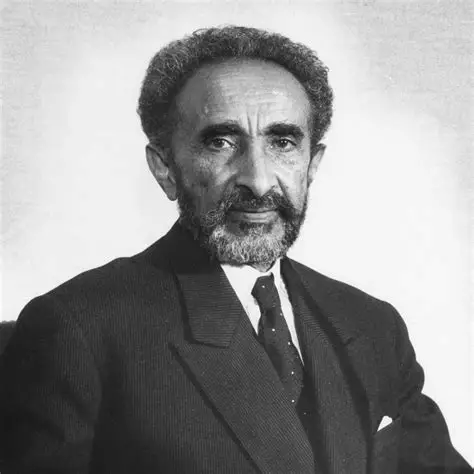
Haile Selassie I, born Lij Tafari Makonnen, was the Emperor of Ethiopia and one of the most influential African leaders of the twentieth century. Best known for modernizing Ethiopia, resisting Italian fascist aggression, and championing African unity, he ruled from 1930 to 1974, except for his years in exile during the Italian occupation.
Born on July 23, 1892, near Harar, Ethiopia, and a member of the historic Solomonic dynasty, Haile Selassie transformed his country through political, educational, and administrative reforms while becoming a respected voice in international diplomacy. His leadership also helped lay the foundation for continental cooperation as a founding figure of the Organization of African Unity.
Haile Selassie I guided Ethiopia through significant changes, from resisting colonial invasion to promoting education, infrastructure, and international diplomacy. His reign symbolized Ethiopian independence and inspired movements across Africa and the African diaspora, particularly the Rastafari movement, which regards him as a divine figure. His life combined ancient royal traditions with efforts to bring his country into the modern world.
Haile Selassie I Early Life
Haile Selassie I, originally named Lij Tafari Makonnen, entered the world on July 23, 1892, in Ejersa Goro, a small village in the Harar province of eastern Ethiopia. His father was Ras Makonnen Wolde Mikael, a prominent governor of Harar and a close advisor to Emperor Menelik II. Ras Makonnen played an important part in the Battle of Adwa in 1896, where Ethiopian forces defeated Italian invaders. His mother was Woizero Yeshimebet Ali Abba Jifar, who came from a noble family with ties to the Wollo region.
The province of Harar, where he grew up, formed a vital cultural and commercial center with deep historical roots. It served as a gateway for trade and ideas, influenced by its position near trade routes connecting the highlands with coastal areas. Tafari’s family background reflected the diverse ethnic makeup of Ethiopia, with Amhara, Oromo, and other influences in his ancestry. His paternal grandmother linked him directly to the Shewan branch of the Solomonic dynasty.
Tafari lost his mother at a young age, around two years old, and his father died in 1906 when he was about 14. These early losses shaped his character and placed him under the care of Emperor Menelik II’s court. He received education at home from French missionaries and Ethiopian tutors, including a Capuchin friar and a surgeon. This exposure to European knowledge alongside traditional Ethiopian learning prepared him for leadership.
At age 13, his father appointed him Dejazmach (a noble title similar to count) and governor of a small region. He later governed parts of Sidamo and then Harar. These early responsibilities taught him administration and the challenges of balancing central authority with local powers in a feudal society. Harar remained central to his identity, and he returned there as governor later, strengthening his base.
Haile Selassie I Education
Tafari Makonnen received a mix of traditional and modern education. Tutors instructed him in Amharic, French, history, and religion. Ethiopian Orthodox Christianity played a central role in his upbringing, with baptismal name Haile Selassie meaning “Power of the Trinity.” French missionaries and European-influenced teachers introduced him to Western ideas, science, and governance.
This education distinguished him from many contemporaries. He studied European systems of government and technology, which influenced his later modernization efforts. His time in Harar exposed him to diverse cultures and the practical side of administration. He continued learning throughout his life, drawing from travels and advisors.
Haile Selassie I Rise to Power
Tafari advanced quickly in the Ethiopian court. After his father’s death, he held governorships and built alliances. In 1911, he married Menen Asfaw, a union that strengthened his position through family ties to the imperial line.
Political shifts followed Emperor Menelik II’s death in 1913. Lij Iyasu, the successor, faced opposition due to his policies and associations. In 1916, nobles deposed Iyasu, and Tafari supported the move. Empress Zewditu became the nominal ruler, while Tafari, elevated to Ras, served as regent and heir apparent from 1916. He effectively controlled the government as Regent Plenipotentiary.
As regent, he worked to centralize power and reduce the influence of feudal lords. He abolished slavery gradually and secured Ethiopia’s entry into the League of Nations in 1923. In 1924, he toured Europe, visiting cities like Paris and London, gaining knowledge and international recognition as the first Ethiopian ruler to do so.
In 1928, he received the title of Negus (King). When Zewditu died in 1930, Tafari became Emperor on November 2, taking the regnal name Haile Selassie I. His coronation was a grand event that symbolized continuity with Ethiopia’s ancient monarchy while signaling reform.
Haile Selassie I Career
Haile Selassie I Regency Period
During his time as regent under Empress Zewditu, Haile Selassie I focused on internal reforms. He developed a salaried civil service and worked to break feudal structures. His efforts against slavery helped Ethiopia join the League of Nations. He promoted education and infrastructure, laying groundwork for later changes.
Haile Selassie I Coronation and Early Reign
Upon becoming emperor in 1930, Haile Selassie I introduced Ethiopia’s first written constitution in 1931. This document centralized authority under the emperor while creating a parliament with limited powers. He established ministries, a national bank, and expanded schools and roads. Revenues from coffee exports supported these initiatives.
Haile Selassie I Italo-Ethiopian War and Exile
In 1935, Italy under Benito Mussolini invaded Ethiopia. Haile Selassie I led resistance but faced superior forces using modern weapons and chemical agents. In 1936, he went into exile in Britain after delivering a famous speech to the League of Nations appealing for support. The speech highlighted the injustice of the invasion and became a landmark in anti-colonial rhetoric.
During exile, he coordinated with British forces. Ethiopian and Allied troops liberated the country in 1941 during the East African campaign of World War II. Haile Selassie I returned triumphantly to Addis Ababa.
Haile Selassie I Post-War Reforms
After restoration, Haile Selassie I accelerated modernization. He abolished slavery fully in 1942, reformed land systems, and expanded education, including founding the University of Addis Ababa. A revised constitution in 1955 broadened some parliamentary roles. He built infrastructure, improved public health, and strengthened the military.
Haile Selassie I Pan-African Leadership
Haile Selassie I became a leading voice for African independence. In 1963, he hosted the founding of the Organization of African Unity (OAU) in Addis Ababa, serving as its first chairman. He promoted unity and non-alignment while maintaining ties with Western powers. Ethiopia contributed troops to UN missions, including in Korea.
Haile Selassie I Later Challenges
In later years, challenges grew. A 1960 coup attempt failed, but discontent increased over land issues, famine, and slow reforms. Student protests and military unrest marked the early 1970s. In 1974, the Derg military junta deposed him amid famine and economic problems.
Haile Selassie I Awards and Recognitions
Haile Selassie I received numerous honors. He held titles such as Conquering Lion of the Tribe of Judah and Elect of God. Internationally, he earned decorations from many countries, noted in records for the volume of awards. He received orders from nations across Europe, Africa, and beyond for his diplomatic efforts.
Haile Selassie I Personal Life
Haile Selassie I married Menen Asfaw in 1911. Their union lasted until her death in 1962 and produced six children: Princess Tenagnework, Crown Prince Asfaw Wossen, Princess Zenebework, Princess Tsehai, Prince Makonnen, and Prince Sahle Selassie. He had an earlier daughter, Princess Romanework. Family life intertwined with court duties, and several children faced tragedies, including during the Italian occupation.
He remained a devout member of the Ethiopian Orthodox Tewahedo Church. His personal style combined dignity with accessibility in private settings. He enjoyed reading and horses, maintaining a disciplined routine.
Haile Selassie I Connection to Rastafari Movement
The Rastafari movement, emerging in Jamaica in the 1930s, views Haile Selassie I as the returned Messiah and incarnation of God (Jah). Inspired by his coronation and biblical prophecies linked to the Solomonic line, followers see him as a symbol of black pride and African redemption. He visited Jamaica in 1966 to a massive, emotional welcome. Though he did not endorse the divinity claims, he engaged with the community and supported land grants in Ethiopia for Rastafarians.
This connection amplified his global legacy, influencing reggae music and cultural movements worldwide.
Haile Selassie I Legacy and Overthrow
Haile Selassie I’s legacy includes modernizing Ethiopia and advancing African solidarity. He transformed Addis Ababa into a diplomatic hub and preserved independence against colonialism. Critics note autocratic tendencies, slow reforms on land and ethnic issues, and challenges in rapid development.
The Derg overthrew him in 1974. He lived under house arrest and died on August 27, 1975, in Addis Ababa. Later revelations indicated he was murdered. His remains received proper burial in 2000 at the Holy Trinity Cathedral.
Read Also: Ebiere Soberekon Biography: Age, State of Origin, Husband, Wedding Day, Career, Net Worth & Family
Conclusion
Haile Selassie I embodied Ethiopia’s transition from ancient empire to modern state. His efforts in education, infrastructure, and international relations left a lasting impact. While facing criticism, his role in African unity and resistance to colonialism endures as inspiration. He remains a complex figure whose life continues to influence discussions on leadership, identity, and progress in Africa.
FAQs
Who was Haile Selassie I?
Haile Selassie I was the Emperor of Ethiopia from 1930 to 1974, known for modernization efforts and leadership in African affairs.
When and where was Haile Selassie I born?
He was born on July 23, 1892, in Ejersa Goro near Harar, Ethiopia.
What does the name Haile Selassie mean?
It means “Power of the Trinity” in Ge’ez, reflecting his Christian faith.
How did Haile Selassie I contribute to African unity?
He played a key role in founding the Organization of African Unity in 1963 and hosted its headquarters in Addis Ababa.
What happened during the Italian invasion?
Italy invaded in 1935, forcing Haile Selassie I into exile until liberation in 1941 with Allied help.
Was Haile Selassie I involved in the Rastafari movement?
Followers regard him as a divine figure, though he was an Ethiopian Orthodox Christian.
When did Haile Selassie I die?
He died on August 27, 1975, in Addis Ababa.