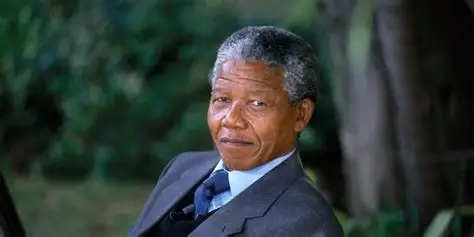
Nelson Rolihlahla Mandela, popularly known as Nelson Mandela or Madiba, was a South African anti-apartheid revolutionary, political leader, philanthropist, and statesman widely regarded as one of the greatest champions of freedom and human rights in modern history. Best known for leading the struggle against apartheid and becoming South Africa’s first Black president in 1994, Mandela inspired the world through his commitment to justice, reconciliation, and democratic governance.
Born on July 18, 1918, in Mvezo, Eastern Cape, South Africa, he spent 27 years in prison before emerging to help unite a deeply divided nation. His extraordinary leadership, moral courage, and enduring advocacy for peace established him as a global symbol of equality, forgiveness, and hope. This article explores Nelson Mandela’s biography, early life, political career, imprisonment, presidency, achievements, personal life, and lasting legacy.
Mandela’s journey from a rural village boy to an international statesman demonstrated extraordinary courage, strategic thinking, and commitment to justice. Imprisoned for 27 years, he emerged without bitterness and guided his nation through a peaceful transition from white minority rule to multiracial democracy. His leadership emphasized unity, forgiveness, and human dignity, inspiring millions worldwide.
Nelson Mandela Early Life
Nelson Rolihlahla Mandela entered the world on 18 July 1918 in Mvezo, a small village on the banks of the Mbashe River in the Transkei. His father, Nkosi Mphakanyiswa Gadla Mandela, served as a chief and principal counsellor to the Acting King of the Thembu people, Jongintaba Dalindyebo. His mother, Nonqaphi Nosekeni (also known as Fanny), was one of his father’s four wives. Mandela was the first in his family to receive a formal education.
The name Rolihlahla, given at birth, means “pulling the branch of a tree” in Xhosa, often interpreted colloquially as “troublemaker.” This name proved prophetic in light of his future role in challenging the status quo. He grew up in the village of Qunu after his family moved there. Life in these rural areas followed traditional Xhosa customs, with strong emphasis on community, storytelling, and respect for elders. Mandela listened to tales of his ancestors’ resistance against colonial forces, which planted early seeds of pride in African heritage.
When Mandela was around nine or twelve years old (historical records vary slightly, but many sources cite 1930), his father died. The young boy then came under the guardianship of Regent Jongintaba at the Great Place in Mqhekezweni. This move exposed him to the workings of traditional leadership and governance. The regent raised him alongside his own children and prepared him for potential future roles in the Thembu royal house. Mandela attended local mission schools, where a teacher, Miss Mdingane, gave him the English name “Nelson” according to the common practice of assigning Christian names to African students.
In his early years, Mandela enjoyed simple rural pleasures like herding cattle, playing games, and participating in traditional ceremonies. He underwent initiation rites, including circumcision at age 16, marking his transition to manhood. These experiences instilled in him a deep respect for African culture while exposing him to the contrasts with Western education and colonial influences. The Transkei region, part of the Eastern Cape, has a rich history tied to Xhosa resistance against British colonialism, which shaped Mandela’s sense of identity and justice.
Nelson Mandela Education
Mandela’s formal education began at a mission school near Qunu. He progressed to Clarkebury Boarding Institute in Engcobo for his Junior Certificate, completing it in two years instead of the usual three. This demonstrated his academic potential early on. He then attended Healdtown, the Wesleyan College at Fort Beaufort, a reputable secondary school where he excelled in academics, boxing, and long-distance running. He also developed interests in literature, history, and African culture.
In 1939, Mandela enrolled at the University College of Fort Hare in Alice, the only Western-style higher education institution for Black South Africans at the time. He studied for a Bachelor of Arts degree, taking courses in English, anthropology, politics, native administration, and Roman-Dutch law. There he met Oliver Tambo, who became a lifelong friend and colleague. Mandela participated actively in student affairs and was elected to the Students’ Representative Council.
His time at Fort Hare ended in expulsion in 1940 after he joined a protest boycott against university policies. Rather than return home to face an arranged marriage planned by the regent, Mandela fled to Johannesburg in 1941. He worked briefly as a mine security officer before securing a position as an articled clerk at a law firm through connections with Walter Sisulu. He completed his BA degree through correspondence with the University of South Africa (Unisa) in 1942.
Mandela later enrolled for an LLB at the University of the Witwatersrand (Wits) in Johannesburg. Studies there proved challenging due to financial difficulties, political involvement, and family responsibilities. He left without completing the degree initially but continued legal work. Much later, while imprisoned, he earned his LLB through Unisa in 1989. His education combined formal Western learning with a growing awareness of racial inequalities in South Africa.
Nelson Mandela Entry into Politics
Mandela’s political awakening intensified in Johannesburg, where he witnessed firsthand the harsh realities of urban life under racial discrimination. He joined the African National Congress (ANC) in 1944 and co-founded the ANC Youth League with Anton Lembede, Oliver Tambo, and Walter Sisulu. The Youth League pushed for a more militant approach within the ANC, advocating mass action against white minority rule.
The 1948 election victory of the National Party, which formalized apartheid, galvanized Mandela and his colleagues. Apartheid enforced strict racial segregation, classifying people into racial groups and restricting movement, education, and opportunities for non-whites. Mandela rose quickly in the Youth League, becoming its national secretary in 1948 and president in 1951. He helped shift the ANC toward the Programme of Action, which included boycotts, strikes, and civil disobedience.
Nelson Mandela Legal Career and Defiance Campaign
In 1952, Mandela and Oliver Tambo opened South Africa’s first Black law firm, Mandela & Tambo, in Johannesburg. They handled cases involving pass laws, evictions, and other apartheid restrictions, often working pro bono for poor clients. This work deepened Mandela’s commitment to justice.
That same year, Mandela served as Volunteer-in-Chief of the Defiance Campaign, a major nonviolent protest against unjust laws. Participants deliberately violated restrictions like pass laws and curfews. Mandela faced arrest and received a suspended sentence. He also received his first banning order, restricting his movement and public activities. Despite these constraints, he continued organizing underground.
Nelson Mandela Treason Trial and Shift to Armed Struggle
In 1956, authorities arrested Mandela and 155 others on treason charges related to their opposition activities. The Treason Trial lasted until 1961, ending in acquittal for all defendants. During this period, Mandela faced personal challenges, including the breakdown of his first marriage.
The Sharpeville Massacre in 1960, where police killed peaceful protesters, marked a turning point. The government banned the ANC and declared a state of emergency. Mandela went underground and helped establish Umkhonto we Sizwe (MK), the ANC’s armed wing, as a response to escalating state violence. In 1962, he traveled abroad for military training and to seek international support before his arrest upon return.
Nelson Mandela Rivonia Trial and Imprisonment
Mandela and other leaders faced the Rivonia Trial in 1963-1964 on charges of sabotage and conspiracy. In his famous “Speech from the Dock,” he declared his readiness to die for the ideal of a democratic and free society. On 12 June 1964, he and seven others received life sentences. Mandela spent 18 years on Robben Island, enduring hard labor in a limestone quarry, followed by time in Pollsmoor and Victor Verster prisons.
Prison life tested Mandela’s resilience. He maintained discipline, studied, and engaged fellow prisoners in debates on politics and philosophy. International campaigns for his release grew, especially after the 1976 Soweto uprising highlighted ongoing resistance. Mandela refused conditional offers of freedom that required renouncing violence.
Nelson Mandela Release and Negotiations
By the late 1980s, mounting domestic and international pressure, combined with economic sanctions, forced change. President F.W. de Klerk unbanned the ANC in 1990 and released Mandela on 11 February 1990 after 27 years in prison. Mandela immediately called for continued struggle while opening negotiations.
He led ANC delegations in talks with the government, navigating violence from various factions. In 1991, he became ANC president. These efforts culminated in South Africa’s first democratic elections in April 1994.
Nelson Mandela Presidency
On 10 May 1994, Nelson Mandela was inaugurated as South Africa’s first democratically elected president at the Union Buildings in Pretoria. At age 75, he focused on reconciliation, establishing the Truth and Reconciliation Commission to address past atrocities. His government prioritized housing, education, healthcare, and economic empowerment for previously disadvantaged communities while maintaining stability.
Mandela served only one term, stepping down in 1999 to set a precedent for democratic succession. He established the Nelson Mandela Foundation to continue his work on social justice, education, and HIV/AIDS awareness.
Nelson Mandela Awards
Mandela received numerous honors, most notably the Nobel Peace Prize in 1993, shared with F.W. de Klerk for their efforts to end apartheid peacefully. Other awards included the Order of Mapungubwe (South Africa’s highest civilian honor), the Bharat Ratna (India), the Presidential Medal of Freedom (United States), and countless honorary degrees and freedoms of cities worldwide.
Nelson Mandela Personal Life
Mandela married three times. His first marriage to Evelyn Ntoko Mase in 1944 produced four children: Thembekile (1945), Makaziwe (1947, died in infancy), Makgatho (1950), and another Makaziwe (1954). The couple divorced in 1958 amid strains from his political work.
In 1958, he married Winnie Madikizela, a social worker. They had two daughters, Zenani (1959) and Zindziswa (1960). Their marriage endured his long imprisonment but ended in divorce in 1996. In 1998, on his 80th birthday, Mandela married Graça Machel, widow of Mozambican President Samora Machel. She remained his wife until his death.
Mandela faced profound family losses, including the deaths of his mother, son Thembekile in a 1969 car accident (which he could not attend), and son Makgatho in 2005 from AIDS-related illness. He advocated openly for HIV/AIDS awareness later in life.
Nelson Mandela Later Years and Legacy
After retirement, Mandela focused on philanthropy, children’s rights, and conflict resolution in Africa and beyond. He supported the 46664 campaign against AIDS and various foundations. His health declined with age, including prostate cancer treatment and respiratory issues. He passed away on 5 December 2013 at his home in Houghton, Johannesburg, at age 95. The nation mourned with 10 days of national mourning, and world leaders attended his funeral.
Mandela’s legacy endures through symbols like Robben Island, his autobiography Long Walk to Freedom, and institutions promoting his values. He transformed South Africa and inspired global movements for justice, proving that dialogue and forgiveness can overcome deep divisions.
Nelson Mandela Books and Writings
Mandela authored several influential works. Long Walk to Freedom (1994), his autobiography, details his life up to his election as president. Other books include No Easy Walk to Freedom, Conversations with Myself, and collections of speeches and letters. These writings provide insight into his thoughts on freedom, leadership, and humanity.
Read Also: Ebiere Soberekon Biography: Age, State of Origin, Husband, Wedding Day, Career, Net Worth & Family
Conclusion
Nelson Mandela’s life exemplified the power of perseverance, moral clarity, and inclusive leadership. From his roots in the Transkei to the presidency, he dedicated himself to dismantling apartheid and building a united South Africa. His story continues to teach the world about the importance of equality, reconciliation, and hope in the face of adversity.
FAQs
What was Nelson Mandela’s full name and birth details?
Nelson Rolihlahla Mandela was born on 18 July 1918 in Mvezo, Transkei, South Africa.
How long was Nelson Mandela imprisoned?
He spent 27 years in prison, from 1962 to 1990, mostly on Robben Island.
What role did Nelson Mandela play in ending apartheid?
He led the ANC, advocated both nonviolent and armed resistance, and negotiated the peaceful transition to democracy after his release.
Who were Nelson Mandela’s wives?
He was married to Evelyn Mase, Winnie Madikizela-Mandela, and Graça Machel.
What awards did Nelson Mandela receive?
He received the Nobel Peace Prize in 1993 and many other international honors for his contributions to peace and equality.
Where is Nelson Mandela buried?
He was buried in his ancestral village of Qunu in the Eastern Cape on 15 December 2013.