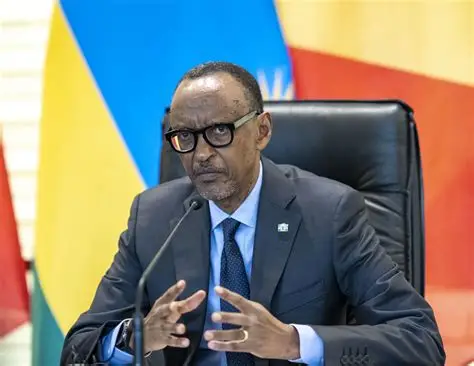
Paul Kagame is a Rwandan politician and former military leader who has served as the President of Rwanda since 2000. Widely recognized for leading the Rwandan Patriotic Front (RPF) during the campaign that ended the 1994 Genocide against the Tutsi, Kagame has played a central role in rebuilding Rwanda and shaping its modern political and economic landscape.
Born on October 23, 1957, in Tambwe, Southern Province, Rwanda, he has overseen significant progress in economic development, healthcare, infrastructure, technology, and public administration while remaining a prominent and often debated figure in African politics. His leadership continues to influence discussions on governance, national reconciliation, and development across the continent.
His life story reflects resilience forged in exile, military discipline, and a commitment to national rebuilding. From refugee camps in Uganda to commanding a liberation army and guiding Rwanda’s recovery, Kagame has shaped the country’s path toward unity, development, and self-reliance. His approach emphasizes accountability, innovation, and long-term planning through strategies like Vision 2020 and Vision 2050.
Paul Kagame Early Life
Paul Kagame was born on October 23, 1957, in Tambwe village, Gitarama Prefecture, in what was then Ruanda-Urundi under Belgian administration (now part of Rwanda’s Southern Province). He was the youngest of six children in a Tutsi family. His father, Deogratias Rutagambwa, came from a Tutsi background with ties to traditional leadership structures, though he worked independently as a farmer or in business. His mother, Asteria Bisinda Rutagambwa, had connections to the royal Nyiginya clan, including links to Queen Rosalie Gicanda.
The family’s roots trace to the Southern Province, a region with deep historical and cultural significance for Rwanda. Tutsi communities in this area maintained strong social and familial networks tied to pre-colonial governance. However, colonial policies under Germany and then Belgium deepened ethnic divisions by favoring Tutsis in administration, which later fueled resentment.
In 1959, as Rwanda moved toward independence, violence against Tutsis erupted during the “peasant revolution” or social revolution led by Hutu groups. Thousands of Tutsis faced attacks, and Kagame’s family fled when he was about two years old. They sought refuge first in places like the Democratic Republic of Congo (then Zaire) and Burundi before settling in Uganda around 1960 or 1962, in the Nshungerezi refugee camp in the Toro sub-region.
Life in the refugee camps was challenging. Kagame began primary education near the camp, learning English and adapting to Ugandan society. He later attended schools like Rwengoro Primary School and Ntare School in Kampala, one of Uganda’s top secondary schools (also attended by future Ugandan President Yoweri Museveni). Academic performance fluctuated after personal losses, including his father’s death in the early 1970s and separation from siblings. Some sisters went to Italy, and a brother died in an accident. Kagame completed studies at Old Kampala Secondary School.
These early experiences of displacement and marginalization deeply influenced his worldview. As a refugee, he faced discrimination but also built connections with other Rwandan exiles, including Fred Rwigyema, who became a key comrade. Kagame made brief visits to Rwanda in 1977 and 1978, reconnecting with family and observing conditions at home.
Paul Kagame Education
Kagame’s formal education occurred mainly in Uganda amid refugee life. He attended primary schools in refugee settings and progressed to secondary education in Kampala. He studied at Makerere University in Kampala for some time, though details of completion vary in sources.
Later, he pursued professional development. He earned a diploma in Professional Management and Business Studies from the Open University of London. Military training formed a significant part of his education. In 1990, he attended the U.S. Army Command and General Staff College at Fort Leavenworth, Kansas, for a command and staff course. This training came at a pivotal moment, just before the RPF invasion.
Kagame has received several honorary doctorates, including from Vellore Institute of Technology in India (2002), Oklahoma Christian University (2006), and others, recognizing his leadership and contributions to development.
Paul Kagame Career
Military Service in Uganda
Kagame joined the National Resistance Army (NRA) in 1979, one of the first 27 fighters alongside Yoweri Museveni fighting against Ugandan regimes, including that of Idi Amin and later Milton Obote. He served as an intelligence officer, gaining a reputation for discipline and effectiveness in guerrilla warfare. By 1986, after the NRA’s success, he became acting chief of military intelligence.
This period honed his organizational and strategic skills. Many Rwandan exiles, including Kagame and Rwigyema, used their positions in the Ugandan army to prepare for eventual return to Rwanda.
Leadership in the Rwandan Patriotic Front and Civil War
In the late 1980s, Kagame and others formed the Rwandan Patriotic Front (RPF), aiming to end exile and address discrimination against Tutsis. The RPF launched an invasion on October 1, 1990. Kagame was in the United States for training at Fort Leavenworth when the offensive began. After Rwigyema’s death early in the fighting, Kagame took command, returned, and reorganized the forces.
The Rwandan Civil War (1990-1994) involved intense fighting and Arusha peace negotiations (1991-1993), which Kagame helped lead. The 1994 genocide interrupted the process. After President Juvénal Habyarimana’s plane was shot down on April 6, 1994, Hutu extremists orchestrated the mass killing of Tutsis and moderate Hutus, resulting in around 800,000 deaths in 100 days.
Kagame’s RPF forces advanced, capturing Kigali in July 1994 and ending the genocide. This victory marked the start of Rwanda’s reconstruction under RPF leadership.
Vice Presidency and Rise to Presidency
In 1994, Kagame became Vice President and Minister of Defence in a broad-based government. He held significant influence while Pasteur Bizimungu served as president. Kagame focused on security, demobilization, and rebuilding institutions.
In 2000, Parliament elected him president after Bizimungu’s resignation. He won subsequent elections in 2003, 2010, 2017, and 2024 with large majorities. A 2015 constitutional amendment allowed him to run for additional terms.
Paul Kagame Political Leadership and Governance
Kagame has prioritized unity and reconciliation. Policies discourage ethnic divisionism while promoting “Rwandanness.” Gacaca community courts addressed genocide-related cases, promoting accountability and healing. His government emphasizes good governance, low corruption, and public accountability.
Critics accuse the administration of authoritarian tendencies, limited political space, and human rights concerns, including restrictions on opposition and media. Supporters highlight stability and development as necessary after genocide.
Kagame has championed regional stability, participating in efforts in the Democratic Republic of Congo and broader African Union initiatives. He served as African Union Chairperson (2018-2019) and Commonwealth Chair-in-Office (2022-2024).
Paul Kagame Economic Vision and Development Achievements
Under Kagame, Rwanda pursued Vision 2020, which focused on rebuilding after genocide. The country achieved strong average annual GDP growth around 8%, poverty reduction, improved health and education, and infrastructure development. Key sectors include agriculture modernization, tourism, services, and emerging industries.
Vision 2050 builds on this, aiming for upper-middle-income status by 2035 and high-income by 2050, with targets for GDP per capita growth, urbanization, private investment, and innovation. The National Strategy for Transformation (NST2, 2024-2029) outlines priorities like job creation (1.25 million jobs), export growth, education quality, and health improvements.
Rwanda has invested in technology, with initiatives in ICT, digital inclusion, and becoming a knowledge economy hub. Tourism, including gorilla trekking in Volcanoes National Park and Akagera wildlife, contributes significantly. Agriculture focuses on productivity, irrigation, and market orientation.
Paul Kagame Awards
Kagame has received numerous recognitions, including:
- Honorary Doctorates from institutions like Vellore Institute of Technology and Oklahoma Christian University.
- Clinton Global Citizen Award (2010).
- ICT Africa Award.
- Various peace, leadership, and development honors from organizations worldwide.
- Recent recognition from WHO for leadership on the global pandemic agreement (2025).
These reflect international acknowledgment of Rwanda’s progress in health, governance, and development.
Paul Kagame Personal Life
Paul Kagame married Jeannette Nyiramongi in 1989. They met in Kenya. Jeannette, born in Burundi, is involved in social initiatives as First Lady, founding the Imbuto Foundation focused on youth, education, health, and empowerment.
They have four children: Ivan Cyomoro Kagame, Ange Kagame, Ian Kagame, and Brian Kagame. Ange has been active in public roles and married in 2019. Sons have pursued education and military service; Ian graduated from Sandhurst. Kagame has spoken about balancing leadership with fatherhood.
Kagame enjoys tennis, football, and reading. He maintains a disciplined, teetotaler lifestyle. The family has faced the challenges of public life, including security concerns common for leaders in the region.
Paul Kagame Role in Regional and International Affairs
Kagame has engaged actively in East African Community, African Union, and global forums. Rwanda contributes peacekeepers to UN missions. Relations with neighbors, particularly DRC, remain complex due to security threats like the FDLR. Kagame stresses Rwanda’s right to self-defense while denying direct involvement in neighboring conflicts.
He advocates for African self-reliance, reduced aid dependency, and fair global partnerships. Initiatives in health, climate, and digital economy position Rwanda as a continental voice.
Paul Kagame Legacy and Challenges
Kagame’s leadership transformed Rwanda from genocide ruins to a stable, growing nation. Achievements in women’s empowerment, health (e.g., reduced mortality), education access, and anti-corruption stand out. Rwanda ranks highly in ease of doing business and governance metrics in Africa.
Challenges include sustaining growth, youth employment, climate resilience, and addressing criticisms on political freedoms. The path forward involves deepening democracy, private sector dynamism, and inclusive prosperity under Vision 2050.
Read Also: Ebiere Soberekon Biography: Age, State of Origin, Husband, Wedding Day, Career, Net Worth & Family
Conclusion
Paul Kagame’s journey from exile to presidency embodies determination to overcome adversity. Rwanda’s progress demonstrates what focused leadership and citizen commitment can achieve. Future success will depend on building on strengths while adapting to new realities for a prosperous, united nation.
FAQs
What is Paul Kagame’s date of birth and place of origin?
Paul Kagame was born on October 23, 1957, in Tambwe, Southern Province, Rwanda. His family has deep roots in the region.
How did Paul Kagame rise to power?
Through military leadership in the RPF, which ended the 1994 genocide, followed by roles as Vice President and election as President in 2000.
What are Paul Kagame’s main achievements in Rwanda?
Economic growth, poverty reduction, reconciliation, infrastructure, health and education improvements, and positioning Rwanda as a development model.
Who is Paul Kagame’s wife and family?
Married to Jeannette Nyiramongi since 1989; they have four children: Ivan, Ange, Ian, and Brian.
What is Vision 2050 under Paul Kagame?
A long-term plan to transform Rwanda into a high-income country by 2050 through sustained growth, innovation, and human development.
Has Paul Kagame received international awards?
Yes, including honors for leadership, peace efforts, ICT promotion, and global health initiatives.