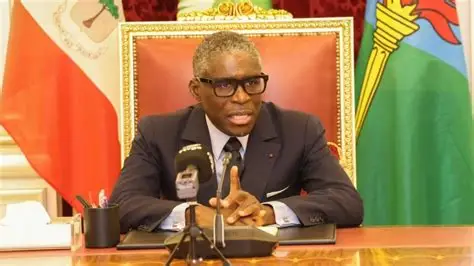
Teodoro Nguema Obiang Mangue, widely known as Teodorín or Teddy Nguema, is an Equatoguinean politician serving as the First Vice President of Equatorial Guinea. Best known as a senior government official and the eldest son of President Teodoro Obiang Nguema Mbasogo, he has played a prominent role in the country’s political leadership through positions in forestry, agriculture, national security, and the vice presidency.
Born on June 25, 1969, in Acoacán, Equatorial Guinea, Teodorín remains one of the country’s most influential political figures and is widely regarded as a leading successor to his father’s long-standing presidency. His public career has drawn international attention for both his government responsibilities and the legal controversies surrounding his wealth and assets.
Teodorín’s life reflects the complexities of power, wealth, and governance in Equatorial Guinea, a nation rich in oil and natural resources yet facing significant development challenges. His career spans ministerial positions, military ranks, and media ventures, while international scrutiny has focused on allegations of corruption and a high-profile lifestyle. This biography explores his background, contributions, and the broader context of his role in Equatoguinean society.
Teodorin Obiang Early Life and Background
Teodoro Nguema Obiang Mangue entered the world on 25 June 1969 in Acoacán, a town in the Mongomo district of what is now the Wele-Nzas province in continental Equatorial Guinea. His birthplace lies in the heart of the Fang ethnic group’s traditional lands, near the border with Gabon. The Fang people form the largest ethnic group in the country, comprising roughly 80-90% of the population, particularly dominant in the mainland region of Río Muni.
Acoacán and the surrounding Mongomo area represent the Esangui clan’s origins, a subgroup of the Fang to which the Obiang family belongs. This clan has played a central role in national politics since independence. Teodorín grew up amid the political transformations following Equatorial Guinea’s independence from Spain in 1968. His father, Teodoro Obiang Nguema Mbasogo, rose to power through a 1979 coup against his uncle, Francisco Macías Nguema, establishing a long-standing family influence.
The Fang people trace their roots to Bantu migrations, settling in the rainforests of what is now Equatorial Guinea, Gabon, and Cameroon. Traditionally, they practiced agriculture, hunting, and maintained rich cultural traditions, including the use of the mvett, a musical instrument tied to oral history and spirituality. In the colonial era, Spanish authorities interacted with Fang communities through missions and administrative control, often facing resistance. Post-independence, the Fang became the dominant force in politics and the military under leaders from Mongomo.
Teodorín’s early years occurred against a backdrop of political upheaval. His father’s regime brought stability after the chaotic Macías period but also centralized power within the family and Esangui clan. As the son of the president and first lady Constancia Mangue, Teodorín enjoyed privileges, including access to international education, while the broader population dealt with economic shifts from cocoa and timber to oil dominance in the 1990s.
Teodorin Obiang Education
Teodorín received a privileged education abroad, beginning at the École des Roches, a prestigious private boarding school in Normandy, France. This institution, known for educating children of global elites, exposed him to Western culture and networks from a young age. He later enrolled in a non-degree English as a second language program at Pepperdine University in Malibu, California.
His time at Pepperdine was short-lived, lasting about five months. Reports describe a focus on social activities and luxury living at places like the Beverly Wilshire Hotel rather than consistent class attendance. He reportedly left at the urging of university officials. Despite this, some accounts, including from The Times, have referred to him as a graduate, though official details confirm the limited program.
These experiences shaped his worldview, blending Equatoguinean roots with international exposure. French and English proficiency, alongside his native Fang language, aided his later diplomatic and political engagements. His education highlighted the contrast between elite opportunities available to the ruling family and the challenges faced by many Equatoguinean youth in accessing quality schooling domestically.
Teodorin Obiang Political Career
Teodorín Obiang’s political career began in the 1990s as an adviser to the presidency. In 1997, his father appointed him Minister of Agriculture and Forestry, a position he held until 2012. This role involved oversight of timber resources and agriculture in a country transitioning to oil as its economic mainstay.
In May 2012, he became Second Vice President, focusing on defense and security. By June 2016, following his father’s re-election, he advanced to First Vice President, solidifying his status as heir apparent. In 2018, he received the rank of Major General in the Armed Forces. He also leads the National Commission for the Prevention and Fight Against Corruption (CNPCC), established in 2022, where he has directed efforts against perceived regime opponents.
Teodorin Obiang Role in Defense and Security
As vice president in charge of defense and security, Teodorín has influenced military and internal affairs. His appointments align with a strategy of family control over key institutions, ensuring continuity in governance. Observers note his involvement in maintaining regime stability amid regional and domestic pressures.
Teodorin Obiang Media and Business Ventures
Beyond politics, Teodorín founded Asonga TV and Radio Asonga, marking private media presence in a tightly controlled information environment. These outlets have broadcast music, news, and content reflecting regime perspectives, while allowing him to engage with hip-hop culture through his TNO Entertainment label.
His business interests have included timber operations, raising questions about conflicts of interest given his ministerial history. These ventures illustrate the intersection of political power and economic activity in Equatorial Guinea.
Teodorin Obiang Achievements and Contributions
Teodorín has contributed to institutional developments, such as the anti-corruption commission, and supported media diversification through Asonga. His military promotion and vice-presidential roles underscore efforts toward dynastic succession and national security. Proponents highlight his role in maintaining stability and promoting certain cultural initiatives.
Teodorin Obiang Awards
Public records of formal international awards for Teodorín are limited, as his profile centers more on political appointments than traditional honors. Within Equatorial Guinea, his high-level positions and military rank serve as primary recognitions of status. He has not been prominently associated with major global awards, with focus instead on his governmental roles.
Teodorin Obiang Personal Life
Teodorín maintains a private personal life, with reports indicating he has children but has not publicly married. He has been linked to various high-profile relationships, including with figures in entertainment. His family ties remain central, with strong bonds to his mother Constancia Mangue and siblings from his father’s other relationships.
The Obiang family structure reflects Fang traditions of polygamy and large extended networks. President Obiang has multiple wives and numerous children, with Teodorín as the prominent son from the first marriage. This dynamic influences power distribution, with relatives holding key posts.
Teodorin Obiang Lifestyle and International Controversies
Teodorín has faced extensive international scrutiny over his lifestyle. Investigators in the US, France, Switzerland, and elsewhere have examined allegations of embezzlement and money laundering, linking assets like luxury cars (including multiple Bugatti Veyrons), a Paris mansion on Avenue Foch, a Malibu property, yachts, and art collections to public funds.
Key cases include a 2014 US settlement involving forfeiture of assets valued around $30-34 million, with some proceeds intended for Equatoguinean benefit. In France, a 2017 conviction (upheld later) resulted in a suspended sentence and seizures totaling over €100 million. Swiss authorities auctioned vehicles, and other probes continue. Teodorín has denied wrongdoing, citing immunity and legal defenses.
These matters highlight broader debates on governance, resource management, and accountability in resource-rich nations. Equatorial Guinea’s oil wealth, discovered in the 1990s, has generated revenue, yet poverty persists for many citizens, contrasting with elite spending patterns.
Teodorin Obiang State of Origin and Cultural Context
Teodorín hails from Acoacán in Mongomo, a key area for the Esangui clan of the Fang people. The Fang dominate Equatorial Guinea’s mainland, with cultural practices emphasizing kinship, oral traditions, and resilience in the rainforest environment. Mongomo’s history ties closely to the ruling family, providing a base of support.
The region’s Fang communities have navigated colonial Spanish rule, independence struggles, and post-colonial politics. Teodorín’s background embeds him in this heritage, influencing his public image and political alliances.
Teodorin Obiang Impact on Equatorial Guinea
Teodorín’s positions have shaped defense, anti-corruption efforts, and media. Supporters point to stability and modernization attempts, while critics focus on governance challenges and inequality. His role underscores ongoing discussions about political transitions in long-standing leadership contexts.
Read Also: Ebiere Soberekon Biography: Age, State of Origin, Husband, Wedding Day, Career, Net Worth & Family
Conclusion
Teodoro Nguema Obiang Mangue remains a pivotal figure in Equatorial Guinea, balancing political responsibilities, family legacy, and international perceptions. His journey from Acoacán to vice presidency encapsulates the nation’s modern history of resource wealth, power consolidation, and development aspirations. As the country evolves, his contributions and challenges will continue to influence its path forward.
FAQs
Who is Teodorin Obiang?
Teodorin Obiang, full name Teodoro Nguema Obiang Mangue, is the First Vice President of Equatorial Guinea and son of the president.
What is Teodorin Obiang date of birth and place of birth?
He was born on 25 June 1969 in Acoacán, Equatorial Guinea.
What positions has Teodorin Obiang held?
He served as Minister of Agriculture and Forestry, Second Vice President, and now First Vice President, with military rank as Major General.
What media outlets did Teodorin Obiang found?
He founded Asonga TV and Radio Asonga.
Has Teodorin Obiang faced legal issues internationally?
Yes, he has been involved in corruption and money laundering cases in France, the US, and other countries, resulting in asset seizures and convictions in absentia, which he disputes.
What is the ethnic background of Teodorin Obiang?
He belongs to the Fang ethnic group, specifically the Esangui clan from the Mongomo area.
What is Teodorin Obiang net worth estimate?
Estimates place his wealth at around $600 million, including various assets, though much has been subject to legal actions.