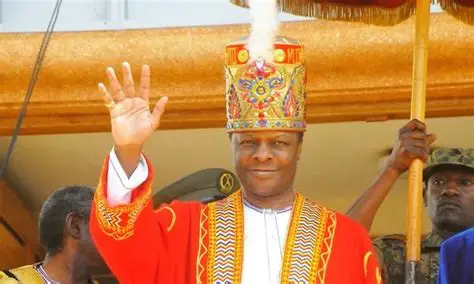
Ronald Edward Frederick Kimera Muwenda Mutebi II, widely known as Kabaka Ronald Muwenda Mutebi II, is the 36th Kabaka of Buganda, the traditional king of Buganda Kingdom and one of East Africa’s most respected cultural leaders. Widely recognized for preserving Buganda’s rich heritage, promoting education, healthcare, and community development, he has played a pivotal role in strengthening one of Africa’s oldest and most influential monarchies.
Born on April 13, 1955, at Mulago Hospital in Kampala, Uganda, Mutebi II ascended the throne in 1993 following the restoration of traditional kingdoms in Uganda. His leadership continues to foster cultural identity, social progress, and unity among the people of Buganda. This article explores Kabaka Ronald Muwenda Mutebi II’s biography, early life, coronation, reign, achievements, personal life, and enduring legacy.
Kabaka Ronald Muwenda Mutebi II holds a central place in the cultural and social life of the Baganda people and broader Uganda. His reign, which began formally in 1993 after years of exile and political upheaval, has focused on cultural revival, community development, and unity. He leads Buganda as a constitutional traditional institution within modern Uganda, balancing heritage with progress in health, education, and economic initiatives. His life story reflects resilience shaped by exile, education abroad, and a commitment to his people’s welfare.
Muwenda Mutebi II Early Life and Background
Muwenda Mutebi II entered the world during a time of political tension in Uganda. His father, Sir Edward Frederick William David Walugembe Mutebi Luwangula Muteesa II, was the Kabaka of Buganda and the first President of independent Uganda. His mother was Namasole Sarah Nalule Kisosonkole (also known as Nabakyala Sarah Nalule), from the Nkima (Monkey) clan.
The young prince spent part of his early childhood immersed in Baganda traditions. He lived in places like Kalo Amatendo Village (now in Kyankwanzi District) to learn the customs, language, and daily life of ordinary people. This grounding helped prepare him for leadership by fostering an understanding of his subjects’ realities. He walked to school without shoes at times, accompanied only by an armed guard, experiencing life close to that of common Baganda families.
In 1966, at age 11, political crisis struck. Prime Minister Milton Obote’s forces attacked the Mengo Palace, forcing the royal family into exile. Mutebi’s father fled, and the young prince joined him in London. This marked the start of a long period away from home. His mother died in the early 1970s. These events shaped his worldview, teaching him about loss, adaptation, and the importance of cultural identity amid adversity.
Muwenda Mutebi II Education
Mutebi received early education in Uganda at Budo Junior School (also referred to as Buddo Primary or King’s College Budo in some accounts) and a rural preparatory school in Bugangaizi County. He also had private tuition at the palace.
After exile in 1966, he continued studies in the United Kingdom. He attended King’s Mead School in Sussex, Bradfield College in West Berkshire, and later enrolled at Magdalene College, Cambridge, where he studied law and social anthropology. He did not complete the degree but gained valuable exposure to international perspectives, governance, and African affairs.
His time abroad combined academic learning with practical experiences. He adapted to ordinary student life, learning skills like making his bed and managing finances, which contrasted sharply with palace privileges. This period built resilience and a broad outlook that later informed his leadership.
Muwenda Mutebi II Career
Mutebi’s professional path began in exile. He worked as a journalist and served as Associate Editor of the magazine African Concord. He also engaged with the African National Congress (ANC) Executive Committee in London, supporting liberation efforts.
Upon his father’s death in 1969, Mutebi became Head of the Royal House of Buganda at a young age. He performed traditional funeral rites in Uganda in 1971. He returned to Uganda in 1988 after the fall of the Obote II regime.
In 1993, following the restoration of traditional kingdoms in Uganda, he was proclaimed Kabaka at Buddo on 24 July and crowned on 31 July at Naggalabi Buddo. He assumed the style “His Majesty” and established his seat at Mengo in Kampala. His reign, known as Omulembe Omutebi, emphasizes cultural renewal and development.
Muwenda Mutebi II Leadership in Buganda Restoration and Governance
One of his first major tasks was restoring Buganda’s institutions. He reinstated the Lukiiko (Buganda Parliament) and a cabinet led by the Katikkiro (Prime Minister). The kingdom operates across 18 counties with a structured hierarchy of chiefs at county, sub-county, parish, and village levels. Clan heads (Abataka) play key roles in preserving customs.
Mutebi established or supported entities like the Buganda Land Board for managing returned properties and settling disputes, the Buganda Cultural and Development Foundation (BUCADEF), and the Kabaka Foundation for philanthropy. These bodies handle land, economic projects, and community support.
Muwenda Mutebi II Contributions to Health Initiatives
Health has been a priority. The kingdom has built multiple hospitals and health centers in counties such as Busiro, Buddu, Kyaggwe, Ssingo, and Bulemeezi. Facilities like those in Nsangi and Kalasa improve access. The Kabaka Foundation organizes medical camps, blood donation drives, and vaccination efforts.
Mutebi serves as a UNAIDS Goodwill Ambassador, focusing on ending AIDS among men. Initiatives like the “Men are Stars” campaign and the annual Kabaka Birthday Run mobilize communities for testing, treatment, and awareness around HIV/AIDS, sickle cell, and other issues. The run attracts tens of thousands and has contributed to declines in new infections in the region.
Muwenda Mutebi II Efforts in Education and Youth Empowerment
Education remains central. The Kabaka Education Fund (KEF) has provided bursaries to thousands of students. The kingdom supports nursery, primary, and secondary schools, including Lubiri schools. Muteesa I Royal University, where Mutebi was installed as first chancellor in 2011, promotes higher education named after an ancestor known for advancing learning.
Youth programs include vocational training centers and the Nnabagereka Development Foundation’s Ekisaakate camps, which teach skills, morals, and culture to young people.
Muwenda Mutebi II Economic and Agricultural Development
The “Mwanyi Terimba” (Coffee is Wealth) campaign encourages coffee farming, boosting production significantly. Buganda contributes a large share of Uganda’s coffee exports. Partnerships like Ssemaduuka with banks provide financing and inputs to farmers.
Other enterprises include K2 Telecom, CBS FM, BBS Television, and commercial properties, generating revenue and employment while promoting culture.
Muwenda Mutebi II Cultural Preservation and Tourism
Mutebi has overseen the rehabilitation of royal tombs like Kasubi (a UNESCO site) and others. The Buganda Heritage Board manages cultural sites, museums, and tourism. Events like the Masaza Cup (inter-county sports) and Bika Bya Baganda (clan competitions) foster unity and pride.
Media outlets like CBS FM have amplified Luganda language and culture, launching artists and preserving traditions.
Muwenda Mutebi II Personal Life
Kabaka Ronald Muwenda Mutebi II married Sylvia Nagginda (Nnaabagereka) on 27 August 1999 at St. Paul’s Cathedral Namirembe in Kampala. She is from the Musu (Edible-Rat) clan and brings advocacy for girls’ education, maternal health, and gender equality through her foundation.
Their daughter is Princess Sarah Katrina Mirembe Ssangalyambogo Nachwa, born in 2001 in London. Mutebi has other children from previous relationships, including Prince Crispin Jjunju Suuna (Kiweewa), Princess Victoria Nkinzi, Princess Joan Tebatagwabwe Nassolo, Prince Richard Ssemakookiro, and others like Jasmine Babirye and Jade Nakato. Family details are often handled with cultural sensitivity in Baganda tradition.
Muwenda Mutebi II State of Origin and Buganda Heritage
Buganda, centered in the central region of Uganda around Kampala and Mengo, is Mutebi’s ancestral home. The kingdom traces its lineage back over 700-800 years to founder Kato Kintu. It encompasses 52 clans and a rich history of governance, diplomacy, and resistance. The Baganda people value customs, clans (with totems), language (Luganda), and institutions like the Kabakaship.
Mutebi’s reign has strengthened this heritage while adapting to contemporary Uganda. He maintains the capital at Mengo and promotes unity across diverse communities.
Awards and Honours
Mutebi holds traditional titles such as the Peaceful Lion, Ssabalongo, Ssaabasajja, and others. He is Sovereign of the Order of the Shield and Spears. He has received national recognition, including a 2025 award for the Mwanyi Terimba campaign’s impact on wealth creation. UNAIDS has honored him for HIV/AIDS efforts.
He awards kingdom honours like Ejjinja ery’Omuwendo and Ekitiibwa ky’Amafumu n’Engabo to deserving individuals for service.
Other Important Aspects of Muwenda Mutebi II Leadership
Muwenda Mutebi II Relationship with National Government
Mutebi maintains a pragmatic engagement with Uganda’s central government under President Yoweri Museveni. While culturally influential, he avoids partisan politics. There have been tensions over land and autonomy, but collaboration on development persists.
Muwenda Mutebi II Environmental and Community Projects
Reforestation, sanitation drives, and community mobilization reflect his holistic approach to sustainable development.
Read Also: Ebiere Soberekon Biography: Age, State of Origin, Husband, Wedding Day, Career, Net Worth & Family
Conclusion
Kabaka Ronald Muwenda Mutebi II’s life and reign embody resilience and dedication to Buganda’s future. From exile to enthronement, he has guided cultural revival and practical progress, strengthening identity while addressing modern challenges in health, education, and economy. His legacy continues to shape the Baganda people and contribute to Uganda’s diversity.
FAQs
Who is Muwenda Mutebi II?
Muwenda Mutebi II is the current Kabaka of Buganda, born in 1955, and a key cultural leader in Uganda.
When was Muwenda Mutebi II crowned?
He was crowned on 31 July 1993 at Naggalabi Buddo.
What is the role of the Kabaka in modern Uganda?
The Kabaka serves as a cultural and spiritual leader, promoting development and unity without executive political power.
How many children does Muwenda Mutebi II have?
He has several children, including a daughter with the Nnaabagereka and others from previous relationships.
What are some key achievements of Muwenda Mutebi II?
Key achievements include health infrastructure, education funds, agricultural campaigns like Mwanyi Terimba, and cultural restorations.