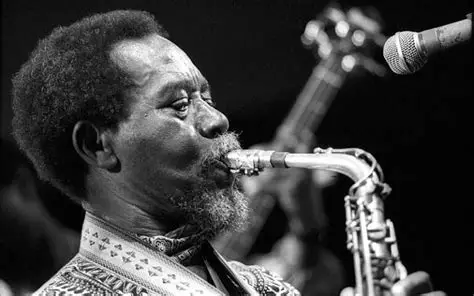
Emmanuel Tettey Mensah, widely known as E.T. Mensah, was a legendary Ghanaian musician, composer, and bandleader celebrated as the father of modern highlife music. Renowned for his exceptional talent as a saxophonist and trumpeter, Mensah transformed Ghanaian highlife into an internationally recognized genre by blending traditional African rhythms with jazz, swing, and Latin influences.
As the leader of the iconic Tempos band, he introduced a vibrant new sound that captivated audiences across West Africa and influenced generations of musicians. His groundbreaking contributions established him as one of Africa’s greatest musical pioneers. This article explores E.T. Mensah’s biography, music career, achievements, personal life, and enduring legacy.
His work reached far beyond Ghana, inspiring musicians across Nigeria, the Congo, and other parts of the continent. E.T. Mensah balanced a professional career as a pharmacist with his dedication to music, using the income from his pharmacy to support his band during its formative years. This biography explores his life from childhood in Accra through his rise as the King of Highlife, his extensive recordings and tours, his honors, and the lasting impact of his contributions to Ghanaian and African culture.
E.T. Mensah Early Life
Emmanuel Tettey Mensah was born on 31 May 1919 in Ussher Town, a historic area of Accra in what was then the Gold Coast, West Africa. Ussher Town formed part of the bustling coastal community that would later become central to modern Accra. His family background placed him within the Ga community that has long inhabited the Accra plains and coastal settlements.
Growing up in this environment exposed him to a rich mix of traditional Ga music, Christian church hymns, and the European military and dance band styles that arrived with colonial rule and wartime presence.
From a young age, Mensah showed strong interest in music. He attended a Government School in Accra, where formal education included opportunities to join school bands. At around the age of twelve he began learning the flute in the Government School band. This early training gave him a foundation in reading music and performing in organized groups.
In 1932 he joined the Accra Orchestra, a band made up of schoolchildren under the direction of teacher Joe Lamptey. Lamptey had developed the group from a school fife band, and under his guidance Mensah learned to play both the concert flute and the piccolo. These early experiences in structured ensembles taught him discipline, ensemble playing, and the basics of Western musical notation while still keeping him connected to local rhythmic traditions.
Accra in the 1920s and 1930s was a lively colonial capital with a growing urban population. Military bands, church choirs, and emerging dance orchestras filled the social calendar. Young Mensah absorbed these sounds. His older brother, Yebuah Mensah, already led a dance orchestra, and the two siblings later collaborated musically.
The competitive spirit of the time encouraged young players to master multiple instruments. Mensah progressed from flute and piccolo to alto saxophone, expanding his range and preparing him for the larger dance band settings that would define his career.
Family life in Ussher Town provided stability during his formative years. The Ga cultural setting emphasized communal gatherings, storytelling, and music as part of daily and ceremonial life. These elements later appeared in the highlife style he helped refine, where local languages and dance rhythms met imported harmonic structures. By his mid teens Mensah had already gained practical experience performing in public settings, laying the groundwork for a lifetime dedicated to music even as he pursued formal academic and professional paths.
E.T. Mensah Education
Mensah’s formal education began at the Government School in Accra and continued at Accra High School. These institutions offered a standard colonial curriculum that included reading, writing, arithmetic, and some exposure to European cultural subjects. Music instruction at school proved especially valuable. Under teachers such as Joe Lamptey he received systematic training in instrumental technique and music reading that many self taught musicians of the era lacked.
After secondary schooling he pursued professional training in pharmacy. In 1943 he graduated as a qualified pharmacist from the training program associated with Korle Bu Teaching Hospital in Accra. This achievement gave him a stable and respected profession at a time when few Africans held such qualifications.
Following graduation he was posted to the Ashanti Region, where he worked for several years. The posting took him inland from the coastal capital and exposed him to different regional musical styles and social environments.
The dual path of pharmacy and music became a defining feature of his adult life. Pharmacy provided reliable income and social standing. It also gave him the financial independence needed to invest in musical equipment, hire musicians, and sustain a professional band during periods when performance fees alone might not have covered costs. When he later returned to Accra he opened his own pharmacy shop. The earnings from this business directly supported the reorganization and growth of the Tempos band.
Mensah never abandoned his musical studies even while training and working as a pharmacist. Between 1936 and 1946 he continued performing with various groups, including the Accra High School Orchestra, the Accra Rhythm Orchestra, and the Kumasi Philharmonic Orchestra during his time in Ashanti.
This combination of formal education, professional qualification, and ongoing musical practice equipped him with both practical skills and the resources to lead a major dance band.
E.T. Mensah Origins and Cultural Roots in Accra
Accra, the city of Mensah’s birth and lifelong base, has deep historical roots as a Ga settlement that grew into the capital of the Gold Coast and later independent Ghana. Ussher Town, specifically, formed one of the older quarters near the coast, close to the sites of early European trading forts.
The Ga people maintained strong traditions of drumming, singing, and communal dance long before colonial contact. Highlife music itself emerged from the interaction between these indigenous forms and the brass band, ballroom, and jazz styles introduced by Europeans and by African American influences carried through recordings and visiting musicians.
Mensah’s upbringing in this environment meant he heard traditional Ga rhythms alongside military band marches and the popular dance music of the day. The coastal location also brought contact with sailors, traders, and later Allied soldiers during the Second World War.
These contacts introduced new instruments, harmonic ideas, and rhythmic patterns that local musicians adapted. Mensah’s later highlife style reflected this layered heritage. He retained African rhythmic foundations while incorporating swing jazz phrasing, Latin percussion elements, and clear melodic lines suitable for dancing in urban clubs and open air venues.
The Ga cultural emphasis on eloquence, communal celebration, and respect for skill found expression in Mensah’s approach to band leadership and composition. He wrote lyrics in local languages as well as in English and other West African tongues, making his music accessible across ethnic and national boundaries. Understanding Accra’s position as both a traditional Ga center and a colonial administrative hub helps explain how Mensah could move comfortably between local audiences and international stages.
E.T. Mensah Career
Mensah’s professional musical career unfolded over more than five decades, evolving from school ensembles to the leadership of one of West Africa’s most celebrated dance bands.
Early Band Experience and the Accra Rhythm Orchestra
In the late 1930s Mensah and his brother Yebuah formed the Accra Rhythmic Orchestra. The group competed successfully, winning the Lambeth Walk Dance Competition in 1939 at the King George Memorial Hall, later the site of Ghana’s Parliament House. This early success demonstrated Mensah’s ability to organize musicians and present polished performances. He continued playing alto saxophone with various Accra based groups through the 1940s while completing his pharmacy training and working in Ashanti.
Formation and Leadership of the Tempos
The original Tempos band began in 1946 as a jam session group organized by European soldiers stationed in Accra. It performed at army dances and the Accra Club. African musicians gradually replaced the Europeans. Mensah joined in 1947 under leaders Joe Kelly and Guy Warren, also known as Kofi Ghanaba. When the band split around 1950, Mensah used earnings from his pharmacy to recruit new players and reestablish the group under his own leadership as E.T. Mensah and the Tempos.
The Tempos became the model for modern highlife dance bands. The lineup typically featured a Cuban style rhythm section, electric lead and rhythm guitars, electric bass, two trumpets, and multiple vocalists. Mensah himself played saxophone and trumpet and handled much of the arranging and composition. In 1952 the band made its first recordings for Decca. These early sides helped spread the highlife sound beyond live performances.
Tours, Independence Era, and International Reach
The Tempos toured extensively across West Africa, particularly Nigeria, where highlife found enthusiastic audiences. Mensah’s 1949 visit to Nigeria helped introduce the dance band style there and left a lasting impression on younger musicians, including the future Afrobeat pioneer Fela Kuti.
In 1953 the band undertook a successful tour of Britain. In 1957, the year of Ghana’s independence, Mensah composed and recorded “Ghana Freedom Highlife,” a song whose lyrics celebrated the struggle and achievement of sovereignty. That same year he shared a stage with the American jazz legend Louis Armstrong during Armstrong’s visit to Ghana.
In 1954 Mensah also formed a second group, the Star Rockets. The Tempos remained his primary vehicle. By the late 1960s the band’s repertoire had expanded to include Congolese styles, reggae, soul, and elements of the emerging Afrobeat and pop music favored by younger listeners. In 1969 the Tempos toured the United Kingdom again and recorded the album “The King of Highlife – African Rhythms” at Decca studios in London.
Later Career and Continued Activity
Although highlife faced competition from new styles in the 1960s and 1970s, Mensah kept the Tempos active. He recorded a total of eleven long playing albums over his career. In 1983 he collaborated with Nigerian trumpeter Dr. Victor Abimbola Olaiya on the album “Highlife Giants of Africa Vol. 1.” Even in later years, when mobility became limited, he continued performing. In 1986 he undertook a world tour despite being confined to a wheelchair, and a special show was organized in his honor in Lagos, Nigeria.
Mensah’s approach combined technical skill on multiple instruments with strong band leadership and an ear for popular dance rhythms. He insisted on tight arrangements, clear melodies, and lyrics that spoke to everyday life and national pride. This combination kept the Tempos in demand for decades and established highlife as a sophisticated urban dance music rather than a purely traditional form.
E.T. Mensah Musical Style and Influence
Highlife under Mensah’s direction featured interlocking guitar patterns, horn riffs influenced by swing jazz, and a steady danceable pulse rooted in African rhythmic concepts. He described the need for an indigenous rhythm that could replace fading foreign styles such as the waltz and rhumba. The result was a music that felt both modern and distinctly West African. Vocalists sang in multiple languages, allowing the music to travel easily across borders.
His influence extended through direct contact and through recordings. Nigerian musicians adopted and adapted the highlife template. Congolese and East African bands drew inspiration from the Tempos’ instrumentation and arranging techniques. In Ghana itself, later highlife artists and guitar band musicians built upon the foundation he helped establish. The 2015 four disc “King of Highlife Anthology” compiled by RetroAfric gathered sixty nine tracks spanning his career and confirmed the depth of his recorded legacy.
E.T. Mensah Discography and Notable Songs
Mensah and the Tempos left a substantial recorded body of work. Early Decca sessions from the 1950s captured the classic highlife sound. Later albums reflected the band’s evolving repertoire. Among the most recognized releases and collections are:
- All for You
- Day by Day: Classic Highlife Recordings
- The King of Highlife – African Rhythms
- Immortal Highlife Recordings of the 1950s and 1960s (Volumes 1 and 2)
- King of Highlife Anthology (four CD box set, 2015)
- Highlife Giants of Africa Vol. 1 (with Victor Olaiya, 1983)
Notable songs include Ghana Freedom Highlife, All for You, Day by Day, 205, Odofo, Ngele Waewae, Muntum, Kwame Nkrumah, and Don’t Mind Your Wife. These tracks showcase the range of the Tempos from independence anthems to romantic and social commentary numbers. Many original 78 rpm shellac discs and later vinyl albums remain prized by collectors, while reissues and compilations have kept the music available to new generations.
E.T. Mensah Awards and Recognition
Recognition for Mensah’s contributions came both during his lifetime and after. In 1975 the Arts Council of Ghana honored him at the National Arts Festival with a stool, formally acknowledging the title “King of Highlife” that audiences and fellow musicians had already conferred.
In 1980 he was elected the first president of the Musicians Union of Ghana (MUSIGA), reflecting the respect he commanded among professional musicians. In 1989 the Ghanaian government awarded him the title Okunini, meaning a very famous or distinguished man, in recognition of his cultural contributions. He also received an honorary doctorate.
These honors confirmed his status not only as a popular entertainer but as a national cultural figure whose work helped define Ghanaian identity in the independence era and beyond.
E.T. Mensah Personal Life
Public information about Mensah’s private family life remains limited compared with details of his musical career. He maintained a pharmacy business that supported both his household and his musical activities. The demands of leading a touring band and running a professional practice required careful balance. Colleagues and historians note his practical approach to sustaining the Tempos through periods when live music income alone might have been insufficient.
He continued performing and recording into the 1980s and early 1990s. Health challenges in later years, including reduced mobility that required the use of a wheelchair, did not end his public appearances. Mensah died on 19 July 1996 in Mamprobi, Accra, at the age of seventy seven. His passing was widely mourned in Ghana and across the West African music community. He left behind a body of recordings and a model of professional band leadership that subsequent generations of highlife musicians continued to study and emulate.
Read Also: Ebiere Soberekon Biography: Age, State of Origin, Husband, Wedding Day, Career, Net Worth & Family
Conclusion
Emmanuel Tettey Mensah transformed highlife from a local dance style into a sophisticated and widely influential form of popular music. Through the Tempos he demonstrated that African rhythms and languages could stand alongside international jazz and dance band techniques without losing their identity. His dual career as pharmacist and musician showed practical determination, while his compositions and performances gave voice to the optimism of Ghana’s independence generation.
The titles King of Highlife and Okunini remain fitting acknowledgments of a lifetime spent elevating Ghanaian music on continental and global stages. His recordings continue to introduce new listeners to the sound of mid twentieth century West Africa, ensuring that the work of E.T. Mensah endures.
FAQs
Who was E.T. Mensah?
Emmanuel Tettey Mensah was a Ghanaian musician, saxophonist, trumpeter, bandleader, and pharmacist best known as the King of Highlife. He led the Tempos band from the early 1950s onward and helped shape modern highlife music across West Africa.
When and where was E.T. Mensah born?
He was born on 31 May 1919 in Ussher Town, Accra, in the Gold Coast, which later became Ghana.
What instruments did E.T. Mensah play?
He began with flute and piccolo, then mastered the alto saxophone and trumpet. He also composed, arranged, and occasionally sang.
What is highlife music and how did Mensah contribute to it?
Highlife is a Ghanaian popular dance music that blends African rhythms with European and American dance band and jazz elements. Mensah modernized the style with electric instruments, tight horn arrangements, and multilingual lyrics, spreading it widely through tours and recordings.
Did E.T. Mensah have another profession besides music?
Yes. He trained as a pharmacist, graduating in 1943, worked in the Ashanti Region, and later operated a pharmacy in Accra. The business helped finance his band.
What are some of E.T. Mensah’s most famous songs?
Ghana Freedom Highlife, All for You, Day by Day, 205, and Odofo rank among his best known recordings.
Did E.T. Mensah perform with famous international artists?
Yes. In 1957 he performed with American jazz trumpeter Louis Armstrong during Armstrong’s visit to Ghana.
When did E.T. Mensah die?
He died on 19 July 1996 in Mamprobi, Accra, at the age of seventy seven.
What honors did E.T. Mensah receive?
He received a ceremonial stool as King of Highlife in 1975, served as first president of MUSIGA in 1980, was given the title Okunini in 1989, and received an honorary doctorate.
Why is E.T. Mensah still important today?
His recordings and band model influenced generations of West African musicians. Compilations such as the King of Highlife Anthology keep his music available, and highlife remains a living tradition that traces important roots to his work.