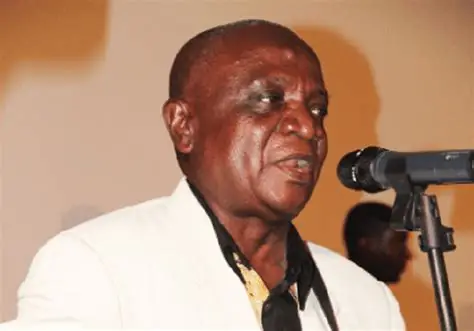
Nana Kwame Ampadu, born Patrick Kwame Ampadu, was a legendary Ghanaian highlife musician, composer, and bandleader whose extraordinary career helped define Ghana’s musical heritage. Celebrated for his masterful storytelling, thought-provoking lyrics, and timeless highlife compositions, Ampadu became one of the genre’s most influential figures.
As the founder of the African Brothers Band, he composed more than 800 original songs that blended traditional rhythms with social commentary and everyday experiences, captivating audiences across Ghana and beyond. His remarkable contributions preserved the rich traditions of highlife music while inspiring generations of musicians. This article explores Nana Kwame Ampadu’s biography, music career, achievements, personal life, and enduring legacy.
From his beginnings in the Eastern Region to national recognition and international tours, Ampadu’s career reflected both personal determination and deep cultural roots. His songs offered advice, celebrated everyday life, and sometimes addressed political issues of the day. This biography explores his journey in clear detail, covering his background, education, professional path, personal life, and lasting impact.
Nana Ampadu Early Life
Nana Kwame Ampadu was born on 31 March 1945 in Obo Kwahu, in what was then the Gold Coast and is now the Eastern Region of Ghana. His birth name was Patrick Kwame Ampadu. His father, Opanyin Kwame Ampadu, served as head of the Asona Clan of Obo Kwahu. His mother, Mercy Afua Ntiriwaa, was a devoted Presbyterian. Both parents came from the same Kwahu community.
The family later moved to Adeemmra near Aboam in the Afram Plains. Young Ampadu grew up in a setting that valued hard work, community, and traditional values. From an early age he showed a strong interest in singing. Teachers and classmates noticed his clear voice and often asked him to lead school songs. These early experiences planted the seeds of his future career. He spent his childhood surrounded by the sounds and stories of Kwahu life, which later appeared in the themes of his music.
Nana Ampadu Education
Ampadu began formal schooling at Obo Roman Catholic Primary School between 1950 and 1952. After the family relocated, he continued his studies in the Afram Plains and completed primary education in 1955 at Standard Three, which corresponds to today’s Class Six.
He then attended Obo Anglican Middle Boys School from 1956 to 1959. There he performed well both academically and in music. The headmaster, Master Ouarcoe, appointed him as a chorister and official tune leader for school activities. In 1957 he passed the West African Examination Council Common Entrance Examination and gained admission with a partial scholarship to Abuakwa State College. Financial difficulties prevented his father from supporting further studies, so Ampadu left formal education and moved to Accra in search of work.
Despite the early end to his schooling, the foundation he received in reading, writing, and music shaped his later ability to compose thoughtful lyrics and lead a professional band.
Nana Ampadu State of Origin and Cultural Roots
Ampadu came from the Kwahu people of Ghana’s Eastern Region. The Kwahu, also called Kwawu, form part of the larger Twi speaking Akan group. Their traditional area lies on the western shore of Lake Volta, between Accra and Kumasi. Major towns include Abene, Abetifi, Pepease, Atibie, Nkwatia, Obo, Bepong, Tafo, Obomeng, Nkawkaw, Mpraeso, and Donkorkrom.
The region is mountainous and has earned the name Asaase Aban, meaning Natural Fortress, because of its high elevation and rocky landscape. The Kwahu people are widely known for their industriousness and strong business skills. Their slogan includes the idea of protecting the land and never quitting. They share the Eastern Region with groups such as the Akyem, Akuapem, and Adangbe Krobo. Like other forest Akan peoples, the Kwahu trace historical origins to the Adansi area.
Growing up in this environment gave Ampadu a deep sense of cultural identity. The values of hard work, community responsibility, and storytelling common among the Kwahu people appear throughout his songs. Obo Kwahu itself remains closely linked to his memory, and his final funeral rites took place there.
Nana Ampadu Career
Ampadu’s professional music life began in Accra after he left school. In 1960 he found work as a messenger with the Ministry of Agriculture at Kwahu Mpraeso. He later worked for the United Ghana Farmers Council Corporation as a messenger and then as a canteen supervisor between 1963 and 1966. He also spent a short time at Faith Drug Store in Okaishie, Accra. During these years he continued writing songs from memory even without instruments and entertained friends with his singing.
Formation of the African Brothers Band
In 1963 Ampadu joined forces with Senior Eddie Donkor, Nana Nyarko, Yaw Asante, Yaw Owusu, Rover Amo Ampadu, Kwame Anim, and Koo Ofori to form the African Brothers Band. The name reflected support for Kwame Nkrumah’s call for African unity. The band held its official inauguration at the Park Cinema Theatre in Accra. They performed original songs at funerals, Muslim wedding ceremonies known as Sunna, and public gatherings.
In 1964 Joe Dee and Oppong Kyekyeku joined as bass player and tenor singer. Ampadu later met Jerry Hansen of the Ramblers Dance Band and gave him several songs that became successful recordings. Hansen introduced Ampadu to Phillips West Africa Limited, which allowed the African Brothers Band to record their first songs. On 14 November 1966 they recorded Agyanka Dabere and Suminaso Ntonko. The single released on 21 December 1966 became an immediate hit and marked the start of their recording career.
By 1967 the group had moved to Kumasi under sponsorship from Ambassador Gardens Hotel and later partnered with D.K. Nyarko of Obuoba Records and Happy Bird Labels. Between 1968 and 1978 the band released more than four hundred single tracks. In 1973 the group became known as the African Brothers International Band. That same year they decided to perform only original compositions rather than cover songs, a practice that set them apart from many other bands of the time.
Rise to National Prominence
Ampadu gained wide attention in 1967 with the song Ebi Te Yie, which means Some Are Well Seated. Some listeners viewed it as critical of the National Liberation Council government, and it temporarily disappeared from the airwaves. It returned after the end of military rule. In 1972 the government organized a nationwide highlife competition.
The African Brothers Band won at the finals held at Rex Cinema in Accra. On 10 February 1973 the Arts Council of Ghana crowned Ampadu with the title Nnwontofohene Nana Kwame Ampadu I, meaning King of Musicians or Singer in Chief.
During the 1970s the band experimented with influences from rumba, reggae, and a style called Afro Hili that aimed to blend various African forms. They later returned to a purer guitar highlife sound. Ampadu also wrote the theme song for the national Operation Feed Yourself programme and composed music used by the Osofo Dadzie drama group and the popular television series Obra.
Later Career and Political Engagement
Ampadu remained active into the 1990s and beyond. He composed a song for Jerry Rawlings’s National Democratic Congress party during the 1992 election campaign and released another song addressing attempts to disqualify Rawlings. He served in public roles including Government Appointee to the Kwahu South District Assembly from 1993 to 2000, General Secretary of the Musicians Union of Ghana in 1992, Board Member of the Ghana Folklore Board of Trustees from 1993 to 2001, and First Vice President of MUSIGA from 1984 to 1991. He continued performing and recording until around 2020.
Key Songs and Albums
Ampadu is credited with composing over eight hundred songs. Many were released as singles or on compilation albums under the African Brothers Band name. Popular titles include:
- Ebi Te Yie
- Oman Bo Adwo
- Agatha
- Kofi Nkrabea
- Yaw Berko
- Akusika
- Driver Adwuma
- Obra
- Agyanka Dabere
- Suminaso Ntonko
- Ntoboase
- Afutusem
- Scholarship
- Me Nsoromma Bepue
Collections such as the Evergreen Tunes series later brought many of these tracks to new listeners. The band recorded extensively in Ghana, creating one of the largest catalogues of original highlife material of its era.
Nana Ampadu Musical Style and Innovations
Ampadu’s highlife combined guitar driven rhythms with clear storytelling lyrics in Twi. His songs often carried moral lessons, observations about daily life, or subtle political messages. The African Brothers Band focused on original material rather than covers, which was unusual at the time. In 1973 Ampadu introduced elements of Afro Highlife Beat.
The band was among the first to record songs longer than the standard maximum length on 45 RPM records and to divide title tracks into Part 1 and Part 2. These approaches influenced later Ghanaian musicians. Ampadu’s voice and guitar work remained central, supported by a revolving cast of skilled band members who later went on to successful careers of their own.
Nana Ampadu Awards and Honors
Ampadu received many awards throughout his career. In 1972 he and the African Brothers Band won the first National Dance Band Competition in Accra. In 1973 the Arts Council of Ghana conferred the title Odwontofoohene or Nnwontofohene Nana Kwame Ampadu I. He received the Grand Medal of the Volta Civil Division in 1977.
In 1997 President Jerry John Rawlings awarded him the State Grand Medal. Between 1981 and 1998 he earned honors from Legon Hall at the University of Ghana, Rex Image Associates, ECRAG, COSGA, and ACRAG. In 2015 he received a Lifetime Achievement Award at the 16th Vodafone Ghana Music Awards. In 2017 he was among five highlife artists honored at a special event. These recognitions reflected both his musical output and his service to Ghanaian culture.
Nana Ampadu Personal Life
Ampadu married several times and had eight children. Their names include Kwadwo Ampadu, Kwaku Amoh Samuel Ampadu, Michael Kwaku Nyarko Ampadu, Naomi Ampadu, Sheila Ampadu, Kwabena Gyimah Amoah Anthony Ampadu, Ohenebah Yaw Rawlings Ampadu, and Yaa Kesewaa Ampadu. One of his widows, Joyce Frimpong, spoke of his gentle character and the importance he placed on reading the Bible.
Beyond music, Ampadu loved football and served as an executive member of Accra Hearts of Oak and Okwawu United. His hobbies included table tennis, draughts, and ludo. He was a devoted Christian and served as an evangelist at the Center for Christ Mission in Achimota. Family members remembered him as someone who balanced a demanding public career with care for those closest to him. His son Anthony Amoah Ampadu later pursued music as well.
Nana Ampadu Public Service and Leadership
In addition to his musical roles, Ampadu held several positions of public trust. He served as Government Appointee to the Kwahu South District Assembly from 1993 to 2000. He was General Secretary of the Musicians Union of Ghana in 1992 and First Vice President of the union from 1984 to 1991. He sat on the Ghana Folklore Board of Trustees from 1993 to 2001 and on the COSGA Band Role Committee from 1991 to 1997. Through these roles he worked to support fellow musicians and preserve Ghanaian cultural traditions. He interacted with national leaders including Lieutenant General Kutu Acheampong, Flight Lieutenant Jerry John Rawlings, and others.
Nana Ampadu Legacy and Influence
Ampadu’s influence extends far beyond his own recordings. The African Brothers Band trained many musicians who later achieved success, among them Senior Eddie Donkor, Sam Derchie, Anthony Scorpion, Apenten, Joe Dee, Oppong Kyekyeku, Teacher Boateng, and others. His song Obra became the theme for a popular Ghanaian television drama series of the same name. The S.K. Oppong Drama Group that toured with his band evolved into the cast of the long running Osofo Dadzie series.
Ampadu’s commitment to original composition and thoughtful lyrics helped define modern Ghanaian highlife. After his death, President Nana Akufo Addo described him as an icon whose music transcended national borders. The Musicians Union of Ghana praised his role in establishing the Ageing Musicians Trust Fund. His catalogue continues to be streamed, performed, and celebrated by new generations.
Read Also: Ebiere Soberekon Biography: Age, State of Origin, Husband, Wedding Day, Career, Net Worth & Family
Conclusion
Nana Kwame Ampadu’s life traced a clear path from a small Kwahu town to national and international recognition. Through talent, persistence, and a deep connection to his cultural roots, he created a body of work that remains central to Ghanaian highlife. His songs continue to entertain, advise, and inspire. The honors he received, the musicians he trained, and the cultural institutions he supported all form part of a lasting contribution. Ampadu’s story shows how one artist’s dedication can enrich an entire nation’s musical heritage.
FAQs
What was Nana Ampadu’s full name and when was he born?
His full name was Nana Kwame Ampadu, born Patrick Kwame Ampadu on 31 March 1945 in Obo Kwahu, Eastern Region of Ghana.
When did Nana Ampadu die?
He died on 28 September 2021 at Legon Hospital in Accra at the age of 76.
What was the name of Nana Ampadu’s band?
He founded the African Brothers Band in 1963. It was later known as the African Brothers International Band.
How many songs did Nana Ampadu compose?
He is credited with composing more than eight hundred original songs.
What title was Nana Ampadu given in 1973?
The Arts Council of Ghana conferred the title Odwontofoohene or Nnwontofohene Nana Kwame Ampadu I, meaning King of Musicians.
Where was Nana Ampadu from?
He was from Obo Kwahu in the Eastern Region of Ghana and belonged to the Kwahu people, an Akan group.
Did Nana Ampadu receive national awards?
Yes. Among them were the National Dance Band Competition win in 1972, the Grand Medal of the Volta Civil Division in 1977, the State Grand Medal in 1997, and a Lifetime Achievement Award at the Vodafone Ghana Music Awards in 2015.
What are some of Nana Ampadu’s most popular songs?
Well known songs include Ebi Te Yie, Oman Bo Adwo, Agatha, Kofi Nkrabea, Yaw Berko, Akusika, Driver Adwuma, and Obra.