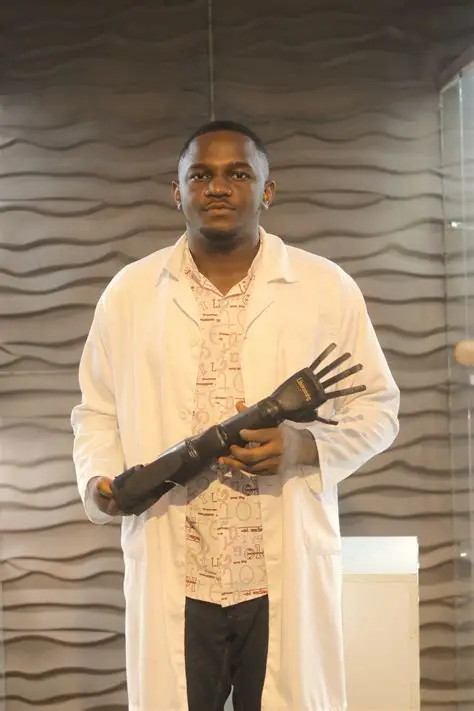
Ubokobong Amanam is a Nigerian inventor and technology entrepreneur known for his work in prosthetics, robotics and assistive medical technology. He gained international recognition in October 2026 when the Ubokobong Bionic Arm, developed through Immortal Cosmetic Art, appeared on TIME magazine’s Best Inventions of 2026 list.
Amanam’s journey combines personal experience with engineering and product development. After losing his fingers in a fireworks accident, he struggled to find a prosthetic that matched his dark skin tone. That experience helped inspire a project that grew into a business creating realistic artificial limbs and developing technology to restore movement for amputees.
Ubokobong Amanam Early Life and Background
Ubokobong Amanam comes from Akwa Ibom State in southern Nigeria. Although detailed information about his childhood and early education remains limited, his professional work shows a strong interest in technology and practical problem-solving.
A turning point in his life came on New Year’s Day in 2019, when a fireworks accident caused him to lose his fingers. The injury introduced him to the practical and emotional challenges that people face when searching for suitable prosthetic devices.
Amanam found it difficult to obtain an artificial hand that matched his dark skin tone. This was not simply a cosmetic concern. A prosthetic becomes part of a person’s everyday life, and its appearance can affect comfort, confidence and the way someone feels in social settings.
His experience helped reveal a gap in the prosthetics market. Many users need devices that combine functionality with a realistic appearance, yet products that meet both needs can be difficult to find or afford. Amanam and his brother John began working on a solution that would address this problem.
Ubokobong Amanam and Immortal Cosmetic Art
Amanam co-founded Immortal Cosmetic Art with his brother, John Amanam, following the accident. The company focuses on lifelike prosthetic hands and other artificial body parts, particularly for Black amputees who struggle to find suitable skin-tone matches.
John brought experience in special-effects artistry and realistic sculpting to the project. Ubokobong contributed his technology and electronics background. Their complementary skills helped turn a personal need into a business with a wider purpose.
The brothers initially concentrated on cosmetic prosthetics. Their work aimed to recreate natural skin details and produce artificial limbs that looked more realistic than conventional alternatives.
As the company developed, the team moved beyond appearance alone. They began working on a prosthetic that could combine a natural-looking exterior with functional movement. This effort led to the Ubokobong Bionic Arm.
The business operates from Uyo, Akwa Ibom State, demonstrating how a Nigerian company can develop specialised technology outside the country’s largest commercial centres. Its work has also attracted interest beyond Nigeria, with international demand helping to expand the company’s reach.
The Ubokobong Bionic Arm
The Ubokobong Bionic Arm is a myoelectric prosthetic. This means it uses electrical signals associated with muscle activity to control movement. Sensors detect signals generated when the user contracts residual muscles, allowing the device to respond to those actions.
The technology offers a different experience from a passive artificial limb, which may primarily restore appearance or provide limited support. A functional bionic arm aims to help users perform practical movements while maintaining a realistic appearance.
One of the device’s distinguishing features is its attention to darker skin tones. Conventional prosthetics have not always met the needs of users whose skin colour differs from the standard shades available. The Amanam brothers’ work treats appearance as an important part of prosthetic design rather than an optional finishing touch.
TIME included the Ubokobong Bionic Arm in its 2026 Best Inventions list under the accessibility category. The magazine reported that clients in 56 countries were using the device, giving the Nigerian-developed product international visibility.
The recognition highlighted the importance of designing assistive technology around the actual needs of users. For amputees, a suitable prosthetic can influence everyday activities, personal confidence and independence.
Ubokobong Amanam’s Robotics and Rehabilitation Work
Aman’s work extends beyond artificial limbs. He has also developed technology aimed at helping people recover hand movement after a stroke or other conditions that affect hand function.
In June 2026, he announced the launch of a robotic rehabilitation glove through Ubokobong Robotics. The device supports guided hand exercises and includes features such as adjustable exercise intensity, targeted finger training and mirror-mode practice.
Mirror-mode training uses movement on one side of the body to support exercises involving the affected hand. The glove was designed to help users practise repetitive movements as part of rehabilitation.
Amanam said the development process involved collaboration with physiotherapists and medical professionals, alongside testing and clinical evaluation. The company also identified affordability as an important consideration, with the aim of reaching patients who have limited access to rehabilitation equipment.
The glove addresses a different problem from the bionic arm. While a prosthetic can help replace a missing limb or restore particular functions, rehabilitation technology seeks to support the recovery or improvement of movement in a person’s existing hand.
Together, these projects reflect Amanam’s interest in applying robotics and electronics to practical healthcare challenges. His work focuses on devices that respond to the needs of patients and people living with physical disabilities.
Ubokobong Amanam’s Achievements and Recognition
Amanam’s growing profile rests on several major developments in assistive technology.
First, his personal experience helped inspire a company that addresses the shortage of realistic prosthetics designed for Black users. Immortal Cosmetic Art developed from a specific need into a business serving a wider group of amputees.
Second, the Ubokobong Bionic Arm brought international attention to Nigerian prosthetic innovation when TIME recognised it among its Best Inventions of 2026. The listing placed the device among innovations highlighted for their potential impact.
Third, his work on the robotic rehabilitation glove expanded his activities into rehabilitation technology. The project reflects an effort to address challenges faced by stroke survivors and other people who need support with hand movement.
These achievements also highlight the value of collaboration. His work with John Amanam combines technology and electronics with special-effects artistry, while the rehabilitation glove’s development involved medical professionals.
Ubokobong Amanam Age, Education and Personal Life
Amanam’s exact date of birth and age have not been reliably established in widely available public information. Detailed information about his formal education is also limited, so specific institutions or qualifications should not be attributed to him without confirmation.
His professional background includes technology and electronics, which have contributed to his work in prosthetics and robotics. He has kept much of his private life outside the public spotlight, and further details about his family or personal relationships should not be assumed.
Conclusion
Ubokobong Amanam has turned a difficult personal experience into a wider effort to improve assistive technology. Through his work with Immortal Cosmetic Art and Ubokobong Robotics, he has helped develop solutions that address prosthetic appearance, functional movement and hand rehabilitation.
The inclusion of the Ubokobong Bionic Arm in TIME’s Best Inventions of 2026 list marked a significant moment for his work and for Nigerian medical technology. His journey demonstrates how lived experience, technical knowledge and collaboration can inspire products designed to improve everyday life.