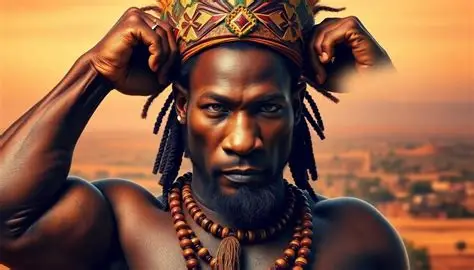
Sundiata Keita stands as one of the most influential figures in West African history. He founded the Mali Empire in the 13th century and transformed a collection of small kingdoms and chiefdoms into one of the wealthiest and most powerful states of the medieval world. His story, preserved through the oral traditions of griots, blends historical events with legendary elements that highlight themes of resilience, leadership, and unity. Sundiata overcame personal challenges and political adversity to unite the Mandinka people and establish a vast empire that controlled key trade routes and resources.
The legacy of Sundiata Keita extends far beyond his military victories. He created systems of governance and justice that promoted stability, protected subjects, and fostered economic prosperity. Known as the Lion Prince or Lion King of Mali, his life continues to inspire people across West Africa and the African diaspora as a symbol of determination and nation-building.
Sundiata Keita Early Life
Sundiata Keita was born around 1217 in the region of Kangaba, part of the small Mandinka kingdom located near the present-day border between Mali and Guinea. Some accounts place his birth in or near Niani, which later became the capital of his empire. He belonged to the Keita clan of the Malinke (Mandinka) ethnic group. His father, Naré Maghann Konaté (also known as Maghan Kon Fatta), ruled Kangaba as a local king or fama. His mother was Sogolon Condé (or Sogolon Kedjou), often described in oral traditions as a woman of striking appearance, sometimes portrayed with a hunchback, who came from the land of Do.
The name Sundiata, sometimes rendered as Sunjata or Sundjata, translates to “lion prince” or “hungering lion,” reflecting the lion as the totem of the Keita clan. He had many half-siblings, including brothers from his father’s first wife, Sassouma Bérété. Oral epics describe Sundiata as a frail and disabled child who could not walk until around the age of seven. This physical challenge, combined with ridicule directed at his mother, marked his early years with hardship. According to legend, a prophecy foretold that a son born to a specific woman would become a great ruler, leading his father to marry Sogolon despite existing family dynamics.
Sundiata grew up in a politically tense environment. After his father’s death, his half-brother Dankaran Touman took the throne, contrary to some accounts of the father’s wishes. Tensions escalated when the Sosso kingdom under Sumanguru Kanté (Soumaoro) expanded and conquered Kangaba around the 1220s. Sumanguru reportedly killed several of Sundiata’s brothers but spared the young, seemingly weak Sundiata. This decision proved fateful. Fearing for their safety, Sundiata and his mother went into exile, traveling through various kingdoms and eventually finding refuge in Mema.
During exile, Sundiata developed his strength and skills as a warrior and hunter. He practiced rigorously, eventually walking and building a powerful physique. In Mema, he served under the local king, gaining military experience and respect. These formative years shaped his character, teaching him diplomacy, strategy, and the value of alliances. The Mandinka people, suffering under Sosso rule, began to call for his return as a liberator.
Sundiata Keita State of Origin and Cultural Background
Sundiata Keita came from the heartland of the Mandinka people in the upper Niger River region. Kangaba served as a key center for the Keita clan within the remnants of the declining Ghana Empire. The area featured fertile lands along the Niger, supporting agriculture and trade. The Mandinka society emphasized clan structures, oral history through griots, and a blend of traditional African religions with emerging Islamic influences.
The Keita lineage traced its identity through paternal and maternal lines, with strong emphasis on prophecy, totems, and heroic destiny. Sundiata’s origins in this small kingdom positioned him amid larger regional powers like the Sosso, who sought dominance after Ghana’s fall. The cultural context of griot narration preserved not only his personal story but also the values of courage, kinship, and justice central to Mandinka identity. Today, this region spans parts of modern Mali and Guinea, where Sundiata remains a foundational national hero.
Sundiata Keita Return from Exile
Sundiata Keita’s return marked a turning point. As oppression under Sumanguru intensified, messengers sought him in Mema. He gathered supporters and formed alliances with other disaffected chiefs. His sister, Nana Triban, played a crucial role by gathering intelligence during captivity. Sundiata built a coalition army, emphasizing brotherhood and shared purpose among warriors from different groups.
This period highlighted his leadership qualities. He united fractious factions through diplomacy and shared opposition to tyranny. Oral traditions describe supernatural elements, such as magical confrontations, but historians emphasize strategic planning and military organization as key factors.
Sundiata Keita Military Campaigns and Battle of Kirina
Sundiata Keita led a series of campaigns against Sosso forces. The decisive Battle of Kirina around 1235 near modern Kangaba proved pivotal. Sundiata’s alliance faced Sumanguru’s army in an epic confrontation. Legends credit Sundiata with superior magic or a poisoned arrow, but practical elements like better coordination and morale likely contributed to victory. Sumanguru fled or disappeared, weakening Sosso control.
Following Kirina, Sundiata’s forces captured Sosso territories and advanced further. His generals, including Tiramaghan Traore and Fakoli Koroma, expanded conquests. By around 1240, they took the old Ghana capital of Kumbi, symbolizing the end of Ghana’s dominance and Mali’s rise. Campaigns extended to areas in present-day Senegal, Guinea, and beyond, securing trade routes for gold, salt, and other goods.
These victories demonstrated Sundiata’s ability to integrate conquered peoples and reward loyal allies. He appointed capable leaders and maintained a balance of central authority with local autonomy.
Sundiata Keita Establishment of the Mali Empire
After military successes, Sundiata Keita established the Mali Empire with its capital at Niani. He adopted the title Mansa, meaning emperor or king of kings. The empire encompassed diverse ethnic groups united under Mandinka leadership. Sundiata divided administration into provinces with governors and military commanders, promoting stability.
Economic policies focused on agriculture, trade, and resource management. Control of gold fields and trans-Saharan routes brought immense wealth. Niani became a thriving hub for merchants from across Africa and the Islamic world. Sundiata encouraged settlement, farming, and commerce, laying foundations for prosperity that peaked under later rulers like Mansa Musa.
Sundiata Keita Governance and the Manden Charter
Sundiata Keita introduced principles of governance preserved in the Manden Charter, also known as the Kouroukan Fouga. Proclaimed after victory, this oral charter emphasized human dignity, the right to life, protections against slavery through raids, rights to food and shelter, and respect for women and strangers. It promoted social harmony and justice, influencing Mali’s legal traditions for generations.
The Gbara assembly of clan representatives advised the Mansa, blending consensus with royal authority. Sundiata’s system respected local customs while fostering unity, contributing to the empire’s longevity.
Sundiata Keita Achievements and Legacy
Sundiata Keita’s achievements include founding one of medieval Africa’s greatest empires, which stretched across West Africa and influenced trade, culture, and Islam’s spread in the region. He rebuilt Niani as a prosperous capital and supported griots as keepers of history. His descendants ruled for centuries, with Mansa Musa becoming legendary for his wealth.
The Epic of Sundiata, passed orally and later recorded, remains a cornerstone of West African literature and identity. It teaches values of perseverance and leadership. Modern Mali and Guinea honor him as a symbol of unity and resilience. No formal awards existed in his era, but his accomplishments earned him enduring recognition as a nation-builder and visionary ruler.
Sundiata expanded Mali’s influence through military prowess and wise administration. He integrated Islamic elements while honoring traditional beliefs, creating a tolerant society attractive to traders. His rule transformed the political landscape of the Western Sudan, replacing fragmented states with a centralized empire.
Sundiata Keita Personal Life
Details of Sundiata Keita’s personal life come mainly from oral traditions. He had multiple wives and children, including sons who succeeded him, such as Mansa Wali Keita (Uli). Family dynamics played roles in politics, with alliances strengthened through marriages. His mother Sogolon remained influential, and siblings like his sisters supported his cause.
Sundiata balanced warrior life with responsibilities as a ruler and father. Traditions portray him as a just leader attentive to his people’s needs. He died around 1255, possibly from an accident or illness, though accounts vary. His burial site and exact circumstances remain part of legendary lore.
Sundiata Keita Historical Significance
Sundiata Keita bridged oral and written history in West Africa. Arabic chroniclers like Ibn Khaldun later referenced Mali’s rulers, confirming the empire’s importance. His story illustrates how personal destiny intertwined with collective fate, inspiring resistance against oppression.
The empire he founded facilitated cultural exchange, scholarship in cities like Timbuktu (developed later), and economic growth. Sundiata’s model of inclusive leadership influenced subsequent African polities. His emphasis on human rights principles in the Manden Charter predates many modern declarations, highlighting indigenous African contributions to governance ideas.
Scholars continue to study variations in the Epic of Sundiata, appreciating its role in preserving Mandinka history, language, and values. Archaeological evidence around Niani and Kangaba supports aspects of the empire’s existence and scale.
Sundiata Keita Influence on Modern West Africa
Today, Sundiata Keita’s name appears in education, arts, and national identity across Mali, Guinea, and beyond. Festivals, music, and literature celebrate his life. The epic serves as a cultural anchor, performed by griots and adapted into books, plays, and media. His story promotes unity in diverse societies and pride in pre-colonial African achievements.
Descendants of the Keita clan maintain traditions, and sites associated with him attract visitors. Sundiata symbolizes hope and transformation, relevant to contemporary discussions on leadership and heritage.
Read Also: Ebiere Soberekon Biography: Age, State of Origin, Husband, Wedding Day, Career, Net Worth & Family
Conclusion
Sundiata Keita rose from humble and challenging beginnings to forge a mighty empire that shaped West African history. His journey of perseverance, strategic brilliance, and commitment to justice left an indelible mark. The Mali Empire’s golden age traces directly to his vision, and his story endures as a timeless narrative of triumph over adversity. Through the voices of griots and historical records, Sundiata continues to teach generations about the power of unity, courage, and wise rule.
FAQs
Who was Sundiata Keita?
Sundiata Keita was the founder and first Mansa of the Mali Empire in the 13th century. He united the Mandinka people and built a vast realm known for its wealth and stability.
Where and when was Sundiata Keita born?
He was born around 1217 in the Kangaba region, near the Mali-Guinea border.
What does the name Sundiata mean?
It means “lion prince” or “hungering lion,” tied to his clan’s symbol.
What is the Epic of Sundiata?
It is the oral epic poem recounting his life, preserved by griots and later written down. It mixes history with legend.
What were Sundiata Keita’s major achievements?
He defeated the Sosso king at Kirina, founded the Mali Empire, established the Manden Charter, and expanded trade and prosperity.
How did Sundiata Keita die?
Accounts vary, but he died around 1255, possibly due to an illness or accident. Details remain legendary.
Why is Sundiata Keita important today?
He symbolizes African resilience, nation-building, and early human rights principles. His legacy inspires cultural pride and unity.