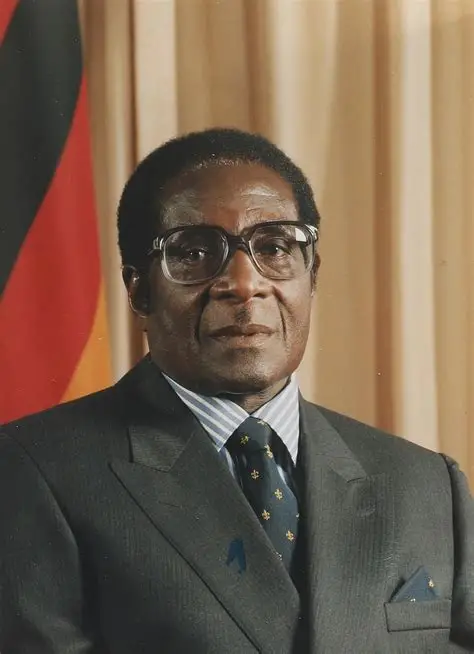
Robert Gabriel Mugabe was a Zimbabwean politician, revolutionary, and statesman who played a central role in the country’s struggle for independence and its postcolonial development. Best known for serving as Zimbabwe’s first Prime Minister from 1980 to 1987 and later as President from 1987 to 2017, Mugabe became one of Africa’s longest-serving and most influential political leaders.
Born on February 21, 1924, in Kutama Mission, Southern Rhodesia, now Zimbabwe, he emerged as a leading figure in the liberation movement before guiding the newly independent nation for nearly four decades. His legacy remains one of the most debated in African history, marked by achievements in education and liberation alongside political controversies and economic challenges.
A teacher-turned-revolutionary, Mugabe played a central role in the fight against white minority rule in Rhodesia. He led the Zimbabwe African National Union (ZANU) and its armed wing during the liberation struggle, helping secure independence in 1980. In his early years in power, he expanded education and healthcare access for black Zimbabweans, earning praise for improving living standards. Over time, his rule became marked by authoritarian measures, economic challenges, land reforms, and international criticism, shaping both his legacy as a liberation hero and a controversial figure.
Robert Mugabe Early Life
Robert Gabriel Mugabe entered the world on February 21, 1924, at Kutama Mission, a Jesuit station in the Zvimba District of Southern Rhodesia, about 60 kilometers west of Salisbury (now Harare). His father, Gabriel Matibili Mugabe, was a carpenter and migrant worker originally from Nyasaland (present-day Malawi). His mother, Bona Mugabe, a Shona woman, worked as a catechist teaching Christian principles to village children. The family lived in a rural, mission-influenced environment under British colonial rule, which imposed restrictions on black Africans’ opportunities for land, education, and jobs.
Mugabe grew up in a family that faced significant hardship. He had several siblings, including Raphael, Michael, Donato, Sabina, and Bridgette. Tragedy struck early when his older brothers Raphael and Michael died young from illness and accidental poisoning. These losses deeply affected the family. In 1934, when Mugabe was around 10 years old, his father abandoned the family to pursue work in Bulawayo, where he remarried and provided little support. Mugabe’s mother raised the children with resilience, and young Robert helped by tending cattle and doing odd jobs. The family settled in a nearby village after an expulsion from the mission area, but the children continued their education there.
The Jesuit mission provided structure and opportunity. Father Jerome O’Hea, the headmaster, acted as a mentor and surrogate father figure to Mugabe, encouraging his studious nature. Mugabe was a quiet, bookish child who spent much time reading while other village boys played. This environment instilled in him discipline, Catholic values, and a strong sense of self-reliance. The colonial context of racial segregation and limited rights for Africans planted seeds of awareness about injustice, though his direct political awakening came later.
Zvimba District, Mugabe’s home area in Mashonaland West province, is a rural region with strong Shona cultural traditions. The Shona people form the largest ethnic group in Zimbabwe, known for their agricultural practices, rich oral history, and resistance to colonial encroachment. Mugabe’s roots in this community connected him deeply to indigenous identity, which later influenced his nationalist ideology and emphasis on African self-determination. The mission station itself represented a blend of local life and missionary education, exposing him to both Western learning and the realities of colonial administration.
Robert Mugabe Education
Mugabe began his formal education at local mission schools. After completing elementary schooling, he attended St. Francis Xavier College at Kutama Mission, graduating in 1945 as a qualified teacher. He showed academic promise from an early age and benefited from the rigorous Catholic education system.
In 1949, he received a scholarship to the University of Fort Hare in South Africa, a key institution for black students where many future African leaders, including Nelson Mandela, studied. There, he earned a Bachelor of Arts degree in History and English in 1951 or 1952. Exposure to nationalist ideas and interactions with peers from across the continent broadened his worldview. He joined the African National Congress branch at the university and engaged with Marxist and pan-Africanist thought.
After returning to teach, Mugabe pursued further studies through correspondence courses. He obtained a Bachelor of Education from the University of South Africa. While teaching in Northern Rhodesia (Zambia) and Ghana, he completed a Bachelor of Science in Economics from the University of London via external programs. During his later imprisonment, he continued studying and earned additional qualifications, including law degrees from the University of London. Reports indicate he accumulated seven academic degrees in fields such as education, law, administration, and economics.
His education equipped him with intellectual tools for political leadership. Time in Ghana exposed him to Kwame Nkrumah’s independence movement and socialist ideas, which profoundly shaped his approach to African nationalism. Mugabe’s commitment to learning persisted throughout his life, reflecting a belief in education as a tool for empowerment.
Robert Mugabe Teaching Career
Before entering full-time politics, Mugabe worked as a teacher for over a decade. After graduating from Kutama College in 1945, he taught at various schools in Southern Rhodesia. He later moved to Chalimbana Training College in Northern Rhodesia (now Zambia) between 1955 and 1958, where he trained other educators. In 1958, he relocated to Ghana, teaching while completing studies and absorbing ideas from the newly independent nation.
Teaching allowed him to connect with communities and observe colonial inequalities firsthand. His experiences in different territories highlighted the shared struggles of Africans under colonial rule. This period built his reputation as an educated, articulate figure committed to upliftment. He met his first wife, Sally Hayfron, a fellow teacher in Ghana, during this time.
Robert Mugabe Political Rise and Liberation Struggle
Mugabe returned to Southern Rhodesia in 1960 and joined the National Democratic Party (NDP) as publicity secretary. When authorities banned the NDP in 1961, he helped form the Zimbabwe African People’s Union (ZAPU) under Joshua Nkomo. Disagreements led him to break away in 1963 and co-found the more militant Zimbabwe African National Union (ZANU) with Ndabaningi Sithole.
His fiery speeches against white minority rule resulted in arrest in 1964 for subversive activities. Mugabe spent about 11 years in prison, from 1964 to 1974. While detained, he studied, taught fellow prisoners, and maintained contact with the movement. He eventually assumed leadership of ZANU from within prison.
Released in 1974, Mugabe went into exile in Mozambique, where he directed the armed struggle known as the Second Chimurenga or Rhodesian Bush War. As leader of ZANU and its military wing ZANLA, he coordinated guerrilla operations against the Rhodesian government under Ian Smith. The war, combined with international pressure, led to negotiations.
Robert Mugabe Lancaster House Agreement and Path to Independence
Mugabe participated in the 1979 Lancaster House Conference in London, alongside Joshua Nkomo and other parties. The agreement paved the way for a ceasefire, new constitution, and elections. It protected some white minority rights while advancing majority rule. Mugabe’s ZANU-PF won a landslide in the 1980 elections, and he became Prime Minister on April 18, 1980, as Rhodesia transitioned to Zimbabwe.
Robert Mugabe Early Governance and Achievements as Prime Minister
In his initial years, Mugabe focused on reconciliation and development. He promoted a policy of racial inclusion, urging white Zimbabweans to stay and contribute. His government expanded access to education and healthcare dramatically. Literacy rates rose, new schools and clinics were built, and infrastructure improved. By the mid-1990s, international observers noted significant progress in social services.
Zimbabwe enjoyed relative stability and growth in the 1980s, with advancements in agriculture, manufacturing, and mining. Mugabe emphasized unity, though underlying ethnic tensions persisted between Shona and Ndebele groups.
Robert Mugabe Matabeleland Issues and Unity Efforts
Post-independence, tensions with ZAPU and the Ndebele community in Matabeleland led to conflict. The government deployed the Fifth Brigade in the early 1980s, resulting in significant loss of life during operations to suppress alleged dissidents. Estimates of deaths vary but highlight a dark chapter. In 1987, ZANU and ZAPU merged into ZANU-PF, and Mugabe became Executive President under a new constitution, consolidating power.
Robert Mugabe Land Reform Policies
One of Mugabe’s major initiatives was addressing colonial-era land imbalances. White farmers owned most prime agricultural land. Initial efforts were gradual, but in the late 1990s and 2000s, fast-track reforms involved farm invasions by war veterans and supporters. While intended to empower black Zimbabweans, the process often lacked planning, leading to production declines and economic fallout. Supporters viewed it as correcting historical injustice; critics pointed to cronyism and mismanagement.
Robert Mugabe Economic Challenges and Later Rule
Zimbabwe faced severe economic difficulties in the 2000s, including hyperinflation, food shortages, and high unemployment. Factors included land disruptions, drought, sanctions, and governance issues. Mugabe’s government introduced measures like Operation Murambatsvina in 2005, which displaced many urban dwellers. He maintained power through multiple elections, often disputed by opposition parties like the Movement for Democratic Change (MDC). A 2008 power-sharing agreement with Morgan Tsvangirai provided temporary relief.
Robert Mugabe Awards and Recognitions
Mugabe received several honors for his role in liberation and leadership, including the Order of Jamaica, the Olympic Order, the Jawaharlal Nehru Award, and the Africa Prize for Leadership for the Sustainable End of Hunger. African nations and pan-African bodies often lauded him as a symbol of anti-colonial resistance.
Robert Mugabe Personal Life
Mugabe married Sally Hayfron in 1961. She was Ghanaian and a strong supporter of his political work. Their only son, Nhamodzenyika, died in 1966 at a young age from malaria while Mugabe was imprisoned. Sally died of cancer in 1992.
In 1996, Mugabe married his former secretary Grace Marufu, with whom he had three children: Bona, Robert Jr., and Chatunga. The marriage drew attention due to the age difference and circumstances. Mugabe remained a Roman Catholic throughout his life, though personal and political decisions sometimes conflicted with church teachings.
He was known for a formal, intellectual demeanor, fondness for suits, and sharp oratory. Family life remained relatively private amid public duties.
Robert Mugabe Later Years and Resignation
By the 2010s, Mugabe’s advanced age and health concerns fueled succession debates, particularly around his wife Grace’s ambitions. In November 2017, military intervention and party pressure led to his resignation after 37 years in power. Emmerson Mnangagwa succeeded him.
Robert Mugabe Death and Legacy
Mugabe died on September 6, 2019, at age 95 in Singapore, where he received medical treatment. He was buried in his birthplace, Kutama. His legacy remains divided: celebrated for ending colonial rule and advancing black empowerment, yet criticized for authoritarianism, economic decline, and human rights issues. He symbolized African resistance to imperialism for many, while others saw him as a cautionary tale of prolonged power.
Read Also: Ebiere Soberekon Biography: Age, State of Origin, Husband, Wedding Day, Career, Net Worth & Family
Conclusion
Robert Mugabe’s life spanned colonial oppression, liberation war, nation-building, and complex governance. His contributions to Zimbabwe’s independence and social progress stand alongside challenges that defined his later decades. Understanding his full story requires acknowledging both achievements and shortcomings in the context of Zimbabwe’s turbulent history.
FAQs
What was Robert Mugabe’s full name and date of birth?
Robert Gabriel Mugabe was born on February 21, 1924.
Where was Robert Mugabe born and what is his ethnic background?
He was born in Kutama Mission, Zvimba District, in what is now Zimbabwe. He was Shona.
How many degrees did Robert Mugabe earn?
He obtained around seven degrees through formal study and correspondence, including in arts, education, economics, and law.
Who were Robert Mugabe’s wives?
His first wife was Sally Hayfron (married 1961, died 1992). His second was Grace Marufu (married 1996).
When did Robert Mugabe become President of Zimbabwe?
He assumed the role of Executive President in 1987 after serving as Prime Minister from 1980.
What led to Robert Mugabe’s resignation?
Political pressure, military intervention, and internal party dynamics in November 2017 forced his exit.
Where and when did Robert Mugabe die?
He died on September 6, 2019, in Singapore.