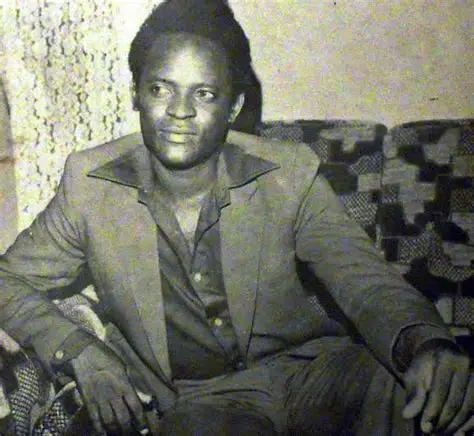
Prince Nico Mbarga was a celebrated Cameroonian-Nigerian highlife musician, guitarist, songwriter, and bandleader whose music transcended borders and generations. Born to a Nigerian mother and a Cameroonian father, he developed a unique musical style that blended West African highlife, Congolese rumba, makossa, and guitar-driven rhythms into a sound that captivated audiences across Africa. He achieved international fame with “Sweet Mother,” one of the best-selling African songs in history, a timeless tribute to the sacrifices and unconditional love of mothers.
Throughout a career spanning more than three decades, Prince Nico Mbarga remained one of Africa’s most respected musicians, leaving behind a rich catalogue of recordings that continue to influence highlife and contemporary African music. This article explores Prince Nico Mbarga’s biography, early life, career, family, songs, death, and legacy.
Quick Facts
| Quick Facts | Details |
|---|---|
| Full Name | Nico Mbarga |
| Popular Name | Prince Nico Mbarga |
| Date of Birth | 1 January 1950 |
| Place of Birth | Abak, Cross River State, Nigeria (now in Akwa Ibom State) |
| Nationality | Cameroonian-Nigerian |
| Ethnicity | Mixed Nigerian and Cameroonian heritage |
| Occupation | Musician, Songwriter, Guitarist, Bandleader |
| Genres | Highlife, Congolese Rumba, Makossa |
| Primary Instrument | Guitar |
| Years Active | 1970s–1997 |
| Famous Band | Rocafil Jazz International |
| Best Known Song | Sweet Mother |
| Known For | Recording one of Africa’s best-selling songs and popularizing a blend of highlife and Congolese rumba |
| Date of Death | 24 June 1997 |
| Cause of Death | Motorcycle accident near Enugu, Nigeria |
| Legacy | One of Africa’s greatest highlife musicians whose music continues to inspire audiences across generations. |
Prince Nico Mbarga Early Life
Prince Nico Mbarga was born on 1 January 1950 in Abakaliki, in what is now Ebonyi State, Nigeria. His full name was Nico Mbarga. His mother came from the Mbembe community in Obubra Local Government Area of Cross River State and worked as a peasant farmer. His father was Cameroonian and earned a living as a timber sawyer. The family settled in Ikom, Cross River State, where young Nico spent his formative years.
Ikom sits near the Nigeria-Cameroon border along the Cross River. In the 1950s the town consisted of administrative buildings, farms, and houses surrounded by tropical rainforest. Life moved at a quiet pace. Goods such as bicycles and sewing machines arrived by river boat from Calabar more than one hundred miles to the south. Nico and his friends fished for tilapia and catfish in the river and set traps for birds in the forest. The environment was remote yet open to the sounds and ideas arriving from larger Nigerian cities.
His father came from a line of xylophone players and taught Nico the instrument, a small handheld version with metal tines plucked by the thumbs. Nico wanted a fuller sound closer to the highlife music he heard on the radio. He built his own xylophone from dried plantain skins and scooped bark. The family radio, a second-hand Philips set, introduced him to highlife. He listened for hours to Bobby Benson’s “Taxi Driver,” E.C. Arinze’s “Saturday Night,” and Rex Lawson’s “Yellow Sisi.” These songs of city life, cars, and nightclubs filled him with ambition.
His father’s sudden death from illness changed the household. Nico’s mother took on the full burden of supporting the family. They moved into a compound in the middle of the village and lived more modestly. As a teenager Nico began singing in bars in nearby villages to help with money, though payment was often little or nothing.
When the Nigerian Civil War, also known as the Biafran War, broke out in 1967, Nico left for Mamfe in Cameroon. His mother and siblings remained in Nigeria. In Mamfe he worked as a band boy for a Congolese group, carrying instruments to hotel performances. There he absorbed Congolese rumba with its melodic guitar lines, spoken asides, and high harmonies. He taught himself conga, bass, drums, and the finger-picking style of Congolese electric guitar. During this period he met Lucy, who became his first love. Despite objections from her parents, they began a relationship and later had children together.
After the war ended in 1970, Nico and Lucy crossed back into Nigeria. Their first attempt by road failed and they spent three days in prison for lacking passports. They succeeded on a second try by travelling through the bush and settled in Onitsha, a busy trading town on the Niger River.
Prince Nico Mbarga State of Origin and Cultural Roots
Prince Nico Mbarga’s roots lie firmly in Cross River State, particularly the areas of Obubra and Ikom. Cross River State occupies the south-eastern edge of Nigeria, sharing a long border with Cameroon. Its capital is Calabar. The state is known for dense forests, the Cross River itself, and a mix of ethnic groups including the Mbembe, Ejagham, Efik, and others.
Obubra Local Government Area, home of his mother’s Mbembe people, lies inland and is noted for farming communities and traditional governance structures. The Mbembe language and customs form part of the cultural fabric of the region. Ikom, where Nico grew up, is an Ejagham-speaking area. The name Ikom relates to ideas of power or strength in the local language. The town and surrounding villages are famous for the Ikom monoliths, ancient carved stones found across many communities and dating back centuries. These stones carry symbolic markings linked to local history and belief systems.
Cross River State has long served as a cultural bridge between Nigeria and Cameroon. Trade, intermarriage, and movement of people across the border have been common for generations. This openness shaped Nico’s own life. His father’s Cameroonian background and his mother’s Nigerian heritage gave him access to musical traditions from both sides. Highlife from Nigerian cities mixed naturally with Congolese and Cameroonian styles he encountered later. The border location of Ikom also made it a practical base later in life when he returned to manage a hotel there.
The region’s economy historically rested on timber, fishing, farming, and river trade. Cocoa became an important crop in later decades. The landscape of rivers, forests, and small towns provided the quiet backdrop against which Nico first heard radio music and decided to pursue a musical path. His later decision to settle again in Ikom and open the Sweet Mother Hotel reflected a lasting attachment to this part of Cross River State.
Prince Nico Mbarga Education
Nico attended primary school in Ikom. At a time when fewer than one in five children in the area received formal schooling, his father’s steady work as a timber sawyer made this possible. He showed early interest in music through school bands, where he played the instruments he had already begun to master at home.
After returning to Nigeria in 1970 and settling in Onitsha, he continued practical musical training while performing. Accounts from people who worked with him note that he also studied law on the side in Onitsha. He was known as a disciplined young man who neither smoked nor drank and who directed his band members with clear purpose. Formal higher education records beyond these details are limited, yet his self-taught mastery of multiple instruments and his ability to organise rehearsals and recordings show a practical intelligence applied fully to music.
Prince Nico Mbarga Career
Prince Nico Mbarga began professional work in 1970 as a member of the hotel band Melody Orchestra. He soon formed his own group, Rocafil Jazz, and secured a regular engagement at the Plaza Hotel in Onitsha. The band mixed Nigerian highlife rhythms with Congolese-style guitar lines. Nico sang, played lead guitar, and guided the arrangements.
Early Recordings and First Success
In 1973 EMI signed the group. Their first single, “I No Go Marry My Papa,” told the story of a young woman who refused her parents’ choice of husband. The song found regional success and gave the band encouragement. Further releases did not meet commercial expectations, and EMI eventually dropped them.
Nico then wrote “Sweet Mother.” The song expressed gratitude to a mother for the daily care she gave her child. It was inspired by the sacrifices of his own mother after his father’s death. The lyrics, sung in Nigerian Pidgin, avoid direct declarations of love and instead list concrete acts of care: drying tears, finding food, praying during illness. A small Onitsha-based label, Rogers All Stars, took interest after hearing the song performed live. The band rehearsed daily for months, refining the arrangement until it combined gentle highlife swing with strong Congolese guitar picking.
Released in 1976, “Sweet Mother” sold more than thirteen million copies across Africa. Radio play, especially on Radio Nigeria, helped it spread rapidly. Listeners requested it so often that it became known as a kind of African anthem. The band toured Nigeria and later West Africa, including Togo, Cameroon, Côte d’Ivoire, Ghana, Benin, Burkina Faso, and as far as Kenya. Crowds met them at airports wearing Rocafil Jazz shirts.
Peak Years with Rocafil Jazz
Between 1975 and 1981 the group recorded nine albums with Rogers All Stars. Songs addressed family, social issues, money, marriage, and everyday life. Nico’s voice remained warm and direct, while the guitar work stayed light and melodic. The band’s sound stood apart from heavier highlife styles of the period.
Later Career Developments
In 1982 Nico toured England and performed with a London-based highlife group, the Ivory Coasters, as well as with former band member Louisiana Tilda. He adopted a more flamboyant stage style influenced by 1970s glam rock. Upon returning to Nigeria he launched his own record label distributed by Polydor. Disagreements led to the departure of original Rocafil Jazz members. He formed a new version of the band but did not again reach the commercial heights of the mid-1970s.
In the 1980s the Nigerian government’s expulsion of many West African migrants affected Cameroonian members of his earlier band. Nico gradually shifted focus. He returned to Ikom and managed the Sweet Mother Hotel, a four-star establishment near the Cameroon border. He continued to perform there on Sundays while overseeing the business.
Prince Nico Mbarga Songs and Albums
Prince Nico Mbarga released a substantial body of recorded work, mostly with Rocafil Jazz. The following albums are among those documented:
- Sweet Mother (1976)
- Prince Nico Mbarga & Rocafil Jazz (1976)
- Rocafil Jazz 76 (1976)
- Prince Nico Mbarga & Rocafil Jazz (1977)
- Free Education in Nigeria (1977)
- Family Movement (1978)
- Rockafil Jazz & Nicholas Mbaraga (1978)
- Prince Nico Mbarga & Rocafil Jazz (1978)
- Cool Money (1979)
- Experience 001 (1979)
- Lucky Marriage! (1980)
- No Die, No Rest (1980)
- Music Message (1981)
- Let Them Say (1982)
- Papal Visit (1982)
- Chameleon (1984)
- Panco Juju System (1986)
- Sweet Family (1987)
- Only One God (1989)
Key songs beyond the title track of his most famous album include “I No Go Marry My Papa,” “Family Movement,” “Cool Money,” “Lucky Marriage,” and tracks that addressed free education and social themes. “Sweet Mother” remains the recording most closely associated with his name and continues to be performed and played widely.
Prince Nico Mbarga Musical Style and Influences
His music combined the uplifting rhythms of Nigerian highlife with the intricate finger-picking guitar of Congolese rumba. He played xylophone, conga, drums, bass, and electric guitar. Vocals were delivered in clear Pidgin English that ordinary listeners across West Africa could understand. Themes stayed close to daily experience: mothers, marriage choices, money, family unity, and social observations. The overall mood stayed positive even when lyrics touched on hardship. This approachable style helped the songs travel far beyond Nigeria.
Prince Nico Mbarga Awards and Recognition
Formal industry awards from the 1970s and 1980s are sparsely documented. The lasting recognition rests on the commercial and cultural success of “Sweet Mother.” The song has been described as the best-selling recording by an African artist. BBC readers and listeners later voted it Africa’s favourite song. It is often called Africa’s anthem. In later years monuments and anniversary events in Calabar and elsewhere have honoured his contribution. His children have organised concerts to keep the music alive, and a foundation linked to the song continues public remembrance.
Prince Nico Mbarga Personal Life
Prince Nico Mbarga married Esame Mbarga, daughter of a local petrol station owner in Ikom. He was also known to maintain a relationship with Lucy, his first love from the Cameroon years. Accounts describe him supporting both households. He and Esame had children together. In total he was survived by ten children: Nico, Descrow, Estelle, Slimphilz, Pauline, Joan, Lillian, Lucy, Lionel, and Nicoline. Pauline passed away in 2011 after a brief illness. Several of the children, including Nico, Descrow, Estelle, and Slimphilz, have remained active in music and have worked to promote their father’s style.
He was known as a non-smoker and non-drinker who valued discipline. After commercial success he used earnings to care for his mother, support his family, and build the Sweet Mother Hotel in Ikom. He returned often to the town of his childhood and maintained close ties with friends such as Ojong, who recalled their early days fishing and trapping birds.
Prince Nico Mbarga Death
On 23 June 1997 (some accounts give 24 June) Prince Nico Mbarga died in Calabar at the age of 47. He was travelling to Ikom to visit his mother and had stopped to buy spare parts for his car along Mayne Avenue when a motorcycle accident occurred. He was thrown from the motorcycle, struck his head, and was taken to hospital. He remained in and out of consciousness for about two weeks before dying. His mother learned of the news and died shortly afterwards.
Conclusion
Prince Nico Mbarga remains one of the most celebrated figures in African highlife music, remembered for creating songs that resonated with everyday people across generations. His ability to blend Nigerian highlife with Congolese rumba produced a distinctive sound that crossed cultural and national boundaries, making him a household name throughout Africa.
While “Sweet Mother” remains his defining masterpiece, his wider body of work reflects a lifelong commitment to meaningful storytelling, memorable melodies, and musical excellence. Decades after his passing, Prince Nico Mbarga’s influence continues through his recordings, the artists inspired by his music, and the enduring popularity of one of Africa’s greatest musical classics.
Frequently Asked Questions
What was Prince Nico Mbarga’s real name?
Prince Nico Mbarga’s birth name was Nico Mbarga. He became widely known across Africa by the stage name Prince Nico Mbarga.
When and where was Prince Nico Mbarga born?
He was born on 1 January 1950 in Abakaliki, Nigeria, and spent much of his childhood in Ikom, Cross River State.
Why is Prince Nico Mbarga famous?
He is best known for “Sweet Mother,” released in 1976 with Rocafil Jazz. The song became one of the highest-selling African records of all time and remains one of the continent’s most beloved musical classics.
Which musical instruments did Prince Nico Mbarga play?
Prince Nico Mbarga was a talented multi-instrumentalist who performed on the guitar, bass guitar, drums, conga, and xylophone.
What band did Prince Nico Mbarga lead?
He founded and led Rocafil Jazz, the band that accompanied him throughout his most successful years and helped establish his reputation as one of Africa’s leading highlife musicians.
How did Prince Nico Mbarga die?
Prince Nico Mbarga died in a motorcycle accident near Calabar, Nigeria, in June 1997 while travelling to visit his mother.
Who were Prince Nico Mbarga’s parents?
His father was a Cameroonian timber worker, while his mother was a Nigerian farmer from the Mbembe community in present-day Cross River State.
Did Prince Nico Mbarga have children?
Yes. Prince Nico Mbarga was survived by ten children, with some of them later pursuing careers connected to music and entertainment.
What did Prince Nico Mbarga do outside music?
Later in life, he managed the Sweet Mother Hotel in Ikom, where he continued to perform occasionally while remaining closely connected to his local community.
Why is “Sweet Mother” still popular today?
“Sweet Mother” remains popular because its message of gratitude, love, and respect for mothers is universal. Its memorable melody and relatable lyrics have made it a timeless anthem enjoyed across Africa and beyond.