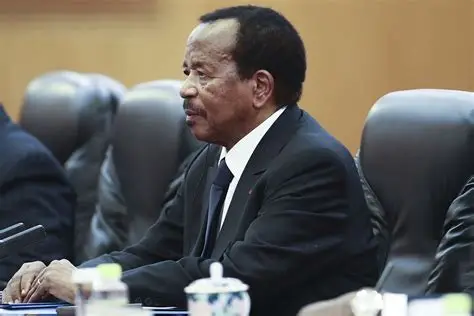
Who Is Paul Biya?
Paul Biya is a Cameroonian politician who has served as President of Cameroon since November 6, 1982. Born on February 13, 1933, he is 93 years old in 2026 and is the world’s oldest serving head of state.
The Paul Biya biography is one of the longest political careers in modern Africa. Before becoming president, he held several senior government positions, including Prime Minister and Secretary-General of the Presidency. More than four decades after taking power, Biya remains at the center of Cameroon’s political system. His unusually long presidency, political longevity, family life and questions surrounding succession continue to attract international attention.
Paul Biya Biography at a Glance
| Profile | Details |
|---|---|
| Full name | Paul Barthélemy Biya’a bi Mvondo |
| Date of birth | February 13, 1933 |
| Age | 93 years |
| Place of birth | Mvomeka’a, Cameroon |
| Nationality | Cameroonian |
| Profession | Politician |
| Political party | Cameroon People’s Democratic Movement |
| Current position | President of Cameroon |
| Became president | November 6, 1982 |
| Wife | Chantal Biya |
| Children | Three |
| Previous position | Prime Minister of Cameroon |
| Education | Law and political studies in France |
| Net worth | Not publicly verified |
Early Life and Background
Paul Biya was born in Mvomeka’a, in Cameroon’s South Region, on February 13, 1933. He was the son of Etienne Mvondo Assam and Anastasie Eyenga Elle. His early education took place in Catholic schools and seminaries. He attended schools in Nden, Edea and Akono before completing his secondary education at Lycée Général Leclerc.
Although his early education included seminary training, Biya eventually moved toward public administration, law and political studies. His background in Catholic education and later studies in France helped shape his early professional career in government.
Paul Biya Education
Biya pursued higher education in France after completing his secondary studies in Cameroon. He attended Lycée Louis-le-Grand in Paris, the Faculty of Law at the University of Paris, the Institute of Political Studies in Paris and the Institut des Hautes Études d’Outre-Mer.
He obtained qualifications in public law and political studies during the early 1960s. His education prepared him for the senior administrative positions he would later occupy within the Cameroonian government.
Paul Biya’s Political Career
Biya began his government career shortly after returning to Cameroon. In 1962, he was appointed to a position at the Presidency. He subsequently became Chief of Cabinet and Secretary-General at the Ministry of National Education.
His career accelerated in the late 1960s. He became Director of the Civil Cabinet of the President and later Secretary-General of the Presidency. In 1975, President Ahmadou Ahidjo appointed Biya as Prime Minister of Cameroon. Biya became constitutional successor to the presidency in 1979. When Ahidjo resigned on November 4, 1982, Biya assumed the presidency two days later.
How Long Has Paul Biya Been President?
Paul Biya has been president since November 6, 1982. He has therefore led Cameroon for more than 43 years, making his presidency one of the longest in the world. He has won multiple presidential elections since taking office.
His long tenure has made him one of Africa’s most recognizable political figures. It has also generated extensive debate about political competition, democratic institutions, governance and succession. Biya’s supporters point to political stability and continuity, while critics have raised concerns about the concentration of political power and the limited turnover in national leadership.
Paul Biya and the CPDM
Biya has been closely associated with the Cameroon People’s Democratic Movement, commonly known as the CPDM. The party emerged from the Cameroon National Union, which had been the dominant political organization during the earlier one-party period.
Biya became president of the CPDM after its formation in 1985. His political organization has remained dominant in Cameroon’s national politics. In 1990, his government introduced legislation allowing multiparty politics. Cameroon subsequently held competitive presidential elections involving multiple candidates. However, opposition parties and international observers have repeatedly criticized aspects of the country’s electoral environment.
Paul Biya’s Presidency
Biya’s presidency has covered major changes in Cameroon’s political and economic history. His government has faced economic challenges, political opposition, security threats and regional conflicts. Cameroon has also dealt with the Boko Haram insurgency in the Far North and an armed separatist conflict in the country’s English-speaking Northwest and Southwest regions.
The separatist conflict has been particularly difficult for the government. It emerged from longstanding grievances over the political and cultural status of Cameroon’s English-speaking regions and escalated into armed violence. Biya’s administration has maintained that national unity and territorial integrity are priorities.
At the same time, critics have accused the government of excessive use of force and restrictions on political activity. These issues remain among the most controversial aspects of his presidency.
Paul Biya’s Wife and Family
Paul Biya is married to Chantal Pulchérie Biya. They married on April 23, 1994, following the death of his first wife. Biya’s official biography identifies three children: Franck Biya, Paul Biya Junior and Anastasie Brenda Eyenga Biya.
Chantal Biya has maintained a prominent public role as Cameroon’s First Lady. She is known for her charitable activities and her involvement with organizations addressing social and humanitarian issues. The president’s family has attracted significant public interest, particularly as questions about Cameroon’s political succession have intensified.
Paul Biya and Political Succession
Succession has become an increasingly important subject surrounding the Paul Biya biography. In 2026, Cameroon introduced a constitutional change restoring the position of vice-president. The vice-president would be appointed by the president and could assume the presidency under certain circumstances if the office became vacant.
The change generated debate over whether Biya’s eventual successor could emerge from his political circle or family. His son Franck Biya has frequently been mentioned in public discussions about succession, although he has not been formally established as his father’s successor.
It is important to distinguish political speculation from confirmed appointments. As of August 2026, Biya remains president.
Paul Biya’s Long Absence From Cameroon in 2026
Biya attracted renewed international attention in 2026 after spending more than two months outside Cameroon. He left the country on June 7 and stayed in Geneva, Switzerland. His prolonged absence prompted questions about his health and concerns about who was managing state affairs during his time abroad.
Biya returned to Yaoundé on August 20, 2026, after approximately 10 weeks abroad. Supporters welcomed him as he travelled from the airport to the presidential palace. The episode renewed discussion about his age, health and the future leadership of Cameroon. However, speculation about a person’s medical condition should not be presented as established fact without authoritative confirmation.
Paul Biya’s Net Worth
Paul Biya’s exact personal net worth is not reliably established through authoritative public financial records. Various websites publish estimates of his wealth, but these figures often differ significantly and lack sufficient documentation. For that reason, it is more accurate to describe Biya as a long-serving head of state without attaching an unverified net worth figure to his biography.
Read More: Patience Rwabwogo Biography: Age, Husband, Children, Church and Ministry
Frequently Asked Questions About Paul Biya
How old is Paul Biya?
Paul Biya was born on February 13, 1933, making him 93 years old in 2026.
When did Paul Biya become president?
He became President of Cameroon on November 6, 1982, following the resignation of Ahmadou Ahidjo.
Who is Paul Biya’s wife?
His wife is Chantal Biya. They married in April 1994.
How many children does Paul Biya have?
His official biography identifies three children: Franck Biya, Paul Biya Junior and Anastasie Brenda Eyenga Biya.
Where was Paul Biya born?
He was born in Mvomeka’a in Cameroon’s South Region on February 13, 1933.
What did Paul Biya study?
He studied law, public law and political science in France, including at the University of Paris and the Institute of Political Studies in Paris.
How long has Paul Biya been president?
He has been president since November 1982, giving him more than four decades in power.
Key Facts About Paul Biya
Paul Biya is Cameroon’s second president and one of Africa’s longest-serving national leaders. His career began in government administration before he became prime minister and eventually succeeded Ahmadou Ahidjo as president.
He has remained in power since 1982, overseeing the introduction of multiparty politics, periods of economic difficulty and several major security challenges.
At 93, Biya remains president in 2026. His prolonged absence from Cameroon earlier this year and the country’s changing succession arrangements have renewed global interest in his leadership and political future.
Conclusion
Paul Biya’s biography is defined by extraordinary political longevity. From his early education in Catholic institutions to advanced studies in France, he built a government career that eventually took him to the presidency in 1982.
More than four decades later, he remains Cameroon’s president and the world’s oldest serving head of state. His government has faced economic challenges, political opposition, separatist conflict and growing questions about succession.
His family, particularly his wife Chantal Biya and children, also forms part of his public profile. In 2026, his prolonged stay abroad and the debate surrounding Cameroon’s new vice-presidential position have placed his leadership and eventual succession back in the international spotlight.