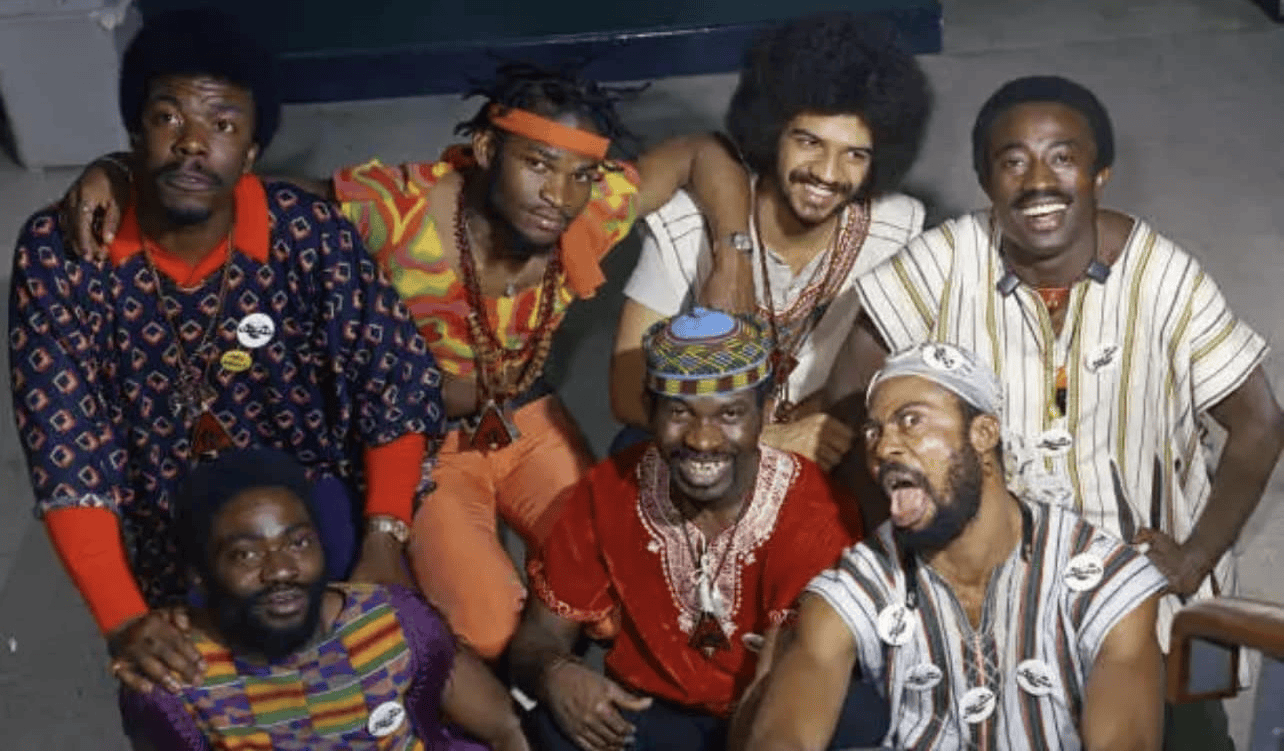
Osibisa is a pioneering Afro-rock band that transformed the global music scene by blending African rhythms with rock, jazz, soul, funk, and highlife. Formed in London in 1969 by Ghanaian and Caribbean musicians, the group gained international acclaim for its vibrant sound, electrifying performances, and innovative musical style.
Through powerful horn arrangements, rich percussion, and infectious melodies, Osibisa introduced African music to mainstream audiences across Europe, the Americas, and beyond, helping to shape the evolution of world music. Their groundbreaking recordings continue to influence artists across genres while celebrating Africa’s rich musical heritage. This article explores Osibisa’s history, band members, greatest hits, achievements, and lasting legacy.
The group took its name from a Fante language term linked to highlife music, often explained in their own words as criss cross rhythms that explode with happiness. Over more than five decades the band released numerous albums, scored chart hits, toured extensively and inspired later generations of African and diaspora artists. This biography traces the story of Osibisa from its Ghanaian roots through its years of global success and continuing legacy.
Osibisa Early Life
The story of Osibisa begins with three Ghanaian musicians whose early experiences in West Africa shaped the foundation of the band. Teddy Osei, born Francis Osei on 1 December 1937 in Kumasi in the Ashanti Region of Ghana, grew up in a household where music held an important place. His father played in prominent school bands, and young Teddy absorbed the sounds of highlife and traditional Akan music that filled the air in Kumasi and surrounding communities.
Kumasi, the historic capital of the Ashanti people, sits at the heart of a region long known for its rich cultural heritage, including drumming, dancing and brass band traditions that later fed into modern highlife. Osei developed a strong interest in the saxophone while studying in Sekondi in western Ghana, and he became a skilled multi instrumentalist comfortable with drums, flute and vocals as well.
Sol Amarfio, born Solomon Amarki Amarfio on 22 September 1938 in Asere in Accra, Ghana, earned the nickname The Rhythm Man for his natural gift with percussion. He began teaching himself drums at the age of fourteen and quickly gained a reputation in local circles. Accra, the coastal capital, offered a different but equally lively musical environment, blending Ga, Akan and other ethnic influences with the growing popularity of highlife dance music. Amarfio played in several Ghanaian bands before eventually making his way to London.
Mac Tontoh, born Kweku Adabanka Tonto on 25 December 1940 also in Kumasi, Ghana, shared the same Ashanti roots as his brother Teddy Osei. The two brothers grew up surrounded by the same cultural sounds of the Ashanti Region, an area historically central to the Asante Empire and known for its elaborate court music, talking drums and communal celebrations.
Tontoh took up the trumpet and horns, later adding percussion to his skills. Together the three young men experienced the excitement of Ghana’s independence era in the late 1950s under Kwame Nkrumah, a time when national pride and cultural expression flourished through music.
In the 1950s Osei, Amarfio and others performed in a highlife group called The Star Gazers. They later formed The Comets with Mac Tontoh on trumpet and scored a major West African hit in 1958 with the song I Feel Pata Pata. These early years immersed the musicians in the lively highlife scene that mixed African rhythms with European brass band elements and Caribbean influences already circulating along the coast.
Their state of origin, Ghana, and specifically the Ashanti and Greater Accra regions, provided the deep cultural soil from which Osibisa’s sound would grow. The Ashanti Region’s history of strong traditional institutions, gold trade and artistic expression, combined with Accra’s cosmopolitan energy as a port city, created a fertile ground for musical innovation that the founders carried with them when they later moved abroad.
Osibisa Education
Teddy Osei received formal support for his musical development when the Ghanaian government awarded him a scholarship in the early 1960s to study music and drama in London. He arrived in the British capital around 1962 and immersed himself in both academic training and the city’s vibrant jazz and soul scenes. This period allowed him to expand his knowledge of Western instruments and arrangement techniques while staying rooted in highlife traditions. In Sekondi earlier he had already focused on the saxophone, building technical skill that would become central to Osibisa’s horn driven sound.
Sol Amarfio and Mac Tontoh developed their abilities largely through practical experience in Ghanaian bands rather than formal conservatory training. Amarfio’s self taught approach to drumming gave him a distinctive, highly responsive style that later earned him recognition as a master of African and Caribbean rhythms.
Tontoh refined his trumpet playing through live performances and collaborations with his brother. When the three eventually reunited in London, their combined practical knowledge and Osei’s additional formal studies created a strong base for experimental work. The educational journey of the core members therefore blended traditional Ghanaian learning by ear and community performance with selective formal opportunities in Europe, reflecting the hybrid path many African musicians of that generation followed.
Osibisa Career
Osibisa’s professional journey began in earnest in London in 1969 when Teddy Osei brought together fellow Ghanaians Sol Amarfio and Mac Tontoh with Caribbean musicians to form a new group. The original lineup, often called the Beautiful Seven, included Wendell Dell Richardson from Antigua on lead guitar and vocals, Robert Bailey from Trinidad on keyboards, Roger Bedeau known as Spartacus R from Grenada on bass, and Lasisi Amao from Nigeria on percussion and tenor saxophone. This multinational mix produced a fresh sound that drew from highlife, rock, jazz, soul and Caribbean styles.
Formation and First Recordings
After earlier experiments with a group called Cat’s Paw that mixed highlife with rock and soul, Osei convinced Amarfio and Tontoh to join him permanently in London. The new band adopted the name Osibisa, drawing from the Fante word osibisaba associated with highlife. They quickly attracted attention in London’s progressive and psychedelic venues.
Their self titled debut album Osibisa appeared in 1971 and reached number 11 on the UK albums chart while also entering the US Billboard 200. The follow up Woyaya, released the same year, achieved similar success. Both records featured distinctive cover art by Roger Dean showing flying elephants that became a lasting visual symbol for the group.
Rise to International Success
The early 1970s brought extensive touring and growing recognition. Albums such as Heads in 1972, Happy Children in 1973 and Osibirock in 1974 continued to chart in multiple countries. The band also contributed to the soundtrack for Superfly T.N.T. in 1973. Live performances proved especially powerful, with energetic shows that combined tight musicianship and infectious rhythms.
In 1975 the album Welcome Home appeared, followed by Ojah Awake in 1976. Two singles from this period became their best known hits. Sunshine Day reached number 17 on the UK singles chart in early 1976, and Dance the Body Music peaked at number 31 the same year. These tracks captured the band’s ability to create uplifting, danceable music that still carried deep African roots.
Tours and Global Reach
Throughout the 1970s Osibisa travelled widely, performing for large audiences in Japan, Australia, New Zealand, India, Africa and Europe. They built a particularly strong following in India, where later live recordings captured the excitement of their shows. In 1980 the band performed at celebrations marking Zimbabwe’s independence, sharing the stage in a historic moment that also featured Bob Marley. A major series of concerts in India in 1981 led to the live album Unleashed Live in India. The group continued appearing at clubs such as the Marquee in London and maintained an active touring schedule even as lineup changes occurred.
Later Career and Continued Activity
As the music industry shifted in the 1980s, Osibisa experienced label changes and evolving membership while still releasing albums including Mystic Energy, Celebration and African Flight. Some original members returned to Ghana at points to support local highlife musicians through recording facilities. In the 1990s Teddy Osei regrouped the band, overseeing remastered reissues and new recordings such as Monsore in 1995.
Further albums included Osee Yee in 2009 and New Dawn in 2021. Live releases from venues including Cropredy and the Jazz Cafe kept the group’s performance energy available to fans. Despite health challenges for key members in later years, the band remained active into the 2020s, with previously unreleased material continuing to surface.
Osibisa discography highlights include the following studio albums among others:
- Osibisa 1971
- Woyaya 1971
- Heads 1972
- Happy Children 1973
- Osibirock 1974
- Welcome Home 1975
- Ojah Awake 1976
- Mystic Energy 1979
- Celebration 1980
- African Flight 1981
- Movements 1989
- Monsore 1995
- Osee Yee 2009
- New Dawn 2021
Live and compilation releases further expanded their catalogue, ensuring that classic tracks and rarities stayed in circulation.
Osibisa Personal Life
Details of the private lives of Osibisa’s core members remain relatively private, as the musicians generally focused public attention on their creative work. Teddy Osei made London his long term home after arriving on scholarship and continued living there until his death. He experienced a stroke in later years that reduced his touring but did not stop his involvement in recording projects.
Sol Amarfio, known for his warm personality and rhythmic mastery, also spent much of his adult life connected to the London music community while maintaining ties to Ghana. Mac Tontoh shared the close family bond with his brother Teddy and participated fully in the band’s early and middle years before passing away in 2010.
The multinational nature of the original lineup meant that personal backgrounds stretched across Ghana, Antigua, Trinidad, Grenada and Nigeria. Members navigated life as expatriate artists in Britain during a period of social change, drawing strength from their shared commitment to music that celebrated African and Caribbean heritage.
Family connections, particularly the Osei Tontoh sibling relationship, provided continuity. In later decades some members returned periodically to Ghana, where the cultural environment of the Ashanti Region and Accra continued to influence their outlook. The band’s story also includes the passing of several founding and long time members, including Lasisi Amao in 1988, Mac Tontoh in 2010, Spartacus R in 2010, Sol Amarfio in 2022 and Teddy Osei in January 2025 at the age of 87 in London. These losses marked the end of an era yet left the music itself as a living connection for fans and remaining associates.
Osibisa Musical Style
Osibisa developed a distinctive approach that blended Ghanaian highlife with rock structures, jazz improvisation, soul vocals, funk grooves and Caribbean rhythmic elements such as calypso and reggae influences. Horn sections featuring saxophone and trumpet sat alongside layered percussion, electric guitar and keyboards to create dense yet joyful textures.
The music often carried positive, uplifting messages that matched the energetic delivery. Later albums explored disco and R and B directions while retaining core African foundations. This hybrid style helped define Afro rock as a recognised category and opened doors for subsequent world music developments.
Osibisa Influence and Legacy
The band played a major role in making African music accessible and commercially viable in Europe and North America during the 1970s. Their success demonstrated that artists drawing primarily from African traditions could fill concert halls and appear on international charts. Later Ghanaian producers and hiplife artists have cited Osibisa tracks such as Welcome Home as direct inspirations.
The group’s emphasis on confident African expression gave many listeners a sense of pride in their cultural roots. Visual elements, particularly the flying elephant artwork, became iconic. Even after the peak commercial years, reissues, live recordings and new projects kept the Osibisa name active and relevant for new audiences discovering the music through streaming and archival releases.
Osibisa Awards
Osibisa received formal recognition for their pioneering contributions. In 2010 the group was honoured with a Lifetime Achievement Award at the Ghana UK Based Achievement GUBA Awards, celebrating their role in promoting Ghanaian and African culture through music on the international stage.
The award highlighted decades of consistent work and the lasting impact of their recordings and performances. Individual members also earned respect within the wider music community for their technical skill and cultural ambassadorship, with tributes following the deaths of key founders underscoring the depth of their influence.
Osibisa Tours and Performances
Live performance formed a central pillar of Osibisa’s identity. From early London club dates the band expanded to major international venues and festivals. Extensive tours through the 1970s took them to Japan, Australasia, the Middle East, India and multiple African countries. The 1980 Zimbabwe independence celebrations placed them in a historically significant setting alongside other global artists.
Return visits to India produced memorable live albums, and later appearances at events such as Cropredy Festival maintained their connection with dedicated fans. The energy of their stage shows, driven by powerful percussion and horn arrangements, consistently received praise and helped sustain their reputation long after initial chart success.
Read Also: Ebiere Soberekon Biography: Age, State of Origin, Husband, Wedding Day, Career, Net Worth & Family
Conclusion
Osibisa emerged from the meeting of Ghanaian highlife traditions and the cosmopolitan London music scene of the late 1960s to create a body of work that remains distinctive and joyful. Through the vision of Teddy Osei, Sol Amarfio, Mac Tontoh and their Caribbean and Nigerian collaborators, the band built a lasting bridge between African rhythms and wider popular music forms.
Their albums, hit singles, extensive tours and visual identity left a clear mark on the development of Afro rock and world music. Even as founding members have passed, the recordings continue to introduce new listeners to the criss cross rhythms that first defined the group. Osibisa’s story stands as a testament to cultural exchange, musical innovation and the enduring power of music rooted in Ghanaian heritage.
FAQs
What does the name Osibisa mean?
The name draws from the Fante language term osibisaba associated with highlife music. Band members often described it as meaning criss cross rhythms that explode with happiness.
When and where was Osibisa formed?
Osibisa formed in London, England, in 1969. The core Ghanaian members came from Accra and the Ashanti Region of Ghana.
Who were the founding members of Osibisa?
The original Beautiful Seven included Teddy Osei, Sol Amarfio and Mac Tontoh from Ghana, Wendell Richardson from Antigua, Robert Bailey from Trinidad, Spartacus R from Grenada and Lasisi Amao from Nigeria.
What are Osibisa’s best known songs?
Sunshine Day and Dance the Body Music became their highest charting singles in the mid 1970s. Other popular tracks include Welcome Home and material from the early albums Osibisa and Woyaya.
Did Osibisa win any major awards?
Yes. The band received a Lifetime Achievement Award at the 2010 GUBA Awards in recognition of their contributions to music and cultural representation.
Is Osibisa still active?
The band has continued in various forms with new recordings and reissues into the 2020s, although several founding members have passed away in recent years.