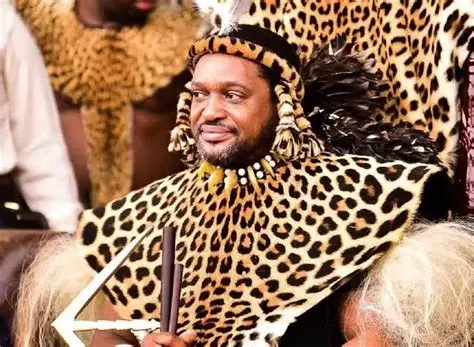
King Misuzulu Zulu (Misuzulu Sinqobile kaZwelithini) is the reigning King of the Zulu Nation and Monarch of KwaZulu-Natal, widely recognized as the traditional leader of South Africa’s largest ethnic group. Best known for preserving Zulu culture, strengthening traditional leadership, and promoting social and economic development, King Misuzulu has emerged as one of Africa’s most prominent contemporary monarchs.
Born on September 23, 1974, in Hlabisa, KwaZulu-Natal, South Africa, he succeeded his father, King Goodwill Zwelithini kaBhekuzulu, and assumed the responsibility of leading the historic Zulu Kingdom through a new era. His reign continues to reinforce the cultural heritage, unity, and global influence of the Zulu people.
His mother, Queen Mantfombi Dlamini Zulu, served briefly as regent before her own passing. He was officially appointed king on 7 May 2021, with a traditional coronation on 20 August 2022 and formal state recognition on 29 October 2022. As monarch, he upholds Zulu customs, promotes cultural heritage, and addresses community issues in one of South Africa’s most influential traditional leadership roles.
This article explores King Misuzulu’s biography, early life, coronation, reign, achievements, personal life, and enduring legacy.
Misuzulu Sinqobile kaZwelithini Early Life
Misuzulu Sinqobile kaZwelithini was born on 23 September 1974 at Hlabisa hospital in northern KwaZulu-Natal. He is the eldest son of King Goodwill Zwelithini kaBhekuzulu and his Great Wife, Queen Mantfombi Dlamini Zulu, who came from the royal family of eSwatini (formerly Swaziland). His mother was the daughter of King Sobhuza II and sister to King Mswati III, linking the Zulu and Swazi royal houses through dynastic ties.
The name Misuzulu means “he who would strengthen the Zulu nation,” while Sinqobile means “we have conquered.” These names reflect aspirations for unity and resilience in the Zulu royal lineage. As a child of the Great Wife, Misuzulu’s position carried cultural weight under Zulu customs, where the firstborn son of the senior wife often holds priority in succession.
Misuzulu spent much of his early childhood in eSwatini, his mother’s homeland. At age five, he moved there with his mother. He attended Assembly of God Primary School and later St. Michael’s School in eSwatini. In 1985, he returned to South Africa to deepen his connection to Zulu culture, enrolling at Roseland Primary School in Phoenix. He later attended St. Charles College in Pietermaritzburg for high school.
Growing up between two royal households shaped his worldview. He learned Zulu traditions alongside influences from eSwatini. Family members described him as shy yet courageous, someone who knew when to speak and when to observe. He participated in rural life activities, including time in the veld, which instilled practical skills and respect for heritage.
His father’s extensive family included multiple wives and many siblings, creating a complex royal environment. Misuzulu navigated this with a focus on education and cultural grounding rather than immediate public prominence. He remained relatively low-profile until the events of 2021 brought him into the spotlight.
Misuzulu Sinqobile kaZwelithini Education
Misuzulu pursued education in both South Africa and internationally. After primary schooling in eSwatini and South Africa, he completed high school at the prestigious St. Charles College in Pietermaritzburg. This institution provided a strong academic foundation in a structured environment.
He later studied in the United States, supported in part by a Swazi royal scholarship. Sources indicate he pursued or completed a degree in International Studies, with some reports linking studies to Jacksonville, Florida. This international exposure broadened his perspective on global affairs, diplomacy, and development—skills relevant to his later leadership role.
His education combined formal academics with deep immersion in Zulu and Swazi customs. Time in eSwatini emphasized royal protocols and cultural identity, while South African schooling connected him to local realities. This blend prepared him for bridging tradition and modernity as king.
State of Origin and Zulu Heritage
Misuzulu hails from KwaZulu-Natal, the heartland of the Zulu people. The province, formerly parts of the Zulu Kingdom and Natal, is the cultural and historical center of Zulu identity. Hlabisa, his birthplace, lies in northern KwaZulu-Natal, an area rich in Zulu history and royal sites.
The Zulu Kingdom originated in the late 18th and early 19th centuries under leaders like Shaka Zulu, who unified Nguni clans into a powerful nation. The region features historic sites such as Ulundi, Isandlwana (site of a famous 1879 victory against British forces), and royal palaces like KwaKhangelamankengane in Nongoma. KwaZulu-Natal’s landscape, from the Drakensberg Mountains to the Indian Ocean coast—shaped Zulu society, which values cattle, warrior traditions, and strong communal ties.
Today, the Zulu form South Africa’s largest ethnic group, with millions in KwaZulu-Natal and beyond. The monarchy, though ceremonial under the South African Constitution, remains highly influential in cultural, social, and land matters through institutions like the Ingonyama Trust. Misuzulu’s roots in this province tie him directly to this vibrant heritage of resilience and pride.
Misuzulu Sinqobile kaZwelithini Accession to the Throne
The path to kingship involved family dynamics and legal processes. King Goodwill Zwelithini died on 12 March 2021. Queen Mantfombi Dlamini Zulu became regent but passed away on 29 April 2021. Her will named Misuzulu as successor.
On 7 May 2021, at the public reading of the will at KwaKhangelamankengane Royal Palace, Misuzulu was announced as the preferred king. The event drew protests from some family members, leading to security measures for his safety. Rain followed, interpreted by some as a positive cultural sign.
Challenges arose from half-brothers like Prince Simakade and others, sparking court cases questioning the process and will. Supporters, including traditional prime minister Prince Mangosuthu Buthelezi, backed Misuzulu based on Zulu custom favoring the son of the Great Wife. Courts ultimately upheld his position through multiple rulings, including by the Supreme Court of Appeal.
Misuzulu Sinqobile kaZwelithini Coronation
Misuzulu’s traditional coronation occurred on 20 August 2022 at KwaKhangelamankengane Palace in Nongoma. He entered the sacred cattle kraal to invoke ancestors, participated in a royal hunt, and wore a lion skin as part of rituals. Thousands attended, with cultural performances and ceremonies reinforcing his legitimacy.
The state recognition ceremony followed on 29 October 2022 at Moses Mabhida Stadium in Durban. President Cyril Ramaphosa presented the certificate of recognition. Dignitaries included King Mswati III, Jacob Zuma, and others. This event formalized his role under South African law.
Misuzulu Sinqobile kaZwelithini Career and Leadership
As king, Misuzulu’s role is largely ceremonial but carries significant cultural and social influence. He presides over traditional ceremonies such as Umkhosi Wokweshwama (First Fruits) and Umhlanga Reed Dance. He promotes Zulu heritage, youth development, and community welfare.
He has engaged in initiatives addressing poverty, climate change, economic development, and rural issues. As trustee of the Ingonyama Trust, he oversees land matters affecting many Zulus. Visits and partnerships, including with other African royals and international figures, aim to strengthen ties and development.
He reappointed traditional prime minister Thulasizwe Buthelezi and established governance structures for better coordination. Public addresses emphasize unity, moral responsibility for youth, and conservation.
Awards
Information on formal personal awards is limited, as his public recognition stems primarily from his royal position rather than individual accolades in entertainment or sports. His leadership has been affirmed through court validations and cultural endorsements. He receives state support and participates in national traditional leadership forums.
Misuzulu Sinqobile kaZwelithini Personal Life
Misuzulu married his longtime partner Ntokozo Mayisela (Great Wife) on 6 May 2021, just before his mother’s funeral. They met in 2009 at his sister’s wedding. Lobola involved eight cows and R50,000. They have two children: Lwandle and Mandulo.
He has other wives, including Nozizwe Mulela (second wife, a banking executive from eSwatini), Nomzamo Myeni (third), and reports of a fourth, Sihle Mdluli. He has a son, Jubezizweni, with Princess Wezizwe Sigcau of the amaMpondo royal house. Family life reflects Zulu polygamous traditions.
He has faced personal and family challenges, including reported divorce proceedings with one wife and ongoing royal family dynamics. He describes himself as committed to healing divisions.
Before kingship, he was known as a farmer and rugby player, enjoying a relatively private life with interests in rural activities.
Other Relevant Aspects of Leadership
Misuzulu has hosted cultural events like Isibaya Esigodlweni and participated in commemorations such as the Battle of Isandlwana anniversary. He emphasizes education, entrepreneurship, and addressing social issues like gender-based violence and economic empowerment.
International engagements include strengthening ties with British royals and other African kingdoms. Domestically, he advocates for traditional leadership autonomy and rural development.
Read Also: Ebiere Soberekon Biography: Age, State of Origin, Husband, Wedding Day, Career, Net Worth & Family
Conclusion
King Misuzulu Sinqobile kaZwelithini leads the Zulu Nation at a time of continuity and change. Rooted in rich heritage, his reign focuses on unity, cultural preservation, and addressing modern challenges facing his people. His journey from royal son to monarch highlights resilience amid family and legal hurdles. As a symbol of Zulu identity, he continues to inspire pride and progress in KwaZulu-Natal and beyond.
FAQs
Who is Misuzulu Sinqobile kaZwelithini?
Misuzulu Sinqobile kaZwelithini is the current King of the Zulu Nation, born in 1974 in Hlabisa, KwaZulu-Natal. He succeeded his father in 2021.
When was Misuzulu Sinqobile kaZwelithini born?
He was born on 23 September 1974.
Where is Misuzulu Sinqobile kaZwelithini from?
He is from Hlabisa in KwaZulu-Natal, South Africa, the heart of Zulu heritage.
How many wives does Misuzulu Sinqobile kaZwelithini have?
He has multiple wives in line with Zulu tradition, including Ntokozo Mayisela as the Great Wife.
What is the role of the Zulu King in South Africa?
The role is ceremonial and cultural, involving leadership in traditions, land oversight via the Ingonyama Trust, and community advocacy, without formal political power.
Did Misuzulu Sinqobile kaZwelithini face succession challenges?
Yes, legal disputes from family members occurred, but courts upheld his position.