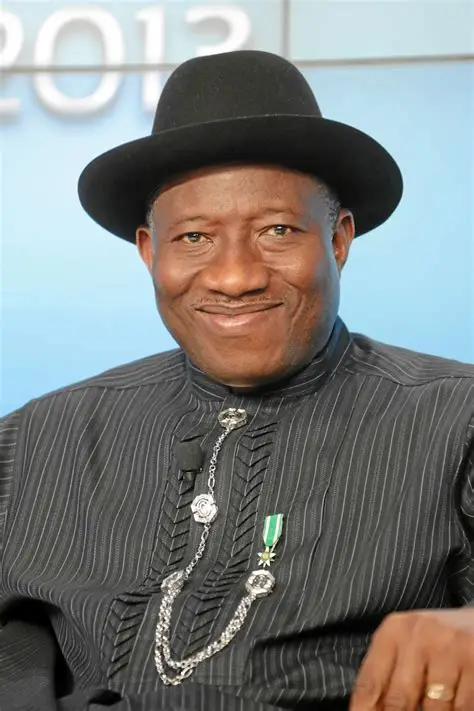
Former Nigerian President Goodluck Ebele Jonathan turned 69 on November 20, 2026, attracting birthday messages from political leaders, including President Bola Ahmed Tinubu. The recognition renewed public attention on a political career that took him from an academic and environmental protection officer in the Niger Delta to the highest political office in Nigeria. He served as Vice President under Umaru Musa Yar’Adua before becoming President in 2010 and winning a full term in 2011.
Jonathan remains an important figure in Nigeria’s democratic history, particularly because of his decision to concede defeat to Muhammadu Buhari in the 2015 presidential election. Since leaving office, he has participated in international election observation, mediation and peacebuilding initiatives across Africa. His life combines academic work, political leadership, national controversy and a continuing role in continental diplomacy.
Early Life, Real Name and Family Background
Goodluck Jonathan’s full name is Goodluck Ebele Azikiwe Jonathan. He was born on November 20, 1957, in Otuoke, a community in Ogbia Local Government Area of present-day Bayelsa State, Nigeria. He belongs to the Ijaw ethnic group of the Niger Delta.
Jonathan grew up in a family of canoe makers. His parents worked in a traditional occupation closely connected to the waterways and fishing communities of the Niger Delta. His upbringing in the region exposed him to the environmental and economic conditions that later influenced his professional interests and political activities.
His background differed from that of many Nigerian politicians who entered public life through established political families or wealthy business networks. Jonathan first built a career in education and environmental administration before entering partisan politics in the late 1990s.
He attended primary and secondary schools in Nigeria before proceeding to university. His academic interests centred on zoology and aquatic life, fields that later shaped his professional career.
Education and Academic Qualifications
Jonathan attended the University of Port Harcourt in Rivers State, where he studied Zoology. He graduated with a Bachelor of Science degree in 1981.
He continued his education at the same university, obtaining a Master of Science degree in Hydrobiology and Fisheries Biology. He later earned a PhD in Zoology, completing his academic training before his entry into elective politics.
His qualifications gave him a scientific background that distinguished him from many career politicians. His postgraduate studies also reflected an interest in aquatic ecosystems, fisheries and environmental issues, subjects with particular relevance to communities in the Niger Delta.
Jonathan’s academic experience became an important part of his public identity. Even after entering politics, he frequently referred to his background as a teacher and scientist.
Career Before Politics
Before becoming a politician, Jonathan worked in several professional roles. He served as an education inspector, helping to monitor educational activities and standards. He also worked as a lecturer, gaining experience in teaching and academic administration.
His career later moved into environmental protection. He joined the Oil Mineral Producing Areas Development Commission, commonly known as OMPADEC, where he served as an Assistant Director responsible for environmental protection and pollution control.
The commission addressed development and environmental concerns in oil-producing communities. Jonathan’s work placed him within an institution dealing with some of the challenges that affected the Niger Delta, including environmental degradation and the need for development in communities hosting petroleum operations.
These professional experiences preceded his political career and gave him exposure to public administration. His transition from education and environmental management into government later provided the foundation for his rise through Bayelsa State politics.
Entry into Politics and Rise in Bayelsa State
Jonathan entered active politics in 1998, during Nigeria’s transition from military rule to civilian government. He joined the Peoples Democratic Party (PDP), which became one of the major political platforms in the country’s emerging Fourth Republic.
In 1999, he contested and won the position of Deputy Governor of Bayelsa State, serving alongside Governor Diepreye Alamieyeseigha. Their administration took office on May 29, 1999, following the restoration of democratic government.
Jonathan served as deputy governor for approximately six years. Although he occupied the state’s second-highest executive position, he maintained a relatively low public profile compared with some other politicians of the period.
His political circumstances changed in December 2005 when the Bayelsa State House of Assembly impeached Governor Alamieyeseigha following legal and corruption-related controversies involving the governor. Jonathan consequently became governor of Bayelsa State.
As governor, he served until May 2007. His time in the office was relatively short, but it positioned him for a much larger political opportunity. The PDP selected him as the running mate to Umaru Musa Yar’Adua in the 2007 presidential election.
Vice Presidency Under Umaru Musa Yar’Adua
The PDP ticket of Umaru Musa Yar’Adua and Goodluck Jonathan won the 2007 presidential election. Jonathan became Vice President of Nigeria on May 29, 2007.
His appointment brought him from state-level administration into the federal executive leadership. As vice president, he worked within the Yar’Adua administration and participated in national policy discussions and government activities.
The most defining event of his vice presidency came in November 2009, when President Yar’Adua travelled to Saudi Arabia for medical treatment. His prolonged absence created uncertainty over executive authority because the country initially lacked a formal transfer of presidential powers.
On February 9, 2010, the National Assembly invoked the Doctrine of Necessity and recognised Jonathan as Acting President. This decision allowed the federal government to continue operating while Yar’Adua remained unable to perform his constitutional responsibilities.
Yar’Adua died on May 5, 2010. Jonathan subsequently became President and Commander-in-Chief of the Nigerian Armed Forces and was sworn in on May 6, 2010.
Presidency of Nigeria: 2010 to 2015
Jonathan’s presidency began during a period of political uncertainty and growing security challenges. He inherited an administration facing concerns about the Niger Delta, economic management, electricity supply and the growing activities of Boko Haram in northern Nigeria.
He completed Yar’Adua’s remaining term and contested the 2011 presidential election under the PDP. Jonathan won the election, securing a full four-year mandate and defeating his major challengers, including Muhammadu Buhari.
His administration pursued the Transformation Agenda, a policy framework intended to promote economic growth, infrastructure development, agriculture, employment and improvements in public services.
Economic Policies and GDP Rebasing
One of the most widely discussed economic developments during Jonathan’s presidency was Nigeria’s 2014 GDP rebasing exercise. The process updated the country’s economic measurement base to reflect newer industries and changes in economic activity.
The revised figures placed Nigeria ahead of South Africa as Africa’s largest economy at the time. The exercise highlighted the size of sectors such as telecommunications, entertainment, financial services and other non-oil activities.
However, the new ranking did not mean that ordinary Nigerians automatically became wealthier. The rebasing changed the measurement of the economy rather than distributing additional income to households. Poverty, unemployment and inequality remained important national challenges.
Power Sector Privatisation
Jonathan’s government also completed a major phase of Nigeria’s power sector privatisation in 2013. The process transferred control of generation and distribution companies previously operated under the Power Holding Company of Nigeria to private investors.
The reform aimed to improve electricity generation, distribution and investment by introducing private ownership into important parts of the electricity industry.
Although the privatisation changed the structure of the sector, it did not immediately solve Nigeria’s electricity problems. Power supply remained unreliable, and the new market faced financial, infrastructure and operational difficulties.
Agriculture and Infrastructure
Agriculture was another major area of the Transformation Agenda. The administration introduced programmes intended to improve farming, increase food production and encourage private investment in agricultural businesses.
Its agricultural reforms included the Growth Enhancement Support Scheme, which used electronic vouchers to help farmers access fertiliser and seeds. The government also promoted agricultural financing and initiatives designed to attract young Nigerians into farming.
In infrastructure, the administration pursued railway rehabilitation and expansion, road construction and improvements to aviation facilities. It also supported the development of new federal universities and other educational institutions.
The administration’s record in these areas attracted both praise and criticism. Supporters pointed to reforms and infrastructure projects, while critics questioned their implementation, impact on employment and ability to improve living conditions.
Boko Haram Insurgency and the Chibok Abduction
Security became one of the most serious challenges of Jonathan’s presidency. Boko Haram expanded its attacks in northeastern Nigeria, targeting communities, schools, security facilities and public institutions.
The April 2014 abduction of more than 200 schoolgirls from Chibok in Borno State became an international crisis. The incident triggered the global Bring Back Our Girls campaign and widespread criticism of the government’s response.
Families, activists and international partners demanded stronger action to rescue the abducted students. Critics accused the administration of responding too slowly and failing to provide adequate protection for communities affected by the insurgency.
The government’s handling of the crisis became one of the most damaging issues for Jonathan’s public image. Although security operations continued during his presidency, Boko Haram remained a major threat when he left office in 2015.
The 2012 Fuel Subsidy Protests
Another major controversy occurred in January 2012 when Jonathan’s government announced the removal of the petrol subsidy. The decision caused fuel prices to rise sharply and triggered nationwide protests organised under the Occupy Nigeria movement.
Labour unions, civil society groups and ordinary citizens opposed the policy, arguing that the increase would place additional pressure on households already struggling with living costs.
Following widespread demonstrations and negotiations, the government partially reversed the decision and restored part of the subsidy. The episode exposed the political and economic difficulties surrounding petroleum subsidy reform in Nigeria.
The 2015 Election and Peaceful Transfer of Power
Jonathan’s political career reached a defining moment during the 2015 presidential election. He contested for re-election under the PDP against Muhammadu Buhari of the All Progressives Congress (APC).
The election took place amid public dissatisfaction over insecurity, corruption allegations, economic concerns and divisions within the ruling party. Buhari defeated Jonathan, ending the PDP’s uninterrupted control of the presidency since 1999.
On March 31, 2015, Jonathan called Buhari to congratulate him before the final results had been formally announced. He subsequently accepted the outcome and prepared to leave office.
His decision was significant because Nigeria had experienced repeated disputes over presidential elections and political transitions. Jonathan’s concession helped reduce uncertainty during the transfer of power and became a defining part of his international reputation.
He left office on May 29, 2015, when Buhari was sworn in as President. The election also marked Nigeria’s first transfer of presidential power from one political party to another through a general election.
Life After the Presidency and African Peacebuilding
After leaving office, Jonathan remained active in international diplomacy, election observation and conflict resolution. His experience as a former head of state made him a prominent figure in African political and peacebuilding discussions.
He has participated in election observation missions and mediation activities across the continent. His work has involved engagement with political leaders, electoral institutions and stakeholders in countries facing democratic transitions or political disputes.
Jonathan also established the Goodluck Jonathan Foundation, which supports initiatives relating to democracy, peace, governance and development. Through the foundation and other international engagements, he has continued to advocate dialogue, peaceful political participation and stronger democratic institutions.
He has also served in roles connected with regional and international peace initiatives. His post-presidency activities have included engagement with political transitions in West Africa and efforts to encourage peaceful solutions to conflicts.
In 2018, he published his memoir, My Transition Hours. The book discusses his experience in government, the circumstances surrounding his emergence as president and his decision to concede the 2015 election.
His post-presidency career has helped maintain his presence in African public affairs, even though he no longer holds an elected political office.
Wife, Children and Personal Life
Goodluck Jonathan is married to Dame Patience Jonathan. She served as Nigeria’s First Lady during his presidency and was involved in public programmes relating to women, children and social development.
The couple have two children. Jonathan generally keeps his immediate family away from the level of public exposure associated with his political activities.
His Christian faith and Ijaw background are also recognised parts of his public identity. Despite spending years in national politics, he has continued to maintain connections with his home community in Otuoke, Bayelsa State.
Goodluck Jonathan Net Worth and Sources of Income
Goodluck Jonathan’s exact current net worth has not been established through reliable, independently verified financial information. Online estimates vary and should not be treated as confirmed figures.
His professional career has included academic employment, environmental administration, elected political positions and service as Nigeria’s president. He has also remained involved in international engagements, public speaking, peacebuilding and foundation activities since leaving office.
These roles form part of his professional background, but they do not provide enough information to calculate his present wealth accurately. A responsible biography should therefore avoid assigning him an unsupported net worth figure.
Frequently Asked Questions About Goodluck Jonathan
1. How old is Goodluck Jonathan?
Goodluck Jonathan was born on November 20, 1957. He turned 69 on November 20, 2026.
2. What is Goodluck Jonathan’s full name?
His full name is Goodluck Ebele Azikiwe Jonathan.
3. Who is Goodluck Jonathan’s wife?
His wife is Dame Patience Jonathan, who served as Nigeria’s First Lady during his presidency.
4. How many children does Goodluck Jonathan have?
Goodluck Jonathan and his wife, Patience Jonathan, have two children.
5. What did Goodluck Jonathan study?
He studied Zoology at the University of Port Harcourt, where he obtained a bachelor’s degree, a master’s degree in Hydrobiology and Fisheries Biology, and a PhD in Zoology.
6. When was Goodluck Jonathan President of Nigeria?
He became President in May 2010 following the death of Umaru Musa Yar’Adua. He served until May 29, 2015.
7. Why did Goodluck Jonathan concede defeat in 2015?
He accepted the presidential election result after Muhammadu Buhari defeated him. His decision to congratulate Buhari before the final results were formally announced helped facilitate a peaceful transfer of power.
8. What does Goodluck Jonathan do after leaving office?
He participates in African peacebuilding, election observation, mediation and governance initiatives through international engagements and the Goodluck Jonathan Foundation.
Conclusion
Goodluck Jonathan’s life reflects a journey from academic and environmental work to state leadership, the Nigerian presidency and international peacebuilding. His five years as president included major economic and institutional reforms, but also serious challenges involving insecurity, corruption concerns, unemployment and public dissatisfaction.
His decision to concede the 2015 presidential election remains one of the most significant events of his political career. At 69, Jonathan continues to participate in African democratic and peacebuilding initiatives, maintaining a public role beyond his years in Nigeria’s highest political office.