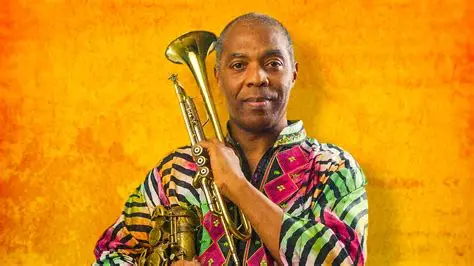
Who Is Femi Kuti?
Femi Kuti is a Nigerian musician, saxophonist, songwriter, composer and activist known for carrying Afrobeat into a new generation. Born Olufela Olufemi Anikulapo Kuti on June 16, 1962, he was born in London but grew up in Lagos, Nigeria.
The Femi Kuti biography is often introduced through his famous father, Fela Anikulapo-Kuti. However, Femi established an independent career, founded the band Positive Force and developed his own interpretation of Afrobeat while continuing his family’s tradition of using music to address social and political issues.
His international reputation has earned him multiple Grammy nominations and collaborations with major artists. His family’s musical legacy also received renewed attention in 2026 after Fela Kuti became the first African artist to receive the Grammy Lifetime Achievement Award, with Femi among the children who accepted the honor on his behalf.
Femi Kuti Biography at a Glance
| Profile | Details |
|---|---|
| Full name | Olufela Olufemi Anikulapo Kuti |
| Stage name | Femi Kuti |
| Date of birth | June 16, 1962 |
| Age | 64 years |
| Place of birth | London, United Kingdom |
| Nationality | Nigerian |
| Profession | Musician, songwriter, composer and activist |
| Main genre | Afrobeat |
| Father | Fela Kuti |
| Band | Positive Force |
| Children | Seven biological children |
| Notable albums | Shoki Shoki, Fight to Win, Africa for Africa, No Place for My Dream |
| Grammy nominations | Six |
| UNICEF role | Goodwill Ambassador |
Early Life and Family Background
Femi Kuti was born into one of Nigeria’s most influential musical and political families. His father, Fela Kuti, became internationally famous for developing Afrobeat and using his music to challenge political oppression and social injustice.
His mother was Remilekun Ransome-Kuti, and his extended family included prominent Nigerian activists and intellectuals. His grandmother, Funmilayo Ransome-Kuti, was a major nationalist, women’s rights campaigner and political figure.
Although Femi was born in London, he was raised primarily in Lagos. Growing up around his father’s music exposed him to performance, instruments, political commentary and the distinctive musical culture that surrounded the Kuti family.
That environment strongly influenced his decision to pursue music professionally.
Femi Kuti’s Education
Femi Kuti attended Baptist Academy and later Igbobi College in Lagos. However, his musical education developed largely through practical experience rather than formal conservatory training.
At about 15, he began playing the saxophone and joined his father’s band, Egypt 80. This placed him directly inside one of Africa’s most influential musical movements while he was still a teenager.
Working alongside Fela gave Femi firsthand experience of Afrobeat performance and its political character. He eventually developed his own approach rather than simply reproducing his father’s sound.
How Femi Kuti Started His Music Career
Femi began his professional music career in his father’s Egypt 80 band. His early years with the group exposed him to international touring, large performances and the demanding lifestyle of a professional musician.
In 1984, Femi temporarily took a more prominent role with Egypt 80 when Fela was arrested before a planned American tour. Femi helped lead performances during the tour, demonstrating that he could command an audience independently.
In 1986, he founded his own band, Positive Force, with keyboardist Dele Sosimi. This decision marked the beginning of his independent musical identity.
Positive Force allowed Femi to explore Afrobeat through his own compositions and arrangements while maintaining the genre’s characteristic combination of African rhythms, horns, jazz, funk and political commentary.
Femi Kuti and Positive Force
Positive Force became central to Femi Kuti’s career. Through the band, he developed a sound that respected his father’s Afrobeat foundation while incorporating elements from other contemporary genres.
His early recordings included No Cause for Alarm?, while his 1998 album Shoki Shoki became one of his most internationally acclaimed projects. The album included “Sorry Sorry,” a politically charged song that continued the tradition of using Afrobeat to criticize social and political problems.
Femi’s music has remained closely connected to questions about corruption, inequality, governance and human rights. However, his musical arrangements have also evolved, allowing him to establish a distinct identity rather than simply being described as Fela’s successor.
Femi Kuti’s Major Albums and Songs
Femi Kuti has released numerous albums during his long career. Some of his best-known projects include Shoki Shoki, Fight to Win, Day by Day, Africa for Africa, No Place for My Dream and Stop the Hate.
His music has received international critical recognition and introduced Afrobeat to audiences who may not have been familiar with its Nigerian roots.
The album Fight to Win included collaborations that connected Femi’s Afrobeat with American hip-hop and other contemporary sounds. Later projects continued his focus on political consciousness while experimenting with different musical influences.
In 2021, Femi and his son Made Kuti released Legacy +, a double album that connected two generations of the Kuti family. The project featured Femi’s Stop the Hate alongside Made’s For(e)ward.
Femi Kuti’s Grammy Nominations
Femi Kuti has received six Grammy nominations during his career, although he has not won the award.
His nominations have included projects such as Fight to Win, Day by Day, Africa for Africa, No Place for My Dream, and Legacy +. He was also nominated for Best Global Music Performance for “Pà Pá Pà” in 2022.
These nominations demonstrate the international recognition his music has achieved.
Although his father Fela received a posthumous Grammy Lifetime Achievement Award in 2026, that honor belongs to Fela and should not be confused with Femi’s own Grammy record.
Femi Kuti and Fela Kuti’s Legacy
Being Fela Kuti’s eldest son has inevitably shaped Femi’s public identity. Nevertheless, Femi has spent decades building a career that stands on its own.
He inherited the Afrobeat tradition but adapted it to his own generation. His songs address modern political and social issues, while his saxophone playing, stage performances and arrangements have helped keep the genre relevant.
The family’s influence became particularly visible in 2026, when the Recording Academy posthumously honored Fela Kuti with the Grammy Lifetime Achievement Award. Femi, alongside his siblings, accepted the award on their father’s behalf. Fela became the first African artist to receive the honor.
Femi Kuti’s International Work
Femi Kuti has performed extensively outside Nigeria and has collaborated with musicians from different parts of the world.
His international work has helped Afrobeat reach new audiences while strengthening his reputation as an important Nigerian cultural ambassador. He has appeared at major festivals and concert venues across Europe, North America and Africa.
His global recognition extends beyond music. In 2002, UNICEF appointed Femi Kuti as a Goodwill Ambassador, reflecting his involvement in social issues and advocacy.
Through this role, he participated in initiatives addressing children’s welfare and public health.
Femi Kuti’s Wife and Children
Femi Kuti has kept much of his family life relatively private compared with his professional activities. He has been married and has spoken publicly about fatherhood and the responsibilities that come with raising children.
In an interview with The Punch, Femi said he has seven biological children and has also raised adopted children. His children include musicians, continuing the family’s strong connection to music.
His son Made Kuti has followed him into music and has worked to develop the family’s Afrobeat tradition through his own artistic style.
Femi Kuti’s Net Worth
Femi Kuti’s exact net worth is not reliably established through authoritative public financial records.
He has earned income through recordings, international performances, touring, collaborations and other music-related activities throughout his career. However, figures published by celebrity websites are inconsistent and should not be treated as verified financial information.
For that reason, BiographySearch.com.ng does not present an unsupported estimate as his confirmed wealth.
Read More: Bruce Melodie Biography: Age, Real Name, Wife, Children and Career
Frequently Asked Questions About Femi Kuti
What is Femi Kuti’s real name?
His full name is Olufela Olufemi Anikulapo Kuti, although he is professionally known as Femi Kuti.
How old is Femi Kuti?
Femi Kuti was born on June 16, 1962, making him 64 years old in 2026.
Who is Femi Kuti’s father?
His father was Fela Anikulapo-Kuti, the legendary Nigerian musician and pioneer of Afrobeat.
What band did Femi Kuti create?
He founded Positive Force in 1986 after establishing his independent career outside his father’s Egypt 80 band.
Has Femi Kuti won a Grammy?
No. Femi Kuti has received six Grammy nominations but has not won a Grammy.
How many children does Femi Kuti have?
Femi has publicly stated that he has seven biological children and has also raised adopted children.
What is Femi Kuti famous for?
He is famous for his Afrobeat music, saxophone playing, songwriting, political activism, Positive Force band and international career.
Key Facts About Femi Kuti
Femi Kuti is a Nigerian musician who has successfully developed his own identity within the Afrobeat tradition. Born in London and raised in Lagos, he began playing music as a teenager before joining his father’s Egypt 80 band.
His creation of Positive Force in 1986 established an independent career that has lasted for decades. Albums such as Shoki Shoki, Fight to Win, Africa for Africa and No Place for My Dream helped make him an internationally recognized Afrobeat artist.
He has received six Grammy nominations and served as a UNICEF Goodwill Ambassador. His role in accepting Fela Kuti’s 2026 Grammy Lifetime Achievement Award has also placed him at the center of renewed global interest in the Kuti family’s extraordinary musical legacy.
Conclusion
Femi Kuti’s biography is much more than the story of Fela Kuti’s eldest son. He inherited one of Africa’s most important musical traditions but spent decades developing his own sound, band and international reputation.
Through Positive Force, his albums, collaborations and socially conscious music, Femi has become an important figure in contemporary Afrobeat. His Grammy nominations and international performances demonstrate the reach of his work.
The 2026 Grammy Lifetime Achievement Award presented to his father has renewed attention on the Kuti family, but Femi’s own achievements remain substantial. He continues to perform, record music and carry the Afrobeat tradition into another generation.