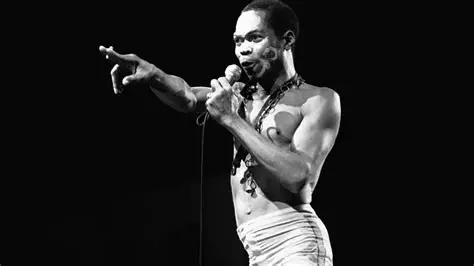
Fela Anikulapo Kuti, born Olufela Olusegun Oludotun Ransome-Kuti, was a legendary Nigerian musician, composer, saxophonist, bandleader, and political activist widely regarded as the founder of Afrobeat. Born in Abeokuta during the colonial era, he revolutionized African music by fusing traditional Yoruba rhythms, highlife, jazz, funk, and soul into a distinctive sound that gained worldwide recognition.
Beyond his musical achievements, Fela became an outspoken critic of corruption, military dictatorship, and social inequality, using his songs as a platform to demand justice and political reform. His fearless activism, electrifying performances, and timeless recordings transformed him into one of Africa’s most influential cultural icons. This article explores Fela Kuti’s biography, early life, career, family, songs, activism, death, and legacy.
Quick Facts
| Quick Facts | Details |
|---|---|
| Full Name | Olufela Olusegun Oludotun Ransome-Kuti |
| Popular Name | Fela Anikulapo Kuti (Fela Kuti) |
| Birth Name | Olufela Olusegun Oludotun Ransome-Kuti |
| Date of Birth | 15 October 1938 |
| Place of Birth | Abeokuta, Ogun State, Nigeria (then British Nigeria) |
| Date of Death | 2 August 1997 |
| Age at Death | 58 years |
| Nationality | Nigerian |
| Ethnicity | Yoruba |
| Occupation | Musician, Composer, Saxophonist, Bandleader, Political Activist |
| Genres | Afrobeat, Highlife, Jazz, Funk |
| Primary Instruments | Saxophone, Keyboards, Trumpet, Vocals |
| Years Active | 1958–1997 |
| Known For | Creating Afrobeat and using music to challenge corruption and military rule |
| Parents | Rev. Israel Oludotun Ransome-Kuti and Chief Funmilayo Ransome-Kuti |
| Children | Including Femi Kuti and Seun Kuti |
| Legacy | Founder of Afrobeat and one of Africa’s most influential musicians and political activists |
Fela Kuti Childhood
Fela Kuti was born on 15 October 1938 in Abeokuta, a historic town in southwestern Nigeria that served as a major center for the Yoruba people. Abeokuta, which means “under the rock,” sits among the rocky hills of what is now Ogun State. It was founded in the 19th century as a place of refuge for Egba Yoruba communities fleeing wars and the slave trade. The town developed a strong tradition of education, Christianity, and political organization, which shaped the family into which Fela was born.
His father, Reverend Israel Oludotun Ransome-Kuti, was an Anglican minister, school principal, and the first president of the Nigeria Union of Teachers. His mother, Funmilayo Ransome-Kuti, was a leading anti-colonial feminist and women’s rights activist who organized the Abeokuta Women’s Union and played a key role in the 1940s protests against colonial taxation and authority.
The Ransome-Kuti household was upper-middle-class by the standards of the time and deeply involved in both church life and the struggle for Nigerian independence. Fela grew up with two brothers who later became prominent doctors: Olikoye Ransome-Kuti and Beko Ransome-Kuti. He was also a cousin of the Nobel Prize-winning writer Wole Soyinka. The family traced its roots to Josiah Ransome-Kuti, an earlier Anglican clergyman and composer of church music, giving Fela an early connection to both European Christian traditions and Yoruba cultural heritage.
As a child in Abeokuta, Fela attended Abeokuta Grammar School, where he received a solid colonial-style education that included English, mathematics, and the sciences. The atmosphere at home mixed strict discipline with open discussion of politics and justice. His mother’s activism exposed him early to ideas of resistance against unfair systems. The surrounding Yoruba culture, with its rich drumming, talking drums, and traditional ceremonies, also left a strong mark on him. These early experiences in a town known for its independent spirit and educated elite formed the foundation of the man who would later reject colonial names and create a music style rooted in African identity.
Abeokuta itself carried a history of self-reliance. The Egba people had defended their independence against larger powers, and the town became a hub for missionary education and early nationalist thought. Growing up there meant living among people who valued both traditional Yoruba ways and modern learning. This dual influence appeared throughout Fela’s later work, where he drew on ancestral spiritual practices while using modern instruments and recording technology.
Fela Kuti Education
After completing secondary school in Abeokuta, Fela was sent to London in 1958 at the invitation of his brother Beko, who was studying medicine. He enrolled at Trinity College of Music (now part of Trinity Laban Conservatoire of Music and Dance) to study music, focusing mainly on the trumpet. London in the late 1950s and early 1960s was a lively place for African students and musicians. Fela quickly formed a band called Koola Lobitos, which mixed highlife, a popular West African dance music style, with jazz. The group included Bayo Martins on drums and Wole Bucknor on piano.
His studies at Trinity gave him formal training in Western music theory, harmony, and performance. At the same time, he spent time absorbing the jazz scene and the growing presence of African and Caribbean music in the city. He married Remilekun Taylor, known as Remi, in 1960 while still in London. The couple later had three children: Yeni, Femi, and Sola.
In 1963, after Nigeria gained independence, Fela returned home. He worked for a short period as a radio producer with the Nigerian Broadcasting Corporation and continued performing with Koola Lobitos. He also played with the band of Victor Olaiya, a well-known highlife musician. These years refined his skills as a bandleader and composer while he searched for a sound that felt more distinctly African and politically meaningful.
Fela Kuti Career
Fela Kuti’s professional path moved through several distinct phases as he developed Afrobeat and used it as a platform for social commentary.
Formation of Early Bands and Move Toward Afrobeat
In the mid-1960s Fela led Koola Lobitos in Nigeria, playing highlife and jazz-influenced music. In 1969 he took the band to the United States, spending about ten months in Los Angeles. There he encountered the Black Power movement through Sandra Smith, later known as Sandra Izsadore. The experience shifted his thinking. He began writing songs that addressed African identity, colonial legacy, and political oppression.
The band recorded material later released as The ’69 Los Angeles Sessions. Upon returning to Nigeria he renamed the group Nigeria 70 and then Africa 70. The music grew longer, more rhythmic, and more focused on social issues. Fela began singing mainly in Nigerian Pidgin English so that listeners across Africa could understand the lyrics.
Rise of Africa 70 and the Kalakuta Republic
In the 1970s Africa 70, with drummer and musical director Tony Allen, became one of the most powerful bands in Africa. Fela established the Kalakuta Republic, a compound in Lagos that served as home, recording studio, and independent community. He declared it free from Nigerian military rule. He also opened the Afrika Shrine nightclub, where he performed long shows that mixed music with traditional Yoruba spiritual ceremonies. He dropped the name Ransome, calling it a slave name, and adopted Anikulapo, meaning “he who carries death in his pouch,” to express mastery over his own destiny.
Albums from this period include Shakara (1972), Roforofo Fight (1972), Afrodisiac (1973), Gentleman (1973), Expensive Shit (1975), and Zombie (1976). Zombie compared Nigerian soldiers to mindless zombies following orders without question. The song became a huge hit and angered the military government. In 1977 about one thousand soldiers attacked the Kalakuta Republic.
Fela was badly beaten, his mother was thrown from a window and later died from her injuries, and the compound was burned. Instruments and master tapes were destroyed. Fela responded by carrying his mother’s coffin to the Dodan Barracks, the official residence of then Head of State Olusegun Obasanjo, and by releasing the songs Coffin for Head of State and Unknown Soldier.
Egypt 80 and Continued Resistance
After many musicians left Africa 70, Fela formed Egypt 80. The new name reflected his belief that ancient Egyptian civilization was African and should be claimed as such. He continued releasing albums that criticized corruption, military rule, and foreign interference. Notable works include Coffin for Head of State (1980), I.T.T. (International Thief Thief) (1980), Original Sufferhead (1982), Army Arrangement (1985), Teacher Don’t Teach Me Nonsense (1986), Beasts of No Nation (1989), and Underground System (1992).
In 1984 the government of Muhammadu Buhari jailed Fela on currency smuggling charges that many observers, including Amnesty International, considered politically motivated. He was held for twenty months and designated a prisoner of conscience. After his release he continued performing in Nigeria, Europe, and the United States. In 1986 he appeared at the Amnesty International Conspiracy of Hope concert at Giants Stadium in New Jersey.
Major albums associated with Fela Kuti include Fela Fela Fela (1970), Live! with Ginger Baker (1971), Shakara (1972), Roforofo Fight (1972), Afrodisiac (1973), Gentleman (1973), Expensive Shit (1975), Zombie (1976), Sorrow Tears and Blood (1977), Shuffering and Shmiling (1978), Unknown Soldier (1979), Coffin for Head of State (1980), Beasts of No Nation (1989), and Underground System (1992). These recordings feature extended grooves, call-and-response vocals, layered percussion, and sharp political lyrics.
Fela Kuti Musical Style and Afrobeat Innovation
Afrobeat, the style Fela largely created, combines traditional Yoruba rhythms, highlife guitar patterns, jazz horn arrangements, funk bass lines, and elements of salsa and calypso. Songs often last fifteen to thirty minutes or longer, building slowly through repetitive rhythmic cycles. Fela played saxophone, keyboards, trumpet, and sang lead vocals.
Tony Allen’s complex drumming provided the foundation. The music was designed for dancing yet carried serious messages about power, poverty, and African pride. Fela insisted that African musicians should create their own forms rather than copy Western styles. His use of Pidgin English made the lyrics accessible across language barriers on the continent.
Fela Kuti Political Activism
Fela treated music as a weapon. He criticized successive Nigerian military governments, corruption, and what he saw as the lingering effects of colonialism. He formed a political party called the Movement of the People in 1979, promoting Nkrumahism and African unity, though it remained largely inactive because of government pressure. He ran for president in 1983 but was barred from the election. His songs attacked specific officials and institutions, including the International Telephone and Telegraph company in the track I.T.T. He also spoke against apartheid in South Africa. The constant raids, beatings, and imprisonment showed the risk he accepted in order to speak freely.
Fela Kuti State of Origin and Family Heritage
Fela came from the Yoruba ethnic group of southwestern Nigeria. Abeokuta in Ogun State is the historic heartland of the Egba Yoruba. The Egba established the town in the 1830s after fleeing the wars that disrupted Yoruba kingdoms. Rock formations provided natural defense, and the community developed a reputation for independence.
Missionaries arrived in the nineteenth century, bringing Western education that the Ransome-Kuti family embraced while remaining connected to Yoruba culture. Fela’s grandfather Josiah Ransome-Kuti composed Christian hymns that incorporated local musical ideas. His mother Funmilayo organized market women and challenged both colonial and traditional male authorities. This combination of educated Christian background and strong Yoruba identity shaped Fela’s worldview. He later deepened his engagement with traditional Yoruba religion and spirituality at the Afrika Shrine.
Fela Kuti Personal Life
In 1960 Fela married Remilekun Taylor. They had three children: Yeni, Femi, and Sola. In 1978, after the destruction of Kalakuta, he married twenty-seven women in a single ceremony. Many were dancers and singers in his band. He later reduced the number of simultaneous wives to twelve and eventually divorced them, saying marriage created jealousy.
His children Femi Kuti and Seun Kuti became successful musicians who continue the Afrobeat tradition. Yeni Kuti has been active in preserving her father’s legacy. Fela lived openly with multiple partners and maintained a large household at Kalakuta and later at other locations in Lagos. He was known for his strong personality, sense of humor, and absolute dedication to his music and political beliefs.
Fela Kuti Awards and Recognition
During his lifetime Fela received limited formal awards because of his confrontational stance toward authority. After his death recognition grew steadily. In 2022 he was inducted into the Black Music and Entertainment Walk of Fame. In 2023 Rolling Stone ranked him among the 200 greatest singers of all time. In 2026 he was posthumously inducted into the Rock and Roll Hall of Fame in the early influence category. The same year the Recording Academy awarded him the Grammy Lifetime Achievement Award, making him the first African artist to receive that honor. These recognitions acknowledge both his musical innovation and his role as a voice for social justice.
Read Also: Ebiere Soberekon Biography: Age, State of Origin, Husband, Wedding Day, Career, Net Worth & Family
Conclusion
Fela Anikulapo Kuti remains one of the most influential figures in African music and political activism. By creating Afrobeat, he introduced a revolutionary sound that blended African musical traditions with jazz, funk, and highlife while giving voice to the struggles of ordinary people. Throughout his career, he fearlessly challenged corruption, dictatorship, and social inequality, proving that music could inspire both cultural pride and political awareness. Decades after his death, Fela’s songs continue to resonate across the world, while his legacy lives on through Afrobeat, the work of his children, and countless artists who draw inspiration from his vision, courage, and uncompromising commitment to justice.
Frequently Asked Questions
Why is Fela Kuti famous?
Fela Kuti is best known as the founder of Afrobeat, a groundbreaking music genre that combines African rhythms, jazz, funk, and highlife. He also gained international recognition for using his music to campaign against corruption, military rule, and human rights abuses.
Where was Fela Kuti born?
Fela Kuti was born on 15 October 1938 in Abeokuta, present-day Ogun State, Nigeria, where he spent his early years in a family known for its contributions to education and social activism.
What made Afrobeat different from other music genres?
Afrobeat combined energetic African percussion, highlife melodies, jazz improvisation, funk grooves, and socially conscious lyrics. Unlike many popular songs, Fela’s compositions often lasted for several minutes and addressed political, economic, and cultural issues.
Approximately how many albums did Fela Kuti record?
Over the course of his career, Fela released more than 40 albums, many of which became classics of African music. Several recordings have also been remastered and reissued for new audiences.
What was the significance of the Kalakuta Republic?
The Kalakuta Republic served as Fela’s home, recording studio, and creative community. It became a symbol of artistic freedom before being destroyed during a military raid in 1977, an event that had a profound impact on his life and career.
Was Fela Kuti ever imprisoned?
Yes. In 1984, Fela was jailed on currency-related charges that many observers believed were politically motivated. His detention attracted international attention, with Amnesty International recognizing him as a prisoner of conscience.
Which members of Fela Kuti’s family continued his musical legacy?
Fela’s sons, Femi Kuti and Seun Kuti, became internationally respected Afrobeat musicians. Both have continued to promote the genre while preserving many of the ideals their father championed.
When did Fela Kuti die?
Fela Kuti passed away on 2 August 1997 in Lagos, Nigeria, at the age of 58, bringing to an end one of the most influential careers in African music history.
Why does Fela Kuti remain relevant today?
Fela Kuti’s influence extends far beyond music. His fearless activism, innovative Afrobeat sound, and commitment to speaking truth to power continue to inspire musicians, activists, scholars, and audiences around the world.