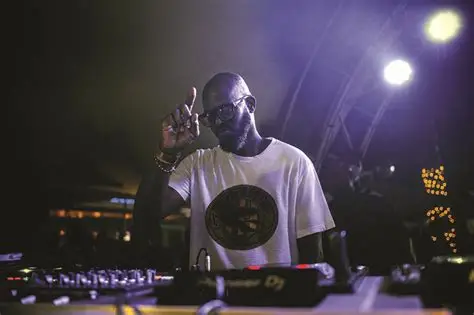
Nkosinathi Innocent Maphumulo, professionally known as Black Coffee, is a South African DJ, record producer, songwriter, and entrepreneur widely recognized as one of the world’s leading electronic music artists. Best known for pioneering a distinctive blend of Afro house, deep house, jazz, and soulful music, Black Coffee has elevated African electronic music onto the global stage through chart-topping releases, acclaimed live performances, and international collaborations.
Born on March 11, 1976, in Durban, South Africa, he has earned numerous prestigious awards while performing at some of the world’s biggest music festivals and venues. His innovation, resilience, and influence have established him as one of Africa’s most successful and respected musicians.
From humble beginnings in South African townships to performing at major international festivals and winning a Grammy Award, Black Coffee’s journey highlights resilience, innovation, and a deep commitment to elevating African music on the world stage. He founded his own label, built a dedicated fan base through consistent releases, and collaborated with global artists while staying rooted in his cultural heritage.
Black Coffee Early Life
Nkosinathi Innocent Maphumulo was born on 11 March 1976 in Umlazi, a township near Durban in KwaZulu-Natal province, South Africa. His full name reflects Zulu heritage, and he grew up during a transformative period in the country’s history as apartheid was ending.
He spent his early years in Umlazi before moving at around age eight with his mother, Faith Dandala, to Mthatha (also known as Umtata) in the Eastern Cape. This move placed him in the Ngangelizwe township, near Nelson Mandela’s home area in Qunu. Life there was modest: the family home lacked running water and indoor toilets, and young Nkosinathi helped with chores like milking his grandmother’s cows. His parents had separated, and his mother raised him primarily on her own. Music filled the household—his father played jazz guitar, his mother sang gospel, and an uncle’s reggae collection shaped his tastes.
At age 14, on 11 February 1990, during celebrations for Nelson Mandela’s release from prison, tragedy struck. A car with its headlights off plowed into a crowd in Mthatha, injuring several people and causing a brachial plexus injury that left Black Coffee with permanent paralysis and no use of his left arm. This event tested his resolve but did not derail his passion for music. He adapted by learning to play instruments and DJ with one hand, turning adversity into a source of strength and determination.
Black Coffee State of Origin
Black Coffee hails from KwaZulu-Natal, with strong ties to both Durban (eThekwini) and the Eastern Cape. Umlazi, his birthplace, is one of South Africa’s largest townships, known for its vibrant culture and resilience. His move to Mthatha in the Eastern Cape exposed him to rural and township life that influenced his worldview and music. These regions shaped his identity: KwaZulu-Natal for its rich Zulu traditions and urban energy, and the Eastern Cape for its connection to anti-apartheid history and community values. He often draws from these roots, incorporating local sounds and stories into his productions.
Black Coffee Education
Black Coffee pursued formal music training at Technikon Natal, now Durban University of Technology, where he majored in Jazz Studies. He immersed himself in music theory, piano, guitar, and other instruments, building technical skills alongside his natural talent. He did not complete the full program, choosing instead to focus on practical experience as a backup singer and performer. This decision allowed him to work with artists like Madala Kunene and form connections that propelled his career. His jazz background remains evident in the sophisticated harmonies and improvisational feel of his house productions.
Black Coffee Career
Black Coffee’s professional path began in the mid-1990s. He started DJing at local parties and clubs, often with his cousin’s sound system crew, gaining early exposure to electronic and dance music scenes.
Early Career Steps
In the late 1990s and early 2000s, he worked as a backup singer with schoolmates Mnqobi Mdabe (Shota) and Thandukwazi Sikhosana (Demor) for guitarist Madala Kunene. The trio later formed the Afro-pop group SHANA (Simply Hot and Naturally African), signed to Melt 2000. His song “Happiness” appeared on the DJs at Work album, marking an initial breakthrough.
Participation in the 2003 Red Bull Music Academy in Cape Town proved pivotal. Selected as one of two South Africans, he networked with international talent and refined his production approach, accelerating his entry into the dance music scene.
Rise with Soulistic Music and Debut Album
In 2005, Black Coffee founded Soulistic Music and released his self-titled debut album. Recorded in his bedroom using basic software, it featured remixes and collaborations with South African legends like Hugh Masekela (a remix of “Stimela”), Thandiswa Mazwai, and Busi Mhlongo. The album mixed deep house with R&B, jazz, and African elements, earning acclaim and the South African Music Award for Best Urban Dance Album.
Subsequent releases built on this foundation. Have Another One (2007) and Home Brewed (2009) showcased growing production confidence and won further SAMAs. He performed marathon sets, including a 60-hour non-stop performance at Maponya Mall in 2010 that earned a Guinness World Record mention.
International Breakthrough and Major Releases
Africa Rising (2012) marked an ambitious project with a live DVD featuring a full orchestra and percussion at Moses Mabhida Stadium in Durban. Pieces of Me (2015) expanded his global reach, leading to performances at Ultra Miami, Tomorrowland, and Coachella. He won Breakthrough DJ of the Year at the 2015 DJ Awards in Ibiza.
Later works include Music Is King EP (2018) and collaborations with artists like Drake (sampled on More Life), Alicia Keys, Usher, Pharrell Williams, and David Guetta. His 2021 album Subconsciously earned him the Grammy for Best Dance/Electronic Album in 2022—the first for an African artist in that category—solidifying his status as a pioneer of Afro house.
Black Coffee continues to tour worldwide, headline festivals, and support emerging talent through his label. His sets emphasize percussive grooves, soulful vocals, and cultural fusion, often described as “Afropolitan House.”
Black Coffee Albums and Songs
Black Coffee has released multiple studio albums and EPs that highlight his evolution:
- Black Coffee (2005)
- Have Another One (2007)
- Home Brewed (2009)
- Africa Rising (2012)
- Pieces of Me (2015)
- Subconsciously (2021)
Notable songs and collaborations include “We Dance Again” (feat. Nakhane Toure), “Drive” (with David Guetta and Delilah Montagu), “LaLaLa” (with Usher), “10 Missed Calls” (feat. Pharrell Williams & Jozzy), “Get It Together,” “The Rapture Pt. III,” and remixes of tracks by Snoh Aalegra and others. His music frequently features South African vocalists and draws from traditional rhythms.
Black Coffee Awards
Black Coffee’s trophy cabinet includes eight South African Music Awards (SAMAs), four DJ Awards, two Metro FM Awards, and a historic Grammy. Key honors feature Best Urban Dance Album wins, Breakthrough DJ of the Year (2015), Best Deep House DJ titles, and the 2022 Grammy for Subconsciously. He also received a BET Award for Best International Act and recognition for his live performances.
Black Coffee Personal Life
Black Coffee was married to actress and television presenter Enhle Mbali Mlotshwa from 2011 until their divorce around 2019. They share two sons, Anesu and Asante. He has two daughters, Esona and Lilitha, from previous relationships. Family remains central to his motivation, and he speaks openly about wanting his children to pursue their dreams.
He has faced public challenges, including reports of relationship issues, but maintains a relatively private personal life focused on music and philanthropy. In recent years, he has explored faith and community support, including fundraising through his foundation for flood victims in Mthatha.
Black Coffee Philanthropy and Legacy
Beyond music, Black Coffee invests in education and community projects. He co-founded an arts school and supports young South African artists through Soulistic Music. His success demonstrates the global potential of African sounds and inspires many with his story of overcoming physical limitations.
Read Also: Ebiere Soberekon Biography: Age, State of Origin, Husband, Wedding Day, Career, Net Worth & Family
Conclusion
Black Coffee’s career reflects dedication, cultural pride, and artistic innovation. From township stages to international acclaim, he has elevated Afro house while honoring his roots. His music continues to bridge continents and generations, leaving a lasting impact on the electronic music landscape.
FAQs
Who is Black Coffee and what is his real name?
Black Coffee is the stage name of Nkosinathi Innocent Maphumulo, a South African DJ and producer known for Afro house music.
When and where was Black Coffee born?
He was born on 11 March 1976 in Umlazi, KwaZulu-Natal, South Africa.
What happened to Black Coffee’s arm?
A car accident in 1990 during Mandela release celebrations caused a brachial plexus injury, resulting in permanent paralysis of his left arm.
What is Black Coffee’s most famous album?
Subconsciously (2021) stands out for winning the Grammy, though earlier works like Pieces of Me and Africa Rising are also highly regarded.
Is Black Coffee married?
He was previously married to Enhle Mbali Mlotshwa; they divorced around 2019. He has four children.
What awards has Black Coffee won?
He has multiple SAMAs, DJ Awards, and the 2022 Grammy for Best Dance/Electronic Album.