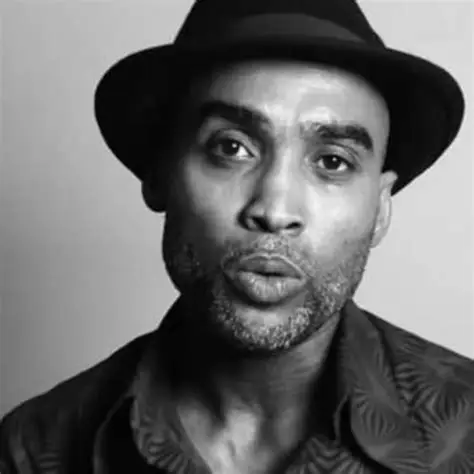
Adegoke Odukoya, better known as Adé Bantu, is a Nigerian-German musician, producer, cultural curator, and social activist celebrated for blending African musical traditions with reggae, hip-hop, Afrobeat, funk, and global sounds. Best known as the founder and frontman of BANTU, he has spent more than three decades using music to promote social justice, cultural identity, gender equality, and artistic freedom.
Born on July 14, 1971, in Wembley, London, England, Adé Bantu has built an international career that spans Europe and Africa through acclaimed recordings, live performances, and influential cultural initiatives, including the annual Afropolitan Vibes festival in Lagos. His work continues to shape contemporary African music while inspiring dialogue on culture, creativity, and social change.
Adé Bantu serves as the frontman of the 13-piece band BANTU (Brotherhood Alliance Navigating Towards Unity), the founder of the Afro-German collective Brothers Keepers, and the creator of Afropolitan Vibes, a prominent live music concert series and festival in Lagos. His work addresses themes of identity, racism, corruption, and Pan-Africanism through energetic performances and thoughtful lyrics. He has collaborated with artists across continents, produced films and documentaries, and directed arts initiatives that empower communities, particularly women and youth. His journey reflects a deep commitment to bridging cultures and using music as a tool for change.
Adé Bantu Early Life
Adé Bantu was born Adegoke Odukoya on 14 July 1971 in Wembley, London, to a German mother, Barbara Odukoya, and a Nigerian father, Adeleke Odukoya. His father, an automobile engineer who studied in Germany, met his mother there before the family moved to England. In 1973, when Adé was about two years old, the family relocated to Lagos, Nigeria.
He spent his formative years in Nigeria, growing up in a culturally rich environment exposed to a wide range of music through his parents’ vinyl collection. His father often played records during family activities, introducing him to diverse sounds that later shaped his eclectic style. Adé attended primary and secondary school in Nigeria, living in places like Port Harcourt, Minna, and Lagos. This period grounded him in Nigerian culture, particularly Yoruba traditions from his father’s side.
Tragedy struck in 1986 when his father was murdered during a robbery in Lagos. This event profoundly affected the family. Adé’s mother then moved with him and his three siblings to Germany. By then, Adé had finished high school in Nigeria. The transition to Germany at age 15 was challenging; he faced questions about his identity, language barriers, and a sense of otherness in a new country. His family settled in Leverkusen, and he began navigating life as a biracial young man in Europe.
These early experiences of loss, cultural duality, and relocation fueled his later activism and music. He has spoken about how the courage of his interracial parents inspired him to pursue his dreams boldly. Adé is the elder brother of musician Abiodun Odukoya, and the family includes other siblings now based in Germany or the UK.
Adé Bantu State of Origin
Adé Bantu’s Nigerian roots trace to the Yoruba people through his father. His paternal heritage connects him to Yoruba culture in southwestern Nigeria, influencing his music with elements of Fuji, Highlife, and traditional rhythms. Though born in London and having lived between countries, he identifies strongly with Lagos and broader Nigerian identity. His work often celebrates Yoruba language, stories, and sounds, while addressing issues relevant to Nigeria, such as corruption, urban life, and social justice.
He has lived and worked extensively in Lagos, contributing to the local music scene through performances, festivals, and community projects. This connection to his state of origin (broadly Yoruba/Lagos) remains central to his artistic and activist identity.
Adé Bantu Education
Details about Adé Bantu’s formal education are limited in public sources, but he completed secondary schooling in Nigeria before moving to Germany. In Germany, he engaged with the emerging hip-hop scene while pursuing further studies. Reports indicate he obtained a degree in Engineering, balancing academics with his growing interest in music. His early musical development was largely self-driven through listening, experimentation, and collaborations rather than formal conservatory training.
This practical background in engineering may have contributed to his methodical approach to band leadership, production, and project management in the arts.
Adé Bantu Career
Adé Bantu’s career began in the late 1980s in Germany as part of the hip-hop movement. He joined the group Exponential Enjoyment in 1989, performing under the alias “Duke T.” Their single “Think for a Moment/Style Introduction” was among the early German hip-hop releases. He later co-founded Weep Not Child and contributed to projects that helped shape the genre.
In 1996, he formed BANTU with his brother Abiodun (Don Abi), Patrice, and Amechi Okerenkwo in Cologne. The name honors unity and South African activist Steve Bantu Biko. BANTU fuses Afrofunk, Afrobeat, Highlife, Fuji, hip-hop, and Yoruba elements. Their debut album Fufu (1999/2000) gained traction in Nigeria with hits like “Nzobu” (featuring Brother Resistance) and “Fire Inna Dancehall.”
Subsequent albums include:
- Bantu (2004), featuring Sly Dunbar, Earl “Chinna” Smith, Positive Black Soul, and others, with tracks like “Lagos Jump.”
- Fuji Satisfaction (2005), a collaboration with Fuji star Adewale Ayuba, blending Fuji with hip-hop and Afrobeat. This earned Kora Awards for Best Group West Africa and Best Group Africa.
- Later releases: No Man Stands Alone (2011), Agberos International (2017), Everybody Get Agenda (2020), and What Is Your Breaking Point? (2023). These albums tackle social issues like police brutality, corruption, xenophobia, and migration while maintaining high-energy grooves.
BANTU has collaborated with UB40, Tony Allen, Seun Kuti, Nneka, Fatai Rolling Dollar, Burna Boy, Yemi Alade, and many more. Adé has also worked on solo and collective projects, including with Brothers Keepers.
Brothers Keepers
In 2000, amid racist violence in Germany (including the killing of Alberto Adriano), Adé Bantu founded Brothers Keepers, an Afro-German collective and NGO. Their 2001 single “Adriano (Die Letzte Warnung)” topped charts and won the 1LIVE Krone Radio Award. The project raised awareness, visited schools, lobbied for policy changes, and supported victims.
Afropolitan Vibes
Launched in 2013 with Abby Ogunsanya, Afropolitan Vibes is a monthly concert series (later quarterly) and annual festival in Lagos, held initially at Freedom Park (a former colonial prison). It showcases alternative African music with BANTU as the house band, featuring no miming and a mix of legends, contemporary artists, and emerging talents. Performers have included Burna Boy, Yemi Alade, Victor Olaiya, Seun Kuti, Nneka, and many others. It promotes live music culture, breaks class barriers, and provides a platform for free expression.
Film, Production, and Other Work
Adé Bantu has produced documentaries, short films, and multimedia projects for clients like Jameson, WDR, and Deutsche Welle. He co-produced Elders Corner, chronicling Nigerian music history. He curated exhibitions like “Statues Also Breathe” and “Naija Pop In HD.” He served as a judge on Project Fame West Africa (2012–2015) and was artistic director for the 2025 Afrobeat Meets Classical concert at Germany’s Beethoven Festival.
He founded or directs initiatives like Catharsis Arts Foundation Nigeria, focusing on arts education and empowering women and girls. He has been involved in community arts projects like BornTroWay for disadvantaged youth.
Adé Bantu Awards
Adé Bantu and BANTU have received notable recognition:
- Kora Awards (2005): Best Group West Africa and Best Group Africa for Fuji Satisfaction.
- 1LIVE Krone Radio Award (2001): Best Single for “Adriano (die Letzte Warnung)” with Brothers Keepers.
- Nordrhein Westphalia Cultural Prize (1997): For the hip-hop musical Coloured Children.
- Nominations include Channel O Music Video Awards and The Headies. His work has charted well and earned critical acclaim in world music circles.
Adé Bantu Personal Life
Adé Bantu married architect Aramide Akinosho in a colorful ceremony in Paris, France, in April 2022. The wedding brought together family and friends from multiple countries. He values family privacy and has described his as supportive.
He enjoys reading, visiting museums, traveling (especially by train), hiking, cooking, and experiencing live music. In 2014, he cut his long signature dreadlocks. His identity as Yoruba-Prussian or Afropolitan reflects pride in his mixed heritage. He has spoken about forgiveness regarding his father’s death while channeling the experience into positive action. He splits time between Nigeria and Germany.
Adé Bantu Activism and Impact
Beyond music, Adé Bantu advocates against racism, for artistic freedom, and for social change. Through Brothers Keepers, Catharsis Arts Foundation, and performances, he addresses inequality, migration, police brutality, and environmental issues. He has participated in rallies, climate conferences, and community programs. His festivals and projects foster dialogue and unity in diverse spaces.
Adé Bantu Legacy
Adé Bantu’s career exemplifies cultural fusion and resilience. From early hip-hop in Germany to leading Afrobeat innovation in Nigeria, he has influenced generations while staying committed to live performance and activism. His efforts have helped revive and globalize live African music scenes.
Read Also: Ebiere Soberekon Biography: Age, State of Origin, Husband, Wedding Day, Career, Net Worth & Family
Conclusion
Adé Bantu continues to tour, produce new music with BANTU, develop film projects, and expand cultural initiatives. His life and work embody the power of music to connect, heal, and challenge societies. As a bridge between continents and generations, he inspires others to embrace complexity and pursue meaningful change.
FAQs
Who is Adé Bantu?
Adé Bantu (Adegoke Odukoya) is a Nigerian-German musician, band leader of BANTU, producer, and activist known for blending African and global sounds.
When and where was Adé Bantu born?
He was born on 14 July 1971 in Wembley, London, England.
What is Adé Bantu’s nationality and heritage?
He holds Nigerian-German nationality, with a Yoruba Nigerian father and German mother.
What are some of Adé Bantu’s notable albums with BANTU?
Key albums include Fufu, Bantu, Fuji Satisfaction, No Man Stands Alone, Agberos International, Everybody Get Agenda, and What Is Your Breaking Point?.
What awards has Adé Bantu won?
He has won Kora Awards and the 1LIVE Krone, among others.
What is Afropolitan Vibes?
It is a live music concert series and festival in Lagos founded by Adé Bantu, showcasing diverse African artists.
Is Adé Bantu married?
Yes, he married Aramide Akinosho in 2022.