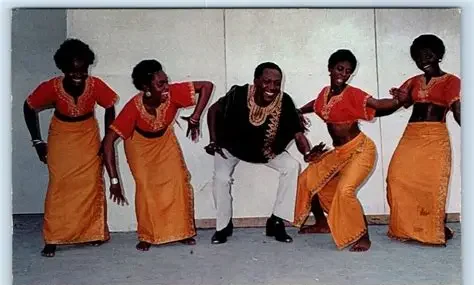
Roy Chicago, born John Akintola Ademuwagun, was a Nigerian highlife musician, trumpeter, saxophonist, bandleader, composer, and vocalist widely regarded as one of the architects of modern Yoruba highlife music. Best known for pioneering the integration of the Yoruba talking drum (gangan) into highlife orchestras, he transformed the genre by blending indigenous Yoruba rhythms, folklore, and percussion with the energetic brass arrangements of classic West African highlife.
Born in Ikare Akoko, present-day Ondo State, Nigeria, Roy Chicago rose to prominence during the 1950s and 1960s, becoming one of the country’s most influential bandleaders alongside legends such as Victor Olaiya and Bobby Benson. His innovative approach helped give Nigerian highlife a distinct cultural identity that continues to inspire musicians today. This article explores Roy Chicago’s biography, early life, music career, songs, family, achievements, death, and lasting legacy.
Quick Facts
| Quick Facts | Details |
|---|---|
| Full Name | John Akintola Ademuwagun |
| Popular Name | Roy Chicago |
| Date of Birth | 5 February 1989 |
| Place of Birth | Ikare Akoko, Ondo State, Nigeria |
| Nationality | Nigerian |
| Ethnicity | Yoruba |
| Occupation | Musician, Bandleader, Trumpeter, Saxophonist, Composer, Vocalist |
| Genres | Highlife, Yoruba Highlife |
| Primary Instruments | Trumpet, Saxophone, Vocals |
| Years Active | 1950s to 1970s |
| Famous Band | Abalabi Rhythm Dandies |
| Known For | Introducing the Yoruba talking drum into modern highlife music |
| Notable Contemporaries | Victor Olaiya, Bobby Benson |
| Major Contribution | Pioneered the fusion of Yoruba traditional music with highlife |
| Legacy | Regarded as one of the founding figures of Yoruba highlife whose innovations shaped Nigerian popular music. |
Roy Chicago Early Childhood
John Akintola Ademuwagun was born in 1931 in Ikare Akoko, a town in the northern senatorial district of what is now Ondo State, Nigeria. He grew up in a Yoruba Muslim household in a region known for its hilly landscape, agricultural traditions, and deep cultural roots tracing back to Ile Ife. Ikare served as a commercial and administrative center for the surrounding Akoko communities, and the young Akintola absorbed the sounds of local drumming, folk songs, and social gatherings that would later inform his musical approach.
As a boy he moved with his family and spent part of his childhood in Sapele, then a growing town in the western region. There he attended elementary school and first encountered organized music through the school band. He quickly showed talent on the trumpet and assumed leadership of the ensemble.
These early experiences planted the seed for a lifelong engagement with music. After completing elementary education around 1946, he returned to areas connected with his Ondo State origins and began working as a teacher, establishing school bands wherever he taught. The combination of formal schooling, practical music making, and exposure to both rural Yoruba culture and the more cosmopolitan atmosphere of Sapele prepared him for the professional path that would follow.
The social environment of his youth was shaped by the late colonial period. Nigeria was still under British administration, yet local cultural expressions remained strong. Akintola’s Muslim background and frequent references in later interviews to the guidance of Allah reflected the religious diversity of Ikare, where Islam, Christianity, and traditional practices coexisted. His childhood in a place of markets, farms producing kolanut, cocoa, and coffee, and community festivals gave him a reservoir of stories, proverbs, and rhythmic patterns that he would draw upon throughout his career.
Roy Chicago Education
Formal education for Roy Chicago centered on elementary schooling in Sapele during the 1940s. The school band provided the most important practical training of his early years. He learned to play the trumpet and gained experience directing other students. After leaving school in 1946 he entered the teaching profession, working in schools in Sapele and in the Ondo area. Teaching allowed him to organize and lead additional school bands, further developing his skills as a musician and organizer.
There is no record of advanced academic study in music or any other field. His real education in performance came through apprenticeship and professional experience. In the late 1950s he joined established ensembles, learning advanced techniques on trumpet and saxophone, as well as the business and discipline of running a working band.
These practical lessons under leaders such as Hubert Ogunde and Bobby Benson proved more formative than any classroom curriculum. The combination of basic formal schooling, self directed practice, and on the job training produced a versatile musician capable of leading large ensembles and composing songs rooted in everyday Nigerian life.
Roy Chicago Career
Roy Chicago’s professional musical career began after he left teaching. In 1959 he joined the band of Hubert Ogunde, the pioneering dramatist and musician. He soon moved to Bobby Benson’s Jam Session Orchestra, one of the most influential groups of the period. With Benson he performed a wide range of styles including highlife, ballroom dances such as foxtrot, tango, waltz, quickstep, and jive, as well as Latin American numbers. He rose to a leadership position within the orchestra at certain points and absorbed the polished stagecraft and instrumental discipline that characterized Benson’s approach.
Formation of Early Bands
After his time with Benson, Chicago went to Ibadan and formed the Green Springers for the Green Spring Hotel. He later returned briefly to Benson before establishing his own independent group. By the late 1950s he was performing regularly at the Central Hotel on Adamasingba Street in Ibadan with a band known as the Rhythm Dandies. The group disbanded around 1959 as members pursued separate paths, but the experience solidified his readiness to lead.
Rise of the Abalabi Rhythm Dandies
In the early 1960s Chicago settled in Lagos and became closely associated with the Abalabi Hotel in Mushin. There he led the Abalabi Rhythm Dandies, one of the two leading highlife bands of the decade alongside Victor Olaiya’s International All Stars. Both leaders had come through the Bobby Benson school, yet their musical directions differed. While Olaiya drew heavily on Ghanaian melodies, Chicago grounded his work in Nigerian indigenous themes and folklore. His band became known for disciplined performances, versatility across dance styles, and a distinctive rhythmic emphasis.
Key sidemen included tenor saxophonist Etim Udo, trumpeter Marco Bazz, guitarist Alaba Pedro, who joined in 1961 and remained until the civil war years, and vocalist Tunde Osofisan, whose clear delivery of Yoruba lyrics complemented Chicago’s own singing. Future stars such as Cardinal Rex Jim Lawson and saxophonist Peter King passed through the ranks, gaining valuable experience before launching their own careers. Playwright and folk singer Jimi Solanke also performed with the band. The recording of “Onile Gogoro,” composed by Solanke, became one of the most memorable highlife hits of the 1960s.
Peak Popularity and Later Challenges
After Nigerian independence in 1960, Chicago’s popularity grew rapidly. Hits such as “Iyawo Pankeke,” “Are owo ni esa Yoyo gbe,” and “Keregbe emu” circulated widely. He performed regularly in Lagos and other cities, chronicling urban life, relationships, and social commentary in Yoruba. The Nigerian Civil War of 1967 to 1970 disrupted the highlife scene. Many leading bands had been led by musicians from the Eastern Region, and their departure contributed to a decline in the genre’s dominance. Yoruba derived juju music rose in its place. Chicago’s band disbanded around 1969.
In the 1970s his career reached a low point. Bobby Benson once again offered assistance, providing musical equipment and lodging in Surulere. Chicago continued to perform and later operated a club, the Chicago Club on Modeke Street off Ojuelegba Road in Surulere, where he also worked as a beer seller while remaining connected to the music community. He was interviewed in 1985, still active and reflective about his long journey. He died on 5 February 1989.
Roy Chicago Musical Style and Innovations
Roy Chicago’s highlife stood apart through its strong rhythmic foundation and deliberate incorporation of Yoruba traditional elements. He combined trumpet and saxophone playing with lead vocals, often supported by strong male backup singers. His saxophone lines contained blue notes and cool jazz intonations that somehow remained closer to traditional Yoruba phrasing than to American jazz. The overall accent of the music rested on rhythm rather than purely melodic display.
His most lasting innovation was the introduction of the talking drum into the modern highlife band. By adding the gangan alongside Western brass, guitars, and jazz drums, he created a hybrid sound that honored ancestral practices while remaining contemporary and danceable. He also employed akuba drums and shekeres, giving the ensemble a textured percussive palette.
Lyrics drawn from proverbs, folk tales, and observations of Lagos street life made the songs accessible and relevant to ordinary listeners. Themes ranged from romantic relationships and social climbing to the hardships of urban living and the antics of city women. He once described his songwriting as a gift, with words arriving spontaneously, often in dreams or quiet moments.
Unlike some contemporaries who leaned heavily on Ghanaian or Cuban influences, Chicago insisted that highlife had deep Yoruba roots and that local embroidery made it uniquely Nigerian. He viewed the genre as sophisticated entertainment suited to the educated elite yet grounded in the culture of the people.
Roy Chicago Notable Songs and Albums
Roy Chicago recorded a substantial body of work that has been reissued in multi volume compilations titled Complete Works of Roy Chicago covering the years 1931 to 1989. His songs remain available on modern streaming platforms and archival collections. Notable recordings include:
- Iyawo Pankeke
- Are owo ni esa Yoyo gbe
- Keregbe emu
- Onile Gogoro
- Sere fun mi baby
- Wazobia
- Ole to ji kakaki wa
- Fiwa Jomi
- Eso Ye Sogbo
These tracks showcase his ability to turn everyday stories into catchy, danceable highlife numbers. The complete works series gathers dozens of sides that illustrate the evolution of his band from the late 1950s through the 1960s peak. Later compilations have kept the music circulating among new generations of listeners interested in classic Nigerian highlife.
Roy Chicago Personal Life
Information about Roy Chicago’s private life remains limited. He was born into a Muslim family and often spoke of divine inspiration in his creative process. He married and had two children, Bolajoko and Kayode Akintola. In later years he lived in Surulere, Lagos, where he ran the Chicago Club and stayed connected to the music scene even when commercial success had faded. Colleagues remembered him as a disciplined bandleader who maintained high standards while remaining approachable. He identified strongly with Lagos despite his roots in Ikare Akoko, describing himself as a Lagosian who chronicled the city’s social realities. He passed away on 5 February 1989 at the age of approximately fifty eight.
Roy Chicago Legacy and Influence
Roy Chicago’s most enduring contribution was the integration of the talking drum into highlife, an innovation that strengthened the genre’s connection to Yoruba tradition and influenced subsequent Nigerian popular music. Former band members such as Rex Jim Lawson, Peter King, and Alaba Pedro carried forward the professional standards and stylistic lessons learned under his leadership. His recordings preserved a snapshot of urban Yoruba life in the years surrounding independence and the civil war.
Although highlife eventually yielded commercial ground to juju, Afrobeat, and later genres, Chicago’s work continues to be celebrated by music historians and reissue labels. Compilations of his complete recordings ensure that new listeners can discover the rhythmic drive and lyrical wit that defined his sound. He remains a symbol of the creative energy that flourished in Nigerian music during the 1950s and 1960s.
Roy Chicago State of Origin and Cultural Background
Ikare Akoko, the hometown of Roy Chicago, lies in the northern senatorial district of Ondo State in southwestern Nigeria. The town sits among hills roughly one hundred kilometers from Akure, the state capital, and serves as the headquarters of Akoko North East Local Government.
Historically it was the divisional headquarters of the old Akoko Division, which included neighboring communities such as Oka Akoko, Isua Akoko, and others. The people of Ikare trace their origins to migrations from Ile Ife, the spiritual cradle of the Yoruba. Two major traditional rulers, the Olukare and the Owa Ale, represent distinct historical lineages that settled the area at different times.
The landscape is characterized by rocky hills and fertile land that supports farming of kolanut, cocoa, and coffee. Markets such as Osele, Oja Oba, and others have long made Ikare a commercial hub for the surrounding region. The population is predominantly Yoruba, yet the town has welcomed settlers from other ethnic groups including Igbo, Hausa, Fulani, and Ijaw. Religious life is diverse, with substantial Christian, Muslim, and traditional communities. Architectural styles reflect both Portuguese influences from the coastal trade era and Arabic elements that arrived with the southward spread of Islam.
Cultural life centers on festivals, drumming, and communal gatherings. Traditional instruments and oral storytelling traditions provided the foundation that Chicago later adapted for the modern stage. The town’s motto, “omo oloke meji tako tabo,” reflects local pride in its topography and identity. Electricity reached Ikare as early as 1956, and the community has long valued education, producing numerous secondary schools and technical institutions. This environment of agricultural productivity, commercial activity, cultural continuity, and openness to outside influences shaped the worldview of the young musician who would later carry those same values into the recording studios and dance halls of Lagos and Ibadan.
Ondo State itself is known for its rich Yoruba heritage, coastal and inland diversity, and contribution to Nigerian arts and politics. Growing up in this setting gave Roy Chicago a deep well of indigenous material that distinguished his highlife from more externally influenced styles.
Roy Chicago Awards
No major formal national awards are recorded in available historical accounts of Roy Chicago’s career. His recognition came primarily through popular success, critical acknowledgment of his innovations, and the lasting respect of fellow musicians. The introduction of the talking drum into highlife and the commercial success of songs such as “Onile Gogoro” and “Iyawo Pankeke” constitute the principal honors of his professional life. Later generations have paid tribute through archival reissues and written histories that place him among the frontline highlife artists of the 1960s.
Read Also: Ebiere Soberekon Biography: Age, State of Origin, Husband, Wedding Day, Career, Net Worth & Family
Conclusion
Roy Chicago occupies a permanent place in the history of Nigerian highlife music as one of the musicians who gave the genre a uniquely Yoruba identity. By combining traditional percussion, especially the talking drum, with the energetic sound of brass-driven highlife, he created a musical style that reflected the culture, language, and everyday experiences of his audience. His influence extended beyond his own recordings through the many performers who trained in his bands and carried his ideas into later generations of Nigerian music. Although he passed away in 1989, Roy Chicago’s recordings remain an important part of Nigeria’s musical heritage, celebrating the creativity and cultural richness that defined the golden age of highlife.
Frequently Asked Questions
What was Roy Chicago’s real name?
Roy Chicago was born John Akintola Ademuwagun. He became widely known by the stage name Roy Chicago, under which he built his successful music career.
Where did Roy Chicago come from?
He was born in Ikare Akoko, located in present-day Ondo State, Nigeria, and was of Yoruba heritage.
Why is Roy Chicago important in Nigerian music?
Roy Chicago is remembered for transforming Nigerian highlife by introducing the Yoruba talking drum (gangan) into modern highlife bands. His innovations helped create a distinctive Yoruba highlife sound that influenced generations of musicians.
When did Roy Chicago die?
Roy Chicago died on 5 February 1989, leaving behind a musical legacy that continues to be celebrated by highlife enthusiasts.
Did Roy Chicago have a family?
Yes. Roy Chicago was the father of Bolajoko Akintola and Kayode Akintola.
Which instruments did Roy Chicago perform?
He was an accomplished trumpeter and saxophonist, while also serving as the lead vocalist and bandleader for his musical groups.
How did Roy Chicago become a professional musician?
His musical journey began with school bands while he worked as a teacher. He later gained professional experience with leading performers, including Hubert Ogunde and Bobby Benson, before establishing his own successful highlife bands.
Which band is most closely associated with Roy Chicago?
Roy Chicago achieved his greatest success as the leader of the Abalabi Rhythm Dandies, one of the most influential highlife bands in Lagos during the genre’s golden era.