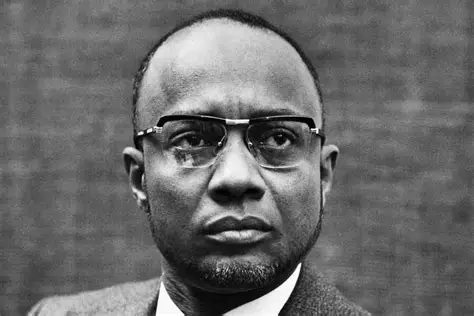
Amílcar Lopes Cabral also known as Amílcar Cabral was a Bissau-Guinean and Cape Verdean agricultural engineer, revolutionary leader, political theorist, and diplomat widely regarded as one of Africa’s greatest anti-colonial figures. Best known for founding the African Party for the Independence of Guinea and Cape Verde (PAIGC), Cabral led the liberation movement that played a decisive role in ending Portuguese colonial rule in Guinea-Bissau and Cape Verde.
Born in Portuguese Guinea, now Guinea-Bissau, he combined intellectual leadership, strategic military planning, and grassroots political organization to inspire one of Africa’s most successful independence struggles. His writings on liberation, culture, and national identity continue to influence scholars, activists, and political leaders around the world.
Cabral combined practical skills as an agronomist with sharp political analysis and a deep commitment to his people. His ideas on national liberation, culture, and unity influenced liberation movements across Africa and beyond. He emphasized that true independence required not just political freedom but also cultural reclamation and improvement of daily life for ordinary people. His assassination in 1973 cut short his life, but his legacy endures through the independence of Guinea-Bissau and Cape Verde, and in writings that continue to inspire movements for self-determination.
Amílcar Cabral Early Life and Background
Amílcar Lopes Cabral was born on September 12, 1924, in Bafatá, Portuguese Guinea (present-day Guinea-Bissau). His full name was Amílcar Lopes da Costa Cabral. He held dual connections to Guinea-Bissau and Cape Verde through his parents. His father, Juvenal António Lopes da Costa Cabral, was a Cape Verdean from Santiago island, a poet, polemicist, schoolteacher, and advocate for better conditions for farmers and civil servants. His mother, Iva Pinhel Évora, came from a more modest background in Guinea and worked as a shopkeeper, guesthouse operator, and seamstress.
The family faced economic challenges, especially after his parents separated around 1929. When Amílcar was about eight years old (around 1932), the family moved to Cape Verde, first to Santa Catarina on Santiago island, and later to Mindelo on São Vicente. This move exposed him to the harsh realities of colonial life, including severe droughts and famines in the 1940s that caused tens of thousands of deaths. These experiences shaped his awareness of poverty, environmental issues, and colonial neglect.
In Cape Verde, Cabral received his early education. His parents homeschooled him initially. He attended primary school in Praia and then the prestigious Liceu Gil Eanes secondary school in Mindelo. An exceptional student, he completed his studies faster than average and showed early interest in literature, writing poetry, and engaging in student discussions about social and economic problems. He also participated in cultural activities, sports like soccer, and worked briefly at the National Printing Office in Praia in 1944.
These formative years in Cape Verde instilled in him a strong sense of identity tied to both islands and mainland Guinea. He witnessed colonial exploitation and the resilience of local communities, which later informed his political thought. His father’s influence on environmental and social issues, combined with the visible suffering from droughts, directed him toward studying agronomy to address practical problems faced by his people.
Amílcar Cabral Education
Cabral’s education played a pivotal role in his development as a thinker and leader. After excelling at Liceu Gil Eanes, he earned a scholarship in 1945 to study at the Instituto Superior de Agronomia in Lisbon, Portugal. He pursued a degree in agronomic engineering, graduating in 1950 or 1952 depending on sources, with high marks.
In Lisbon, he immersed himself in intellectual and political circles. He connected with other African students from Portuguese colonies, including future leaders like Agostinho Neto of Angola. Together, they formed the Centro de Estudos Africanos and engaged in discussions against the Salazar dictatorship and colonialism. Cabral read widely, drawing from Marxist ideas, pan-Africanism, and anti-colonial theories while maintaining a focus on African realities.
His time in Portugal exposed him to racism and the contradictions of colonial rule, even as a relatively privileged student. He participated in opposition groups and honed his skills in analysis and organization. During apprenticeships, including at the Agronomic Station in Santarém, he gained practical experience in soil science and agriculture, which he later applied in Guinea.
This period transformed Cabral from a bright student into a committed activist. By the time he completed his studies, he was determined to return to Africa and contribute to ending colonial domination.
Amílcar Cabral State of Origin and Background
Amílcar Cabral originated from Bafatá in what was then Portuguese Guinea, a region characterized by diverse ethnic groups, rivers, and agricultural potential. Guinea-Bissau lies on the West African coast, bordered by Senegal and Guinea (Conakry). Its people include groups like the Balanta, Fula, Mandinka, and others, with a history shaped by Portuguese trade, slavery, and later colonial administration.
His family’s Cape Verdean roots added another layer. Cape Verde, an archipelago off the coast, faced chronic droughts and emigration. Cabral’s parents bridged these worlds, giving him a unique perspective on unity between Guinea and Cape Verde. He viewed their struggles as interconnected under Portuguese rule and advocated for joint independence.
This background influenced his emphasis on cultural identity, land, and people. He understood the importance of local knowledge and the need to address both political and material conditions like soil fertility and food security.
Amílcar Cabral Career
Cabral’s career spanned agronomy, political organization, diplomacy, and military strategy. He returned to Guinea-Bissau in 1952 as an agricultural engineer with the colonial Department of Agricultural and Forestry Services. He conducted a comprehensive agricultural census, traveling extensively across the territory. This work gave him intimate knowledge of the land, people, cultures, and economic conditions, which proved invaluable for mobilization.
Political Mobilization and Party Formation
In the 1950s, Cabral balanced colonial employment with clandestine political work. Due to his activities, Portuguese authorities pressured him to leave Guinea in 1955. He spent time in Angola, collaborating with the MPLA. On September 19, 1956, during a secret visit, he and associates including his half-brother Luís Cabral, Aristides Pereira, and others founded the PAIGC in Bissau.
The party initially focused on peaceful mobilization in urban areas. After the 1959 Pidjiguiti massacre, where police killed striking dockworkers, the PAIGC shifted to armed struggle. Cabral established headquarters in Conakry, Guinea, and led training and diplomatic efforts.
Armed Struggle and Strategy
The armed phase began in 1963. Cabral proved a masterful strategist, emphasizing guerrilla tactics suited to the terrain, political education of fighters, and building support among peasants. The PAIGC liberated large areas, established schools, clinics, and governance structures in “liberated zones.” By the early 1970s, they controlled much of the countryside.
Cabral traveled extensively, visiting dozens of countries to secure support, arms, and recognition. He addressed the United Nations and built alliances with socialist and non-aligned nations. His diplomacy isolated Portugal internationally.
Writings and Intellectual Contributions
Cabral was a prolific writer and speaker. His works include analyses of colonialism, culture, and revolution. Key collections feature titles like Unity and Struggle, Return to the Source, and Revolution in Guinea. He stressed that national liberation must involve cultural resistance and that “the weapon of theory” was essential alongside armed struggle.
He wrote on soil science, agriculture, and development, linking environmental care to human freedom. His speeches covered party principles, unity, and the role of women and youth.
Amílcar Cabral Achievements
Cabral led one of Africa’s most effective liberation movements. The PAIGC’s success pressured Portugal and contributed to the 1974 Carnation Revolution in Lisbon, which ended the dictatorship and accelerated decolonization. Guinea-Bissau declared independence in 1973 (recognized in 1974), followed by Cape Verde in 1975.
His agricultural census and practical programs improved understanding of local conditions. Internationally, he elevated the visibility of Portuguese colonial issues and promoted pan-African solidarity.
Amílcar Cabral Awards
While focused on collective struggle rather than personal honors, Cabral received recognition. Posthumously, institutions and awards bear his name, such as the Amílcar Cabral Medal or tributes in Guinea-Bissau and Cape Verde. His ideas earned him respect as a leading African thinker. Many liberation movements and intellectuals cited him as an inspiration.
Amílcar Cabral Personal Life
Cabral married Maria Helena Rodrigues, a Portuguese woman, during his studies in Lisbon. They had children, but the demands of the struggle strained family life. He maintained correspondence and showed a personal side in letters. Known for humility and charisma, he lived simply and emphasized discipline within the PAIGC.
He balanced roles as husband, father, and leader while facing constant danger. His half-brother Luís later became president of Guinea-Bissau.
Amílcar Cabral Assassination and Legacy
On January 20, 1973, Cabral was assassinated in Conakry by Inocêncio Kani, a disgruntled PAIGC member acting with Portuguese agents. The killing aimed to disrupt the movement but failed. The PAIGC continued and achieved victory.
Cabral’s legacy includes independent nations, his writings studied worldwide, and influence on revolutionary theory. He advocated for unity, culture as resistance, and people-centered development. Monuments, foundations, and annual commemorations honor him in Guinea-Bissau, Cape Verde, and beyond. His emphasis on realism, education, and solidarity remains relevant.
Amílcar Cabral Thoughts on Culture and Revolution
Cabral viewed culture as a vital weapon in liberation. He argued for returning to African sources while adapting to modern needs. In speeches like “National Liberation and Culture,” he explained how colonialism distorted identities and how struggle could restore dignity.
Amílcar Cabral International Diplomacy
Cabral excelled as a diplomat. He secured aid from countries like Cuba, China, and the Soviet Union, and spoke at global forums. His clear, principled positions won respect even from adversaries.
Amílcar Cabral Military Innovations
He innovated by integrating political work with military action. Fighters received education in history, politics, and skills. This built morale and legitimacy in liberated areas.
Read Also: Ebiere Soberekon Biography: Age, State of Origin, Husband, Wedding Day, Career, Net Worth & Family
Conclusion
Amílcar Cabral’s life exemplified dedication to freedom through intellect, action, and humanity. From his roots in Bafatá and Cape Verde to leading a nation toward independence, he left an indelible mark. His ideas continue to guide those fighting oppression and seeking genuine development.
FAQs
Who was Amílcar Cabral?
Amílcar Cabral was a revolutionary leader, agronomist, and founder of the PAIGC who led the independence struggle for Guinea-Bissau and Cape Verde from Portuguese rule.
When and where was Amílcar Cabral born?
He was born on September 12, 1924, in Bafatá, Portuguese Guinea.
What was Amílcar Cabral’s role in the independence movement?
He served as secretary-general of the PAIGC, strategist, diplomat, and ideological guide for the armed struggle.
How did Amílcar Cabral die?
He was assassinated on January 20, 1973, in Conakry, Guinea, by a fellow PAIGC member with Portuguese involvement.
What are some key writings by Amílcar Cabral?
Major works appear in collections such as Unity and Struggle and Return to the Source, covering topics from colonialism to culture and revolution.
Why is Amílcar Cabral important today?
His theories on liberation, culture, and people-centered development offer lessons for contemporary struggles against inequality and imperialism.