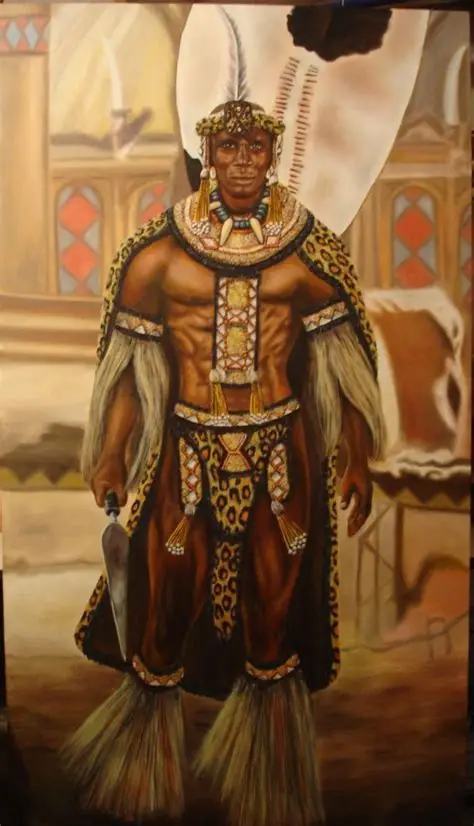
Shaka kaSenzangakhona, widely known as Shaka Zulu, was the founder and first king of the Zulu Kingdom, celebrated as one of Africa’s greatest military leaders and state builders. Best known for transforming a small Zulu chiefdom into a powerful regional kingdom, Shaka revolutionized military tactics, warfare, and political organization in southern Africa during the early nineteenth century.
Born around July 1787 in present-day KwaZulu-Natal, South Africa, he rose from a challenging childhood to become a visionary ruler whose leadership reshaped the history of the region. His military innovations, administrative reforms, and enduring influence on Zulu culture established him as one of the most significant figures in African history.
Shaka unified disparate clans into a powerful centralized kingdom through a combination of strategic conquest, administrative reforms, and strict discipline. Though his reign lasted only about 12 years, from 1816 to 1828, its impact endured, influencing Zulu identity and resistance long after his death. He is remembered as a military genius whose legacy includes both remarkable achievements in nation-building and the human costs of rapid expansion.
Shaka Zulu Early Life and Background
Shaka Zulu was born in the lunar month of uNtulikazi, corresponding to July, in 1787, in the Mthonjaneni area or nearby Langeni territory in what is now KwaZulu-Natal Province, South Africa. His full name was Sigidi kaSenzangakhona, meaning he was the son of Senzangakhona kaJama, chief of the small Zulu clan, a minor Nguni group. His mother was Nandi, daughter of Chief Mbhengi of the Langeni (or eLangeni) clan.
The circumstances of his birth were controversial. According to oral traditions, Nandi and Senzangakhona’s relationship violated clan taboos because they were too closely related by custom for a formal marriage at the time. Some accounts describe their union as illicit, with the pregnancy initially dismissed by Senzangakhona as Nandi suffering from an intestinal condition caused by the “iShaka” beetle, which led to the child’s name. Despite initial denial, Senzangakhona eventually acknowledged Shaka, making Nandi his third wife. However, the stigma of illegitimacy or irregular birth marked Shaka’s early years.
Shaka spent his childhood amid hardship. He and his mother faced mistreatment from Senzangakhona’s other wives and children at the Zulu homestead near present-day Babanango in the EmaKhosini valley, a sacred burial place of Zulu ancestors. The Zulu clan was small, numbering perhaps fewer than 1,500 people, occupying land along the White Umfolozi River. Shaka was teased and bullied, experiences that built his resilience and determination.
Around 1802, after further tensions, Nandi and Shaka were expelled from the Zulu and sought refuge with Nandi’s Langeni relatives. They were not warmly received there either due to the lingering stigma. Later, they found shelter among the Dletsheni, a subclan of the powerful Mthethwa under Chief Dingiswayo. These years of rejection and movement across Nguni territories exposed Shaka to diverse customs and conflicts, shaping his later approach to leadership and warfare.
By his late teens, Shaka had grown into a tall, powerfully built young man, standing around six feet with exceptional physical prowess. His time with the Mthethwa proved pivotal as Dingiswayo called up age-based regiments for military service. Shaka joined and quickly distinguished himself through courage and tactical insight.
Shaka Zulu Education
Formal Western-style education did not exist in Shaka’s context, as he lived in a pre-colonial Nguni society reliant on oral tradition, practical skills, and initiation rites. Shaka’s “education” came through lived experience, military training, and mentorship. He absorbed lessons in strategy, leadership, and survival from the hardships of his youth and service under Dingiswayo.
In Mthethwa regiments, Shaka learned advanced warfare techniques of the time, including spear throwing and skirmishing. He refined these through observation and innovation, questioning traditional methods. Dingiswayo, a reformist chief who sought to centralize power, mentored promising warriors like Shaka, promoting merit over birthright in some cases. This exposure to a larger confederacy broadened Shaka’s vision beyond the small Zulu clan.
Oral histories emphasize Shaka’s intelligence, physical discipline, and ability to analyze battles. He studied terrain, enemy weaknesses, and troop morale. These informal but rigorous experiences in age regiments (amabutho) formed the foundation of his later military reforms. Shaka also drew from cultural knowledge of Zulu ancestors and Nguni traditions passed through storytelling and rituals.
Shaka Zulu Military Career
Shaka Zulu’s military career began in earnest in the Mthethwa army around age 23. He served with distinction in Dingiswayo’s forces, earning promotion and command roles. His tactical innovations set him apart. He advocated for the short stabbing spear, known as the iklwa (named for the sound it made when withdrawn from a body), which replaced or supplemented longer throwing spears for close-quarters combat. This required greater discipline and bravery.
He also perfected the “buffalo horns” or “bull horn” formation. The chest (main body) engaged the enemy directly, while the horns (flanking units) encircled them, and the loins (reserve) provided support. This allowed for encirclement and annihilation rather than hit-and-run raids common at the time. Shaka enforced rigorous training, including long marches barefoot, weapon drills, and mock battles to build endurance.
In 1816, Senzangakhona died. With Dingiswayo’s support, Shaka returned to the Zulu with a regiment, assassinated his half-brother Sigujana (the designated heir), and seized leadership. He immediately reorganized the Zulu into a more effective fighting force, incorporating conquered groups and expanding regiments.
Shaka Zulu Conquests and Expansion
After consolidating power, Shaka launched campaigns against neighboring clans. Key early victories included actions against the Buthelezi. Following Dingiswayo’s murder by Zwide of the Ndwandwe around 1817-1818, Shaka faced a major threat. He defeated Zwide’s forces at the Battle of Gqokli Hill in 1818 despite being outnumbered, using terrain and disciplined tactics. A subsequent decisive clash at the Mhlatuze River in 1818-1819 crushed the Ndwandwe, eliminating a primary rival.
Shaka expanded rapidly, incorporating defeated clans through conquest, alliance, or absorption. By the mid-1820s, the Zulu Kingdom dominated much of present-day KwaZulu-Natal, from the Drakensberg to the Indian Ocean, controlling territory and tribute from many groups. His army grew to tens of thousands, organized by age regiments that crossed clan lines, fostering unity.
Campaigns extended south toward the Tugela River and north, disrupting regional power structures. These wars contributed to the Mfecane (or Difaqane), a period of widespread upheaval, migration, and conflict across Southern Africa in the 1810s-1830s, as displaced groups fled Zulu expansions and competed for resources. Estimates of deaths vary widely, but the era involved massive demographic shifts.
Shaka established royal kraals, such as at Bulawayo and later Dukuza (near modern Stanger), as administrative and military centers. He used cattle raids and tribute to sustain the economy and reward loyal warriors. His rule blended force with political acumen, appointing indunas (commanders) based on merit and integrating captives.
Shaka Zulu Innovations and Reforms
Beyond tactics, Shaka revolutionized Zulu society. He created a standing army with mandatory service for men and supportive roles for women in logistics. Regiments lived in dedicated barracks, promoting discipline and loyalty to the king over local chiefs. He banned marriage for young warriors until they earned it through service, channeling energy into military duties.
Administrative reforms centralized authority. Shaka presided over reviews where cowards faced severe punishment, reinforcing standards. He promoted cultural unity, with the Zulu identity expanding to encompass absorbed peoples. Economic focus on cattle herding supported the military machine.
Shaka showed curiosity toward European traders who arrived in the 1820s, such as British figures like Henry Francis Fynn. Interactions provided limited goods and intelligence but did not lead to major alliances during his reign.
Shaka Zulu Personal Life
Shaka Zulu never formally married, focusing his energy on military and state matters. Oral traditions and Zulu royal accounts indicate he had romantic relationships and girlfriends but avoided marriage to prevent rival heirs or divided loyalties. Women who became pregnant by him reportedly faced severe consequences, aligning with his emphasis on control.
He maintained close ties with his mother Nandi, who held significant influence. Her death in October 1827 deeply affected him, leading to periods of intense mourning and erratic orders, including mass killings of those deemed insufficiently grieved. This phase strained relations within the kingdom. Shaka had half-brothers, including Dingane, Mhlangana, and Mpande, from Senzangakhona’s other wives.
His households were managed by senior royal women, such as aunts, rather than wives. Shaka’s personal life reflected his singular dedication to power and the Zulu nation.
Shaka Zulu Death
In 1828, while much of the army was on campaign, Shaka was assassinated on September 22 (or around 24) near his barracks at Dukuza. The conspirators included his half-brothers Dingane and Mhlangana, along with bodyguard Mbopha. They stabbed him as he faced internal discontent from prolonged warfare, mourning excesses, and authoritarian rule. As he died, Shaka reportedly uttered words warning of the arrival of the “whites” who would rule.
Dingane succeeded him, but the kingdom faced challenges. Shaka’s death marked the end of his direct rule but not the Zulu state he built.
Shaka Zulu Legacy
Shaka Zulu’s legacy is complex. He forged a kingdom that resisted colonial pressures for decades, notably defeating British forces at Isandlwana in 1879 using adapted tactics. Zulu identity and pride trace strongly to his era. Historians credit him with military and political innovations that created a formidable state from humble origins.
Critics highlight the violence of conquests and internal purges, contributing to regional instability during the Mfecane. European accounts sometimes exaggerated brutality for sensationalism, while Zulu oral traditions balance achievement with context. Today, Shaka symbolizes African leadership, resilience, and nation-building. Statues, festivals, and media like the 1986 miniseries portray his story.
Shaka Zulu Awards and Honors
As a pre-colonial figure, Shaka received no modern awards. Within Zulu tradition, honors came through praise poetry (izibongo), military victories, and territorial expansion. His name endures in cultural reverence, with South African sites and institutions commemorating him. No formal posthumous honors exist in the Western sense, but his historical stature is immense.
Shaka Zulu Cultural Impact
Shaka influenced art, literature, and national identity. Praise songs celebrate his bravery and vision. In modern South Africa, he represents Zulu heritage within the broader rainbow nation. Films, books, and academic studies continue to explore his life, debating interpretations of his rule.
Read Also: Ebiere Soberekon Biography: Age, State of Origin, Husband, Wedding Day, Career, Net Worth & Family
Conclusion
Shaka Zulu rose from adversity to create a powerful kingdom that defined Southern African history. His military genius, reforms, and ambition unified peoples and established structures that outlasted him. While marked by conflict, his story highlights leadership, innovation, and the forging of identity in turbulent times. The Zulu Kingdom’s endurance testifies to his enduring impact.
FAQs
Who was Shaka Zulu?
Shaka Zulu was the founder and king of the Zulu Kingdom from 1816 to 1828, known for military reforms and territorial expansion in what is now South Africa.
Where and when was Shaka Zulu born?
He was born around July 1787 in the Mthonjaneni or Langeni area of KwaZulu-Natal Province, South Africa.
What were Shaka Zulu’s major military innovations?
He introduced the short iklwa stabbing spear and the buffalo horns formation for encirclement tactics, along with rigorous regimental training.
How did Shaka Zulu die?
He was assassinated by his half-brothers Dingane and Mhlangana and associates in September 1828 at Dukuza.
Did Shaka Zulu have children or a family?
He did not formally marry and had no recognized legitimate heirs, focusing instead on state-building, though he had relationships.
What is the Mfecane and Shaka’s role in it?
The Mfecane was a period of wars and migrations in the 19th century; Shaka’s expansions were a significant contributing factor