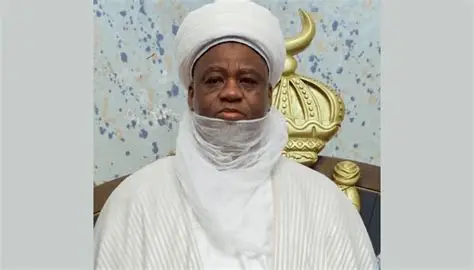
Muhammadu Sa’ad Abubakar III is the 20th Sultan of Sokoto, a Nigerian traditional ruler and one of the country’s most respected Islamic spiritual leaders. Widely recognized as the spiritual head of Muslims in Nigeria, the Sultan has played a pivotal role in promoting religious harmony, national unity, peacebuilding, and humanitarian initiatives.
Born in Sokoto, Nigeria, and descending from the historic Sokoto Caliphate, he combined a distinguished military career with deep Islamic scholarship before ascending the throne in 2006. His leadership continues to strengthen interfaith dialogue, community development, and the preservation of Islamic and cultural heritage across Nigeria.
As the current Sultan, Muhammadu Sa’ad Abubakar III leads the Sokoto Sultanate, which traces its roots to the Sokoto Caliphate founded by his ancestor, Sheikh Usman dan Fodio. He acts as the spiritual leader for millions of Muslims in Nigeria and plays an important role in promoting peace, unity, and interfaith dialogue across the nation. His background combines military service with traditional rulership, giving him a unique perspective on leadership and national development.
This article explores Sultan Muhammadu Sa’ad Abubakar III’s biography, early life, military career, coronation, achievements, personal life, and enduring legacy.
Muhammadu Sa’ad Abubakar III Early Life
Muhammadu Sa’ad Abubakar III was born on 24 August 1956 in Sokoto, in what was then the Northern Region of British Nigeria. He is the youngest son of Sir Siddiq Abubakar III, the 17th Sultan of Sokoto, who ruled for over 50 years from 1938 to 1988. His father was a highly respected leader known for his long reign and contributions to the region during colonial and post-independence times.
Sokoto State, his place of origin, lies in the extreme northwest of Nigeria. It borders the Republic of Niger to the north and west, Zamfara State to the east, and Kebbi State to the south and west. The state covers an area with short-grass savanna in the south and thorn scrub in the north. Its capital, Sokoto city, sits near the confluence of the Sokoto River and the Rima River. The region has a rich history as the seat of the former Sokoto Caliphate, making it a center of Islamic learning and culture in Nigeria. The population is predominantly Muslim, with Hausa and Fulani as the main ethnic groups. Agriculture, trade in hides and skins, and livestock herding form key parts of the local economy.
Growing up in the royal palace, Sa’ad Abubakar experienced a life shaped by tradition, Islamic values, and the responsibilities of leadership. His family traces direct lineage to Sheikh Usman dan Fodio, the scholar and reformer who established the Sokoto Caliphate in the early 19th century through a jihad that united many Hausa states under Islamic governance. This heritage placed high expectations on him from a young age. The palace environment exposed him to community issues, Islamic scholarship, and the duties of a traditional ruler. He developed qualities of humility, discipline, and respect for others, influenced by his father’s approachable style.
Muhammadu Sa’ad Abubakar III Education
Sa’ad Abubakar received early education that combined formal schooling with traditional Islamic learning. He attended Sultan’s Ward Primary School in Sokoto before moving to the prestigious Barewa College in Zaria, one of Nigeria’s top secondary schools known for producing many future leaders.
In 1975, he joined the Nigerian Defence Academy (NDA) in Kaduna as a member of the 18th Regular Course. This step marked the beginning of his professional military training. The NDA provided rigorous academic and military education, preparing officers for leadership roles in the armed forces. His time there built skills in strategy, discipline, and international relations that later proved valuable in his career and as Sultan.
Muhammadu Sa’ad Abubakar III Military Career
Sa’ad Abubakar pursued a long and successful career in the Nigerian Army. Commissioned as a Second Lieutenant in 1977, he served in the elite Armoured Corps. He held various command positions and participated in peacekeeping missions, reflecting Nigeria’s role in regional stability.
In the early 1980s, he commanded a battalion of African peacekeepers in Chad as part of the Organisation of African Unity’s efforts. He later served as an ECOWAS military liaison officer. From 1995 to 1999, he acted in that capacity and commanded the 231 Tank Battalion during ECOMOG operations in Sierra Leone from 1999 to 2000. These roles involved maintaining peace in conflict zones and coordinating multinational forces.
In 1993, he became Commanding Officer of the 241 Recce Battalion in Kaduna. In the late 1980s, he headed a presidential security unit guarding then-military ruler General Ibrahim Babangida. From 2003 to 2006, he served as Nigeria’s Defence Attaché to Pakistan, with accreditation to Iraq, Saudi Arabia, and Afghanistan. This diplomatic posting enhanced his understanding of international affairs and security issues. He retired as a Brigadier General in 2006.
His military service emphasized professionalism, peacekeeping, and service to the nation rather than combat alone. Colleagues and observers noted his dedication and ability to work across borders.
Muhammadu Sa’ad Abubakar III Ascension to the Throne
On 2 November 2006, Muhammadu Sa’ad Abubakar III ascended the throne following the death of his elder brother, Sultan Muhammadu Maccido, in the tragic ADC Airlines Flight 53 crash. He retired from the army to take up this role. His enthronement brought continuity to the Sultanate as a direct son of the long-reigning Sir Siddiq Abubakar III.
The position of Sultan of Sokoto carries immense significance. It represents leadership of the Qadiriyya Sufi order and spiritual guidance for Nigeria’s Muslim community. The Sultanate stems from the Sokoto Caliphate, established in 1804 by Usman dan Fodio. At its peak, the Caliphate was one of the largest states in West Africa, covering vast territories and influencing politics, education, and religion across the region. British colonial forces defeated it in 1903, but the Sultan title endured as a symbol of authority and unity.
Muhammadu Sa’ad Abubakar III Leadership as Sultan of Sokoto
As Sultan, Muhammadu Sa’ad Abubakar III focuses on unity within the Muslim community and broader Nigerian society. He serves as President-General of the Nigerian Supreme Council for Islamic Affairs (NSCIA) and leads Jama’atu Nasril Islam (JNI). He also acts as Chief Moonsighting Officer, helping standardize dates for Ramadan and Eid across Nigeria.
His leadership style promotes dialogue and calm during tensions. He has worked to bridge divides among Muslim groups and between Muslims and Christians through the Nigeria Inter-Religious Council (NIREC), where he co-chairs with Christian leaders. He condemns extremism and violence, such as actions by Boko Haram, and advocates for peaceful coexistence.
The Sultan engages in national issues, offering counsel to political leaders and supporting development initiatives. He participates in interfaith efforts and has spoken at international forums on peace-building in West Africa. His military background informs his approach to security and stability.
Muhammadu Sa’ad Abubakar III Contributions to Peace and Interfaith Harmony
Muhammadu Sa’ad Abubakar III has built a strong record in peace promotion. He collaborates with Christian leaders like Cardinal John Onaiyekan on interfaith initiatives. Their joint work includes projects supporting tolerance and addressing conflicts. He has received nominations and recognition for these efforts, including mentions for peace prizes.
He travels within Nigeria and abroad to speak on religious harmony. He emphasizes that religion should foster understanding rather than division. In a country with diverse faiths, his voice carries weight in reducing tensions and promoting national unity.
Muhammadu Sa’ad Abubakar III Role in National Development and Society
Beyond religious duties, the Sultan supports education, healthcare, and community welfare. He backs initiatives for youth empowerment, poverty reduction, and cultural preservation. His position allows him to influence traditional rulers and mobilize communities for development projects in Sokoto and beyond.
He advises on matters affecting the north and the nation, drawing from his experience. His focus includes stability, economic progress, and addressing challenges like insecurity through dialogue and cooperation.
Muhammadu Sa’ad Abubakar III Awards and Honours
Muhammadu Sa’ad Abubakar III has received several recognitions. He holds the national honour of Commander of the Federal Republic (CFR). He features regularly among the world’s most influential Muslim leaders due to his administrative and peace-building roles. He has earned honorary doctorates and fellowships from institutions in Nigeria and internationally.
His military service and leadership earned respect across sectors. Awards highlight his integrity, contributions to peace, and service to Nigeria.
Muhammadu Sa’ad Abubakar III Personal Life
The Sultan is married to Hajia Nabila and has children, including Fatimah, Amir, Wali, and Amira. Family life remains private, but he balances royal duties with personal responsibilities. He enjoys a reputation for approachability and humility.
Read Also: Ebiere Soberekon Biography: Age, State of Origin, Husband, Wedding Day, Career, Net Worth & Family
Conclusion
Muhammadu Sa’ad Abubakar III continues to serve as a unifying figure in Nigeria. His journey from military officer to Sultan reflects dedication to duty, peace, and heritage. Through his roles, he upholds the legacy of the Sokoto Caliphate while addressing modern challenges. His efforts in interfaith dialogue, community leadership, and national stability make him an important voice for harmony and progress in Nigeria and West Africa.
FAQs
Who is Muhammadu Sa’ad Abubakar III?
Muhammadu Sa’ad Abubakar III is the 20th Sultan of Sokoto and a prominent traditional and religious leader in Nigeria.
When and where was Muhammadu Sa’ad Abubakar III born?
He was born on 24 August 1956 in Sokoto, Sokoto State, Nigeria.
What is the background of Muhammadu Sa’ad Abubakar III family?
He is the youngest son of Sir Siddiq Abubakar III, the 17th Sultan of Sokoto. His lineage connects directly to Sheikh Usman dan Fodio.
What was Muhammadu Sa’ad Abubakar III military rank?
He retired as a Brigadier General in the Nigerian Army.
What are the main responsibilities of the Sultan of Sokoto?
The Sultan leads the Qadiriyya Sufi order, heads Islamic organizations like NSCIA and JNI, and serves as a spiritual guide for Nigerian Muslims while promoting peace and unity.
How did Muhammadu Sa’ad Abubakar III become Sultan?
He ascended the throne in November 2006 after the death of his brother, Sultan Muhammadu Maccido.
What contributions has Muhammadu Sa’ad Abubakar III made to peace in Nigeria?
He works on interfaith dialogue, condemns violence, standardizes religious calendars, and collaborates with leaders from different faiths to foster harmony.
What is the significance of Sokoto State in Nigerian history?
Sokoto State is the seat of the historic Sokoto Caliphate, a major center of Islamic scholarship and governance in West Africa.