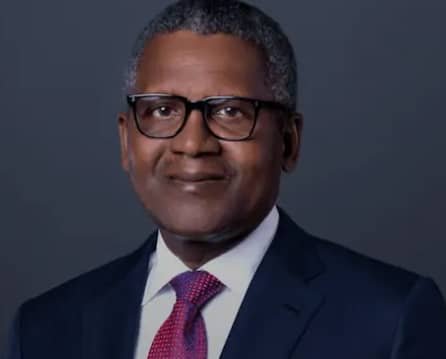
Aliko Mohammad Dangote, popularly known as Aliko Dangote, is a Nigerian businessman, industrialist, and investor widely regarded as Africa’s richest person. Renowned for building one of the continent’s largest business empires, Dangote has transformed key industries through investments in cement, sugar, salt, fertilizer, and petroleum refining.
Born into a prominent trading family in Kano, Nigeria, he expanded a modest commodity business into the Dangote Group, a multinational conglomerate with operations across Africa. His visionary leadership, landmark projects such as the Dangote Refinery, and significant contributions to job creation and economic development have established him as one of the world’s most influential business leaders. This article explores Aliko Dangote’s biography, business career, net worth, achievements, personal life, and lasting legacy.
Dangote’s story reflects determination, strategic vision, and a focus on meeting everyday needs across the continent. From humble trading beginnings to leading large-scale industrial projects, he has contributed to self-reliance in key sectors while engaging in significant philanthropic efforts. His influence extends to policy discussions and regional development, making him a key player in Africa’s economic landscape.
Aliko Dangote Early Life
Aliko Mohammad Dangote was born on 10 April 1957 in Kano, Kano State, Nigeria. He grew up in a prominent Hausa Muslim family with deep roots in commerce and trade. Kano, a historic commercial hub in northern Nigeria, shaped his early exposure to business activities. His family background provided both stability and inspiration for entrepreneurship.
His name “Aliko,” given by his maternal grandfather Sanusi Dantata, carries meaning related to victory and defense of humanity. Dangote belongs to the Hausa ethnic group, one of Nigeria’s major groups known for trading traditions. His state of origin is Kano State, a region famous for its long history as a center of trade across the Sahel and beyond.
Kano has served as a crossroads for goods like groundnuts, textiles, and agricultural produce for centuries. The state’s economy historically relied on agriculture and commerce, with markets drawing merchants from many parts of West Africa. Dangote’s family connections trace back to influential traders who operated during colonial times and earlier.
Dangote’s maternal great-grandfather, Alhassan Abdullahi Dantata, was one of the wealthiest individuals in West Africa in his era. He supplied groundnuts to major companies and engaged in extensive caravan trade. This legacy of business acumen passed through generations. After his father Mohammed Dangote passed away when Aliko was young, his maternal grandfather and uncle played key roles in his upbringing. His mother, Mariya Sanusi Dantata, was a businesswoman and philanthropist who contributed to the family’s success.
As a child, Dangote showed early interest in business. At around eight years old, he used pocket money to buy sugar sweets, which he sold through others for profit. This small venture taught him basic principles of trade and reinvestment. He lived an upper-class life but remained grounded in family values centered on hard work and community. Raised as a practicing Muslim, he attended a madrasa for early education alongside public schooling. These experiences instilled discipline and a practical outlook that later defined his career approach.
The economic environment of Kano during his youth, with its bustling markets and trading networks, reinforced the importance of supply chains and meeting consumer demands. Family discussions about commerce exposed him to strategies for scaling operations and managing risks. These formative years in Kano State laid the foundation for his understanding of local and regional markets, which he would later expand nationally and continentally. Siblings included brothers Sani (a businessman who passed away), Bello, and Garba, though he faced personal losses within the family over time.
Aliko Dangote Education
Aliko Dangote pursued education that combined traditional and formal learning. He attended Sheikh Ali Kumasi Madrasa for primary studies, where he gained religious and basic knowledge. He completed further primary education in a public school in Kano. For secondary education, he studied at Capital High School and later Government College in Birnin Kudu.
In the mid-1970s, he traveled to Egypt to attend Al-Azhar University in Cairo, a prestigious Islamic institution. There, he earned a bachelor’s degree in business studies and administration around 1977 or 1978. The program equipped him with knowledge of commerce, management, and international trade practices. Exposure to a different cultural and academic setting broadened his perspective while maintaining ties to his faith and heritage.
Upon returning to Nigeria, Dangote applied this education directly to business. The combination of classroom learning and family mentorship proved effective. He has often credited practical experience alongside formal studies for his success. His time abroad also highlighted opportunities in manufacturing and value addition, ideas he later implemented on a large scale in Nigeria.
Education remains important to him. Through his foundation and donations, he supports institutions, including contributions to universities in Nigeria. This reflects a belief in building human capital for national development.
Aliko Dangote Career
Aliko Dangote started his professional journey with a small loan from his uncle, around $3,000, in the late 1970s. He began trading in commodities such as sugar, salt, rice, and other food items. Initial operations focused on importing and distributing these goods in Nigeria, where demand was high due to population growth and limited local production.
Aliko Dangote Early Business Ventures
In 1977, he formally established what became the Dangote Group as a trading company. By 1981, he incorporated additional entities and expanded into bulk materials, including cement imports during Nigeria’s infrastructure boom. Challenges like port delays led him to invest in transportation, acquiring trucks for distribution. This vertical integration approach—controlling supply from import to delivery—became a hallmark of his operations.
He ventured into manufacturing pasta, salt, sugar, and flour. These consumer essentials provided steady revenue and allowed him to understand production processes. The Dangote Sugar Refinery in Lagos grew into one of the world’s largest, reducing reliance on imports and creating employment.
Aliko Dangote Expansion into Manufacturing and Cement
Dangote shifted toward local manufacturing in the 1990s and 2000s. He acquired and developed cement plants, including the Obajana plant in Kogi State, which became one of Sub-Saharan Africa’s largest. Dangote Cement expanded operations across Nigeria and into countries like Ghana, Benin, Cameroon, South Africa, and others. The company focused on high-quality production using local resources where possible, aiming to meet rising construction demands.
By the 2010s, Dangote Cement generated substantial revenue and employed thousands. This growth supported infrastructure projects and contributed to economic activity in multiple regions. He also invested in flour mills and other food processing to enhance food security.
Aliko Dangote Dangote Refinery and Energy Projects
One of his most ambitious undertakings is the Dangote Refinery in Lagos, Africa’s largest oil refinery with a capacity of 650,000 barrels per day. Commissioned in 2023 after years of construction, it includes a petrochemical complex and fertilizer plant. The project addresses Nigeria’s fuel import dependence despite being a major oil producer. It aims to produce refined products for domestic use and export, while generating jobs and reducing foreign exchange outflows.
Associated facilities include a power station to support operations. The refinery faced technical and logistical hurdles but represents a step toward industrial self-sufficiency. Recent developments include significant private equity investments to expand capacity and prepare for potential public offerings.
Aliko Dangote Diversification and Regional Presence
The Dangote Group operates in multiple sectors, including haulage, real estate, and agriculture. Investments span several African countries, promoting intra-African trade and job creation. In Kenya, for example, acquisitions in tourism-related businesses show broader interests. In South Africa, joint ventures in cement strengthened regional footprints.
His strategy emphasizes backward integration—producing inputs locally rather than relying on imports—and scaling to achieve efficiencies. This has positioned the group as one of West Africa’s largest private employers.
Aliko Dangote Political and Advisory Roles
Dangote has engaged in advisory capacities. In 2011, President Goodluck Jonathan appointed him to the economic management team. He supported various administrations through consultations on business and development matters. While maintaining focus on enterprises, his insights influence policy discussions on industrialization and investment.
Aliko Dangote Challenges and Criticisms
Like any large-scale operator, his businesses have faced scrutiny over market dominance, regulatory issues, and competition. Reports of government concessions or preferences have circulated, though he has addressed claims by emphasizing legal operations and contributions to the economy. External factors like currency fluctuations and global commodity prices also affect performance.
Aliko Dangote Awards
Aliko Dangote has received numerous recognitions for business excellence and contributions to development. In 2011, he was awarded the Grand Commander of the Order of the Niger (GCON), Nigeria’s second-highest national honor, as the first non-governmental recipient. This acknowledged his role in economic growth.
Other honors include the Grand Commander of the National Order of the Republic of Benin (2013), Commander of the National Order of Valour of Cameroon (2021), and Commander of the Order of Merit of Niger (2022). He has appeared in Time magazine’s list of 100 most influential people (2014) and received lifetime achievement awards from business forums. Philanthropy and leadership in African initiatives have earned further accolades from organizations like the United States Chamber of Commerce.
Aliko Dangote Philanthropy
Aliko Dangote established the Dangote Foundation, later renamed the Aliko Dangote Foundation (ADF), with a major endowment. The foundation focuses on health, nutrition, education, economic empowerment, and disaster relief. It has committed substantial resources to combating malnutrition, with programs treating children with severe acute malnutrition and supporting household food security.
Key efforts include partnerships for polio eradication, Ebola and COVID-19 response donations, and rice distribution initiatives. The foundation supports immunization, education infrastructure, and vocational training. Annual spending supports vulnerable populations across Nigeria and other African countries. Dangote has emphasized practical interventions that create long-term opportunities.
Aliko Dangote Personal Life
Aliko Dangote maintains a relatively private personal life. He has been married twice, both ending in divorce. His first marriage in 1977 was to Zainab, with whom he had daughters including Mariya and Halima. The second marriage was to Mariya Muhammad Rufai, producing daughter Fatima. He has children and grandchildren, with some family members involved in business operations.
Residing primarily in Lagos, he balances professional demands with family time. As a practicing Muslim, faith remains central. He has faced personal losses, including siblings, but continues to draw on family legacy for motivation.
Read Also: Ebiere Soberekon Biography: Age, State of Origin, Husband, Wedding Day, Career, Net Worth & Family
Conclusion
Aliko Dangote’s journey from commodity trading in Kano to building industrial giants demonstrates the power of vision and persistence. His enterprises have reshaped sectors, promoted local production, and generated economic value across Africa. Through philanthropy, he addresses pressing social needs, aiming for broader prosperity. While challenges persist in business and public perception, his contributions to industry and development leave a lasting impact. Future generations may build on this foundation of African-led industrialization and self-reliance.
FAQs
Who is Aliko Dangote?
Aliko Mohammad Dangote is a Nigerian businessman, founder of the Dangote Group, and Africa’s richest individual known for leadership in manufacturing and refining.
When and where was Aliko Dangote born?
He was born on 10 April 1957 in Kano, Kano State, Nigeria.
What is Aliko Dangote’s net worth?
Estimates vary but place his wealth in the tens of billions of US dollars, primarily from cement, sugar, and refining operations, making him the wealthiest person in Africa.
What businesses does the Dangote Group operate?
The group includes cement production, sugar refining, flour milling, oil refining, fertilizers, and other sectors with operations in Nigeria and several African countries.
What is the significance of the Dangote Refinery?
It is Africa’s largest oil refinery, designed to boost local refining capacity, reduce fuel imports, and support energy security in Nigeria.
How has Aliko Dangote contributed to philanthropy?
Through the Aliko Dangote Foundation, he supports nutrition programs, health initiatives, education, and emergency relief across Africa.
What awards has Aliko Dangote received?
He holds Nigeria’s GCON honor and various national awards from African countries for business and humanitarian achievements.