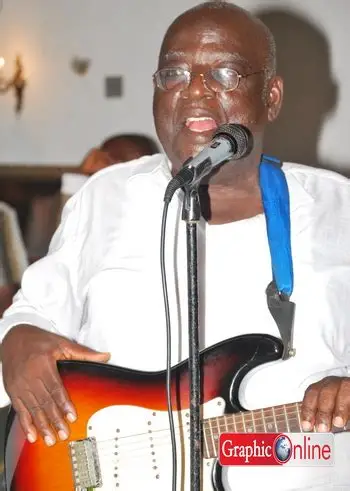
Charles Kofi Amankwaa Mann, widely known as C.K. Mann, was a Ghanaian highlife musician and producer whose career shaped the sound of modern Ghanaian music for more than four decades. Born in Cape Coast in the Central Region of Ghana, he became celebrated for taking the traditional osode rhythms of coastal fishermen and blending them with guitars, organs, bass, and later wind instruments to create a fresh, danceable style that reached audiences far beyond the fishing communities of the western coast.
His work as a guitarist, bandleader, composer, and producer left a lasting mark on highlife. From early days with groups such as the Kakaiku Band and Ocean Strings to leading the Carousel 7 and later his own ensembles, C.K. Mann produced many popular songs that remain part of Ghanaian musical memory. He received national recognition, including the Grand Medal of Ghana, and continued creating music into his later years. This biography traces his journey from modest beginnings through a long and productive career to the influence he still holds today.
C.K. Mann Early Life
Charles Kofi Amankwaa Mann was born in 1936 in Cape Coast, the capital of Ghana’s Central Region. Cape Coast is a historic coastal city that once served as an important centre during the European presence in West Africa. The city sits along the Gulf of Guinea and has long been home to the Fante people, whose culture, language, and traditions shaped daily life. Fishing has always been central to the local economy, and the rhythms, songs, and call-and-response singing of fishermen formed part of the soundscape that young Charles would later draw upon in his music.
His parents were Madam Maame Benyiwa and Mr. Claude Amanquandoh Mann. After his mother’s death, his father relocated the family to Agona Swedru. The household was modest, and resources were limited. Charles received no formal schooling. From an early age he showed a natural gift for singing. His father noticed this talent when the boy gathered friends in the evenings and sang for them. Without the means to support formal training, the family could offer only encouragement through these informal moments.
At the age of fourteen, Charles left for Takoradi in search of better opportunities. Takoradi, part of the twin city of Sekondi-Takoradi in the Western Region, was a growing industrial and port town. Life there was difficult. He slept in kiosks and shops around Market Circle and supported himself through petty trading, carpentry, and tailoring. These early struggles built resilience and independence. He later worked briefly as a seaman, an experience that exposed him to different places and people before he decided to dedicate himself fully to music.
The coastal environment of Cape Coast and the nearby fishing communities remained important to him. The traditional osode music performed by fishermen with hand claps, call-and-response vocals, and simple percussion instruments would later become the foundation of his distinctive sound. Growing up amid the Fante cultural setting of the Central Region, with its strong oral traditions, festivals, and communal music making, gave him a deep well of local material to draw from when he began shaping his own style.
C.K. Mann Education
C.K. Mann did not attend formal school. His education came through practical experience, observation, and self-directed learning. In Takoradi he watched band rehearsals and learned the basics of guitar from a friend who had access to a tutor book. This informal training was enough to start him on the path of professional music. He absorbed knowledge by listening carefully, practising regularly, and working alongside more experienced musicians. Later in life he would pass on skills to younger players, showing that his own learning process had been thorough and effective even without classroom instruction.
C.K. Mann Career
C.K. Mann’s professional music path began in the late 1950s and early 1960s. He first became involved with local bands in the Takoradi area. Around 1960 he played with the Broadway Combo, a group connected to the Broadway Cinema Company. The band performed in clubs that attracted expatriates and local elites. These early engagements helped him gain experience on stage and understand audience tastes.
Time with the Kakaiku Band
In 1962 he travelled to Tarkwa-Aboso to join Moses Kweku Oppong’s Kakaiku Band. He stayed with the group for several years, refining his guitar skills and learning the workings of a professional ensemble. The experience gave him a solid foundation in highlife performance and the discipline required for regular work.
Leadership of Ocean Strings
After leaving Kakaiku, he joined Ocean Strings and became its leader until around 1965 or 1966. Under his direction the band developed a following. When it eventually disbanded, new opportunities opened.
Rise with the Carousel 7
The owner of the Princess Cinema in Takoradi, Anis Mubarak, invited him to lead a newly formed resident band called the Carousel 7. This move proved decisive. In 1969 C.K. Mann released the single “Edina Benya,” which brought him wider attention. He also encouraged the signing of Paapa Yankson to the group. With Yankson providing strong backing vocals, the Carousel 7 quickly gained popularity.
It was during this period that C.K. Mann began modernising osode. He kept the essential elements of the fishermen’s music, the hand claps, the call-and-response singing, and the emotional quality, while adding two guitars, organ, bass, and later saxophone and trumpet. The result was a mildly melancholy yet highly danceable sound that appealed to a much broader audience beyond the coastal fishing communities. This innovation became his signature contribution to highlife.
Recording Success and Own Bands
In 1971 he signed a recording arrangement that led to major hits including “Nyimpa Rebre” (also referred to as Nimpa Rebre) and “Araba Lucy.” He continued to explore Latin American rhythms, incorporating elements of salsa into some tracks such as “Matow Abowa.” He later formed his own group, C.K. Mann and the Masters Band, and released a series of successful albums. He was among the first Ghanaian musicians in his circle to introduce wind instruments systematically into this style of highlife.
In the 1980s he spent about ten years performing in the United States. After returning to Ghana he established the Super Seven Band and a recording studio. His final album, “Wope Nye Ho,” was produced at West Gold Music Studio in Takoradi and released in 2013. Throughout his career he also worked as a producer and trained many younger musicians, both Ghanaian and from other countries.
Popular Songs and Albums
C.K. Mann’s catalogue includes many well-known tracks that remain popular. Among them are:
• Adwoa Yankey • Asafo Beesuon • Obaa Yaa Aye Me Bone • Kolomashie • Dofo Bi Akyerew Me • Ankwasema Dede • Okwan Tsentsen Awar • Aboa Akonkoran • Beebi a Odo Wo • Tsie M’afotusem • Ebusua Ape Adze Aye Me • Yebeyi Wo Aye • Do Me Ma Mondo Wo Bi • Edina Benya • Nyimpa Rebre • Araba Lucy • Matow Abowa • Medo Wo • Wope Nye Ho • Nnoma Etumtum
Notable albums and collections associated with his work include Party Time with Ceekay by C.K. Mann and His Carousel 7, Funky Highlife, and the later release Wope Nye Ho. His recordings often featured strong guitar work, rich vocal arrangements, and rhythms that invited dancing while carrying thoughtful lyrics about love, family, humility, and social life.
C.K. Mann Musical Style and Innovations
C.K. Mann’s greatest contribution was the modernisation of osode. Traditional osode was performed by fishermen using local percussion and pure vocal ensembles. He retained the call-and-response structure and hand claps while expanding the instrumentation with Western tools. The addition of guitars, organ, bass, and eventually saxophone and trumpet created a fuller, more accessible sound without losing the original character. The result carried a gentle melancholy that many listeners found moving and memorable.
He also drew inspiration from Latin American music and occasionally blended salsa elements into highlife. His guitar playing was noted for its clarity and virtuosity. As a bandleader he emphasised discipline and strong arrangements. His songs often addressed everyday themes—relationships, family tensions, humility before God, and the need for national unity—delivered in clear, relatable language that connected with ordinary people.
C.K. Mann Awards
C.K. Mann received several important honours for his work. In 2005 he was given a MUSIGA Merit Award. In 2006 President John Agyekum Kufuor awarded him the Grand Medal of Ghana at the National Honours and Awards Ceremony in recognition of his contribution to Ghanaian music. He was among the first recipients after the ceremony was revived that year. In 2017 he received a MUSIGA Honours Award for music excellence. During Nigeria’s 50th Independence Anniversary celebrations, then-President Goodluck Jonathan presented him with a Lifetime Achievement Award in the category of outstanding Ghanaian highlife innovator. These recognitions reflected both his artistic achievement and his role in elevating Ghanaian highlife on the national and regional stage.
C.K. Mann Personal Life
C.K. Mann settled in Takoradi, where he spent much of his adult life and later years. He was the father of eleven children. Family remained important to him even as his music career demanded long periods of travel and performance. In 2006 he established the C.K. Mann Foundation, a non-governmental organisation that supported needy but brilliant children in the Sekondi-Takoradi metropolis. This initiative showed his desire to give back to the community that had sustained him.
He faced health challenges in his final years. An unspecified illness intensified in December 2017. He passed away on 20 March 2018 at the Ghana Ports and Harbours Authority Hospital in Takoradi at the age of 81 or 82. His death was widely mourned by the music community and the public. A street in the Anaji suburb of Takoradi and a football park in the same area were named in his honour, lasting public reminders of his connection to the city.
C.K. Mann Connection to Cape Coast and the Central Region
Cape Coast, his birthplace, is one of Ghana’s most historically significant cities. Located in the Central Region, it served as an early European trading post and later as a colonial administrative centre. The city is closely associated with the Fante people and their rich cultural traditions. Fishing has always been a mainstay of the local economy, and the songs and rhythms of the fishermen formed a living musical heritage. Osode itself belonged to this coastal culture stretching from Cape Coast through Elmina and Shama toward Sekondi-Takoradi.
The Central Region is known for its forts and castles, its educational institutions, and its vibrant festivals. Growing up in this environment gave C.K. Mann direct contact with the oral and musical traditions that later defined his art. Even after moving to Takoradi, he continued to draw inspiration from the coastal life he knew as a child. His success in bringing osode into the mainstream of highlife can be seen as a creative dialogue between the traditional culture of the Central Region and the modern band formats that developed in Ghana’s urban centres.
C.K. Mann Influence on Other Artists
C.K. Mann’s modernised osode style influenced a generation of highlife musicians. Artists such as Paapa Yankson, who worked closely with him, and others including Gyedu Blay Ambolley drew from the same well of coastal rhythms and innovative instrumentation. In later decades, hiplife musicians sampled his recordings, keeping his melodies and grooves alive for younger listeners. His willingness to train emerging players further extended his impact. By combining deep local roots with open experimentation, he demonstrated a path that many subsequent Ghanaian musicians have followed.
Read Also: Ebiere Soberekon Biography: Age, State of Origin, Husband, Wedding Day, Career, Net Worth & Family
Conclusion
Charles Kofi Amankwaa Mann, known throughout his career as C.K. Mann, rose from modest beginnings in Cape Coast to become one of the defining voices of Ghanaian highlife. Through determination, natural talent, and creative vision he transformed the traditional osode music of coastal fishermen into a modern, widely loved style. His work as guitarist, bandleader, composer, and producer spanned more than four decades and produced numerous lasting songs.
National awards, including the Grand Medal of Ghana, recognised his contribution, while a street and park in Takoradi continue to bear his name. Beyond the music itself, his foundation for needy children and his mentorship of younger artists reflected a generous spirit. C.K. Mann’s recordings and innovations remain part of Ghana’s cultural heritage, enjoyed by listeners who still find joy and meaning in the rhythms he shaped.
FAQs
Who was C.K. Mann?
C.K. Mann was the stage name of Charles Kofi Amankwaa Mann, a Ghanaian highlife musician and producer born in 1936 in Cape Coast. He is best remembered for modernising the traditional osode rhythms of Ghanaian fishermen and creating many popular highlife songs over a career that lasted more than forty years.
Where was C.K. Mann born?
He was born in Cape Coast, the capital of the Central Region of Ghana. The city is a historic coastal settlement with strong Fante cultural traditions and a long association with fishing communities.
What is osode music and how did C.K. Mann change it?
Osode is a traditional style of music performed by fishermen along Ghana’s western coast, characterised by call-and-response singing, hand claps, and local percussion. C.K. Mann kept these core elements while adding guitars, organ, bass, and later saxophone and trumpet, making the music accessible to a much wider audience without losing its original character.
What are some of C.K. Mann’s most famous songs?
Popular tracks include Edina Benya, Adwoa Yankey, Asafo Beesuon, Nyimpa Rebre, Beebi a Odo Wo, Obaa Yaa Aye Me Bone, and many others that remain well known among highlife listeners.
Did C.K. Mann receive any national awards?
Yes. In 2006 he received the Grand Medal of Ghana from President John Agyekum Kufuor. He also received MUSIGA awards and a Lifetime Achievement Award from Nigerian authorities during that country’s independence anniversary celebrations.
When and where did C.K. Mann die?
He died on 20 March 2018 at the Ghana Ports and Harbours Authority Hospital in Takoradi after a period of illness.
Did C.K. Mann have a family?
He was the father of eleven children. He also founded the C.K. Mann Foundation to support needy but brilliant children in the Sekondi-Takoradi area.
Why is C.K. Mann still important today?
His modernisation of osode helped expand the language of highlife. His songs continue to be played and sampled, and his example of drawing creatively on local traditions while embracing new instruments remains an inspiration for Ghanaian musicians.