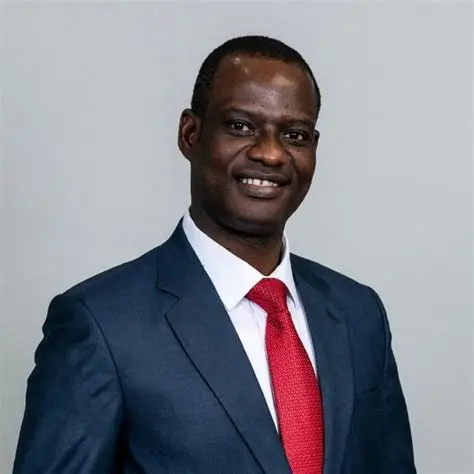
Taiwo Oyedele is a Nigerian economist, chartered accountant, tax expert, and public policy strategist widely recognized for his contributions to fiscal policy and tax reform in Nigeria. Renowned for his expertise in taxation, economic policy, and public finance, Oyedele has become one of the country’s leading voices on sustainable economic growth and revenue reforms.
Born on June 18, 1975, in Ikare-Akoko, Ondo State, he rose from humble beginnings to build a distinguished career in accounting, consulting, and public policy. His leadership of Nigeria’s Presidential Committee on Fiscal Policy and Tax Reforms has strengthened his influence on national economic policy and governance. This article explores Taiwo Oyedele’s biography, career, achievements, personal life, and lasting impact on Nigeria’s economic development.
Over more than two decades in the private sector and later in high-level public service, Oyedele has shaped national conversations on tax administration, revenue generation, and economic growth. He spent 22 years at PricewaterhouseCoopers, where he became Fiscal Policy Partner and Africa Tax Leader, before accepting the role of Chairman of the Presidential Committee on Fiscal Policy and Tax Reforms in 2023.
In 2026 he entered the federal cabinet, first as Minister of State for Finance and shortly afterwards as the substantive Minister of Finance and Coordinating Minister of the Economy. This biography traces his path from a rural community in Ondo State through education, professional achievement, policy leadership, and personal life.
Taiwo Oyedele Early Life
Taiwo Oyedele was born on 18 June 1975 in Ikare-Akoko, then part of Western State and today located in Ondo State, Nigeria. He is a twin; his twin sister is named Kehinde, following the traditional Yoruba naming practice for twins in which the first to arrive is called Taiwo and the second Kehinde. He was raised in the nearby community of Ikaram in the Akoko area of Ondo State, a region known for its agricultural character, strong community ties, and the challenges that often accompany rural life in southwestern Nigeria.
His father worked as a school headmaster and at one time enjoyed modest comfort, including ownership of one of the few black-and-white television sets in the village. That relative ease did not last. The elder Oyedele’s generous nature led him to lend money freely to neighbours and friends. Many of those debts went unpaid, and the family’s financial position declined sharply. Taiwo has spoken of how the household that once attracted visitors for evening television dramas later faced genuine hardship.
School fees at the time were only fifty naira per term, yet even that sum proved difficult. Young Taiwo worked on weekends clearing farmland for local farmers, earning between five and ten naira each weekend to help cover his own education costs. He attended St. Luke’s Primary School and later Babatope Memorial High School in the area. Admission to primary school almost failed because of his small stature.
The headmaster required children to touch the right ear with the left hand as a simple test of readiness. Taiwo’s arm was too short, but his taller twin sister succeeded. Because the two had been born on the same day, the school admitted both, allowing him to begin formal education at the age of five.
He remained a consistently strong student throughout primary and secondary school. When the time came to register for the West African Examinations Council examinations in his final year, the registration fee of nearly five hundred naira seemed unreachable through farm work alone.
A timely intervention by a group of indigenes of his village who worked at the Ajaokuta Steel Complex provided a scholarship of five hundred naira awarded to the best student based on earlier results. Taiwo received the award, paid the examination fees, and continued his studies without interruption.
These early experiences in Ondo State shaped a lasting appreciation for education, community support, and personal effort. Ondo State itself occupies a significant place in Nigeria’s southwest. It is known for its cocoa production, bitumen deposits, and a cultural heritage rooted in Yoruba traditions. The Akoko district, where Oyedele grew up, is characterised by hilly terrain, farming communities, and a history of resilience. Growing up there instilled in him both a practical understanding of economic constraints and a belief that opportunity, when combined with hard work, can change the course of a life.
Taiwo Oyedele Education
After secondary school, Taiwo Oyedele faced the common challenge of choosing a career path with limited exposure and guidance. His mother hoped he would study medicine. An uncle suggested accountancy and the examinations of the Institute of Chartered Accountants of Nigeria, describing the profession as one that would make a graduate highly employable. That advice set the direction for the rest of his formal education.
He applied to the University of Lagos and Obafemi Awolowo University, scoring approximately 220 in the entrance examinations. The scores fell short of the cut-off for accounting. Offered alternative courses such as estate management and economics education, he declined. Determined to pursue accountancy, he enrolled at the Federal Polytechnic, Ado-Ekiti for a National Diploma.
While there he sold his allocated hostel bed space to raise money for ICAN registration and study materials. He combined his polytechnic studies with professional examinations and later extended his industrial attachment period to earn additional funds for further diets of the professional exams.
He completed his Higher National Diploma in Accountancy and Finance at Yaba College of Technology in Lagos. By 1999, one year before finishing the HND, he had already qualified as a chartered accountant. He later earned a Bachelor of Science degree in Applied Accounting from Oxford Brookes University.
His commitment to continuous learning continued through executive education programmes at the London School of Economics, Yale University, the Gordon Institute of Business Science, and the Harvard Kennedy School. These programmes broadened his understanding of public policy, organisational leadership, and global economic issues.
Oyedele has also contributed to academic life as a professor at Babcock University, an adjunct faculty member at the University of Lagos, and a visiting scholar at the Lagos Business School. His combination of professional qualifications and international executive education prepared him for the complex intersection of private-sector practice and public-sector reform that would define his later career.
Taiwo Oyedele Career
Taiwo Oyedele’s professional life began in earnest during his National Youth Service Corps year. While waiting for mobilisation, he sat for a recruitment test at PricewaterhouseCoopers in Lagos. He was the only one among his group of friends to pass. When administrative issues at Yaba College of Technology temporarily delayed his mobilisation, he used his ICAN qualification to resolve the matter and resumed at PwC as a corps member in 2001. He was confirmed as a full-time employee the following year.
Rise at PricewaterhouseCoopers
Over the next two decades he advanced steadily through the firm. He moved from junior roles into tax and fiscal policy work, spending time in Kenya as an assistant manager and later returning to Nigeria in senior leadership positions. By 2009 he had become a partner, an unusually rapid progression that placed him among the youngest partners in the firm’s Nigerian practice. He later served as Fiscal Policy Partner and West Africa Tax Leader before becoming Africa Tax Leader, with responsibility spanning more than thirty countries.
During his time at PwC he advised governments, contributed to regional tax harmonisation efforts under ECOWAS frameworks, and provided expert input to the World Bank’s Doing Business reports. He also served as vice chairman of the National Tax Policy Committee under the Federal Ministry of Finance and held leadership roles in professional bodies, including the Taxation and Fiscal Policy Faculty Board of the Institute of Chartered Accountants of Nigeria and the Faculty of Direct Taxation at the Chartered Institute of Taxation of Nigeria. He chaired the West Africa Debt Management Roundtable under the Nigerian Economic Summit Group and participated in high-level think tanks on regional integration.
In July 2023 he resigned from PwC to avoid any conflict of interest after accepting a major public appointment.
Leadership of Fiscal and Tax Reforms
President Bola Tinubu appointed Oyedele Chairman of the Presidential Committee on Fiscal Policy and Tax Reforms in 2023. The committee received a broad mandate covering fiscal governance, revenue transformation, and measures to support economic growth. Under his leadership the committee developed proposals aimed at simplifying Nigeria’s complex tax system, reducing the burden on low-income earners and small businesses, and raising the country’s tax-to-GDP ratio from roughly ten percent toward a target of at least eighteen percent within three years.
Key recommendations included the creation of a unified Nigeria Revenue Service to replace multiple existing tax agencies, reforms to value-added tax frameworks, and changes to petroleum royalty arrangements. In May 2025 the Senate passed four tax reform bills grounded in the committee’s work. Oyedele consistently emphasised that the goal was not simply to raise more revenue through higher rates but to broaden the tax base, improve collection efficiency, close leakages, and create a fairer system that encourages formalisation of businesses. He argued publicly that a country cannot become prosperous by taxing poverty and that sustainable revenue growth depends on expanding economic activity rather than squeezing existing taxpayers more tightly.
His communication style during this period became an important part of the reform process. Through briefings, interviews, and public engagements he sought to explain complex policy changes in clear language, addressing public scepticism and clarifying the intended benefits for ordinary citizens and enterprises.
Entry into Federal Cabinet
In March 2026 President Tinubu nominated Oyedele as Minister of State for Finance. The Senate confirmed the nomination, and he was sworn in on 16 March 2026. On 21 April 2026, following a cabinet adjustment, he was appointed Minister of Finance and Coordinating Minister of the Economy, succeeding Wale Edun. In this role he leads Nigeria’s public finance and economic strategy, overseeing fiscal policy design and execution, public financial management, and broader economic coordination. The position places him at the centre of efforts to achieve macroeconomic stability, sustainable growth, and improved living standards in line with the government’s economic agenda.
Taiwo Oyedele State of Origin and Cultural Roots
Ondo State, the place of Taiwo Oyedele’s origin, lies in the southwestern geopolitical zone of Nigeria. It was created in 1976 from the former Western State and is bordered by Ekiti, Kogi, Edo, Delta, Ogun, and Osun States as well as the Atlantic Ocean to the south. The state is richly endowed with natural resources, including extensive cocoa plantations that once made it a major contributor to Nigeria’s agricultural exports, significant bitumen deposits, oil and gas potential in the coastal areas, and fertile land for food crops.
The Akoko region in the northern part of the state, where Ikare-Akoko and Ikaram are located, is characterised by undulating hills, rocky outcrops, and closely knit farming communities. The people of Akoko are part of the broader Yoruba ethnic group and maintain strong cultural traditions, including respect for education, communal solidarity, and festivals that celebrate local history and values. Many sons and daughters of the area have risen to prominence in national life, reflecting a long-standing emphasis on learning and self-improvement despite the challenges of rural infrastructure and economic opportunity.
Oyedele’s early life in this environment gave him firsthand experience of the constraints faced by families dependent on agriculture and informal economic activity. It also exposed him to the power of community intervention, as seen in the scholarship that enabled him to sit for his secondary school examinations. These roots continue to inform his public comments on the need for policies that support small businesses, farmers, and low-income households across Nigeria.
Taiwo Oyedele Professional Affiliations and Mentorship
Beyond formal employment and government service, Oyedele has maintained active involvement in professional and civic organisations. He is a Fellow of the Institute of Chartered Accountants of Nigeria, the Chartered Institute of Taxation of Nigeria, and the Association of Chartered Certified Accountants. He has served on the Global Governing Council of ACCA and as a member of the Global Tax Forum and the Harvard Business Review Advisory Council. He is also a Fellow of the Nigeria Leadership Initiative.
He founded the Impact Africa Foundation, a non-profit organisation focused on education, mentoring, and advocacy. The foundation provides scholarships and financial support to less privileged children from primary through tertiary levels, offers career guidance to young people, and promotes public policy discussions around social justice, equality, fair taxation, accountability, and good governance. Oyedele serves as a mentor and patron to several youth organisations, including junior chamber groups, university tax clubs, and student associations at institutions such as Obafemi Awolowo University, the University of Lagos, and Yaba College of Technology.
His academic appointments allow him to share practical experience with the next generation of professionals and policymakers. Through lectures, keynote addresses, and written commentary he has sought to demystify taxation and fiscal policy for wider audiences, including journalists, business leaders, and the general public.
Taiwo Oyedele Awards and Recognition
Taiwo Oyedele has received recognition from professional bodies and industry groups for his contributions to taxation and fiscal policy. He has been honoured by the Chartered Institute of Taxation of Nigeria for outstanding service to the taxation profession. He has also been conferred with fellowship awards by bodies such as the Capital Market Academics of Nigeria in recognition of contributions to financial and economic discourse. In 2025 he received the NEAPS Excellence in Fiscal Policy and Tax Reform Implementation award for his work as Chairman of the Presidential Committee.
President Bola Tinubu publicly congratulated him on his fiftieth birthday in June 2025, praising his role in advancing a fairer, simpler, and more growth-oriented tax system. Professional peers and media commentators have frequently described him as one of Nigeria’s leading authorities on tax matters, citing both his technical expertise and his ability to communicate complex issues clearly. These recognitions reflect sustained professional achievement rather than isolated events and underscore the respect he commands within accounting, taxation, and public policy circles.
Taiwo Oyedele Personal Life
Taiwo Oyedele is a married man and a father of two children. He has spoken publicly of the support he receives from his wife, including during periods of intense public scrutiny surrounding tax reform proposals. In one interview he noted that she held daily vigils for him while the tax bills were under debate, illustrating the personal dimension of high-stakes policy work. He maintains a relatively private family life while remaining active on social media and in public forums where he discusses economic issues.
His personal story continues to inspire many young Nigerians, particularly those from rural or modest backgrounds. The narrative of a village boy who sold his hostel bed space to fund professional examinations, qualified as a chartered accountant before completing his polytechnic diploma, and rose to partnership in a global firm within less than a decade after national service resonates widely. He has used that platform to encourage diligence, continuous learning, and ethical practice among emerging professionals.
Outside formal roles he remains engaged with community and youth initiatives through the Impact Africa Foundation and various mentoring relationships. These activities reflect a consistent interest in expanding opportunity for others, informed by the community support that helped him at critical moments in his own youth.
Read Also: Ebiere Soberekon Biography: Age, State of Origin, Husband, Wedding Day, Career, Net Worth & Family
Conclusion
Taiwo Oyedele’s life traces a clear arc from the hills of Akoko in Ondo State to the highest levels of economic policymaking in Nigeria. The same qualities that enabled a young student to work on farms for school fees and sell a hostel bed space for professional exam fees later drove rapid advancement at a global professional services firm and eventual leadership of national tax and fiscal reforms. As Minister of Finance and Coordinating Minister of the Economy he now carries responsibility for translating years of technical expertise and reform design into practical outcomes that affect millions of citizens.
His emphasis on fairness, efficiency, and growth rather than simply higher tax rates has shaped the current direction of Nigeria’s fiscal policy. The reforms initiated under the Presidential Committee he chaired aim to create a more coherent revenue system capable of supporting public services and economic expansion without placing undue pressure on the most vulnerable. Whether measured by professional milestones, policy influence, or personal example, Oyedele represents a generation of technocrats who combine private-sector experience with public-sector commitment. His story continues to unfold in real time as he steers the country’s public finances through a period of significant economic transition.
FAQs
Who is Taiwo Oyedele?
Taiwo Oyedele is a Nigerian economist, accountant, and public policy expert who serves as the Minister of Finance and Coordinating Minister of the Economy of Nigeria. He previously chaired the Presidential Committee on Fiscal Policy and Tax Reforms and spent 22 years at PricewaterhouseCoopers, rising to become Fiscal Policy Partner and Africa Tax Leader.
When and where was Taiwo Oyedele born?
He was born on 18 June 1975 in Ikare-Akoko, then in Western State and now in Ondo State, Nigeria. He was raised in the Ikaram community in the Akoko area of the state.
What is Taiwo Oyedele’s educational background?
He obtained a Higher National Diploma in Accountancy and Finance from Yaba College of Technology, a Bachelor of Science in Applied Accounting from Oxford Brookes University, and completed executive education programmes at the London School of Economics, Yale University, the Gordon Institute of Business Science, and the Harvard Kennedy School. He qualified as a chartered accountant in 1999.
What positions has Taiwo Oyedele held in government?
He was appointed Chairman of the Presidential Committee on Fiscal Policy and Tax Reforms in 2023. In March 2026 he became Minister of State for Finance, and in April 2026 he was appointed Minister of Finance and Coordinating Minister of the Economy.
Is Taiwo Oyedele married?
Yes, he is married and has two children. He has publicly acknowledged the support of his wife during demanding periods of policy work.
What is the Impact Africa Foundation?
It is a non-profit organisation founded by Taiwo Oyedele that focuses on education support for less privileged children, mentoring of young people, and advocacy on issues of public policy, fair taxation, accountability, and good governance.
What are the main goals of the tax reforms associated with Taiwo Oyedele?
The reforms seek to simplify Nigeria’s tax system, improve collection efficiency, broaden the tax base, reduce the burden on low-income earners and small businesses, and raise the tax-to-GDP ratio toward a target of at least 18 percent while promoting formalisation and economic growth.