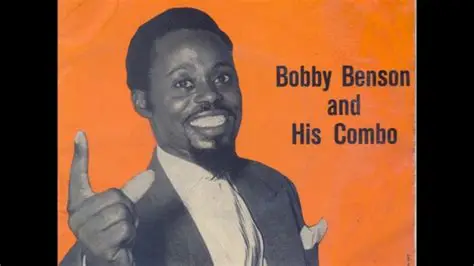
Bernard Olabinjo Bobby Benson, popularly known as Bobby Benson, was a pioneering Nigerian musician, bandleader, entertainer, comedian, and businessman who played a defining role in the evolution of highlife music in West Africa. Celebrated for his musical innovation and dynamic stage performances, Benson blended jazz, calypso, swing, Caribbean rhythms, and traditional African sounds to create a distinctive style that transformed Nigerian popular music.
Born in Ikorodu, Lagos State, he built a remarkable career that influenced generations of performers while introducing audiences to a fresh and vibrant musical experience. His groundbreaking contributions established him as one of Nigeria’s most influential highlife pioneers. This article explores Bobby Benson’s biography, music career, achievements, personal life, and lasting legacy.
His career stretched from the late 1940s through the early 1980s and included hit songs, a successful nightclub and hotel, television appearances, and the mentoring of many younger musicians who later became stars in their own right. Bobby Benson remains remembered as a key figure who helped Nigerian music move from ballroom dance halls into a broader popular form that reached audiences far beyond Lagos.
Bobby Benson Early Life
Bernard Olabinjo Benson was born on 11 April 1922 in Ikorodu, Lagos State, Nigeria. Some records list the year as 1921, yet the more widely accepted date is 1922. He came from an aristocratic Yoruba family with deep roots in the Ikorodu community. His older brother, Theophilus Owolabi Shobowale Benson, known as T.O.S. Benson, later became a prominent lawyer, politician, and minister in the Nigerian government. The family background gave young Bernard early exposure to both traditional Yoruba values and the growing urban culture of colonial Lagos.
Ikorodu itself sits on the northern shore of the Lagos Lagoon and has a rich history as a Yoruba settlement. The name is widely linked to “Oko Odu,” meaning Odu farm, referring to a vegetable once used in cloth dyeing that grew abundantly in the area. Oral traditions credit early founders such as Oga, who came from the Remo area of present day Ogun State, along with later arrivals from Ijebu and other Yoruba groups.
Over time the settlement grew through trade, farming, and its position as a gateway between Lagos Island and the interior. By the early twentieth century Ikorodu had become an important town within the broader Lagos region, blending Yoruba customs with the commercial energy of the colonial capital. Bobby Benson’s birth into this environment placed him at the meeting point of traditional culture and modern change.
As a boy he showed an early interest in performance and practical skills. After completing his schooling he briefly tried boxing, then joined the Merchant Navy as a sailor. These experiences took him away from home and exposed him to different people and music. In 1944 he left his ship in London. There he joined the Negro Ballet, a performing group that toured major European cities. The time abroad introduced him to jazz, swing, and stage performance at a professional level. It also brought him into contact with Cassandra, a woman of mixed Scottish and Caribbean background who would become his senior wife and stage partner. The couple returned to Nigeria in 1947 ready to build a career in entertainment.
Bobby Benson Education
Bobby Benson received his primary and secondary education in different parts of Nigeria. He attended Enitonia High School in Port Harcourt and later C.M.S. Grammar School in Lagos. These schools gave him a solid foundation in formal learning during the colonial period. While still in secondary school he also learned tailoring, a practical trade that many young men of the time acquired alongside their studies.
His formal education ended when he left school and entered the wider world of work and travel. The years spent in the Merchant Navy and later in London served as an informal education of another kind. Exposure to European stages, different musical styles, and international audiences expanded his understanding of entertainment. By the time he returned home he carried both the discipline of his school years and the broader experience gained abroad.
Bobby Benson State of Origin and Cultural Roots
Bobby Benson’s state of origin is Lagos State, specifically the historic town of Ikorodu. Lagos State is one of Nigeria’s most cosmopolitan regions, yet Ikorodu has long retained a strong Yoruba identity. The community’s history involves migration, trade across the lagoon, and the blending of Remo, Ijebu, and other Yoruba influences. Traditional institutions, festivals, and language remained important even as the town grew closer to the commercial and administrative centre of Lagos.
Growing up in this setting meant Bobby Benson heard both traditional Yoruba music and the newer sounds arriving through the ports and radio. The lagoon location encouraged movement of people and ideas. This cultural mix later appeared in his own music, which combined local rhythms with jazz and Caribbean elements. His family’s aristocratic standing also gave him early social connections that helped when he began performing and later when he opened his nightclub.
Bobby Benson Career
Bobby Benson’s professional life covered music, theatre, comedy, magic, television, and business. After returning to Nigeria in 1947 he and Cassandra formed the Bobby Benson and Cassandra Theatrical Party. The group offered a mix of serious music, dance, and light entertainment. Bobby played guitar and saxophone while Cassandra danced. The shows proved popular and soon led to the formation of a dance band called the Bobby Benson Jam Session. The band played swing, jive, sambas, and calypsos, styles that appealed to the growing urban audience in Lagos.
Bobby Benson Early Band Years
In the 1950s Bobby expanded the group into an eleven piece ensemble known as Bobby Benson and His Combo. He added a trumpet section and began shaping the music toward highlife, the popular West African style that mixed African rhythms with brass, guitar, and danceable beats. Highlife had already taken root in Ghana and parts of Nigeria, yet Bobby Benson helped give it a distinct Nigerian flavour by bringing in big band jazz and Caribbean touches. The band performed in dance halls and clubs across Lagos and beyond, building a strong following.
Bobby Benson Hit Songs and Recordings
The breakthrough came with the song “Taxi Driver,” also known in some versions as “I Don’t Care.” Released in the late 1950s, the track mixed highlife rhythms with jazz and pidgin English lyrics that spoke about everyday life, class, and romance. It became a major hit across West Africa and was later covered by other artists. Other well known songs from this period include “Gentleman Bobby,” “Iyawo se wo lo se mi,” “Mafe,” “Nylon Dress,” “Niger Mambo,” “Freedom Yes Sir,” and “Onye Solu Ife Uwa.”
These recordings helped establish Bobby Benson as a leading highlife artist. His music was danceable yet full of character, and the band’s live performances added comedy and showmanship. International artists later interpreted some of his pieces. American saxophonists Stanley Turrentine and Jackie McLean recorded versions of “Taxi Driver” and “Niger Mambo,” while pianist Randy Weston included “Niger Mambo” on a 1978 album, describing it as pure highlife style.
Bobby Benson Nightclub and Hotel Business
Bobby Benson became the first Nigerian to own both a major nightclub and a hotel. He established the Caban Bamboo, a popular venue in Lagos that served as a centre for highlife music and nightlife. The club later became Hotel Bobby. The establishment offered live music, food, and a lively atmosphere that attracted both local audiences and visiting artists. For many years the hotel served as a base for performances and collaborations. One notable long term guest was the international musician Eddy Grant, who lived and performed there for an extended period and later recorded songs in Yoruba and Nigerian pidgin English.
Bobby Benson Leadership in the Music Industry
In 1960 Bobby Benson became president of the Nigerian Union of Musicians. The role reflected his standing among fellow artists and his interest in organising the profession. In 1981 he formed the Performing Artistes Association of Nigeria, continuing his efforts to support and represent performers. These positions showed that his influence went beyond the stage into the practical organisation of the music business.
Bobby Benson Television and Stage Entertainment
During the 1970s Bobby Benson appeared regularly on Nigerian Television Authority programmes. On his own show he performed as a musician, stand up comedian, and magician. The combination of talents made him a complete entertainer who could hold an audience with music, jokes, and magic tricks. He also formed friendships with international figures such as B.B. King and Hugh Masekela, further linking Nigerian highlife to the wider world of popular music.
Many younger musicians gained early experience in his band. These included Victor Olaiya, who later led the Cool Cats; Roy Chicago; Sir Victor Uwaifo; Bayo Martins; Zeal Onyia; and Eddy Okonta. Their later success helped spread the highlife style that Bobby Benson had helped develop. His approach also influenced the growth of juju music, another major Nigerian popular form.
Bobby Benson Songs and Notable Recordings
As a singer and bandleader Bobby Benson left a body of work that continues to be remembered. Among the best known pieces are:
- Taxi Driver (also known as I Don’t Care)
- Gentleman Bobby
- Iyawo se wo lo se mi
- Mafe
- Nylon Dress
- Niger Mambo
- Freedom Yes Sir
- Onye Solu Ife Uwa
These songs capture the spirit of mid century Lagos nightlife and the wider West African highlife movement. They remain available on later compilations and continue to be played by fans of classic African music.
Bobby Benson Personal Life
Bobby Benson married several times and fathered ten children. His senior wife Cassandra, whom he met in Britain, was an important early partner both on stage and in life. The couple’s theatrical work together marked the beginning of his professional career in Nigeria. Details about later marriages and the full list of children are less widely documented in public sources, yet it is clear that family remained part of his life alongside the demands of performance and business.
He maintained a public image as a cheerful showman who enjoyed entertaining people. Friends and colleagues remembered him as witty, energetic, and generous with younger artists. His ownership of the Caban Bamboo and Hotel Bobby placed him at the centre of Lagos social life for many years. Even as musical tastes changed in the 1970s and early 1980s, he continued to perform and appear on television until his final years.
Bobby Benson Influence on Highlife and Nigerian Music
Highlife music developed in West Africa in the early twentieth century, drawing on local dance rhythms, brass bands, and later guitar and jazz elements. In Nigeria the style grew strong in the years after the Second World War. Bobby Benson played a central part in that growth by adding big band arrangements and Caribbean flavours while keeping African themes at the centre. His success showed that Nigerian musicians could create popular music that felt both local and modern.
The musicians who passed through his band carried the highlife sound into the next generation. Victor Olaiya became one of the best known highlife leaders. Sir Victor Uwaifo later mixed highlife with other styles and achieved lasting fame. The presence of these artists in Bobby Benson’s group helped spread his approach across the country. His songs also reached international listeners through cover versions, introducing highlife ideas to jazz audiences in the United States and elsewhere.
Beyond the music itself, Bobby Benson demonstrated that an African artist could own the venues where the music was played. The Caban Bamboo and Hotel Bobby gave musicians a regular place to perform and audiences a regular place to enjoy the new sounds. This combination of artistic and business activity helped professionalise the entertainment scene in Lagos.
Bobby Benson Later Years and Passing
Bobby Benson remained active into the early 1980s. He continued to perform, appear on television, and support the organisation of musicians. On 14 May 1983 he died in Lagos at the age of 61. His death marked the end of an era for the first generation of Nigerian highlife stars. Tributes at the time and in later years described him as a pioneer who brought energy, humour, and professionalism to Nigerian popular music.
Bobby Benson Legacy and Recognition
Although formal national awards from the period are not widely recorded in available sources, Bobby Benson received lasting recognition through the respect of fellow musicians and the continued popularity of his songs. He is regularly described as one of the fathers of Nigerian highlife. Later writers and musicians point to his role in blending styles, mentoring younger talent, and building institutions such as the nightclub and the musicians’ unions. His music continues to appear on classic highlife compilations, and the story of his career remains part of the history of Nigerian entertainment.
The Hotel Bobby and the memory of the Caban Bamboo live on in accounts of Lagos nightlife of the 1950s and 1960s. The songs “Taxi Driver” and “Niger Mambo” still introduce new listeners to the sound of that period. Through the artists he trained and the style he helped shape, Bobby Benson’s influence extends far beyond his own lifetime.
Read Also: Ebiere Soberekon Biography: Age, State of Origin, Husband, Wedding Day, Career, Net Worth & Family
Conclusion
Bernard Olabinjo Bobby Benson lived a full life that moved from the lagoon town of Ikorodu to the stages of Europe and the dance halls of Lagos. He returned home with new ideas and turned them into a career that mixed music, comedy, magic, and business. Through his band, his songs, his nightclub, and his work with fellow musicians he helped give Nigerian highlife its early shape and energy. Decades after his death his name still stands for creativity, showmanship, and the lively spirit of mid century Nigerian popular culture.
FAQs
Who was Bobby Benson?
Bobby Benson was a Nigerian musician, bandleader, comedian, and businessman best known for helping develop highlife music in Nigeria. His full name was Bernard Olabinjo Benson.
When and where was Bobby Benson born?
He was born on 11 April 1922 in Ikorodu, Lagos State, Nigeria. Some sources list the year as 1921.
What is Bobby Benson’s most famous song?
His best known song is “Taxi Driver,” also called “I Don’t Care.” It became a major hit across West Africa in the late 1950s.
Did Bobby Benson own a nightclub?
Yes. He opened the Caban Bamboo nightclub in Lagos, which later became Hotel Bobby. He is regarded as the first Nigerian to own both a major nightclub and a hotel.
Which musicians started in Bobby Benson’s band?
Several later stars played with him, including Victor Olaiya, Roy Chicago, Sir Victor Uwaifo, Bayo Martins, Zeal Onyia, and Eddy Okonta.
When did Bobby Benson die?
He died on 14 May 1983 in Lagos, Nigeria, at the age of 61.
What other talents did Bobby Benson have?
Besides music he was a comedian and magician. He appeared on Nigerian television in the 1970s performing all three skills.
How did Bobby Benson influence Nigerian music?
He introduced big band and Caribbean elements into highlife, mentored younger artists, and helped organise the music profession through union leadership.