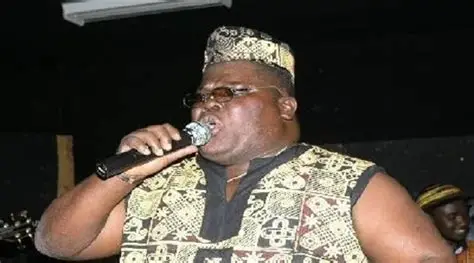
Jewel Kofi Ackah was a renowned Ghanaian highlife and gospel musician, singer, songwriter, and composer whose music helped shape Ghana’s contemporary sound. Widely known as the Prince of Highlife, Ackah captivated audiences with his powerful voice, heartfelt lyrics, and masterful blend of traditional Ghanaian rhythms and modern musical influences.
Born in the coastal town of Axim, he built an exceptional career that spanned more than five decades, releasing over 27 albums and later becoming a leading figure in Ghanaian gospel music. His memorable compositions, including a song that became closely associated with a major political party in Ghana, cemented his place among the country’s most influential musicians. This article explores Jewel Kofi Ackah’s biography, music career, achievements, personal life, and lasting legacy.
Ackah’s music reflected the spirit of his Nzema heritage while reaching audiences across Africa, Europe, and North America. He performed with leading bands, collaborated with other highlife legends, and continued creating until the later years of his life. His story is one of talent, resilience, and dedication to both secular and spiritual expression through song.
Jewel Ackah Early Life
Jewel Kofi Ackah was born in 1945 in Axim, a historic coastal town in the Western Region of what was then the Gold Coast, now Ghana. He was the son of Emmanuel Ackah and Cecilia Dye. As a member of the Nzema people, he grew up immersed in the cultural traditions of this Akan subgroup known for its rich musical heritage, fishing communities, and strong sense of identity along the southwestern coastline of Ghana.
Axim, his birthplace, has long served as an important center for the Nzema. The town sits on the Atlantic coast and is the capital of the Nzema East Municipal District. Its history stretches back centuries, marked by early European contact. The Portuguese built Fort Santo Antonio there in 1515, one of the earliest European structures on the Gold Coast.
Control later passed to the Dutch and then the British. Through these changes, the Nzema people maintained their cultural practices, including traditional drumming, dance, and the annual Kundum festival. This festival, celebrated in August, features rhythmic dancing originally linked to driving away evil spirits and coincides with the peak fishing season. Young Jewel grew up in an environment where music and communal gatherings were central to daily life.
His early years were shaped by the rhythms of coastal life in Axim and the broader Western Region. The region is known for its lush vegetation, palm plantations, and coastal trade. The Nzema language, part of the Akan family, features prominently in local songs and storytelling.
Ackah’s first album would later be recorded in Nzema, connecting his professional work directly to the tongue of his childhood. Family life with his parents provided a foundation that valued education and hard work. Although specific details of his childhood activities remain limited in public records, it is clear that music entered his life early through traditional drumming groups common in Nzema communities.
Before fully committing to music, Ackah pursued other paths. He worked as a professional footballer, a common ambition for young men in Ghana during that era when the sport was gaining national popularity. Later he took a job with the Palm Line shipping company. The maritime work exposed him to different parts of the coast and the demands of regular employment.
Yet he soon recognized that neither football nor shipping fulfilled his deeper interests. He left the Palm Line and joined a traditional drumming ensemble. Within a short time he became the standout drummer in the group. This skill caught the attention of established musicians and opened the door to a professional career in highlife.
The Western Region of Ghana, and specifically the Nzema areas around Axim, provided more than a geographic origin. It offered a cultural wellspring. Nzema society traditionally organizes around clans and stools of authority, with music playing a role in festivals, funerals, and celebrations. Highlife itself, the genre that would define much of Ackah’s career, evolved from a mix of local rhythms, European brass instruments, and Caribbean influences that arrived through coastal ports. Growing up near these ports and within a community that valued performance prepared him for the stage.
Jewel Ackah Education
Jewel Ackah received his early formal education at the Axim Roman Catholic Primary School. This institution holds historical significance because it was once a place where Kwame Nkrumah, later the first president of independent Ghana, served as a teacher. The school provided a basic foundation in reading, writing, and arithmetic within a structured Catholic environment that was common in many Ghanaian coastal towns during the colonial and early independence periods.
After primary school, Ackah continued his studies and completed his education in Takoradi in 1963. Takoradi, a larger port city in the Western Region, offered greater educational opportunities and exposure to a more diverse urban setting. Completing school in 1963 placed him among a generation of young Ghanaians coming of age just after the country’s independence in 1957.
The educational system at the time emphasized practical skills alongside academic subjects, preparing students for various forms of employment in a developing nation.
His schooling years coincided with a period of national optimism and cultural revival in Ghana. Music education was not formal in the Western sense for most students, yet traditional and popular music permeated community life. Ackah’s decision to join a drumming group after leaving formal education shows how informal learning complemented classroom knowledge. The discipline he gained from school, combined with the performance skills developed in local ensembles, equipped him for the demands of a professional music career that required travel, collaboration, and consistent output.
Jewel Ackah State of Origin and Cultural Roots
Jewel Ackah’s roots lie deep in the Western Region of Ghana, specifically among the Nzema people of Axim. The Western Region is one of Ghana’s sixteen administrative regions and is known for its natural resources, including gold, oil, and fertile land for cocoa and palm. The Nzema occupy the southwestern portion of this region, stretching along the coast toward the border with Côte d’Ivoire. Their traditional areas include both Eastern and Western Nzema, with Axim serving as a key cultural and historical hub.
The Nzema language is mutually intelligible with other Akan languages to varying degrees and carries a distinct musical quality that appears in local songs and proverbs. Social organization follows matrilineal patterns common among Akan groups, with clans that regulate inheritance and identity. Traditional leadership operates through chiefs and stools, and festivals such as Kundum reinforce communal bonds through dance, drumming, and feasting.
Axim itself is a coastal settlement with a population that has grown over the decades yet retains its character as a fishing and trading town. The presence of Fort Santo Antonio reminds visitors of the long history of external contact. Despite colonial influences, Nzema cultural practices endured. Drumming groups, which Ackah joined as a young man, form an essential part of this heritage. These ensembles use complex polyrhythms that later informed the highlife sound.
Understanding Ackah’s origin helps explain the authenticity in his music. When he recorded in Nzema or incorporated local themes, he spoke directly to audiences who shared that background while also appealing to broader Ghanaian and international listeners. The Western Region produced other notable musicians, yet Ackah stood out for his ability to move between traditional foundations and contemporary styles.
Jewel Ackah Career
Jewel Ackah’s professional music journey began in earnest after he left shipping work and excelled as a drummer. The celebrated Ghanaian musician Ebo Taylor recognized his talent and brought him into wider circles. Ackah then performed with live dance bands alongside figures such as Elgrand Kwofie, C.K. Mann, and Jos Akins.
Early Band Work and First Recordings
In 1965 Ackah sang with the cover version band known as the Pick Ups. He later had periods with C.K. Mann’s Carousel Seven, the Eldoradoes, and the Medican Lantics. Between 1975 and 1979 he worked with the Sweet Beans Band and rose to become lead vocalist with the Sweet Talks based in Tema. These years built his reputation as a strong vocalist with a soul tinged highlife style.
His first major recording came in 1974 with the album Gyaki Mea, performed in the Nzema language. The release became an immediate success and brought him several accolades. That same year he partnered with Pat Thomas on the song False Lover. These early works established him as a serious artist capable of both traditional expression and commercial appeal.
Solo Albums and Collaborations
In 1979 Ackah led a new lineup of the Sweet Talks and recorded Hallelujah Amen with a backing group called S.T. Express. The following year he released the solo album Asomdwee Hene and worked with the Great Pilsner’s Band. He also collaborated with guitarist Kwame Nkrumah on Yeridi a Wu, a collection that revisited classic highlife material from earlier decades.
The mid 1980s saw further experimentation. He recorded the soca inspired Super Pawa and the funk highlife fusion London Connection. In 1986 the album Electric Highlife appeared, featuring performances with Pat Thomas and A.B. Crentsil. This period marked some of his most enduring secular work. He continued as both a soloist and band vocalist, performing in Accra and traveling to London. In the late 1980s he relocated for a time to Toronto, Canada, and later renamed his band the Butterfly Six.
Transition to Gospel Music
Ackah began incorporating gospel themes more strongly in the 1980s and 1990s. Albums such as Oh Jesus, recorded with the Tema Anglican Church Choir, reflected this shift. He helped popularize gospel highlife at a time when the genre was still developing in Ghana. His ability to move between secular dance music and spiritual songs broadened his audience and demonstrated versatility.
Political Contribution
One of Ackah’s most widely recognized compositions is Arise Arise, the party anthem of the National Democratic Congress. Set to the tune of the Christian hymn Stand Up Stand Up for Jesus, the song became a symbol of the party’s identity and was performed at rallies and gatherings. He also contributed other campaign related material, linking his musical talent to national political life.
International Performances
Ackah toured the United States with C.K. Mann and made solo trips to Canada, the United States, Sweden, and other European countries. These performances introduced Ghanaian highlife to new audiences and allowed him to refine his craft through exposure to different musical environments. Later releases such as New York Connection and reissues of earlier material kept his catalog available to international listeners.
Albums and Songs
Jewel Ackah released more than 27 albums over his career. Selected works and songs include:
- Gyaki Mea (1974)
- False Lover (1974)
- Hallelujah Amen (1979)
- Asomdwee Hene (1980)
- Yeridi a Wu (1980)
- Super Pawa (1984)
- London Connection (1984)
- Electric Highlife (1986)
- Oh Jesus (1988)
- Me Dear (1989)
- Butu Sela
- Pull Him Down
- Abena
- Arise Arise
- Bodambo Bodambo
- I’m in the Mood
- Jesus
- Joyce Sane Bra
- Kyere Mase
- Manye Yie
- Me Wo Bi
- Classic Highlife (1995)
- Araba
- Mfa Me Ho
These recordings capture the range of his output from pure highlife to gospel influenced material and collaborative projects.
Jewel Ackah Awards
Public records do not list numerous formal national awards by name, yet contemporaneous accounts note that his debut album Gyaki Mea earned him several accolades upon its release in 1974. Recognition came primarily through popular success, consistent recording output, and the lasting cultural impact of songs such as Arise Arise.
His reputation as the Prince of Highlife among media commentators and fellow musicians served as an informal but meaningful form of honor within the Ghanaian music community. Later tributes after his passing further affirmed the respect he commanded across generations of artists.
Jewel Ackah Personal Life
Jewel Ackah maintained a private family life while remaining publicly active in music and politics. Reports differ on the exact number of children, with some sources indicating five and others eleven or six. He was known as a committed member of the National Democratic Congress and participated in activities connected to the party.
In his later years Ackah faced health challenges. He suffered a stroke several years before his death and dealt with other ailments. A 2017 report by a Ghanaian journalist highlighted his difficult circumstances and led to public support efforts. Despite these struggles he remained connected to his faith community, attending Joshua Generation International Ministries in Taifa.
Ackah spent significant time in Tema, where he lived in later years, while maintaining ties to his hometown of Axim. His international periods in Canada and elsewhere reflected the mobility common among successful Ghanaian musicians of his generation.
Jewel Ackah Illness Death and Funeral
Jewel Ackah died at his home in Tema on the night of 27 April 2018 at the age of 72 or 73. The cause involved complications from stroke and other health issues that had affected him for years.
A memorial concert took place on 21 July 2018 at the Plus 233 Jazz Bar and Grill in Accra. Performers included Gyedu Blay Ambolley, Kwabena Kwabena, Trigmatic, Kofi Kinaata, Rex Omar, and many others. His funeral service was held on 4 August 2018 at the Community 11 Complex Park in Tema. Burial followed in Axim, his birthplace. A memorial service occurred the next day at Joshua Generation International Ministries, followed by another tribute concert.
The funeral drew representatives from the Musicians Union of Ghana and the Ghana Music Rights Organisation, as well as fellow musicians including A.B. Crentsil and Bessa Simons. Former president Jerry John Rawlings attended and spoke of Ackah’s principled character and contribution to the nation. Rawlings also issued a public message noting the lasting value of Ackah’s music and his role in the National Democratic Congress.
Jewel Ackah Legacy in Ghanaian Music
Jewel Ackah’s body of work continues to influence highlife and gospel musicians in Ghana. His ability to compose in both English and local languages, including Nzema, helped preserve linguistic diversity in popular music. The anthem Arise Arise remains part of the political and cultural soundscape.
Reissues of albums such as Electric Highlife and London Connection introduce newer listeners to his catalog. Memorial concerts and ongoing radio play keep his voice present in Ghanaian musical life.
His journey from traditional drummer to international performer and gospel contributor illustrates the pathways available to talented artists from coastal Ghana. By bridging secular highlife and spiritual music, he expanded the reach of both genres. The respect shown by peers and political figures at his funeral underscores the depth of his impact.
Read Also: Ebiere Soberekon Biography: Age, State of Origin, Husband, Wedding Day, Career, Net Worth & Family
Conclusion
Jewel Kofi Ackah’s life traced a path from the coastal town of Axim through the highlife stages of Ghana and international venues, leaving a rich musical legacy. His recordings, collaborations, and the enduring anthem he composed for the National Democratic Congress ensure that his contribution remains part of Ghana’s cultural memory. From traditional drumming roots to gospel expression, he demonstrated the power of music to connect communities and generations.
FAQs
Who was Jewel Ackah?
Jewel Kofi Ackah was a Ghanaian highlife and gospel musician known as the Prince of Highlife. He was born in Axim in the Western Region and released more than 27 albums over a career lasting from the 1960s until his death in 2018.
Where was Jewel Ackah born?
He was born in Axim, a coastal town in the Western Region of Ghana, then known as the Gold Coast.
What year was Jewel Ackah born?
Jewel Ackah was born in 1945.
What is Jewel Ackah best known for?
He is best known for his highlife recordings, the gospel songs that helped popularize the genre in Ghana, and for composing Arise Arise, the anthem of the National Democratic Congress.
How many albums did Jewel Ackah release?
He released more than 27 albums during his career.
When did Jewel Ackah die?
Jewel Ackah died on 27 April 2018 at his home in Tema, Ghana.
What was Jewel Ackah’s ethnic background?
He was a member of the Nzema people of southwestern Ghana.
Did Jewel Ackah perform outside Ghana?
Yes, he toured the United States, Canada, Sweden, and other European countries, and lived for a period in Toronto.
What was Jewel Ackah’s first major album?
His first major recording was the 1974 album Gyaki Mea, performed in the Nzema language.
Was Jewel Ackah involved in politics?
He was a member of the National Democratic Congress and composed the party’s popular anthem Arise Arise.