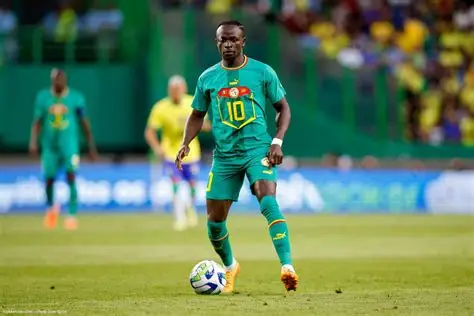
Sadio Mané is a Senegalese professional footballer widely recognized as one of Africa’s greatest football stars. Known for his blistering pace, clinical finishing, and exceptional work ethic, Mané has built an outstanding career at both club and international levels. Born in a remote village in southern Senegal, he transformed natural talent and unwavering determination into global success, earning major trophies across Europe while representing the Senegal national team with pride.
Throughout his career, he has starred for leading clubs in France, Austria, England, Germany, and Saudi Arabia, cementing his legacy as one of the most influential African footballers of his generation.
As a left winger known for his pace, directness, goal scoring, and work rate, Mané has left a lasting mark on the game. Beyond the pitch he has used his success to transform the lives of people in his hometown, funding essential infrastructure and supporting families. This biography explores his origins, development, professional achievements, personal values, and ongoing contributions to football and his community.
Sadio Mané Early Life
Sadio Mané was born on 10 April 1992 in Bambali, a small settlement in the Sédhiou region of southern Senegal. Bambali lies in the Casamance area, along the banks of the Casamance River, roughly 15 kilometres southeast of the regional capital Sédhiou. The region is known for its agricultural landscapes, rural communities, and strong cultural and religious traditions. At the time of his childhood the village had limited modern facilities, with basic housing, few paved roads, and restricted access to advanced healthcare and secondary education. Families often lived in extended households sharing limited resources, and daily life revolved around farming, fishing, and religious observance.
Mané was born to parents of Guinean origin. His father served as an imam in a nearby town and placed great importance on religious education and discipline. The household was devoutly Muslim, and the young Mané grew up attending Quranic studies alongside ordinary village life. His father initially discouraged him from playing football, viewing the sport as a distraction from spiritual and academic priorities.
The family hoped he might become a teacher or follow a path connected to religious learning. Tragedy struck when his father died when Mané was seven years old. The loss left a deep impression. In later interviews Mané has spoken of how the event strengthened his sense of responsibility toward his mother and the rest of the family. He resolved to work hard so that he could support them one day.
After his father’s death the family became more supportive of his interest in football. As a boy he played barefoot on dusty pitches with friends, developing the speed and skill that would later define his style. At around the age of fifteen he made a decisive choice. With the help of a childhood friend he left Bambali for the capital city Dakar, determined to pursue a professional career. The journey of several hundred kilometres represented a major risk for a teenager from a rural background.
In Dakar he joined local sides and eventually found his way to the Génération Foot academy, a respected youth development centre with links to European clubs. The academy provided structured training, better facilities, and exposure to scouts. Mané’s progress there marked the true beginning of his path out of the village and toward the professional game.
Life in Bambali during those early years shaped his character. The absence of material comfort taught him resilience and humility. The strong Islamic faith of the community instilled discipline and a sense of purpose that he has carried throughout his career. Neighbours and relatives later recalled a quiet, focused boy who combined religious observance with an intense love of football. Those formative experiences in the Sédhiou region remain central to his identity even after years of international success.
Sadio Mané Education
Formal schooling for Mané was limited by the economic realities of rural Senegal and the demands of pursuing football. In Bambali he attended local primary classes and continued Quranic education under the guidance of religious teachers, as was common for children in the area.
His father’s preference for religious studies meant that academic subjects sometimes took second place to spiritual instruction. When he moved to Dakar as a teenager, the focus shifted almost entirely to football development at Génération Foot. Regular classroom attendance became secondary to training sessions, matches, and the need to support himself away from home.
Despite the interruptions, Mané has always valued learning. In later years he has spoken of the importance of education for the next generation in his village. His own limited formal schooling did not prevent him from developing strong personal discipline, language skills through travel, and a clear understanding of the value of knowledge.
The combination of religious grounding and practical life experience formed the foundation of his outlook. He has consistently encouraged young people in Senegal to balance sporting ambition with study whenever possible, recognising that opportunities outside football are essential for long term security.
Sadio Mané State of Origin and Roots in Sédhiou
The Sédhiou region occupies a distinctive place in Senegal’s geography and culture. Located in the south of the country within the broader Casamance zone, it is separated from the northern parts of Senegal by the Gambia. The area is characterised by river systems, fertile land for rice and other crops, and a population that includes various ethnic groups with shared traditions of hospitality and community solidarity.
Bambali itself sits near the Casamance River, and life there has historically depended on agriculture, small scale trade, and fishing. Infrastructure was modest when Mané was growing up, with limited electricity, healthcare, and secondary schooling options.
This environment produced a generation of young people who looked beyond the village for opportunity. Mané’s decision to leave for Dakar reflected a pattern seen among talented athletes from rural Senegal. Yet he never severed ties with Sédhiou. The region’s values of mutual support and respect for elders remain visible in his public statements and actions. Local authorities and residents have recognised his achievements by naming facilities after him and celebrating his contributions.
Understanding the realities of Sédhiou helps explain both the obstacles he overcame and the motivation behind his later investments in the area. The contrast between the quiet riverside village of his childhood and the stadiums of Europe underscores the scale of his personal journey.
Sadio Mané Career
Mané’s professional career spans more than a decade and several countries. Each stage brought new challenges and higher levels of competition.
Early Professional Steps in France and Austria
After impressing at Génération Foot, Mané moved to France in 2011 to join FC Metz, a club then competing in Ligue 2. He made his professional debut in January 2012 as a substitute. In his first full season he appeared regularly and scored his first senior goals. Metz were relegated at the end of the campaign, yet the experience of European football proved valuable. In the summer of 2012 Austrian club Red Bull Salzburg signed him for a fee reported around four million euros.
At Salzburg he developed rapidly under a high intensity training regime. He scored regularly in the Austrian Bundesliga and cup competitions, including several hat tricks. In the 2013 to 2014 season he helped the team complete a domestic double of league and cup titles. His performances attracted interest from larger clubs, and by 2014 he was ready for a move to one of Europe’s top leagues.
Breakthrough at Southampton
In September 2014 Southampton of the English Premier League paid a club record fee of approximately 11.8 million pounds to bring Mané to England. He adapted quickly to the physical demands of the Premier League. In his first season he scored important goals and set a new league record for the fastest hat trick, completing three goals in under three minutes against Aston Villa in May 2015. The following campaign he finished as Southampton’s top scorer. His combination of speed, finishing, and willingness to press opponents made him a standout performer. After two successful seasons on the south coast, bigger clubs took notice.
Glory Years at Liverpool
Liverpool signed Mané in June 2016 for a fee that made him the most expensive African player at the time, around 34 million pounds. Under manager Jürgen Klopp he became a central figure in a high pressing attacking system. Playing alongside Mohamed Salah and Roberto Firmino, he formed one of the most effective forward lines in European football. In his first season he scored crucial goals and earned individual recognition.
Over the next years the team reached consecutive Champions League finals. In 2019 Liverpool defeated Tottenham Hotspur to win the competition, with Mané contributing throughout the campaign. The same season he shared the Premier League Golden Boot. The following year Liverpool ended a thirty year wait for the league title.
Mané also helped the club win the UEFA Super Cup, the FIFA Club World Cup, the FA Cup, and the League Cup. He scored more than one hundred goals in all competitions for Liverpool and became one of the highest scoring African players in Premier League history. His consistency, big game performances, and work rate earned him places in PFA Teams of the Year and high rankings in Ballon d’Or voting.
Move to Bayern Munich
In the summer of 2022 Mané transferred to Bayern Munich in the German Bundesliga for a fee reported near 32 million euros. He scored on his competitive debut and contributed to the team’s successful start. An injury later that year forced him to miss the 2022 World Cup. He returned in early 2023 and helped Bayern secure another Bundesliga title. The spell in Germany added another major league championship to his collection, though it lasted only one season before a new chapter began.
Chapter in Saudi Arabia with Al-Nassr
In August 2023 Mané joined Al-Nassr in the Saudi Pro League. The move brought him together with other high profile players and offered a new competitive environment. He has continued to score goals and provide assists while adapting to the league’s style. The club has competed for domestic titles, and Mané’s experience has proved valuable. As of 2026 he remains an important part of the squad, wearing the number 10 shirt and contributing regularly in league and cup matches.
Sadio Mané International Career with Senegal
Mané made his senior debut for Senegal in 2012 and has gone on to become the country’s all time leading goal scorer with more than fifty international goals. He represented the Olympic team at the 2012 Games and has appeared at multiple Africa Cup of Nations tournaments. In 2019 Senegal reached the final, finishing as runners up.
The breakthrough came at the 2021 tournament held in 2022, when Mané scored the decisive penalty in the final against Egypt to give Senegal their first Africa Cup of Nations title. He was named player of the tournament. He repeated the success in the 2025 edition, again lifting the trophy and earning best player honours.
Mané has also played in World Cup finals in 2018 and 2026, though injury kept him out of the 2022 tournament. His leadership, goal scoring, and consistency have made him a central figure for the Teranga Lions across more than a decade of international duty. He announced his retirement from international football after the 2026 World Cup.
Sadio Mané Playing Style and Strengths
Observers describe Mané as a complete modern winger. He possesses explosive acceleration that allows him to beat defenders on the outside or cut inside. He is effective with both feet and scores a high proportion of headers for a player of his height. His work rate off the ball is exceptional; he presses opponents relentlessly and tracks back to help defend. Former teammates and coaches have praised his concentration, intensity, and belief in team success even in difficult moments. These qualities enabled him to thrive in different tactical systems across several leagues.
Sadio Mané Awards and Honours
Mané’s trophy cabinet reflects sustained excellence at club and international level. With Red Bull Salzburg he won the Austrian Bundesliga and Austrian Cup. At Liverpool he collected the Premier League title, UEFA Champions League, UEFA Super Cup, FIFA Club World Cup, FA Cup, and League Cup. With Bayern Munich he added a Bundesliga title. For Senegal he has won the Africa Cup of Nations twice and finished as runner up on other occasions.
Individually he has been named CAF African Player of the Year on multiple occasions, shared the Premier League Golden Boot, earned places in PFA Teams of the Year, and received high rankings in Ballon d’Or and FIFA Best awards. Senegal has also honoured him with the rank of Grand Officer of the National Order of the Lion. These recognitions confirm his status among the leading African footballers of the modern era.
Sadio Mané Philanthropy and Community Work
Despite global fame Mané has remained deeply connected to Bambali and the wider Sédhiou region. He has funded the construction of a hospital that includes maternity services, addressing the lack of healthcare that affected his own childhood. He has built a secondary school and provided resources such as laptops and financial rewards for high achieving students.
Additional projects include a petrol station, a post office, improved internet access, a mosque, and a football stadium meeting international standards. He has also arranged regular monthly support payments for local families. These investments have improved living conditions, education, and health outcomes for thousands of residents.
Mané has stated that giving back is a natural response to the opportunities football provided him. His actions have turned Bambali into a more modern and connected community while serving as an example of how successful athletes can create lasting positive change in their places of origin.
Sadio Mané Personal Life
Mané is a practising Muslim who maintains the religious habits formed in his youth. He is often seen making private prayers before matches. In January 2024 he married Aisha Tamba in an Islamic ceremony in Senegal. The couple have kept much of their private life away from the media. During his time in Liverpool he lived in the Allerton area of the city.
He is known for a modest lifestyle and a preference for focusing on football and family rather than public spectacle. His older brother Malick also pursued football at a professional level. Mané’s sense of responsibility toward his mother and extended family has remained constant since the loss of his father.
Sadio Mané Influence on African Football
Mané’s career has raised the profile of Senegalese and West African football. His success at top European clubs demonstrated that players from small villages can reach the highest level through talent and dedication. Younger generations in Senegal and across the continent cite him as a role model. His leadership in winning major trophies with the national team has strengthened belief in African football’s competitive potential. Off the pitch his philanthropy has shown a different dimension of athlete responsibility.
Read Also: Ebiere Soberekon Biography: Age, State of Origin, Husband, Wedding Day, Career, Net Worth & Family
Conclusion
Sadio Mané’s story is one of perseverance, talent, and generosity. From the riverside village of Bambali in the Sédhiou region of Senegal he travelled a long road to become a Champions League winner, Premier League champion, multiple Africa Cup of Nations winner, and one of the most respected African footballers of his time. Along the way he scored hundreds of goals, collected major trophies, and represented his country with distinction.
Equally important is the way he has used his success to improve the lives of people in the community that raised him. His biography continues to unfold as he plays in Saudi Arabia and looks toward the next stages of life after international retirement. The values formed in a humble Senegalese village remain the foundation of everything he has achieved.
FAQs
What is Sadio Mané’s full name and when was he born?
Sadio Mané was born on 10 April 1992.
Where was Sadio Mané born?
He was born in Bambali, a town in the Sédhiou region of southern Senegal.
Which clubs has Sadio Mané played for?
His professional clubs include Metz, Red Bull Salzburg, Southampton, Liverpool, Bayern Munich, and Al-Nassr.
What major trophies has Sadio Mané won?
He has won the Premier League, UEFA Champions League, multiple domestic cups, a Bundesliga title, and two Africa Cup of Nations titles with Senegal, among other honours.
Is Sadio Mané married?
Yes, he married Aisha Tamba in January 2024.
How has Sadio Mané helped his hometown?
He has funded a hospital, school, stadium, and other infrastructure projects, and provides ongoing support to local families.
What is Sadio Mané’s playing position?
He primarily plays as a left winger, though he can also operate as a forward.
Has Sadio Mané won the African Player of the Year award?
Yes, he has received the CAF African Player of the Year award on more than one occasion.