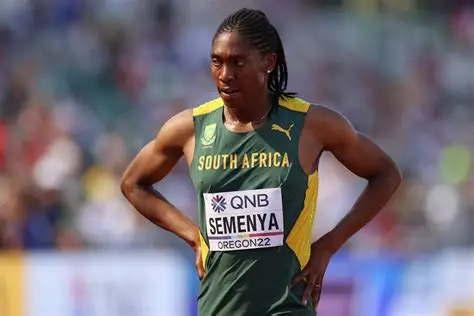
Caster Semenya is a South African middle-distance runner celebrated as one of the greatest 800 metre athletes in history. Renowned for her remarkable speed, endurance, and championship success, she has won multiple Olympic and World Championship titles while inspiring millions across Africa and beyond. Born and raised in rural South Africa, Semenya rose from local school competitions to the global stage through exceptional talent, relentless determination, and unwavering resilience. At the same time, she has remained a central figure in international athletics, overcoming years of public scrutiny while continuing to champion excellence, equality, and perseverance in sport.
Her story combines remarkable sporting achievement with complex questions of biology, fairness in sport, and individual rights. Through consistent performance, legal challenges, and later a published memoir, Semenya has shaped discussions that extend far past the finish line. This biography traces her path from a remote Limpopo village to the global stage, examining the key stages of her life and career with care and clarity.
Caster Semenya Early Life
Mokgadi Caster Semenya was born on 7 January 1991 in the village of Ga-Masehlong, near Polokwane in South Africa’s Limpopo province. Polokwane was previously known as Pietersburg. She spent much of her childhood in the nearby village of Fairlie, also in the northern part of Limpopo. Her parents are Dorus and Jacob Semenya.
She has three sisters and one brother. The family home was relatively large by local standards, with five bedrooms and a living room, yet daily life remained basic. Water came from a communal well, sanitation relied on a long drop toilet, and the household only connected to the electrical grid in 2001. Her father often worked away for months at a time as a gardener in Pretoria, roughly 200 miles distant, while the children helped their mother with subsistence farming on a small plot of land.
From an early age Semenya showed a strong preference for outdoor activity and physical play. She spent long hours in the bush, exploring and seeking adventure. Football became her first organised sport. She played for a local side called Try Again FC, competing in the men’s division because no suitable girls’ team existed. She changed clothes separately from the boys yet participated fully in matches and training.
Running entered her life mainly as a way to build fitness for football. Teachers and coaches soon noticed her natural speed and endurance. She attended Nthema Secondary School, where she continued to develop her athletic ability through regular training after classes, sometimes covering distances between villages on foot.
Life in rural Limpopo shaped her independence and toughness. At around age thirteen she moved to Fairlie to help care for her grandmother, Maputhi Sekgala, and some male cousins. Periods of separation from her immediate family were common. One difficult episode involved a seven month hospital stay after a knee injury that required surgery. These experiences taught her self reliance long before international fame arrived. Community members in Ga-Masehlong and Fairlie later recalled a quiet, determined child who simply loved movement and competition. Her rural upbringing, marked by limited resources yet strong family and village bonds, provided the foundation for the discipline that would later define her professional career.
Limpopo province itself is South Africa’s northernmost region, sharing borders with Botswana, Zimbabwe and Mozambique. It is characterised by savannah landscapes, baobab trees and a mix of rural villages and growing urban centres such as Polokwane. The area has a rich cultural heritage linked to various South African communities, and traditional ways of life remain visible alongside modern development.
Growing up in this environment gave Semenya a deep connection to the land and to the values of perseverance common in many rural African settings. She has often spoken of the freedom she felt running through dusty paths and the support she received from family and neighbours who encouraged her sporting efforts without questioning her place among them.
Caster Semenya Education
Semenya completed her secondary schooling at Nthema Secondary School in Limpopo. Academic work shared time with sport, yet she maintained focus on both. After leaving school she enrolled at North West University, also known as the University of North West, in Potchefstroom. There she studied sports science. She earned a diploma in the subject in 2018. Additional qualifications include certificates in sports management and coaching levels.
These studies equipped her with theoretical knowledge that complemented her practical experience as an elite athlete. Later in her career she drew on this educational background when she moved into coaching roles, working with athletes such as Glenrose Xaba. Education remained important to her even while training and competing at the highest levels, reflecting a balanced approach to personal development beyond pure athletic performance.
Caster Semenya State of Origin and Cultural Roots
Limpopo province forms the northern gateway of South Africa. Ga-Masehlong and Fairlie sit in a part of the province where traditional village life coexists with the gradual spread of infrastructure. The landscape features open spaces ideal for informal running and ball games, which helped foster Semenya’s early interest in sport. Cultural life in the area includes strong community ties, respect for elders, and a blend of indigenous practices with Christian faith.
Semenya has described her own spiritual outlook as inclusive, drawing on both Christian belief and ancestral connections. This dual foundation offered her emotional grounding during later public pressures. The province has produced other notable South African figures in various fields, yet Semenya’s rise brought particular international attention to the everyday realities of rural northern communities. Her success demonstrated that world class talent can emerge from places far from major training centres or well funded academies.
Caster Semenya Career
Semenya’s competitive running career began in earnest during her teenage years. She first gained notice at junior level events.
Junior Achievements and Breakthrough
In 2008 she competed at the World Junior Championships in the 800 metres but did not reach the final. The same year she claimed gold at the Commonwealth Youth Games with a time of 2:04.23. The following season brought dramatic improvement. At the 2009 African Junior Championships she won both the 800 metres in 1:56.72 and the 1500 metres in 4:08.01.
These times marked large personal best advances and set national and championship records. Later that year, at the age of eighteen, she travelled to Berlin for the World Championships. There she won the senior women’s 800 metres final in 1:55.45, the fastest time in the world that season. The victory announced her as a major force in middle distance running. Track and Field News ranked her the top women’s 800 metre runner of 2009.
Olympic Success
At the 2012 London Olympics Semenya carried the South African flag at the opening ceremony. She finished second in the 800 metres final behind Russia’s Mariya Savinova. Subsequent doping investigations led to the disqualification of Savinova’s results. Semenya’s silver medal was upgraded to gold. Four years later, at the 2016 Rio de Janeiro Olympics, she won the 800 metres outright in 1:55.28. The performance confirmed her status as the leading athlete in the event during that period.
World Championships and Other Titles
Semenya secured World Championships gold in the 800 metres in 2009, 2011 (after reallocation following doping cases) and 2017. In 2017 she also earned bronze in the 1500 metres. She collected gold medals at the Commonwealth Games in both the 800 metres and 1500 metres in 2018 on the Gold Coast. Additional titles came at the African Games, African Championships and various Diamond League meetings.
She remained unbeaten in the 800 metres for long stretches, including a period of more than thirty consecutive victories. Her personal bests include 1:54.25 in the 800 metres (a South African record), 49.62 in the 400 metres, 1:21.77 in the 600 metres, 2:30.70 in the 1000 metres and 3:59.92 in the 1500 metres, several of which stand as national records.
Later Years and Transition
After 2018 regulatory changes restricted her ability to compete in her preferred events without medical intervention. She continued to race when possible and expanded into other distances and even football, appearing for JVW F.C. By the mid 2020s she had largely stepped away from elite competition and focused on coaching. Throughout her career she demonstrated exceptional consistency, tactical awareness and physical power that set her apart from many contemporaries.
Caster Semenya Challenges and Regulatory Battles
Following the 2009 World Championships victory, questions arose about Semenya’s rapid improvement and physical appearance. World Athletics required sex verification testing. Results were leaked to the media, revealing that she has 5α reductase 2 deficiency, a difference of sex development that occurs in individuals with XY chromosomes.
She was born with internal undescended testes, no uterus or fallopian tubes, and does not menstruate. Her body produces testosterone in the typical male range. Semenya has consistently described herself as a woman, stating that she was born with a vagina and that she is simply a different kind of woman. She rejects the intersex label in personal terms.
She was cleared to compete again in 2010. Later rules introduced in 2011 and revised in subsequent years required athletes with certain differences of sex development to lower their testosterone levels through medication if they wished to race in events from 400 metres to the mile.
Semenya underwent treatment for several years but later refused further intervention, citing health concerns and the right to compete as she is. Legal challenges followed at the Court of Arbitration for Sport, Swiss courts and the European Court of Human Rights. Some rulings recognised aspects of discrimination while upholding the regulations in practice.
In 2025 she ended the prolonged legal effort. These battles occupied much of the later part of her competitive career and brought intense media attention. Support within South Africa remained strong, with many viewing the scrutiny as an unfair intrusion into her privacy and an expression of external bias.
Caster Semenya Awards
In 2014 Semenya received the bronze Order of Ikhamanga from the South African government. The honour recognises excellence in the arts, culture, literature, music, journalism or sport. She has been shortlisted for World Athlete of the Year awards and named among influential figures by publications such as Time magazine. Her Olympic and world titles themselves constitute the core of her sporting recognition. Additional honours have come from national sporting bodies and public acknowledgements of her contribution to South African athletics.
Caster Semenya Personal Life
Semenya married her long term partner Violet Raseboya in a traditional ceremony in December 2015 and a civil ceremony in January 2017. The couple have two daughters, born in 2019 and 2022. Their first child was conceived through artificial insemination. The family lives in Pretoria. Semenya has spoken of the importance of privacy and the support she receives at home amid public pressures. In 2023 she published her memoir, The Race to Be Myself.
The book offers a first person account of her childhood, athletic rise, the impact of gender related testing and regulation, and her determination to live and compete on her own terms. Reviewers noted its direct style and the insight it provides into both sporting success and personal cost. Beyond running she has engaged in football and coaching, maintaining an active lifestyle while focusing on family and mentoring younger athletes.
Caster Semenya Legacy and Influence
Semenya’s career has influenced conversations about eligibility rules, biological variation and the rights of athletes. In South Africa she is widely regarded as a national hero whose achievements inspire young people from rural backgrounds. Her refusal to accept certain medical requirements highlighted tensions between individual autonomy and governing body policies.
The memoir extended her voice beyond the track. Coaching work allows her to pass on technical knowledge and the values of resilience she developed through years of high level competition and public challenge. Her story remains part of ongoing discussions in international sport about fairness, inclusion and the treatment of athletes with differences of sex development.
Read Also: Ebiere Soberekon Biography: Age, State of Origin, Husband, Wedding Day, Career, Net Worth & Family
Conclusion
Caster Semenya’s life traces a path from the villages of Limpopo to the highest levels of global athletics. She built a record of Olympic and world titles through talent, hard work and mental strength. At the same time she navigated intense scrutiny of her biology and prolonged regulatory restrictions that ultimately limited her ability to race in her strongest event. Through it all she maintained a clear sense of identity and purpose.
Her achievements on the track, her advocacy for the right to compete as oneself, and her later work as a coach and author form a coherent body of contribution. For many she represents both sporting excellence and the determination to claim space in the face of opposition. Her biography continues to unfold through family life, mentoring and public reflection, ensuring that the lessons of her journey remain relevant for future generations of athletes and observers.
FAQs
What is Caster Semenya’s full name and date of birth?
Mokgadi Caster Semenya was born on 7 January 1991.
Where was Caster Semenya born and raised?
She was born in Ga-Masehlong near Polokwane in Limpopo province, South Africa, and grew up mainly in the village of Fairlie in the same province.
What are Caster Semenya’s major athletic achievements?
She is a two time Olympic gold medallist in the 800 metres (2012 after reallocation and 2016) and a three time World Championships gold medallist in the same event (2009, 2011 after reallocation and 2017). She also won Commonwealth Games gold medals and multiple African titles.
What condition does Caster Semenya have?
She has 5α reductase 2 deficiency, a difference of sex development associated with XY chromosomes and naturally elevated testosterone levels.
Is Caster Semenya married and does she have children?
She is married to Violet Raseboya. They have two daughters, born in 2019 and 2022.
What book has Caster Semenya written?
In 2023 she published the memoir The Race to Be Myself, which details her life, career and the challenges she faced regarding eligibility rules.
What national honour has Caster Semenya received?
In 2014 she was awarded the bronze Order of Ikhamanga by the South African government for excellence in sport.
Why has Caster Semenya been restricted from competing in certain events?
World Athletics regulations require athletes with certain differences of sex development to reduce their testosterone levels medically in order to compete in events from 400 metres to one mile. Semenya declined further treatment after earlier periods of compliance.
Where does Caster Semenya live now?
She lives in Pretoria, South Africa, and has moved into coaching.
How did Caster Semenya start running?
She began running primarily as fitness training for football, which was her first sport, before coaches recognised her talent for middle distance events.