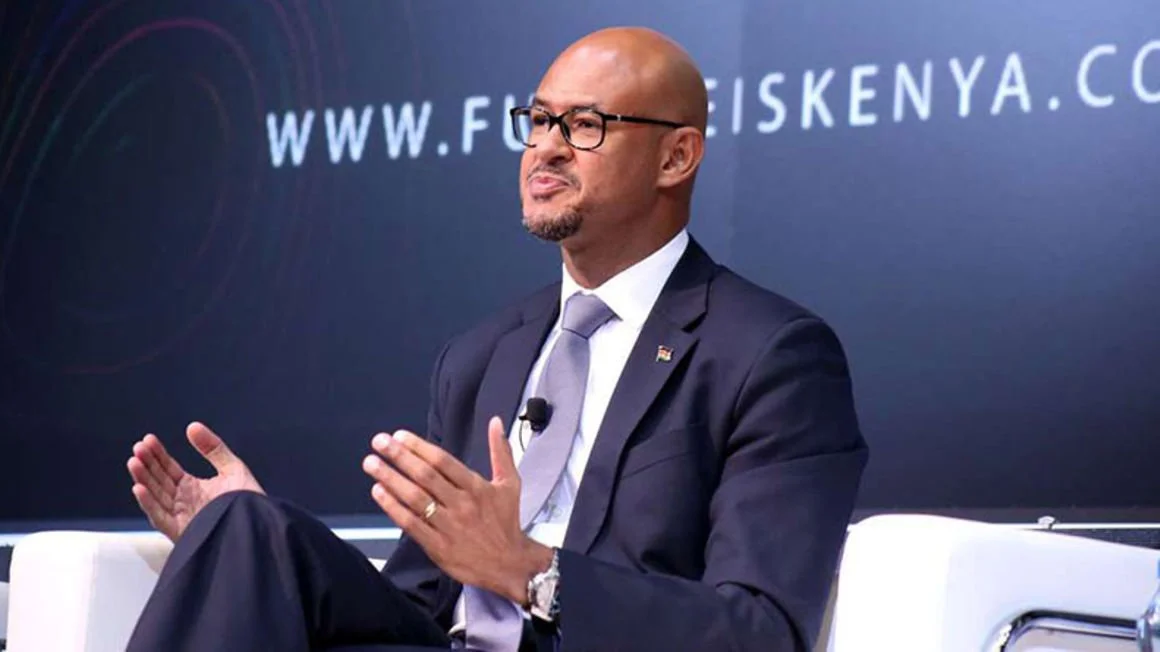
Jeremy Awori is a Kenyan banking executive whose career has taken him from pharmacy into senior leadership positions at some of Africa’s most prominent financial institutions. He served as Managing Director and Chief Executive Officer of Absa Bank Kenya for nearly a decade before becoming Group Chief Executive Officer of Ecobank Transnational Incorporated in March 2023. In November 2026, he received the Business Leader of the Year Award at the All Africa Business Leaders Awards, adding another major recognition to his career.
His appointment at Ecobank placed him at the head of a banking group with operations across several African markets and an important role in the continent’s financial infrastructure. His work now involves strengthening the group’s performance, expanding digital financial services and making cross-border trade and payments easier for businesses and individuals.
Early Life and Educational Background
Jeremy Awori is Kenyan. He attended St. Mary’s School in Nairobi before pursuing higher education in the United Kingdom. His academic path initially led him towards healthcare rather than banking.
He studied Pharmacy at the University of Manchester, where he obtained a Bachelor of Science degree. After graduating, he worked as a pharmacist in the United Kingdom. That early professional experience gave him a foundation in a different industry before he moved into financial services.
Awori later pursued a Master of Business Administration at McGill University in Canada. His MBA covered Finance, Strategy and International Business, equipping him with business and management knowledge that became relevant to his banking career.
He has also completed executive and leadership development programmes at international institutions, including INSEAD, London Business School, Oxford University, Harvard Business School and IMD. These programmes formed part of his continuing professional development as he moved into increasingly senior management positions.
His educational background combines scientific training with business administration. Although pharmacy was his first profession, his later career demonstrates how he applied his analytical and management skills to the financial sector.
From Pharmacy to Banking
Awori began his professional life as a pharmacist in the United Kingdom. He eventually decided to pursue a career in banking, a transition that required him to move from healthcare practice into a highly competitive financial industry.
He joined Standard Chartered Bank in Kenya in 1999. His entry into the bank marked the beginning of a career that would take him through retail banking, regional management and country-level executive leadership.
His early banking responsibilities included consumer and retail banking. These areas gave him experience in customer relationships, financial products, sales management and the operational demands of a commercial bank.
Awori’s career developed beyond Kenya as Standard Chartered assigned him responsibilities in other markets. He held senior positions in the Middle East and other regions, gaining experience in different banking environments and customer segments.
One of his important regional responsibilities was serving as Regional Sales Director for the Middle East, South Asia and Africa. The position required him to work across markets with different economic conditions, customer needs and regulatory environments. It also strengthened his experience in managing teams and supporting business growth across several countries.
Standard Chartered Tanzania Leadership
In 2008, Awori became Managing Director and Chief Executive Officer of Standard Chartered Bank Tanzania. The appointment represented a major step in his career because it placed him in charge of the bank’s operations in an individual African market.
As country chief executive, he had responsibility for business performance, customer relationships, operational delivery and the bank’s strategic direction. His experience in regional consumer banking provided a foundation for managing the wider demands of a national banking operation.
His time in Tanzania also strengthened his understanding of East African financial markets. Banking executives working across the region must respond to differences in regulation, economic activity, business financing needs and consumer behaviour. Awori’s responsibilities gave him experience in handling these issues before his next major career move.
He remained with Standard Chartered until 2013, when he moved to Kenya to take charge of Barclays Bank Kenya.
Barclays Bank Kenya and the Transition to Absa
Awori became Managing Director and Chief Executive Officer of Barclays Bank Kenya in February 2013. He led the bank through a period of significant change in Kenya’s banking industry and remained in the role as the institution transitioned from the Barclays brand to Absa.
The rebranding formed part of a wider strategic separation of Barclays Africa from its former parent group. Barclays Africa Group adopted the Absa name in 2018, while the Kenyan subsidiary completed its transition to Absa Bank Kenya in 2020.
Managing a major bank through a brand transition required more than changing its name and visual identity. The institution also needed to maintain customer confidence, preserve business relationships and establish a clear position under its new identity. Awori led the Kenyan operation during this period.
His tenure also coincided with the growing importance of digital banking in Kenya. Customers increasingly expected banks to provide convenient services through mobile devices and digital platforms rather than relying entirely on physical branches.
Absa invested in digitisation, automation and customer service technology during this period. The bank introduced Abby, a virtual assistant designed to help customers access information and complete banking-related tasks. The wider shift reflected the industry’s effort to improve service delivery and respond to changing customer expectations.
Awori also led the bank’s commercial operations during a period when competition from mobile money providers, fintech companies and other financial institutions continued to reshape the market.
He left Absa Bank Kenya on October 31, 2022, after nearly ten years as its chief executive. His departure followed his appointment to lead Ecobank, where he would take responsibility for a much larger multinational banking group.
Appointment as Ecobank Group CEO
Ecobank Transnational Incorporated appointed Jeremy Awori to succeed Ade Ayeyemi as Group Chief Executive Officer in September 2022. He formally assumed the position on March 2, 2023.
The appointment placed him in charge of one of Africa’s major pan-African banking groups. Ecobank operates through subsidiaries and branches across sub-Saharan Africa, serving individuals, small and medium-sized businesses, large companies, governments and institutional customers.
The group’s operations span multiple markets with different currencies, regulatory systems and economic conditions. This footprint gives Ecobank an important position in regional payments, trade finance and cross-border banking.
Awori brought more than 25 years of financial industry experience to the position. His previous roles at Standard Chartered and Absa had exposed him to retail banking, regional management, digital transformation and the leadership of major banking operations.
His challenge at Ecobank was to build on the group’s existing network while improving performance, strengthening its financial position and making its services more useful to customers operating across national borders.
He also inherited a bank with an established pan-African identity and a long-term ambition to support trade and financial integration across the continent.
Ecobank’s Growth, Transformation and Returns Strategy
One of the central priorities under Awori’s leadership has been Ecobank’s Growth, Transformation and Returns strategy, commonly known as GTR.
The strategy focuses on three connected objectives. Growth involves expanding business opportunities and increasing the group’s relevance to customers. Transformation involves improving operations, technology, efficiency and customer experience. Returns focus on stronger financial performance and sustainable value for shareholders.
The approach recognises that a large banking network does not automatically guarantee strong performance. Ecobank must compete in individual markets, manage risks, control costs and provide services that meet the needs of customers across different economies.
Expanding Digital Banking and Payments
Digital banking is an important part of Awori’s leadership agenda. African customers increasingly use mobile devices and digital platforms to make payments, transfer money, manage accounts and conduct business.
Ecobank’s regional network gives it an opportunity to support customers who operate across borders. A company importing goods from another African country, for example, may need payment services, foreign exchange facilities and working capital to complete transactions.
Awori has emphasised the importance of making financial services more accessible and improving the customer experience through technology. The group also works with fintech companies rather than treating every digital financial service provider as a direct competitor.
This approach allows Ecobank to use its banking infrastructure, regulatory presence and payment capabilities to support new financial products and partnerships.
Supporting African Trade and Business
Cross-border trade remains an important part of Ecobank’s business strategy. African companies often face practical difficulties when they trade across national boundaries, including currency differences, payment delays, financing constraints and varying regulatory requirements.
Ecobank’s presence in multiple African markets gives it an opportunity to provide banking services that help businesses manage these challenges.
Under Awori, the group has continued to position itself as a financial partner for companies seeking to expand across the continent. Its services include corporate banking, trade finance, payments, cash management and investment banking.
Small and medium-sized enterprises also form an important part of this agenda. These businesses need access to credit, payment systems and financial services that can support their growth. Improving their access to banking can help strengthen commercial activity and create opportunities across African markets.
Financial Performance and Shareholder Returns
Ecobank’s financial performance provides one measure of the progress made under its leadership.
For the 2025 financial year, the group reported profit before tax of approximately $801 million, representing an increase of 21 per cent. Net revenue reached approximately $2.45 billion, up 17 per cent from the previous year.
The results reflected improved business performance across the group’s operations. They also supported the wider objective of strengthening shareholder returns after a period in which dividend payments had been constrained.
Shareholders approved a $40 million dividend for the 2025 financial year, marking a return to dividend payments after the suspension that began in 2022.
These results do not remove the challenges facing a multinational African bank. Ecobank must continue to manage credit risk, currency movements, inflation, regulatory differences and competition from digital financial service providers. However, its financial performance gives investors and customers a basis for assessing the group’s progress under Awori.
Leadership Approach and Industry Influence
Awori’s career has involved leading financial institutions through different forms of change. At Standard Chartered, he developed experience across regional banking operations. At Barclays and Absa, he managed a major Kenyan bank through a significant corporate rebranding and the expansion of digital services. At Ecobank, he leads a group with a much broader geographical footprint.
His leadership interests also include diversity and inclusion. He has supported efforts to strengthen the participation and advancement of women in business and organisational leadership. At Ecobank, he initiated a diversity and inclusion council to develop and implement the group’s agenda in this area.
Awori has also participated in wider business and leadership networks. He is a Fellow of the Aspen Global Leadership Institute and the African Leadership Initiative. He is also a member of the Young Presidents’ Organization.
His previous public responsibilities included serving as Chairman of the Kenya Bankers Association and participating in the Kenya Private Sector Alliance. He also served on the board of the United Nations Global Compact Network Kenya.
During the COVID-19 pandemic, he was appointed to the Kenya Emergency COVID-19 Fund board and took part in efforts to mobilise private-sector support for the national response.
These roles reflect his influence beyond the daily operations of the banks he has led. They also show his involvement in discussions about financial services, corporate responsibility and private-sector development.
Jeremy Awori’s Awards and Recognition
Awori has received recognition for his contribution to banking and business leadership in Africa.
In November 2026, he won the Business Leader of the Year Award at the All Africa Business Leaders Awards. The award recognised him in his capacity as Group Chief Executive Officer of Ecobank Transnational Incorporated.
He had received other professional recognition before the 2026 award. Financial Afrik named him among its Top Leaders Who Transformed Africa in 2023. Business Monthly magazine also recognised him as the most influential CEO shaping the East African business agenda for three consecutive years, from 2020 to 2022.
He was previously recognised among the leading business executives at the All Africa Business Leaders Awards. These honours reflect his career across Standard Chartered, Absa and Ecobank, as well as his influence in the wider African financial sector.
Jeremy Awori’s Net Worth
Jeremy Awori’s exact net worth has not been reliably established in the public domain. Although he has held senior executive positions at major banks for many years, there is no sufficiently verified figure that establishes his personal wealth.
His position as Group Chief Executive Officer of Ecobank places him among the senior executives in African banking. However, the size of the bank’s assets, revenue or market value should not be confused with his personal net worth.
Conclusion
Jeremy Awori’s career is notable for its transition from pharmacy into senior banking leadership. His experience at Standard Chartered took him across several markets before he became CEO of the bank’s Tanzanian operation. He later led Barclays Bank Kenya through its transition to Absa and became Group Chief Executive Officer of Ecobank in March 2023.
His current role places him at the centre of efforts to strengthen pan-African banking, improve digital financial services and support trade across the continent. His 2026 Business Leader of the Year award adds to the recognition he has received throughout his career.
The long-term measure of his leadership at Ecobank will depend on the group’s ability to sustain growth, manage risk, improve customer services and deliver lasting value across its African markets.
Frequently Asked Questions About Jeremy Awori
1. Who is Jeremy Awori?
Jeremy Awori is a Kenyan banker and corporate executive. He is the Group Chief Executive Officer of Ecobank Transnational Incorporated, a pan-African banking group. Before joining Ecobank, he served as Managing Director and CEO of Absa Bank Kenya and held senior positions at Standard Chartered.
2. What is Jeremy Awori’s current position?
He is the Group Chief Executive Officer of Ecobank Transnational Incorporated. He assumed the position on March 2, 2023, succeeding Ade Ayeyemi.
3. How old is Jeremy Awori?
His exact date of birth and age have not been consistently established through reliable public records. Some online profiles give different birth years, so an exact age should not be treated as confirmed.
4. Where did Jeremy Awori study?
Awori studied Pharmacy at the University of Manchester in the United Kingdom, where he obtained a Bachelor of Science degree. He later earned an MBA in Finance, Strategy and International Business from McGill University in Canada. He has also completed executive programmes at several international business schools.
5. Did Jeremy Awori work as a pharmacist?
Yes. He began his professional career as a pharmacist in the United Kingdom after studying Pharmacy at the University of Manchester. He later changed careers and joined Standard Chartered Bank in Kenya in 1999.
6. Was Jeremy Awori the CEO of Absa Bank Kenya?
Yes. He became Managing Director and CEO of Barclays Bank Kenya in 2013. The institution later changed its name to Absa Bank Kenya, and he led it until October 2022.
7. Has Jeremy Awori won the Business Leader of the Year Award?
Yes. He received the Business Leader of the Year Award at the 2026 All Africa Business Leaders Awards. The award recognised him as Group Chief Executive Officer of Ecobank Transnational Incorporated.