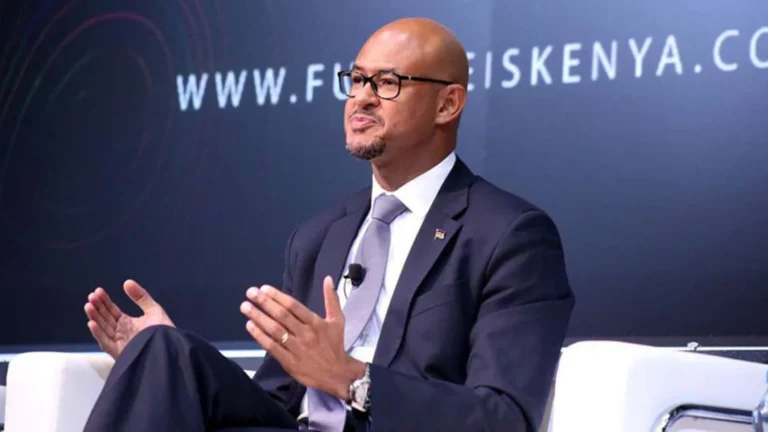
Tesh Mbaabu is a Kenyan technology entrepreneur and fintech executive whose businesses have operated across digital commerce, retail technology and financial services. He is the founder and chief executive officer of Cloud9 Money, a fintech company developing cross-border payment and digital banking services for African consumers and businesses.
His career entered a new phase on November 25, 2026, when Cloud9 announced its acquisition of Monix Pay, a Canadian money services business registered with the Financial Transactions and Reports Analysis Centre of Canada (FINTRAC). The transaction gives Cloud9 a regulated presence in North America and supports its ambition to build payment infrastructure connecting African businesses with international markets.
Before Cloud9, Mbaabu co-founded MarketForce, a business-to-business commerce platform that expanded into several African markets. He also established and worked on other technology ventures, including Cloud9xp and Chpter. His entrepreneurial journey reflects both the opportunities and difficulties of building technology companies in emerging markets.
Early Life and Education
Tesh Mbaabu grew up in Kenya and developed an interest in technology and business while still young. He taught himself graphic and web design after high school and began offering digital services to clients before entering university.
His first business emerged from this early interest. He established Tesh Technologies Limited, commonly known as TeshTeq, as a creative design and printing agency. The venture gave him an opportunity to earn money by providing practical services to businesses while developing his technical and commercial skills.
Mbaabu later studied Computer Science at the University of Nairobi, graduating in 2015. His university years coincided with the development of his entrepreneurial activities. Rather than waiting until graduation to establish a career, he continued building businesses and working with clients while studying.
His experience at university also introduced him to future business partners. He met Mesongo Sibuti, who later became his co-founder at MarketForce. Their shared interest in technology and business development helped shape several ventures that followed.
Mbaabu’s education provided a technical foundation for his work in software and digital platforms. However, much of his professional experience came from building companies, testing business models, raising investment and responding to the challenges of operating across different markets.
TeshTeq and Mesozi: His First Technology Businesses
TeshTeq marked the beginning of Mbaabu’s formal entrepreneurial journey. He started the business as a graphic design and printing agency, offering services to customers who needed websites, digital designs and related creative work.
As the business developed, its activities moved beyond design and printing into software development. This change allowed Mbaabu to take on more technical projects and work with organisations seeking digital solutions.
During his university years, he also partnered with Sibuti to establish Mesozi Group. The company provided integrated business and technology solutions, including software consulting and technology services. The founders used the business to generate income through client projects while developing their wider entrepreneurial ambitions.
Mesozi became important to their early strategy because it provided a commercial foundation for experimentation. Instead of relying entirely on outside investment to develop new ideas, the founders could use revenue from technology projects to support other ventures.
The experience also exposed them to the needs of businesses and public institutions. Working on technology projects required them to understand customer problems, deliver solutions and manage commercial relationships. These lessons later became relevant as they moved into travel technology and retail distribution.
Mbaabu’s early ventures were not all large-scale startups. Some projects did not succeed, and he has spoken publicly about the lessons that came from closing unsuccessful businesses. That experience became part of his approach to entrepreneurship, particularly the importance of focus and understanding the economics behind a business model.
Cloud9xp: His First Major Business Exit
In 2016, Mbaabu co-founded Cloud9xp, a digital marketplace for travel, leisure and entertainment experiences. The platform helped users discover and book activities across Africa while giving experience providers and tour operators access to potential customers.
The idea addressed a gap in the travel and leisure market. Many people wanted to discover activities beyond traditional accommodation and transport bookings, but information about local experiences was often scattered across different providers. Cloud9xp sought to bring these options together through an online marketplace.
The platform allowed users to explore experiences, make bookings and plan leisure activities. Providers could use the service to promote their offerings and manage bookings.
Cloud9xp gained recognition within Kenya’s technology ecosystem. It participated in the Google Launchpad Accelerator Africa programme and received the Oracle Innovation Award in the tourism category at the 2018 Connected Summit.
The venture later attracted the attention of HotelOnline, a hospitality technology company. HotelOnline acquired Cloud9xp in 2020, giving Mbaabu an early business exit and experience in building a company that could become part of a larger technology operation.
The sale was an important milestone because it demonstrated that he could develop a digital product, build a customer base and take a venture through an acquisition process. It also allowed him to move towards a different opportunity in African commerce.
MarketForce: Building a Retail Technology Business Across Africa
Mbaabu’s most prominent earlier venture was MarketForce, which he co-founded with Mesongo Sibuti in 2018. The company initially developed sales force automation software before moving into business-to-business commerce and digital distribution.
Its main platform, RejaReja, focused on informal retailers. Small shops and neighbourhood merchants often faced difficulties sourcing inventory, comparing suppliers, arranging deliveries and accessing working capital. MarketForce sought to address these problems through a digital platform that connected retailers with consumer goods distributors and brands.
Through RejaReja, merchants could browse products, place orders, make payments and receive inventory. The platform also developed services around merchant financing and access to additional business tools.
The model targeted a large part of Africa’s retail economy. Informal shops serve communities across the continent, but many operate with limited technology and depend on traditional supply chains. MarketForce aimed to make product distribution more efficient by connecting retailers with suppliers through a central digital system.
Under Mbaabu’s leadership, the company expanded into five African markets. Its growth attracted support from international investors and brought it into the Y Combinator startup ecosystem through the Summer 2020 programme.
In February 2022, MarketForce announced a $40 million Series A funding round. The financing was intended to support expansion, strengthen its technology and increase its reach among informal retailers. The company reported serving more than 270,000 merchants and connecting over 100 consumer brands to its retail network.
The scale of the business made MarketForce one of the more visible African retail technology startups of its period. Its model also reflected a wider investment trend in platforms seeking to digitise fragmented industries, improve distribution and provide financial services to underserved businesses.
MarketForce’s Difficulties and Lessons
MarketForce’s growth did not translate into a sustainable business model. The company faced the difficult economics of distributing fast-moving consumer goods across multiple countries. Retail distribution involves inventory costs, logistics, low product margins, working capital requirements and operational complexity.
Mbaabu later acknowledged that the company expanded aggressively. It built teams and operations across five markets while managing a capital-intensive distribution model. Although the strategy helped increase its reach and revenue, the underlying economics made profitability difficult.
The funding downturn also affected the company’s ability to sustain its operations. MarketForce eventually shut down its RejaReja operations after struggling to scale the business under the prevailing financial conditions.
The experience became a significant chapter in Mbaabu’s career. It showed the difference between attracting investment, growing transaction volumes and building a business that can support its operating costs over the long term.
His account of the experience has highlighted the importance of understanding margins, controlling expansion and choosing business models with stronger unit economics. Rather than treating the MarketForce chapter as a straightforward success story, his career is better understood through both its expansion and the challenges that followed.
Chpter and the Move into Conversational Commerce
After the MarketForce experience, Mbaabu became involved in Chpter, a conversational commerce technology business. The company developed tools that helped businesses communicate with customers and complete sales through messaging platforms such as WhatsApp and Instagram.
Many African consumers already use messaging and social media applications to discover products, ask questions and communicate with sellers. Chpter sought to help businesses turn those conversations into organised commercial interactions.
Its technology supported customer engagement, automated responses, marketing and payment-related processes. This allowed businesses to manage enquiries and sales conversations more efficiently without requiring customers to move through complicated websites or separate applications.
Chpter represented a narrower business opportunity than MarketForce. Instead of managing physical inventory and distribution across several countries, it focused on software that helped merchants improve their digital sales processes.
Cloud9 acquired Chpter in 2026, bringing its technology and commerce capabilities into Cloud9’s business banking platform. The transaction connected Mbaabu’s experience in social commerce with his newer work in financial services.
The acquisition also illustrated how his business interests have remained connected. His ventures have repeatedly focused on helping businesses trade, reach customers, receive payments and operate more efficiently.
Cloud9 Money: Building a Digital Financial Services Business
Cloud9 represents Mbaabu’s move into fintech and digital banking. The brand has a connection to his earlier travel technology venture, Cloud9xp, but its current business model is different.
Cloud9 began operating as a digital banking platform in 2026. It targets African consumers and businesses that need to receive, hold, send and manage money across borders. Its services focus on multi-currency accounts, international payments, foreign exchange and financial tools for businesses.
For African companies involved in international trade, moving money across borders can involve several financial institutions and payment intermediaries. Each stage can introduce additional costs, currency conversion charges and settlement delays.
Cloud9 aims to simplify these transactions by providing financial tools through a digital platform. Its customers include importers, exporters, freight forwarders, online merchants, freelancers and remote workers who receive payments from international clients.
The platform supports accounts and transactions involving currencies such as the Kenyan shilling, US dollar, euro, British pound and Chinese yuan, alongside several African currencies. It also incorporates digital asset and stablecoin payment capabilities.
For businesses, the platform offers services connected to payments, payroll, team approvals and trade finance. Cloud9 has also introduced products intended to help businesses manage the gap between paying suppliers and receiving money from sales.
The company announced an investment from Alliance in October 2026, bringing its reported total funding to $1 million. At the time, Cloud9 said it had opened more than 25,000 accounts since launching its services earlier that year.
The company also joined the sixth cohort of the Visa Africa FinTech Accelerator, which connects participating fintech businesses with industry expertise and potential commercial opportunities.
Cloud9’s development shows how Mbaabu has moved from building platforms for retail distribution and digital commerce to providing financial infrastructure for the businesses operating within those markets.
Monix Pay Acquisition and Cloud9’s North American Expansion
Cloud9’s acquisition of Monix Pay on November 25, 2026, marked a major development in the company’s international strategy.
Monix Pay is a Canadian money services business registered with FINTRAC. Through the acquisition, it will operate as Cloud9’s Canadian subsidiary and provide a regulated base for services involving foreign exchange, money transfers, general payment services and virtual currency transactions.
The deal gives Cloud9 its first North American presence. It also supports the company’s plan to reduce its dependence on external payment intermediaries by developing more of the infrastructure used to move money between Africa and other markets.
For an African importer paying a supplier in Canada or a freelancer receiving money from a client abroad, cross-border payments can involve several institutions. Cloud9 wants to reduce the number of intermediaries involved in these transactions and improve the speed and transparency of settlement.
The acquisition is particularly relevant to its plans for currency conversion and payment corridors involving the Canadian dollar, US dollar, euro, British pound, Chinese yuan and African currencies.
Cloud9 did not disclose the purchase price. The acquisition was its third transaction in 2026, following its purchases of M-Tickets and Chpter.
The M-Tickets acquisition brought digital event ticketing into the company’s wider ecosystem, while Chpter added conversational commerce technology. Monix Pay serves a different strategic purpose by giving Cloud9 a regulated business presence in Canada.
The transaction does not mean Cloud9 has become a Canadian bank. Monix Pay’s registration as a money services business provides the regulatory basis for the specific services covered by its Canadian registration. Cloud9’s broader banking and payment services still depend on the relevant regulatory arrangements in each market where it operates.
For Mbaabu, the acquisition represents another step in a career built around identifying business infrastructure gaps and developing technology-led solutions. It also places Cloud9 in a more demanding phase, where the company must translate international expansion into reliable services, strong compliance and sustainable growth.
Awards and Professional Recognition
Mbaabu has received recognition from business, technology and entrepreneurship organisations in Africa and internationally.
His honours and professional distinctions include:
- Forbes Africa 30 Under 30.
- Business Daily’s Top 40 Under 40 Men in Kenya.
- Choiseul 100 Africa recognition.
- Top 10 finalist in the Africa’s Business Heroes competition.
- Recognition among CIO Africa’s influential figures in digital transformation.
- Fintech Investment Excellence Award at the Africa Fintech Summit in 2022.
These recognitions reflect his involvement in several areas of technology entrepreneurship, from digital services and travel technology to retail commerce and financial technology.
He has also participated in entrepreneurship development programmes and supported early-stage founders through mentorship. His professional activities have included mentoring with JASIRI and iHub Nairobi, as well as guest lecturing in Stanford University’s Entrepreneurship Without Borders programme.
Through these roles, Mbaabu has shared experience from building companies, raising capital, managing teams and expanding technology ventures across African markets.
Tesh Mbaabu’s Net Worth
Tesh Mbaabu’s exact net worth has not been reliably established in the public domain. No verified financial disclosure provides a complete picture of his personal assets, investments, liabilities and ownership interests.
His career includes businesses that raised venture capital, completed acquisitions and operated across several markets. MarketForce’s $40 million Series A funding round and the sale of Cloud9xp to HotelOnline are notable commercial milestones, but neither figure establishes Mbaabu’s personal wealth.
Venture funding belongs to the company and its operating needs. It does not represent money paid directly to a founder. Similarly, an acquisition does not reveal how much an individual founder received unless the transaction terms and ownership arrangements are disclosed.
Mbaabu is also associated with Mesozi and TM Futures, through which he has interests in technology and early-stage entrepreneurship. However, the value of these interests has not been publicly established.
Conclusion
Tesh Mbaabu has built his career through several technology ventures serving different parts of the African economy. He began with digital design and software services, developed Cloud9xp into a travel and leisure marketplace, and later co-founded MarketForce to improve retail distribution for informal merchants.
MarketForce’s expansion and eventual difficulties provided important lessons about the economics of scaling a business. His subsequent work with Chpter and Cloud9 reflects a shift towards software-enabled commerce and financial services.
The acquisition of Monix Pay in November 2026 gives Cloud9 a regulated Canadian presence and a foundation for expanding cross-border payment services between Africa and North America. It is the latest development in Mbaabu’s effort to build technology businesses around the needs of African consumers and entrepreneurs.
Frequently Asked Questions About Tesh Mbaabu
1. Who is Tesh Mbaabu?
Tesh Mbaabu is a Kenyan technology entrepreneur and fintech executive. He is the founder and CEO of Cloud9 Money and previously co-founded MarketForce, Cloud9xp and Chpter.
2. How old is Tesh Mbaabu?
His exact date of birth and current age have not been reliably confirmed in the public domain. He began his first business as a teenager, but that information alone does not establish his birth year.
3. Where did Tesh Mbaabu study?
He studied Computer Science at the University of Nairobi and graduated in 2015. He also developed practical experience in graphic design, web development and software services before completing his degree.
4. What companies has Tesh Mbaabu founded or co-founded?
His entrepreneurial ventures include TeshTeq, Mesozi Group, Cloud9xp, MarketForce, Chpter and Cloud9 Money. These businesses have operated in digital services, software, travel technology, retail distribution, conversational commerce and fintech.
5. What happened to MarketForce?
MarketForce expanded its RejaReja retail platform across five African markets and served more than 270,000 merchants. However, the company struggled with the operating costs and low margins associated with large-scale retail distribution and eventually shut down RejaReja operations.
6. What is Cloud9 Money?
Cloud9 Money is a digital financial services platform founded by Mbaabu. It provides multi-currency financial tools, cross-border payments and business banking services for African consumers and companies.
7. Why did Cloud9 acquire Monix Pay?
The acquisition gives Cloud9 a Canadian money services business registered with FINTRAC. It provides a regulated base for foreign exchange, money transfers, payment services and virtual currency transactions, supporting the company’s expansion into North America.
8. What is Tesh Mbaabu’s net worth?
His personal net worth has not been reliably disclosed. Although he has founded companies that attracted investment and completed acquisitions, those business transactions do not establish his individual wealth.