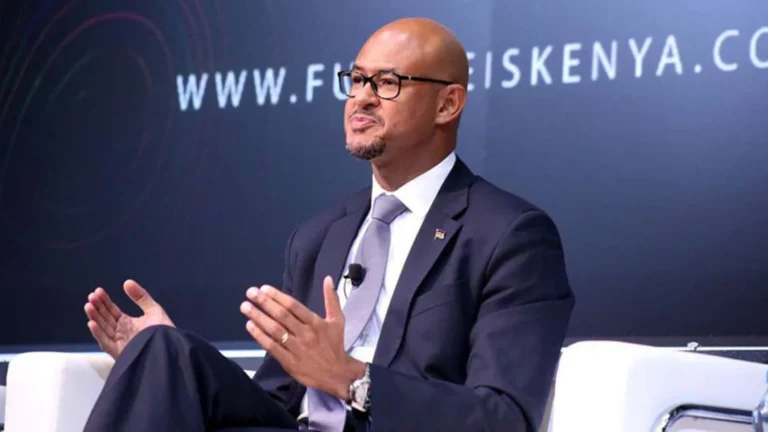
Moses Kwesi Baiden Jr. is a Ghanaian entrepreneur whose work in identity management and secure document technology has helped shape an important part of the country’s digital infrastructure. As the founder and chief executive officer of Margins ID Group, he built a technology business that grew from a small document-finishing operation into a company involved in identity systems, biometric solutions, secure card production and data management.
His entrepreneurial journey began in 1990 with an investment of just $100. At the time, Baiden was studying law at the University of Ghana. He started the business in his father’s garage at Ringway Estates in Accra, initially supplying office equipment and document-finishing products. Over the following decades, he guided the company through several changes in direction as demand for document security and reliable identity systems increased.
Baiden received the Man of the Year award at the 11th EMY Africa Awards in November 2026. The recognition brought renewed attention to his career and the company he established more than three decades ago. His story offers an example of how an entrepreneur can build a specialised technology business by identifying practical needs and developing solutions around them.
Early Life and Education
Moses Kwesi Baiden Jr. attended Mfantsipim School in Ghana, where he developed interests that later extended into business and public leadership. During his time at the school, he belonged to Sarbah-Picot House and served as deputy headboy.
His education continued at the University of Ghana, where he studied law. He was still a law student when he established Margins in 1990. He later completed his legal training and qualified as a barrister.
His legal education gave him exposure to the regulatory and institutional environment in which businesses operate. Although he built his career primarily as an entrepreneur and technology executive, his understanding of law became relevant to an industry involving identity records, personal information, government institutions and secure documentation.
Baiden’s professional path also demonstrates that a formal qualification does not always determine the direction of a person’s career. Rather than pursuing a conventional legal practice, he developed a business around an emerging commercial need and gradually moved into a specialised technology sector.
How Moses Kwesi Baiden Started Margins with $100
Baiden established Margins in 1990 with approximately $100. The business operated from his father’s garage at Ringway Estates in Accra and initially traded as Margins Company Limited.
Its first activities centred on document-finishing equipment and office supplies. The company supplied products such as laminators, binding systems, laminating materials and other office consumables. These products served organisations adapting to changes in office technology as computers increasingly replaced typewriters and traditional paperwork systems.
At the time, many businesses and institutions needed equipment that could help them produce, protect and present documents more professionally. Baiden recognised an opportunity in this market and built relationships around the supply of the equipment and materials customers required.
The business did not begin as a national identity technology company. Its early operations focused on a more straightforward commercial need: helping organisations process, finish and protect documents. However, that experience introduced Margins to the importance of document quality, durability and security.
This early foundation became important when the company began moving beyond ordinary office supplies. Instead of remaining a distributor of document-finishing products, Margins started developing capabilities in areas where the authenticity and protection of documents carried much greater importance.
From Document Finishing to Secure Document Technology
Margins’ early experience with laminating products created an opening into the document-security market. As organisations placed greater importance on protecting certificates and official records, the company began supplying materials and services for more sensitive documents.
One significant development involved supplying laminating film to the West African Examinations Council (WAEC) for examination certificates. The work exposed the business to the demands of institutional document protection, where durability and resistance to tampering mattered more than ordinary office presentation.
By 1997, Margins had become involved in passport lamination in Ghana. This represented an important change in the company’s commercial direction. Passports and other official identity documents require specialised production processes, security controls and dependable materials. The work therefore demanded a different level of technical capability from the company’s original office-supply operations.
In 1998, Margins ID Systems was incorporated. The development reflected the company’s growing focus on identity management and secure documentation rather than general document finishing.
This transition laid the foundation for the Margins business that emerged in later years. It also placed the company in a market where governments, financial institutions and other organisations increasingly needed reliable ways to identify individuals, authenticate documents and manage sensitive information.
Building Margins ID Group
Baiden’s development of Margins involved more than expanding the original company’s product range. He helped establish a broader group structure with specialised businesses serving different parts of the identity and secure-document industry.
Margins ID Group operates through subsidiaries that include Margins ID Systems, Intelligent Card Production Services (ICPS), Margins ID Systems Africa (MIDSA) and IMSII. Their activities support different aspects of identity technology, card production and related services.
A major step in this expansion came in 2004 with the development of Intelligent Card Production Services. The facility introduced greater manufacturing capacity into the group’s operations and strengthened its ability to produce secure cards locally.
The facility covers approximately 5,000 square metres and has a reported production capacity of more than 150 million secure cards annually. It also became Ghana’s first EMV-certified facility, giving the group an important position in secure card manufacturing.
EMV technology supports secure payment-card transactions through standards used across the banking and payments industry. The certification therefore represented a significant technical milestone for a company seeking to serve institutions that require reliable card production and personalisation.
The investment in manufacturing capacity also changed the group’s role in the market. Instead of relying only on imported products or external production services, Margins could undertake more specialised work through its own infrastructure.
That capability became relevant to a wider range of customers, including financial institutions, public agencies and organisations that require secure identification products.
Moses Kwesi Baiden and Ghana’s National Identification System
One of the most prominent parts of Baiden’s business career is Margins ID Group’s involvement in Ghana’s identity management infrastructure.
The group’s work in identity management developed over several years. Its involvement with Ghana’s national identification project dates back to the period before the current national identity system took shape. The company produced national identity cards from 2008 and later became involved in the wider programme through its subsidiary, Identity Management Systems (IMS).
In 2012, Margins undertook work connected to the Foreigners Identification Management System (FIMS). The project expanded the company’s experience in managing identity information and developing systems for identifying people living in the country.
The national identification programme later became a major part of the group’s public-sector business. In 2017, the Ghanaian government directed the National Identification Authority to engage IMS, a Margins subsidiary, in the national identity project. The two parties entered into a public-private partnership agreement in April 2018.
The arrangement placed IMS within the institutional framework responsible for implementing important parts of the national identity programme. The work involved more than producing physical identity cards. It required systems for registering individuals, collecting biometric information, managing identity records and supporting verification.
Ghana’s national identification programme, commonly associated with the Ghana Card, became an important part of the country’s efforts to establish a reliable identity database. Such infrastructure can support public administration, financial services, access to government programmes and identity verification across different sectors.
Margins’ involvement in this work has been a defining part of its development. Under Baiden’s leadership, the company became associated with a specialised area of technology that requires substantial investment, technical expertise and coordination with public institutions.
It is important to distinguish the company’s role from the responsibilities of government agencies. The National Identification Authority remains the public institution responsible for Ghana’s national identification programme, while Margins and its subsidiary have participated as private-sector technology partners.
The Technology Behind Margins ID Group
Margins’ activities now extend beyond the production of identification cards. The group works across several areas of identity management and secure information technology.
Its services include biometric verification, identity authentication, secure document production, card personalisation, data management and digital identity platforms. These capabilities serve organisations that need to establish identities, verify personal information and protect sensitive records.
Biometric technology plays an important role in this work. It uses physical or behavioural characteristics, such as fingerprints, to help establish whether an individual is the person they claim to be. When integrated with identity databases and verification systems, biometrics can support more dependable identification processes.
Secure card production remains another important part of the group’s operations. Banks, public agencies and other institutions use personalised cards for identification, access and transactions. Producing these cards requires specialised equipment, controlled processes and safeguards against counterfeiting or unauthorised alteration.
The group also works in areas connected to border management, driver licensing, health insurance, social protection and government electronic services. These applications show how identity technology can extend into everyday public and commercial activities.
Margins has reported that its systems have secured more than 18 million identities and that its production infrastructure can handle over 150 million secure documents annually. These are company-reported figures that indicate the scale of its operations, rather than a measure of Baiden’s personal wealth.
The group’s work reflects a broader change in the technology industry. Identity systems are no longer limited to physical documents. Governments and businesses increasingly need digital platforms that can connect identity records with services, verification processes and institutional databases.
For Baiden, the opportunity has been to position Margins within this changing environment while retaining the secure-document and card-manufacturing capabilities that supported its early growth.
Awards and Professional Recognition
Baiden’s work has attracted recognition from business and technology organisations in Ghana and across Africa. The awards reflect different aspects of his career, including entrepreneurship, innovation and leadership.
In 2015, he received technology and innovation recognition at the Millennium Excellence Awards. He later received the Man of the Year award at the 2022 Millennium Excellence Awards.
The group and its executive leadership also received recognition for industry innovation at the 2025 Millennium Excellence Awards. Baiden’s earlier honours include the Innovation Pacesetter of the Year award at the 2018 Mobex Africa Innovation Awards.
He has also been associated with the Ghana CEO Summit Technology Hall of Fame, recognising his contribution to the country’s technology and business environment.
His most recent major recognition came at the 11th EMY Africa Awards in Accra on November 21, 2026. The organisers named him Man of the Year, bringing his entrepreneurial journey back into public attention.
The award followed more than three decades of building and expanding Margins. Its significance lies not only in the recognition of an individual executive but also in the development of a Ghanaian technology company operating in a specialised field with national importance.
Public Leadership and Connection to Mfantsipim
Beyond his corporate responsibilities, Baiden maintains a connection with Mfantsipim School and its old students’ community.
He has held leadership responsibilities within the Mfantsipim Old Boys Association (MOBA), including serving as president of the Class of 1983 and participating in the association’s national council. He also holds the traditional association title of Ebusuapanyin, fifth.
These roles reflect his continued involvement with the institution where he received part of his education. Alumni associations often support schools through mentorship, fundraising, networking and development initiatives. Baiden’s participation places him within that wider community of former students who maintain relationships with their school.
His public profile also connects business leadership with discussions about technology and national development. Through his work in identity management, he has contributed to conversations about the role of secure identification systems in modern government and commercial services.
Moses Kwesi Baiden Jr. Net Worth
Moses Kwesi Baiden Jr.’s exact net worth has not been reliably established in the public domain. There is no sufficiently verified figure that can accurately represent his personal assets, investments, liabilities and ownership interests.
His position as founder and chief executive of Margins ID Group demonstrates that he has built a substantial business in a specialised technology sector. However, the reported production capacity, number of identities managed and commercial activities of the group should not be treated as his personal wealth.
A company’s revenue, assets and operational scale do not automatically establish the personal net worth of its founder. Without reliable financial disclosures or a credible independent valuation of his holdings, assigning a specific dollar amount would be misleading.
Conclusion
Moses Kwesi Baiden Jr. built his business career by recognising opportunities in document technology and gradually moving into a more specialised field. What began in 1990 as a small operation with approximately $100 developed into Margins ID Group, a Ghanaian technology business involved in secure card production, biometric systems and digital identity management.
His career stands out for the company’s transition from office supplies to infrastructure used by institutions and public agencies. Its involvement in Ghana’s national identification programme has made identity technology a central part of his business legacy.
The 2026 EMY Africa Man of the Year award added another milestone to a career spanning more than three decades. His story illustrates how a focused business idea, technical investment and the ability to adapt to changing market needs can create a lasting enterprise.
Frequently Asked Questions About Moses Kwesi Baiden Jr.
1. Who is Moses Kwesi Baiden Jr.?
Moses Kwesi Baiden Jr. is a Ghanaian entrepreneur and business executive. He founded Margins ID Group and serves as its chief executive officer. His work focuses on identity management, biometric technology, secure documents and card production.
2. What is Moses Kwesi Baiden Jr. known for?
He is best known for establishing Margins ID Group and developing it into a technology business involved in secure identification and digital identity systems. The group has also participated in Ghana’s national identification programme through its subsidiary, Identity Management Systems.
3. What company did Moses Kwesi Baiden establish?
He established Margins Company Limited in 1990. The business later developed into Margins ID Group, with subsidiaries operating in identity management, secure card production and related technology services.
4. How did Moses Kwesi Baiden start his business?
Baiden started Margins in 1990 with approximately $100. He operated from his father’s garage at Ringway Estates in Accra and initially supplied office equipment, laminators, binding systems and document-finishing materials.
5. What is Margins ID Group?
Margins ID Group is a Ghanaian technology group that provides identity management and secure-document solutions. Its activities include biometric verification, digital identity platforms, card personalisation, secure document production and data management.
6. What is Moses Kwesi Baiden’s role in Ghana’s national ID system?
Through Margins ID Group and its subsidiary Identity Management Systems, Baiden has led a business involved in Ghana’s identity management infrastructure. The group has participated in the national identification programme, including work connected to identity registration and secure card production.
7. Which award did Moses Kwesi Baiden receive in 2026?
He received the Man of the Year award at the 11th EMY Africa Awards held in Accra on November 21, 2026.
8. What is Moses Kwesi Baiden Jr.’s net worth?
His exact net worth is not publicly established through reliable financial information. Although he leads a major technology business, its reported operations do not provide enough information to calculate his personal wealth.